
 A SCHOLARLY BOOK REPOSITORY
Results by Title
3 books about Situations
3 books about Situations
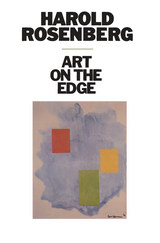
Art on the Edge
Creators and Situations
Harold Rosenberg
University of Chicago Press, 1983
"As a stylist, in his descriptions of art and movements and books, Rosenberg has no equal. . . . One is grateful for [this] essay collection. To my mind, his piece on art criticism and the distinction between it and art history is alone worth the price of the book."—Corinne Robins, New York Times Book Review
[more]
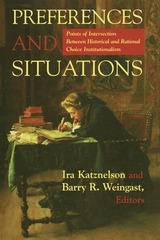
Preferences and Situations
Points of Intersection Between Historical and Rational Choice In.
Ira Katznelson
Russell Sage Foundation, 2005
A scholarly gulf has tended to divide historians, political scientists, and social movement theorists on how people develop and act on their preferences. Rational choice scholars assumed that people—regardless of the time and place in which they live—try to achieve certain goals, like maximizing their personal wealth or power. In contrast, comparative historical scholars have emphasized historical context in explaining people's behavior. Recently, a common emphasis on how institutions—such as unions or governments—influence people's preferences in particular situations has emerged, promising to narrow the divide between the two intellectual camps. In Preferences and Situations, editors Ira Katnelson and Barry Weingast seek to expand that common ground by bringing together an esteemed group of contributors to address the ways in which institutions, in their wider historical setting, induce people to behave in certain ways and steer the course of history. The contributors examine a diverse group of topics to assess the role that institutions play in shaping people's preferences and decision-making. For example, Margaret Levi studies two labor unions to determine how organizational preferences are established. She discusses how the individual preferences of leaders crystallize and become cemented into an institutional culture through formal rules and informal communication. To explore how preferences alter with time, David Brady, John Ferejohn, and Jeremy Pope examine why civil rights legislation that failed to garner sufficient support in previous decades came to pass Congress in 1964. Ira Katznelson reaches back to the 13th century to discuss how the institutional development of Parliament after the signing of the Magna Carta led King Edward I to reframe the view of the British crown toward Jews and expel them in 1290. The essays in this book focus on preference formation and change, revealing a great deal of overlap between two schools of thought that were previously considered mutually exclusive. Though the scholarly debate over the merits of historical versus rational choice institutionalism will surely rage on, Preferences and Situations reveals how each field can be enriched by the other.
[more]
Situations and Attitudes
Jon Barwise and John Perry
CSLI, 1983
In this provocative book, Barwise and Perry tackle the slippery subject of "meaning," a subject that has long vexed linguists, language philosophers, and logicians. Meaning does not exist solely within words and sentences but resides largely in the situation and the attitudes brought to it by those involved. The authors present an unusually lucid treatment of important innovations in the field of natural semantics, contending that the standard view of logic (as derived from Frege, Russell, and work in mathematics and logic) is inappropriate for many of the uses to which it has been put by scholars. In Situations and Attitudes they provide the basics of a realistic model-theoretic semantics of natural language, explain the main ideas of the theory, and contrast them with those of competing theories.
[more]
READERS
Browse our collection.
PUBLISHERS
See BiblioVault's publisher services.
STUDENT SERVICES
Files for college accessibility offices.
RECENTLY PUBLISHED


UChicago Accessibility Resources
home | accessibility | search | about | contact us
BiblioVault ® 2001 - 2026
The University of Chicago Press