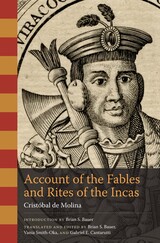
front cover of Account of the Fables and Rites of the Incas
Account of the Fables and Rites of the Incas
By Cristóbal de Molina
University of Texas Press, 2011

Only a few decades after the Spanish conquest of Peru, the third Bishop of Cuzco, Sebastián de Lartaún, called for a report on the religious practices of the Incas. The report was prepared by Cristóbal de Molina, a priest of the Hospital for the Natives of Our Lady of Succor in Cuzco and Preacher General of the city. Molina was an outstanding Quechua speaker, and his advanced language skills allowed him to interview the older indigenous men of Cuzco who were among the last surviving eyewitnesses of the rituals conducted at the height of Inca rule. Thus, Molina's account preserves a crucial first-hand record of Inca religious beliefs and practices.

This volume is the first English translation of Molina's Relación de las fábulas y ritos de los incas since 1873 and includes the first authoritative scholarly commentary and notes. The work opens with several Inca creation myths and descriptions of the major gods and shrines (huacas). Molina then discusses the most important rituals that occurred in Cuzco during each month of the year, as well as rituals that were not tied to the ceremonial calendar, such as birth rituals, female initiation rites, and marriages. Molina also describes the Capacocha ritual, in which all the shrines of the empire were offered sacrifices, as well as the Taqui Ongoy, a millennial movement that spread across the Andes during the late 1560s in response to growing Spanish domination and accelerated violence against the so-called idolatrous religions of the Andean peoples.
[more]

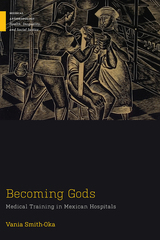
front cover of Becoming Gods
Becoming Gods
Medical Training in Mexican Hospitals
Vania Smith-Oka
Rutgers University Press, 2021
Through rich ethnographic narrative, Becoming Gods examines how a cohort of doctors-in-training in the Mexican city of Puebla learn to become doctors. Smith-Oka draws from compelling fieldwork, ethnography, and interviews with interns, residents, and doctors that tell the story of how medical trainees learn to wield new tools, language, and technology and how their white coat, stethoscope, and newfound technical, linguistic, and sensory skills lend them an authority that they cultivate with each practice, transforming their sense of self. Becoming Gods illustrates the messy, complex, and nuanced nature of medical training, where trainees not only have to acquire a monumental number of skills but do so against a backdrop of strict hospital hierarchy and a crumbling national medical system that deeply shape who they are.
[more]

front cover of Shaping the Motherhood of Indigenous Mexico
Shaping the Motherhood of Indigenous Mexico
Vania Smith-Oka
Vanderbilt University Press, 2013
Mainstream Mexican views of indigenous women center on them as problematic mothers, and development programs have included the goal of helping these women become "good mothers." Economic incentives and conditional cash transfers are the vehicles for achieving this goal. With ethnographic immediacy, Shaping the Motherhood of Indigenous Mexico</> examines the dynamics among the various players--indigenous mothers, clinicians, and representatives of development programs. The women's voices lead the reader to understand the structures of dependency that paradoxically bind indigenous women within a program that calls for their empowerment.

The cash transfer program is Oportunidades, which enrolls more than a fifth of Mexico's population. It expects mothers to become involved in their children's lives at three nodes--health, nutrition, and education. If women do not comply with the standards of modern motherhood, they are dropped from the program and lose the bi-monthly cash payments. Smith-Oka explores the everyday implementation of the program and its unintended consequences.

The mothers are often berated by clinicians for having too many children (Smith-Oka provides background on the history of eugenics and population control in Mexico) and for other examples of their "backward" ways. An entire chapter focuses on the humor indigenous women use to cope with disrespectful comments. Ironically, this form of resistance allows the women to accept the situation that controls their behavior.
[more]

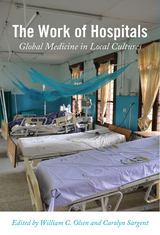
front cover of The Work of Hospitals
The Work of Hospitals
Global Medicine in Local Cultures
William C. Olsen
Rutgers University Press, 2022
In the context of neoliberalism and global austerity measures, health care institutions around the world confront numerous challenges in attempting to meet the needs of local populations. Examples from Africa (including, Ethiopia, Ghana, and Congo), Latin America (Peru, Mexico, Guatemala), Western Europe (France, Greece), and the United States illustrate how hospitals play a significant role in the social production of health and disease in the communities where they are. Many low-resource countries have experienced increasing privatization and dysfunction of public sector institutions such as hospitals, and growing withdrawal of funding for non-profit organizations. Underlying the chapters in The Work of Hospitals is a fundamental question: how do hospitals function lacking the medications, equipment and technologies, and personnel normally assumed to be necessary? This collection of ethnographies demonstrates how hospital administrators, clinicians, and other staff in hospitals around the world confront innumerable risks in their commitment to deliver health care, including civil unrest, widespread poverty, endemic and epidemic disease, and supply chain instability. Ultimately, The Work of Hospitals documents a vast gulf between the idealized mission of the hospital and the implementation of this mission in everyday practice. Hospitals thus become “contested space” between policy and practice. 
 
[more]


Send via email Share on Facebook Share on Twitter