
 A SCHOLARLY BOOK REPOSITORY
Results by Title
3 books about Socialism and art
3 books about Socialism and art

Art and Production
Boris Arvatov
Pluto Press, 2017
Boris Arvatov's Art and Production is a classic of the early Soviet avant-garde. Now nearing a century since its first publication, it is a crucial intervention for those seeking to understand the social dynamic of art and revolution during the period.
Derived from the internal struggles of Soviet Constructivism, as it confronted the massive problems of cultural transformation after 'War Communism', Arvatov's writing is a major force in the split that occurred in the revolutionary horizons of Constructivism in the early 1920s. Critical of early Constructivism's social-aesthetic process of art's transformation of daily life - epitomised in studio-based painting, photography and object making - Arvatov polemicises for the devolution of artistic skills directly into the relations of production and the factory.
Whilst acknowledging the problems of a pure factory-based Productivism, Arvatov remains overwhelmingly committed to a new role and function for art outside the conventional studio and traditional gallery. Addressing issues such as artistic labour and productive labour, the artist as technician, art and multidisciplinarity and a life for art beyond 'art' - finding new relevance amidst the extensive social turn of contemporary participatory art - Art and Production offers a timely and compelling manifesto.
Derived from the internal struggles of Soviet Constructivism, as it confronted the massive problems of cultural transformation after 'War Communism', Arvatov's writing is a major force in the split that occurred in the revolutionary horizons of Constructivism in the early 1920s. Critical of early Constructivism's social-aesthetic process of art's transformation of daily life - epitomised in studio-based painting, photography and object making - Arvatov polemicises for the devolution of artistic skills directly into the relations of production and the factory.
Whilst acknowledging the problems of a pure factory-based Productivism, Arvatov remains overwhelmingly committed to a new role and function for art outside the conventional studio and traditional gallery. Addressing issues such as artistic labour and productive labour, the artist as technician, art and multidisciplinarity and a life for art beyond 'art' - finding new relevance amidst the extensive social turn of contemporary participatory art - Art and Production offers a timely and compelling manifesto.
[more]
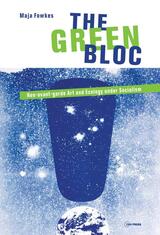
The Green Bloc
Neo-avant-garde Art and Ecology under Socialism
Maja Fowkes
Central European University Press, 2015
Expanding the horizon of established accounts of Central European art under socialism, this book uncovers the neglected history of artistic engagement with the natural environment in the Eastern Bloc. The turbulent legacy of 1968, which saw the confluence of political upheaval, spread of counterculture, rise of ecological consciousness, and emergence of global conceptual art, provides the setting for Maja Fowkes’s innovative reassessment of the environmental practice of the Central European neo-avant-garde. Focussing on artists and artist groups whose ecological dimension has rarely been considered, including the Pécs Workshop from Hungary, OHO in Slovenia, TOK in Croatia, Rudolf Sikora in Slovakia, and the Czech artist Petr Štembera, 'The Green Bloc: Neo-avant-garde Art and Ecology under Socialism' brings to light an array of distinctive approaches to nature, from attempts to raise environmental awareness among socialist citizens to the exploration of non-anthropocentric positions and the quest for cosmological existence in the midst of red ideology. Embedding artistic production in social, political, and environmental histories of the region, this book reveals the Central European artists’ sophisticated relationship to nature, at the precise moment when ecological crisis was first apprehended on a planetary scale.
[more]

Icons of the Left
Benjamin and Eisenstein, Picasso and Kafka after the Fall of Communism
Otto Karl Werckmeister
University of Chicago Press, 1999
In his new book, art historian O. K. Werckmeister advances a critique of Marxist culture in capitalist society.
Focusing on some of the most celebrated instances of traditional "Western Marxism," Werckmeister shows how such "icons of the Left" have been progressively detached from their political roots in communist activism to the safe distance of utopian or revolutionary speculations. He assesses some recent critiques of "Western Marxism" in popular culture such as Soderbergh's film Kafka, pointing out the historic fallacies that underlie such wholesale repudiations. With this analysis, Werckmeister seeks to clear the ground for a coherent cultural policy of the Left that responds to the continuing crisis of society.
Focusing on some of the most celebrated instances of traditional "Western Marxism," Werckmeister shows how such "icons of the Left" have been progressively detached from their political roots in communist activism to the safe distance of utopian or revolutionary speculations. He assesses some recent critiques of "Western Marxism" in popular culture such as Soderbergh's film Kafka, pointing out the historic fallacies that underlie such wholesale repudiations. With this analysis, Werckmeister seeks to clear the ground for a coherent cultural policy of the Left that responds to the continuing crisis of society.
[more]
READERS
Browse our collection.
PUBLISHERS
See BiblioVault's publisher services.
STUDENT SERVICES
Files for college accessibility offices.
RECENTLY PUBLISHED


UChicago Accessibility Resources
home | accessibility | search | about | contact us
BiblioVault ® 2001 - 2026
The University of Chicago Press