
 A SCHOLARLY BOOK REPOSITORY
5 start with M start with M
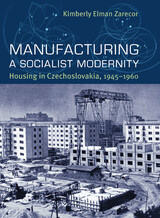
Eastern European prefabricated housing blocks are often vilified as the visible manifestations of everything that was wrong with state socialism. For many inside and outside the region, the uniformity of these buildings became symbols of the dullness and drudgery of everyday life. Manufacturing a Socialist Modernity complicates this common perception. Analyzing the cultural, intellectual, and professional debates surrounding the construction of mass housing in early postwar Czechoslovakia, Zarecor shows that these housing blocks served an essential function in the planned economy and reflected an interwar aesthetic, derived from constructivism and functionalism, that carried forward into the 1950s.
With a focus on prefabricated and standardized housing built from 1945 to 1960, Zarecor offers broad and innovative insights into the country’s transition from capitalism to state socialism. She demonstrates that during this shift, architects and engineers consistently strove to meet the needs of Czechs and Slovaks despite challenging economic conditions, a lack of material resources, and manufacturing and technological limitations. In the process, architects were asked to put aside their individual creative aspirations and transform themselves into technicians and industrial producers.
Manufacturing a Socialist Modernity is the first comprehensive history of architectural practice and the emergence of prefabricated housing in the Eastern Bloc. Through discussions of individual architects and projects, as well as building typologies, professional associations, and institutional organization, it opens a rare window into the cultural and economic life of Eastern Europe during the early postwar period.

Yet these concepts, within a specifically Marxist framework, are not always easy to understand. This book is an ideal student introduction that explains, in clear and concise chapters, the precise meaning and implications of each of Marx's key concepts. Furthermore, the contributors show how these ideas continue to be relevant, and how they relate to modern society.
The contributors include leading academics in the field of politicial science. Outlining clearly what each concept means, they move on to situate it within cutting-edge contemporary political theory.
Concepts include historical materialism, capitalism, class, the state, imperialism, the division of labour, oppression, production and reproduction, revolution, working class internationalism, equality and democracy.
It covers a broad range of digital aspects now proliferating across our work and lives, including chapters on the digitalization of agriculture, robotics in the factory and the labor process on crowdworking platforms. It looks to how 20th century Marxist predictions of the 'workerless factory' are, or are not, coming true, and how 'Platform Capitalism' should be understood and critiqued.
Through rich empirical, theoretical and historical material, this book is necessary reading for those wanting a clear overview of our digital world.

How does one explain the presence of educated recruits in movements that were overwhelmingly working class in composition? How did intellectuals function within the movements? In the first in-depth exploration of this question, Stanley Pierson examines the rise, development, and ultimate failure of the German Social Democrats, the largest of the European socialist parties, from 1887 to 1912. Prominent figures, such as Karl Kautsky, August Bebel, Rosa Luxemburg, and Eduard Bernstein are discussed, but the book focuses primarily on the younger generation. These forgotten intellectuals—Max Schippel, Paul Kampffmeyer, Conrad Schmidt, Paul Ernst, and others—struggled most directly with the dilemmas arising out of the attempt to translate Marxist doctrines into practical and personal terms.
These young writers, speakers, and politicians set out to supplant old ways of thinking with a Marxist understanding of history and society. Pierson weaves together over thirty intellectual biographies to explore the relationship between ideology and politics in Germany. He examines the conflict within Social Democracy between the “revisionist” intellectuals, who sought to adapt Marxist theory to changing economic and social realities, and those “orthodox” and “radical” intellectuals who attempted to remain faithful to the Marxist vision. By examining the struggles of the socialist intellectuals in Germany, Pierson brings out the special features of German cultural, social, and political life before World War I. His study of this critical time in the development of the German Social Democratic party also illuminates the wider development of Marxism in Europe during the twentieth century.
READERS
Browse our collection.
PUBLISHERS
See BiblioVault's publisher services.
STUDENT SERVICES
Files for college accessibility offices.
RECENTLY PUBLISHED







UChicago Accessibility Resources
home | accessibility | search | about | contact us
BiblioVault ® 2001 - 2024
The University of Chicago Press