logo for University of Minnesota Press
Theories Of The New Class
Intellectuals And Power
Lawrence Peter King
University of Minnesota Press, 2004

Demonstrates the centrality of thinking about intellectual class formation to social theory

Old as the notion of the “New Class” is (the term was coined by anarchist Mikhail Bakunin around 1870), the idea of the ascendancy of an intellectual elite continues to engage, and perplex, social theorists. In Theories of the New Class, Iván Szelényi, one of the most incisive and respected analysts of the intellectual class, and his colleague Lawrence King put New Class theories into a broad historical framework for the first time.

Addressing the intellectual history of Marxism and socialism, theories of the increasing role of the state and technocratic elites in capitalism, and theories of contemporary social change, King and Szelényi’s work clearly links the centrality of thinking about intellectual class formation to a variety of theoretical and political projects that have shaped social theory and influenced political realities over the past century.King and Szelényi show that the idea of the New Class has stubbornly entered and reentered the agenda of critical social theorizing throughout the last century. Indeed, they interpret that the last century as a history of projects by different groups of the highly educated—factions of intellectuals, bureaucrats, technocrats, managers, and the left-wing humanistic intelligentsia—to gain ultimate power. A rare empirical discussion of theory, Theories of the New Class invigorates class theories by grounding them in contemporary issues; at the same time, it uses modern polemics to revitalize historical debates on the origins of capitalism.
[more]

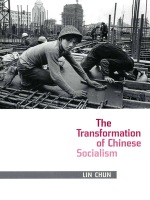
front cover of The Transformation of Chinese Socialism
The Transformation of Chinese Socialism
Chun Lin
Duke University Press, 2006
In this significant contribution to both political theory and China studies, Lin Chun provides a critical assessment of the scope and limits of socialist experiments in China, analyzing their development since the victory of the Chinese communist revolution in 1949 and reflecting on the country’s likely paths into the future. Lin suggests that China’s twentieth-century trajectory be grasped in terms of the collective search by its people for a modern alternative to colonial modernity, bureaucratic socialism, and capitalist subordination. Evaluating contending interpretations of the formation and transformation of Chinese socialism in the contemporary conditions of global capitalism, Lin argues that the post-Mao reform model must be remade.
[more]

front cover of Transgender Marxism
Transgender Marxism
Jules Joanne Gleeson
Pluto Press, 2021
The first collection of its kind, Transgender Marxism is a provocative and groundbreaking union of transgender studies and Marxist theory.

Exploring trans lives and movements, the authors delve into the experience of surviving as transgender under capitalism. They explore the pressures, oppression and state persecution faced by trans people living in capitalist societies, their tenuous positions in the workplace and the home, and give a powerful response to right-wing scaremongering against 'gender ideology'.

Reflecting on the relations between gender and labour, these essays reveal the structure of antagonisms faced by gender non-conforming people within society. Looking at the history of transgender movements, Marxist interventions into developmental theory, psychoanalysis and workplace ethnography, the authors conclude that for trans liberation, capitalism must be abolished.
[more]

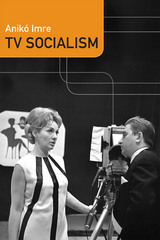
front cover of TV Socialism
TV Socialism
Anikó Imre
Duke University Press, 2016
In TV Socialism, Anikó Imre provides an innovative history of television in socialist Europe during and after the Cold War. Rather than uniform propaganda programming, Imre finds rich evidence of hybrid aesthetic and economic practices, including frequent exchanges within the region and with Western media, a steady production of varied genre entertainment, elements of European public service broadcasting, and transcultural, multi-lingual reception practices. These televisual practices challenge conventional understandings of culture under socialism, divisions between East and West, and the divide between socialism and postsocialism. Taking a broad regional perspective encompassing Eastern Europe and the Soviet Union, Imre foregrounds continuities between socialist television and the region’s shared imperial histories, including the programming trends, distribution patterns, and reception practices that extended into postsocialism. Television, she argues, is key to understanding European socialist cultures and to making sense of developments after the end of the Cold War and the enduring global legacy of socialism.

[more]


Send via email Share on Facebook Share on Twitter