logo for Temple University Press
Asian Ameritopias
Asian American Speculative Fictions
Stephen Hong Sohn
Temple University Press, 2026

Asian American writers have long produced literary works of speculative fiction, the supergenre that employs science fictional, fantastical, or supernatural elements. Stephen Hong Sohn’s Asian Ameritopias is the first book-length study to consider how these aesthetically complex and wildly imaginative representations offer writers a way to explore themes of race and identity, as well as alternate futures and other planets.

Sohn examines how various novels and stories enable Asian American writers to engage with and reimagine issues of social justice, revisualize the bounds of social collectives, and create new pathways for precarious subjects. Asian Ameritopias assesses speculative fictions that spotlight supernatural horror and fantasy, such as ghosts and magical objects, to excavate racialized histories of oppression. Moving to science fiction, Sohn shows how Asian American cyborgs employ their technological powers to offer protection for socially marginalized groups, including sex workers, the undocumented, the poor, and the injured. He ends by analyzing three novels featuring extraterrestrials who look like Asian Americans in order to address issues of xenophobia and ostracization.

The speculative fictions Sohn unpacks in Asian Ameritopias provide a ripe opportunity to reflect on and confront our current, turbulent reality.
[more]

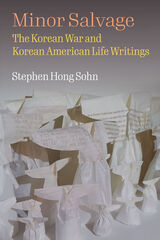
front cover of Minor Salvage
Minor Salvage
The Korean War and Korean American Life Writings
Stephen Hong Sohn
University of Michigan Press, 2022
The Korean War, often invoked in American culture as “the forgotten war,” remains ongoing. Though active fighting only occurred between 1950 and 1953, the signing of an armistice resulted in an infamous stalemate and the construction of the Korean Peninsula’s Demilitarized Zone. Minor Salvage reads early Korean American life writings in order to explore the admittedly partial ways in which those made precarious by war seek to rebuild their lives. The titular phrase “minor salvage,” draws on different valences of the word salvage which, while initially associated with naval recovery efforts, can also be used to describe the rescue of waste material. Spurred by the stories told and retold to him by his parents Soon Ho and Yunpyo, Sohn enacts minor salvage by reading overlooked early Korean American life writings penned by Induk Pahk, Taiwon Koh, Joseph Anthony, and Kim Yong-ik alongside a later generation of life writings authored by Sunny Che and K. Connie Kang. In the context of the Korean War, Sohn argues, life writings take on a crucial political orientation precisely because of the fragility attached to refugees, civilians, children, women, and divided family members. To depict the possibility of life is to acknowledge simultaneously the threat of death, violence, and brutality, and in this regard, such life writings are part of a longer genealogy in which marginalized communities find representational power through the creative process.
[more]

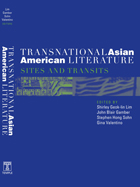
front cover of Transnational Asian American Literature
Transnational Asian American Literature
Sites and Transits
edited by Shirley Geok-lin Lim, John Blair Gamber, Stephen Hong Sohn and Gina Valentino
Temple University Press, 2005
Transnational Asian American Literature: Sites and Transits examines the diasporic and transnational aspects of Asian American literature and asserts the importance of a globalized imaginary in what has been considered an ethnic subgenre of American literature. The thirteen essays in this volume engage works of prose and poetry as aesthetic articulations of the fluid transnational identities formed by Asian American writers who move within and across national boundaries. With its emphasis on the transmigratory and flexible nature of Asian American literary production, the collection argues for an equally balanced mode of criticism that extends our readings of these works beyond the traditional limits of the American literary canon. Individual chapters feature such writers as Chang-rae Lee, Karen Tei Yamashita, Jhumpa Lahiri, Maxine Hong Kingston, and Ha Jin, with attention to such discourses as gender, space and mobility, transnationalism, identity, genre, and post-coloniality.
[more]


Send via email Share on Facebook Share on Twitter