
 A SCHOLARLY BOOK REPOSITORY
18 start with A start with A
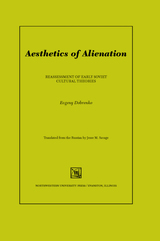
In chapters on Proletkult, RAPP, LEF, and Pereval, Dobrenko reexamines the theories generated by these major Marxist literary groupings of the early Soviet Union. He shows how each approached the problems of literature's response to the presumed social mandate of the young communist society, and how Socialist Realism emerged as a conglomerate of these earlier, revolutionary theories. With extensive and detailed reference to supporting testimony and documents, Dobrenko clearly demonstrates how Socialist Realism was created from within the revolutionary culture, and how this culture and its disciples fully participated in this creative process. His work represents a major breakthrough in our current understanding of the complex sources that contributed to early Soviet culture.

This book is the first companion to the film in any language. It recounts the film’s plot and turbulent production history, and it also offers a close analysis of the artistic vision of its director, Aleksandr Askoldov, and the ways that viewers can trace in the film not only his complex aesthetics, but also the personal crises he endured in the years leading up to the film. The result is an indispensable companion to an unforgettable film.
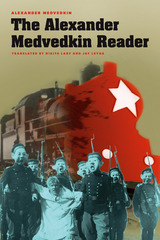
Although he was a dedicated Communist, Medvedkin’s satirical approach and social critiques ultimately led to his suppression by the Soviet regime. State institutions held back or marginalized his work, and for many years, his films were assumed to have been lost or destroyed. These texts, many assembled for this volume by Medvedkin himself, document for the first time his considerable achievements, experiments in film and theater, and attempts to develop satire as a major Soviet film genre. Through scripts, letters, autobiographical writings, and more, we see a Medvedkin supported and admired by figures like Eisenstein, Dovzhenko, and Maxim Gorky.

This expanded edition retains the lectures and essays first published in 1951 as American Diplomacy, 1900-1950 and adds two lectures delivered in 1984 as well as a new preface by the author. In these additional pieces, Kennan explains how some of his ideas have changed over the years. He confronts the events and topics that have come to occupy American opinion in the last thirty years, including the development and significance of the Cold War, the escalation of the nuclear arms race, and the American involvement in Vietnam.
"A book about foreign policy by a man who really knows something about foreign policy."—James Reston,New York Times Book Review
"These celebrated lectures, delivered at the University of Chicago in 1950, were for many years the most widely read account of American diplomacy in the first half of the twentieth century. . . . The second edition of the work contains two lectures from 1984 that reconsider the themes of American Diplomacy"—Foreign Affairs, Significant Books of the Last 75 Years.

For more than sixty years, George F. Kennan’s American Diplomacy has been a standard work on American foreign policy. Drawing on his considerable diplomatic experience and expertise, Kennan offers an overview and critique of the foreign policy of an emerging great power whose claims to rightness often spill over into self-righteousness, whose ambitions conflict with power realities, whose judgmentalism precludes the interests of other states, and whose domestic politics frequently prevent prudent policies and result in overstretch. Keenly aware of the dangers of military intervention and the negative effects of domestic politics on foreign policy, Kennan identifies troubling inconsistencies in the areas between actions and ideals—even when the strategies in question turned out to be decided successes.
In this expanded sixtieth-anniversary edition, a substantial new introduction by John J. Mearsheimer, one of America’s leading political realists, provides new understandings of Kennan’s work and explores its continued resonance. As America grapples with its new role as one power among many—rather than as the “indispensable nation” that sees “further into the future”—Kennan’s perceptive analysis of the past is all the more relevant. Today, as then, the pressing issue of how to wield power with prudence and responsibility remains, and Kennan’s cautions about the cost of hubris are still timely. Refreshingly candid, American Diplomacy cuts to the heart of policy issues that continue to be hotly debated today.
“These celebrated lectures, delivered at the University of Chicago in 1950, were for many years the most widely read account of American diplomacy in the first half of the twentieth century.”—Foreign Affairs, Significant Books of the Last 75 Years
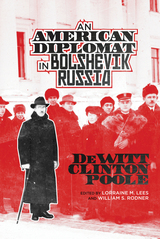
Historians Lorraine M. Lees and William S. Rodner introduce and annotate Poole's recollections, which give a fresh, firsthand perspective on monumental events in world history and reveal the important impact DeWitt Clinton Poole (1885–1952) had on U.S.–Soviet relations. He was active in implementing U.S. policy, negotiating with the Bolshevik authorities, and supervising American intelligence operations that gathered information about conditions throughout Russia, especially monitoring anti-Bolshevik elements and areas of German influence. Departing Moscow in late 1918 via Petrograd, he was assigned to the port of Archangel, then occupied by Allied and American forces, and left Russia in June 1919.
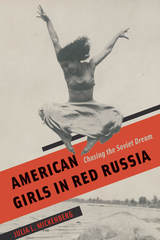
Mickenberg reveals the complex motives that drew American women to Russia as they sought models for a revolutionary new era in which women would be not merely independent of men, but also equal builders of a new society. Soviet women, after all, earned the right to vote in 1917, and they also had abortion rights, property rights, the right to divorce, maternity benefits, and state-supported childcare. Even women from Soviet national minorities—many recently unveiled—became public figures, as African American and Jewish women noted. Yet as Mickenberg’s collective biography shows, Russia turned out to be as much a grim commune as a utopia of freedom, replete with economic, social, and sexual inequities.
American Girls in Red Russia recounts the experiences of women who saved starving children from the Russian famine, worked on rural communes in Siberia, wrote for Moscow or New York newspapers, or performed on Soviet stages. Mickenberg finally tells these forgotten stories, full of hope and grave disappointments.
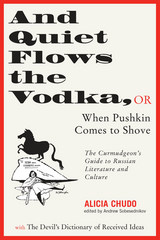
Written in the tradition of 1066 and All That, The Pooh Perplex, and The Classics Redefined, And Quiet Flows the Vodka will, with any luck, be the final word on the ghastly first two millennia of Russian literature, history, and culture.

Bird brings a novel approach to his dissection of Tarkovsky’s wholly original techniques and sensibilities, arranging the films into elemental categories of Water, Fire, Earth, and Air. Solaris, Ivan’s Childhood, Mirror, Nostalgia, Andrei Rublev, and Sacrifice all get their due here; through them, Bird explores how the filmmaker probed the elusive correlation between cinematic representation and a more primeval perception of the world. Though the book also considers Tarkovsky’s work in radio, theatre, and opera—as well as his work as an actor, screenwriter, and film theorist—Bird throughout keeps his focus firmly on Tarkovsky as a consummate filmmaker.
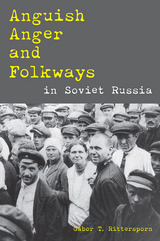
For Rittersporn, citizens’ conscious and unreflected actions at all levels of society defined a distinct Soviet universe. Terror, faith, disillusionment, evasion, folk customs, revolt, and confusion about regime goals and the individual’s relation to them were all integral to the development of that universe and the culture it engendered. Through a meticulous reading of primary documents and materials uncovered in numerous archives located in Russia and Germany, Rittersporn identifies three related responses—anguish, anger, and folkways—to the pressures people in all walks of life encountered, and shows how these responses in turn altered the way the system operated.
Rittersporn finds that the leadership generated widespread anguish by its inability to understand and correct the reasons for the system’s persistent political and economic dysfunctions. Rather than locate the sources of these problems in their own presuppositions and administrative methods, leaders attributed them to omnipresent conspiracy and wrecking, which they tried to extirpate through terror.
He shows how the unrelenting pursuit of enemies exacerbated systemic failures and contributed to administrative breakdowns and social dissatisfaction. Anger resulted as the populace reacted to the notable gap between the promise of a self-governing egalitarian society and the actual experience of daily existence under the heavy hand of the party-state. Those who had interiorized systemic values demanded a return to what they took for the original Bolshevik project, while others sought an outlet for their frustrations in destructive or self-destructive behavior.
In reaction to the system's pressure, citizens instinctively developed strategies of noncompliance and accommodation. A detailed examination of these folkways enables Rittersporn to identify and describe the mechanisms and spaces intuitively created by officials and ordinary citizens to evade the regime's dictates or to find a modus vivendi with them. Citizens and officials alike employed folkways to facilitate work, avoid tasks, advance careers, augment their incomes, display loyalty, enjoy life’s pleasures, and simply to survive. Through his research, Rittersporn uncovers a fascinating world consisting of peasant stratagems and subterfuges, underground financial institutions, falsified Supreme Court documents, and associations devoted to peculiar sexual practices.
As Rittersporn shows, popular and elite responses and tactics deepened the regime’s ineffectiveness and set its modernization project off down unintended paths. Trapped in a web of behavioral patterns and social representations that eluded the understanding of both conservatives and reformers, the Soviet system entered a cycle of self-defeat where leaders and led exercised less and less control over the course of events. In the end, a new system emerged that neither the establishment nor the rest of society could foresee.
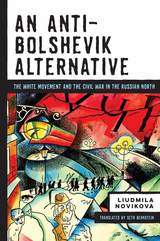
Novikova draws on declassified archives and sources in both Russia and the West to reveal the White movement in the north as a complex social and political phenomenon with a distinct regional context. She documents the politics of the Northern Government and its relations with the British and American forces who had occupied the ports of Murmansk and Arkhangelsk at the end of World War I. As the civil war continued, the increasing involvement of the local population transformed the conflict into a ferocious "people's war" until remaining White forces under General Yevgeny Miller evacuated the region in February 1920.
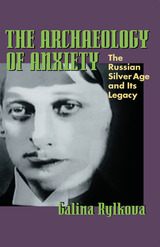
The “Silver Age” (c. 1890-1917) has been one of the most intensely studied topics in Russian literary studies, and for years scholars have been struggling with its precise definition. Firmly established in the Russian cultural psyche, it continues to influence both literature and mass media. The Archaeology of Anxiety is the first extended analysis of why the Silver Age occupies such prominence in Russian collective consciousness.
Galina Rylkova examines the Silver Age as a cultural construct-the byproduct of an anxiety that permeated society in reaction to the social, political, and cultural upheavals brought on by the Bolshevik Revolution, the fall of the Romanovs, the Civil War, and Stalin's Great Terror. Rylkova's astute analysis of writings by Anna Akhmatova, Vladimir Nabokov, Boris Pasternak and Victor Erofeev reveals how the construct of the Silver Age was perpetuated and ingrained.
Rylkova explores not only the Silver Age's importance to Russia's cultural identity but also the sustainability of this phenomenon. In so doing, she positions the Silver Age as an essential element to Russian cultural survival.
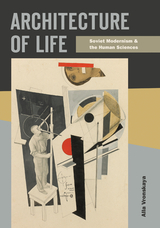
Explores how Soviet architects reimagined the built environment through the principles of the human sciences
During the 1920s and 1930s, proponents of Soviet architecture looked to various principles within the human sciences in their efforts to formulate a methodological and theoretical basis for their modernist project. Architecture of Life delves into the foundations of this transdisciplinary and transnational endeavor, analyzing many facets of their radical approach and situating it within the context of other modernist movements that were developing concurrently across the globe.
Examining the theories advanced by El Lissitzky, Moisei Ginzburg, and Nikolay Ladovsky, as well as those of their lesser-known colleagues, this illuminating study demonstrates how Soviet architects of the interwar period sought to mitigate Fordist production methods with other, ostensibly more human-oriented approaches that drew on the biological and psychological sciences. Envisioning the built environment as innately connected to social evolution, their methods incorporated aspects of psychoanalysis, personality theory, and studies in spatial perception, all of which were integrated into an ideology that grounded functional design firmly within the attributes of the individual.
A comprehensive overview of the ideals that permeated its expanded project, Architecture of Life explicates the underlying impulses that motivated Soviet modernism, highlighting the deep interconnections among the ways in which it viewed all aspects of life, both natural and manufactured.
.

Art of the Baltics is the first major survey of the development of modernist art in Estonia, Lithuania, and Latvia during the post-World War II Soviet period. The contributors discuss and reappraise the art of Baltic artists working in modernist styles. They argue that Estonian, Lithuanian, and Latvian art did not develop in similar ways. Estonia, for example, had closer contact with Scandinavian countries, while Lithuania clearly was part of Central Europe, and was more influenced by Poland.
This book contains nearly three hundred illustrations—many in color—that serve to visually compare the art of the three Baltic countries. It also has three useful historical timelines that contextualize the art presented. In addition to historical overviews of each country, Art of theBaltics contains essays on the art of the region, written by both Baltic and American scholars. The articles extensively cover the Baltic art of the 1960s through the 1980s, which reflect the Zimmerli Art Museum’s holdings of the Norton and Nancy Dodge Collection of Nonconformist Art from the Soviet Union. To round out the scope of this work, contributors also discuss the pre-Soviet art of the region, as well as the recent creative developments that resulted from these small countries gaining independence in 1991.

The first account of the August Trials, in which postwar Poland confronted the betrayal of Jewish citizens under Nazi rule but ended up fashioning an alibi for the past.
When six years of ferocious resistance to Nazi occupation came to an end in 1945, a devastated Poland could agree with its new Soviet rulers on little else beyond the need to punish German war criminals and their collaborators. Determined to root out the “many Cains among us,” as a Poznań newspaper editorial put it, Poland’s judicial reckoning spawned 32,000 trials and spanned more than a decade before being largely forgotten.
Andrew Kornbluth reconstructs the story of the August Trials, long dismissed as a Stalinist travesty, and discovers that they were in fact a scrupulous search for the truth. But as the process of retribution began to unearth evidence of enthusiastic local participation in the Holocaust, the hated government, traumatized populace, and fiercely independent judiciary all struggled to salvage a purely heroic vision of the past that could unify a nation recovering from massive upheaval. The trials became the crucible in which the Communist state and an unyielding society forged a foundational myth of modern Poland but left a lasting open wound in Polish-Jewish relations.
The August Trials draws striking parallels with incomplete postwar reckonings on both sides of the Iron Curtain, suggesting the extent to which ethnic cleansing and its abortive judicial accounting are part of a common European heritage. From Paris and The Hague to Warsaw and Kyiv, the law was made to serve many different purposes, even as it failed to secure the goal with which it is most closely associated: justice.
The remarkable story of seven contemporary Russian-language poets whose experimental work anchors a thriving dissident artistic movement opposed to both Putin’s regime and Western liberalism.
What does leftist art look like in the wake of state socialism? In recent years, Russian-language avant-garde poetry has been seeking the answers to this question. Marijeta Bozovic follows a constellation of poets at the center of a contemporary literary movement that is bringing radical art out of the Soviet shadow: Kirill Medvedev, Pavel Arseniev, Aleksandr Skidan, Dmitry Golynko, Roman Osminkin, Keti Chukhrov, and Galina Rymbu. While their formal experiments range widely, all share a commitment to explicitly political poetry. Each one, in turn, has become a hub in a growing new-left network across the former Second World.
Joined together by their work with the Saint Petersburg–based journal [Translit], this circle has staunchly resisted the Putin regime and its mobilization of Soviet nostalgia. At the same time, the poets of Avant-Garde Post– reject Western discourse about the false promises of leftist utopianism and the superiority of the liberal world. In opposing both narratives, they draw on the legacies of historical Russian and Soviet avant-gardes as well as on an international canon of Marxist art and theory. They are also intimately connected with other artists, intellectuals, and activists around the world, collectively restoring leftist political poetry to global prominence.
The avant-garde, Bozovic shows, is not a relic of the Soviet past. It is a recurrent pulse in Russophone—as well as global—literature and art. Charged by that pulse, today’s new left is reimagining class-based critique. Theirs is an ongoing, defiant effort to imagine a socialist future that is at once global and egalitarian.
READERS
Browse our collection.
PUBLISHERS
See BiblioVault's publisher services.
STUDENT SERVICES
Files for college accessibility offices.
RECENTLY PUBLISHED




UChicago Accessibility Resources
home | accessibility | search | about | contact us
BiblioVault ® 2001 - 2024
The University of Chicago Press