
 A SCHOLARLY BOOK REPOSITORY
Ethics and morality are generally viewed as critical areas in contemporary sport and need not be limited to such topics as sportsmanship, the use of performance-enhancing drugs, violence and cheating. Those in sport management are responsible for addressing ethical and moral questions pertaining to professionalism, equity, legal and financial management, personnel concerns, governance and policies, league and franchise issues, and matters of social justice associated with all aspects of sport. Sport managers must also be aware of and approach these queries logically, rationally and with sensitivity to ensure the integrity of sport, the sport community and society at large.
Ethics & Morality in Sport Management, 4th edition, presents concepts and theories in ethics and morality and demonstrates their applicability in sport management. While addressed primarily to undergraduate and graduate students interested in the organization and administration of sport, this text is also a practical guide and reference for professionals already in the field, as well as athletes, coaches, franchise owners, journalists, spectators, governmental agencies and others associated with sport. Sport managers must be aware of and concerned about their own obligations, rights and responsibilities, as well as those they influence. As such, nothing short of sound ethical and moral reasoning must inform their managerial decisions and actions. This text aims to make clear the nature of ethics and morality, introducing readers to several major ethical theories, and discussing and analyzing the practical ramifications of these precepts in several sport management contexts.
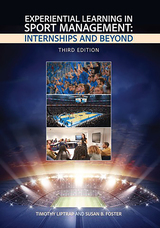
Experiential learning is the cornerstone for success for careers in sport management. Experiential Learning in Sport Management: Internships and Beyond, 3rd edition, guides students through specific segments of sport such as professional, college, recreation, and much more. The text assists students in developing a career plan and strategies for learning solid soft skills, as well as interviewing and resume writing strategies. Participating in experiential learning via a class, volunteering, planned apprenticeships, internships, graduate assistantships, and summer jobs helps students qualify for a strong career in sport.
Experiential Learning in Sport Management: Internships and Beyond, 3rd edition, builds upon the framework designed in the first two editions but includes additional content such as AI, eSport, international sport, and cooperative education. Introductory comments and fresh Time-Out Interviews from industry experts, many of whom have degrees in sport management/business, provide students with first-hand knowledge on possible paths into their field of choice. The book can be used as the main text for an introduction to sport management class and can be used throughout the academic career as a guiding text in any experiential learning class, and senior seminars that prepare students for a culminating internship. Graduate students without an undergraduate degree can benefit from this text as can doctoral students preparing for a teaching career in sport management.

In the multi-billion dollar sport industry that captures the interest of a global audience, opportunities abound on the front lines and behind the scenes for those who have the education, skill, and drive to succeed. Often the biggest hurdles for those who want to work in the sport industry is breaking through with an initial opportunity. Experiential Learning in Sport Management: Internships and Beyond, 2nd Edition, presents aspiring sport practitioners with a wealth of information about the industry and provides professors within sport management programs a framework for how to lead students through the experiential learning experience.
Authors Susan Brown Foster and John E. Dollar draw from more than 50 years of combined experience in teaching, research, and internship supervision in writing a comprehensive yet concise manual for students preparing for a career in sport. This new edition includes enhanced content on trending topics such as social media and eSports.

Foundations of Sport Management, 4th edition, features content from a comprehensive collection of leading sport management scholars and industry professionals who bring a fresh perspective to the introductory study of sport management. The text provides the fundamental theories and principles of the discipline in a practical and user-friendly format, as well as an abundance of real-world examples in the sport industry. The fifteen chapters thoroughly examine strategies for sport leadership, sport facility management, event management and tourism, sponsorship, analytics, law, governance, ethics, globalization, and other vital topics in the field of sport management. Foundations of Sport Management is essential reading for entry-level sport management students pursuing this field of study and a career in the sport industry.
With an updated and expanded look at the skills and knowledge needed to succeed in the sport industry, the third edition of Foundations of Sport Management will maintain its previous editions stance as one of the most widely adopted sport management foundational texts on the market. Editors Andy Gillentine and R. Brian Crow, along with a team of leading authors, aim to provide readers with a dynamic and comprehensive overview of the core concepts and current trends of the industry. Their years of experience as elite academicians and practitioners make this volume a cutting-edge resource for undergraduates considering or pursuing careers in sport management. Topics covered in this edition include economics and finance, marketing, sponsorship and sales, facility and event management, media relations, governance, and ethics.
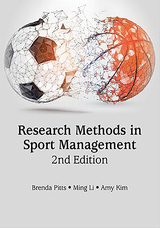
Research—the systematic investigation of materials and sources to establish facts and reach new conclusions—is carried out for a variety of purposes and to achieve a variety of goals. For sport business industry, research is critical for developing strategies to effectively understand and manage the franchise, property, or facility.
This second edition of Research Methods in Sport Management provides a detailed introduction into the research itself, and applies those methods directly to the field of sport business management. With established reputations as expert researchers in the field, the authors have reorganized foundational concepts and updated methods and industry examples to provide students, instructors and professionals with a knowledge base and resources to prepare, collect, analyze and present targeted research for scholarly publication or to better interpret and respond to the needs of an array of areas in the sport management industry.
READERS
Browse our collection.
PUBLISHERS
See BiblioVault's publisher services.
STUDENT SERVICES
Files for college accessibility offices.
RECENTLY PUBLISHED







UChicago Accessibility Resources
home | accessibility | search | about | contact us
BiblioVault ® 2001 - 2026
The University of Chicago Press