
 A SCHOLARLY BOOK REPOSITORY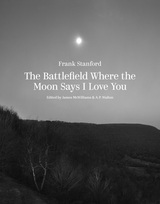
Frank Stanford’s The Battlefield Where the Moon Says I Love You is a truly original Southern epic with immense cultural and creative range. Revered by a devoted cult following since it was first published posthumously in 1978, the poem unfolds over more than fifteen thousand lines without stanza breaks or punctuation, creating an unstoppable linguistic flow that mirrors the chaos and beauty it depicts. In this third edition, meticulously edited by James McWilliams and A. P. Walton, Stanford’s sprawling vision is revived not as a lost relic but as a towering work fiercely alive in its ethical and aesthetic extremes.
Beginning with poetry composed in his teens, Stanford worked feverishly in his early twenties to transform and expand fragments into this colossal, labyrinthine poem that captures the terrains of Tennessee, Mississippi, and Arkansas circa 1960. A few years later, he helped prepare the poem for its initial publication before ending his brief life at twenty-nine. The Battlefield blends vernacular speech and dream logic, creating a mythic landscape inhabited by Francis, the epic’s twelve-year-old hero—orphan, seer, street hustler—who navigates racial injustice, cinematic visions, and historical collisions with unflinching poetic force, wandering through myth and memory and armed with a bard’s ear and a trickster’s tongue.
A one-of-a-kind outlaw epic, The Battlefield has hidden in the literary shadows for half a century as a mystical artifact. Now, in this first scholarly edition, Stanford’s visionary masterpiece returns, fortified by the editorial precision and contextual care it deserves.
"The full-throated biography fans have been yearning for.”
—Kirkus Starred Review, April 2025
"McWilliams does a remarkable job connecting Stanford’s poetry with his personal life, particularly his lifelong friendship with Irv Broughton, owner of a small press and Stanford’s first publisher; his penchant for love triangles; and how his need for connection fueled his poetry. The end of Stanford’s life, which saw him cohabiting with two women in different towns and running an independent press before his death by suicide at age 29, is rendered here in spellbinding detail. It’s a page-turner."
—Publishers Weekly Starred Review, July 2025
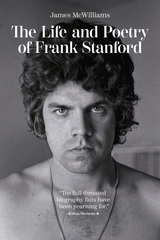
When twenty-nine-year-old Frank Stanford put three bullets in his chest on June 3, 1978, he ended a life that had been inextricably linked with poetry since childhood. Deeply influential but largely unknown outside his corner of the poetry world, this prodigy of the American South inspired a cult following that has kept his reputation and work flickering on the periphery of the American literary tradition ever since.
The Life and Poetry of Frank Stanford offers for the first time a comprehensive study of Stanford’s life and work, introducing to a broad readership poetry that remains both captivating to poets and, in its celebration of everyday experience over academic erudition, accessible to those who rarely read poetry.
Stanford’s poems range from one line to his 15,283-line epic, The Battlefield Where the Moon Says I Love You. The vital thread running through all of his poetry is an ear for language that vies with Walt Whitman in its expansiveness and generosity. Stanford’s omnivorous attraction to vernacular, particularly Black and rural vernacular, centered on an admiration for the marginalized and eccentric. Blending the Southern Gothic of Faulkner and O’Connor with a racially egalitarian vision, his poetry thrives on the stories and traditions of the oppressed and forgotten.
The themes that preoccupied Stanford’s prolific output—language, sex, death, class, geography, commercialism, surrealism, film, race—also preoccupied the poet in his daily life, which was marked by heavy drinking, philandering, mental instability, emotional abuse, and, through it all, an inveterate desire for beauty. Constantly attentive to this tension, biographer James McWilliams traces the short and painfully complicated life of this hidden talent who left a lifetime’s worth of poetry that, through its grounding in the mundane, achieved a vision of the transcendent.
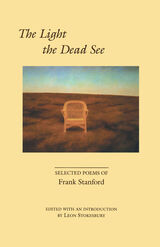
Between 1972, when he published his first book, The Signing Knives, and 1978, when he died at the age of twenty-nine, Frank Stanford published seven volumes of poetry. Within a year of his death, two posthumous collections were published. At the time of this death, as Leon Stokesbury asserts in his introduction, “Stanford was the best poet in America under the age of thirty-five.”
The Light the Dead See collects the best work from those nine volumes and six previously unpublished poems. In the earlier poems, Stanford creates a world where he could keep childhood alive, deny time and mutability, and place a version of himself at the center of great myth and drama.
Later, the denial of time and mutability gives way to an obsessive and familiar confrontation with death. Although Stanford paid an enormous price for his growing familiarity with Death as a presence, the direct address to that presence is a source of much of the striking originality and stunning power in the poetry.
READERS
Browse our collection.
PUBLISHERS
See BiblioVault's publisher services.
STUDENT SERVICES
Files for college accessibility offices.
RECENTLY PUBLISHED



UChicago Accessibility Resources
home | accessibility | search | about | contact us
BiblioVault ® 2001 - 2026
The University of Chicago Press