
 A SCHOLARLY BOOK REPOSITORY
Results by Title
3 books about Sweeney, Megan
3 books about Sweeney, Megan
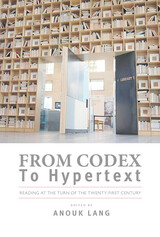
From Codex to Hypertext
Reading at the Turn of the Twenty-first Century
Anouk Lang
University of Massachusetts Press, 2012
The start of the twenty-first century has brought with it a rich variety of ways in which readers can connect with one another, access texts, and make sense of what they are reading. At the same time, new technologies have also opened up exciting possibilities for scholars of reading and reception in offering them unprecedented amounts of data on reading practices, book buying patterns, and book collecting habits.
In From Codex to Hypertext, scholars from multiple disciplines engage with both of these strands. This volume includes essays that consider how changes such as the mounting ubiquity of digital technology and the globalization of structures of publication and book distribution are shaping the way readers participate in the encoding and decoding of textual meaning. Contributors also examine how and why reading communities cohere in a range of contexts, including prisons, book clubs, networks of zinesters, state-funded programs designed to promote active citizenship, and online spaces devoted to sharing one's tastes in books.
As concerns circulate in the media about the ways that reading—for so long anchored in print culture and the codex—is at risk of being irrevocably altered by technological shifts, this book insists on the importance of tracing the historical continuities that emerge between these reading practices and those of previous eras.
In addition to the volume editor, contributors include Daniel Allington, Bethan Benwell, Jin Feng, Ed Finn, Danielle Fuller, David S. Miall, Julian Pinder, Janice Radway, Julie Rak, DeNel Rehberg Sedo, Megan Sweeney, Joan Bessman Taylor, Molly Abel Travis, and David Wright.
In From Codex to Hypertext, scholars from multiple disciplines engage with both of these strands. This volume includes essays that consider how changes such as the mounting ubiquity of digital technology and the globalization of structures of publication and book distribution are shaping the way readers participate in the encoding and decoding of textual meaning. Contributors also examine how and why reading communities cohere in a range of contexts, including prisons, book clubs, networks of zinesters, state-funded programs designed to promote active citizenship, and online spaces devoted to sharing one's tastes in books.
As concerns circulate in the media about the ways that reading—for so long anchored in print culture and the codex—is at risk of being irrevocably altered by technological shifts, this book insists on the importance of tracing the historical continuities that emerge between these reading practices and those of previous eras.
In addition to the volume editor, contributors include Daniel Allington, Bethan Benwell, Jin Feng, Ed Finn, Danielle Fuller, David S. Miall, Julian Pinder, Janice Radway, Julie Rak, DeNel Rehberg Sedo, Megan Sweeney, Joan Bessman Taylor, Molly Abel Travis, and David Wright.
[more]
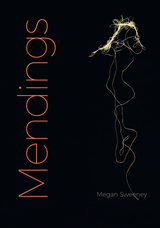
Mendings
Megan Sweeney
Duke University Press, 2023
Mendings tells an intimate story about family, selfhood, and the love and loss lodged in garments. In this narrative about making meaning of brokenness and grief, Megan Sweeney reflects on her childhood entanglement with her mother, her loss-filled relationship with her alcoholic father, and her attachment to the clothes that have mended her as she has mended them. Sweeney explores how clothing fosters communication and enables us to cultivate relationships with ourselves and with others, both living and deceased. In dialogue with other clothing lovers, writers, fiber artists, evolutionary biologists, historians, and environmentalists, Sweeney also foregrounds the entwinement of clothing, race, and gender as she considers the ethics and environmental effects of clothing consumption, the history of clothing in the US prison system, and the roles that textiles play as sources of creativity, artistry, and self-fashioning, even within conditions of constraint. For Sweeney, the act of mending is a way of living. Unlike fixing, which leaves no trace of damage or loss, mending allows Sweeney to embrace holes, rips, and threadbare patches as part of her life’s design.
[more]
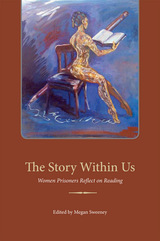
The Story Within Us
Women Prisoners Reflect on Reading
Edited by Megan Sweeney
University of Illinois Press, 2012
This volume features in-depth, oral interviews with eleven incarcerated women, each of whom offers a narrative of her life and her reading experiences within prison walls. The women share powerful stories about their complex and diverse efforts to negotiate difficult relationships, exercise agency in restrictive circumstances, and find meaning and beauty in the midst of pain. Their shared emphases on abuse, poverty, addiction, and mental illness illuminate the pathways that lead many women to prison and suggest possibilities for addressing the profound social problems that fuel crime.
Framing the narratives within an analytic introduction and reflective afterword, Megan Sweeney highlights the crucial intellectual work that the incarcerated women perform despite myriad restrictions on reading and education in U.S. prisons. These women use the limited reading materials available to them as sources of guidance and support and as tools for self-reflection and self-education. Through their creative engagements with books, the women learn to reframe their own life stories, situate their experiences in relation to broader social patterns, deepen their understanding of others, experiment with new ways of being, and maintain a sense of connection with their fellow citizens on both sides of the prison fence.
Framing the narratives within an analytic introduction and reflective afterword, Megan Sweeney highlights the crucial intellectual work that the incarcerated women perform despite myriad restrictions on reading and education in U.S. prisons. These women use the limited reading materials available to them as sources of guidance and support and as tools for self-reflection and self-education. Through their creative engagements with books, the women learn to reframe their own life stories, situate their experiences in relation to broader social patterns, deepen their understanding of others, experiment with new ways of being, and maintain a sense of connection with their fellow citizens on both sides of the prison fence.
[more]
READERS
Browse our collection.
PUBLISHERS
See BiblioVault's publisher services.
STUDENT SERVICES
Files for college accessibility offices.
RECENTLY PUBLISHED






UChicago Accessibility Resources
home | accessibility | search | about | contact us
BiblioVault ® 2001 - 2026
The University of Chicago Press