
 A SCHOLARLY BOOK REPOSITORY
Energy plays a critical role in determining the shape, form and character of our daily existence, which is why a genuine shift in our energy usage demands a wholesale transformation of the petrocultures in which we live. After Oil provides readers with the resources to make this happen.

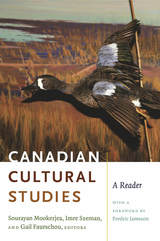
Including essays by anglophone, francophone, and First Nations writers, the reader is divided into three parts, the first of which features essays by scholars who helped set the agenda for cultural and social analysis in Canada and remain important to contemporary intellectual formations: Harold Innis, Marshall McLuhan, and Anthony Wilden in communications theory; Northrop Frye in literary studies; George Grant and Harold Innis in a left-nationalist tradition of critical political economy; Fernand Dumont and Paul-Émile Borduas in Quebecois national and political culture; and Harold Cardinal in native studies.
The volume’s second section showcases work in which contemporary authors address Canada’s problematic and incomplete nationalism; race, difference, and multiculturalism; and modernity and contemporary culture. The final section includes excerpts from federal policy documents that are especially important to Canadians’ conceptions of their social, political, and cultural circumstances. The reader opens with a foreword by Fredric Jameson and concludes with an afterword in which the Quebecois scholar Yves Laberge explores the differences between English-Canadian cultural studies and the prevailing forms of cultural analysis in francophone Canada.
Contributors. Ian Angus, Himani Bannerji, Jody Berland, Paul-Émile Borduas, Harold Cardinal, Maurice Charland, Stephen Crocker, Ioan Davies, Fernand Dumont, Kristina Fagan, Gail Faurschou, Len Findlay, Northrop Frye, George Grant, Rick Gruneau, Harold Innis, Fredric Jameson, Yves Laberge, Jocelyn Létourneau, Eva Mackey, Lee Maracle, Marshall McLuhan, Katharyne Mitchell, Sourayan Mookerjea, Kevin Pask, Rob Shields, Will Straw, Imre Szeman, Serra Tinic, David Whitson, Tony Wilden
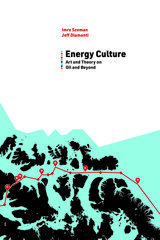
Energy Culture is a provocative book about oil’s firm grip on our politics and everyday lives. It brings together essays and artwork produced in a collaborative environment to stimulate new ways of thinking and to achieve a more just and sustainable world.
The original work collected in Energy Culture creatively engages energy as a social form through lively arguments and artistic research organized around three vectors of inquiry. The first maps how fossil fuels became, and continue to be, embedded in North American society, from the ideology of tar sands reclamation projects to dreams of fiber optic cables running through the Northwest Passage. The second comprises creative and artistic responses to the dominance of fossil fuels in everyday life and to the challenge of realizing new energy cultures. The final section addresses the conceptual and political challenges posed by energy transition and calls into question established views on energy. Its contributions caution against solar capitalism, explore the politics of sabotage, and imagine an energy efficient transportation system called “the switch.” Imbued with a sense of urgency and hope, Energy Culture exposes the deep imbrications of energy and culture while pointing provocatively to ways of thinking and living otherwise.

Who will lead the transition from fossil fuel–dependent societies into renewable energy futures?
Energy transition is crucial to the struggle against climate change. But even while embracing the death of fossil fuels, some want to preserve the current social and political order. Futures of the Sun explores the competing eco-stories being offered by people intent on shaping the transition to fit their vision and version of a renewable society. Imre Szeman explains how and why key players are working hard to make sure a greener, cleaner future will look much like the world we live in today. He examines the rhetoric, ideology, and politics of liberal nationalists intent on fighting a war against climate change, billionaire solar entrepreneurs who believe only in themselves, and the populist far right who want no change at all.
Offering possible new critical and political avenues, Szeman reveals how those on the environmental left can ensure their vision of egalitarianism beyond the status quo can become the reality of our renewable future.
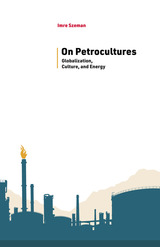
On Petrocultures brings together key essays by Imre Szeman, a leading scholar in the field of energy humanities and a critical voice in debates about globalization and neoliberalism. Szeman’s most important and influential essays, in dialogue with exciting new pieces written for the book, investigate ever-evolving circuits of power in the contemporary world, as manifested in struggles over space and belonging, redefinitions of work and individual autonomy, and the deep links between energy use and climate change.
These essays explore life lived in the twenty-first century by examining critically the vocabulary through which capitalism makes sense of itself, focusing on concepts like the nation, globalization, neoliberalism, creativity, and entrepreneurship. At the heart of the volume is the concept of “petrocultures,” which demands that we understand a fundamental fact of modern life: we are shaped by and through fossil fuels. Szeman argues that we cannot take steps to address global warming without fundamentally changing the social, cultural, and political norms and expectations developed in conjunction with the energy riches of the past century. On Petrocultures maps the significant challenge of our dependence on fossil fuels and probes ways we might begin to leave petrocultures behind.

Featuring brief essays on 101 key terms by scholars, artists, and activists from around the world and across disciplines, Power Shift offers an expansive, kaleidoscopic guide to the history of petromodernity, recent technological and social developments, and pathways to new energy futures. The book offers new insights into the emergent politics of energy, contrasting today’s environmental and climate movements with the geopolitical contests of the Cold War era. It explores the still unfolding story of energy transition by focusing on the ongoing struggles of communities and individuals against decisions made by corporations, governments, and international organizations.
READERS
Browse our collection.
PUBLISHERS
See BiblioVault's publisher services.
STUDENT SERVICES
Files for college accessibility offices.
RECENTLY PUBLISHED





UChicago Accessibility Resources
home | accessibility | search | about | contact us
BiblioVault ® 2001 - 2026
The University of Chicago Press