
 A SCHOLARLY BOOK REPOSITORY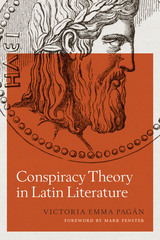
Conspiracy theory as a theoretical framework has emerged only in the last twenty years; commentators are finding it a productive way to explain the actions and thoughts of individuals and societies. In this compelling exploration of Latin literature, Pagán uses conspiracy theory to illuminate the ways that elite Romans invoked conspiracy as they navigated the hierarchies, divisions, and inequalities in their society. By seeming to uncover conspiracy everywhere, Romans could find the need to crush slave revolts, punish rivals with death or exile, dismiss women, denigrate foreigners, or view their emperors with deep suspicion. Expanding on her earlier Conspiracy Narratives in Roman History, Pagán here interprets the works of poets, satirists, historians, and orators—Juvenal, Tacitus, Suetonius, Terence, and Cicero, among others—to reveal how each writer gave voice to fictional or real actors who were engaged in intrigue and motivated by a calculating worldview.
Delving into multiple genres, Pagán offers a powerful critique of how conspiracy and conspiracy theory can take hold and thrive when rumor, fear, and secrecy become routine methods of interpreting (and often distorting) past and current events. In Roman society, where knowledge about others was often lacking and stereotypes dominated, conspiracy theory explained how the world worked. The persistence of conspiracy theory, from antiquity to the present day, attests to its potency as a mechanism for confronting the frailties of the human condition.
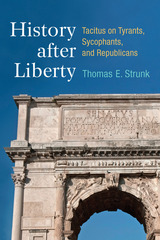
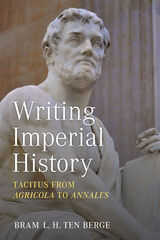
History after Liberty explores Tacitus’ political thought through his understanding of liberty. Influenced by modern republican writers such as Quentin Skinner and Philip Pettit, this study defines Tacitean libertas as the freedom from the rule of a dominus and as freedom to participate in the traditional politics of Rome through military service, public service in the senate and magistracies, and public speech. All of these elements are balanced in Tacitus’ writings with examples of those resisting the corruption of politics in an effort to restore a sense of free civic engagement. The work concludes with an exploration of Tacitus’ own writings as an act of restoring liberty. In contrast to most studies on Tacitus, History after Liberty argues that Tacitus is a republican who writes both to demonstrate that Rome had become a tyranny and to show a way out of that tyranny.
History after Liberty addresses the political thought of Tacitus’ writings. As such it will be of most interest to those who study the history and historiography of the early Roman empire, namely classicists and ancient historians. The work will also be of use to those interested in the antecedents to modern political thought, particularly the history of republicanism and freedom; readers from this category will include political scientists, philosophers, and modern historians.
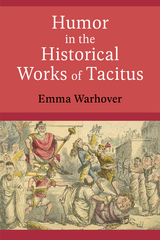
In serious texts like Tacitus’ historical works, humor can expose hypocrisy in the powerful, demonstrate the absurdity of imperial pronouncements, and simultaneously communicate why such offenses were allowed to stand. Warhover argues that major elements of Tacitus’ distinctive style, such as variatio, appendix sentences, and sententiae, create humor, and that Tacitus used humor deliberately to emphasize the incongruities that emerged from the principate. By employing humor, Tacitus followed Roman rhetorical traditions evident in Cicero and Quintilian, who agree that humor is an important tool for criticism. For Tacitus, humor is therefore not an amusement or decoration, but an integral part of his historiographic construction.
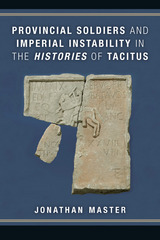
Master draws on scholarship in political theory, Latin historiography, Roman history, and ethnic identity to demonstrate how Tacitus presented to his contemporary audience in Trajanic Rome the dangerous consequences of the city’s failure to reward and incorporate its provincial subjects. Master argues that Tacitus’ presentation of the Vitellian and Flavian armies, and especially the Batavian auxiliary soldiers, reflects a central lesson of the Histories: the Empire’s exploitation of provincial manpower (increasingly the majority of all soldiers under Roman banners) while offering little in return, set the stage for civil wars and ultimately the separatist Batavian revolt.
READERS
Browse our collection.
PUBLISHERS
See BiblioVault's publisher services.
STUDENT SERVICES
Files for college accessibility offices.
RECENTLY PUBLISHED


UChicago Accessibility Resources
home | accessibility | search | about | contact us
BiblioVault ® 2001 - 2025
The University of Chicago Press