
 A SCHOLARLY BOOK REPOSITORY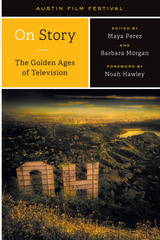
“On Story is film school in a box, a lifetime’s worth of filmmaking knowledge squeezed into half-hour packages.”
—Kenneth Turan, film critic for the Los Angeles Times
Austin Film Festival (AFF) is the first organization to focus on writers’ creative contributions to film and television. Its annual Film Festival and Conference offers screenings, panels, workshops, and roundtable discussions that help new writers and filmmakers connect with mentors and gain advice and insight from masters, as well as reinvigorate veterans with new ideas. To extend the Festival’s reach, AFF produces On Story, a television series currently airing on PBS-affiliated stations and streaming online that presents high-caliber artists talking candidly and provocatively about the art and craft of screenwriting and filmmaking, often using examples from their own work.
On Story—The Golden Ages of Television explores the transformation of television’s narrative content over the past several decades through interviews with some of TV’s best creators and writers, including Garry Shandling (The Larry Sanders Show), Carl Reiner (The Dick Van Dyke Show), Issa Rae (Insecure), Vince Gilligan (Breaking Bad), Greg Daniels (The Office), Paula Pell (Saturday Night Live), Noah Hawley (Fargo), Liz Meriwether (New Girl), David Chase (The Sopranos), Alan Yang (Master of None), Marta Kauffman (Friends), Jenji Kohan (Orange Is the New Black), and many more. Their insights, behind-the-scenes looks at the creative process, production tales, responses to audiences’ reactions, and observations on how both TV narratives and the industry have changed make this book ideal for TV lovers, pop culture fans, students taking screenwriting courses, and filmmakers and writers seeking information and inspiration.
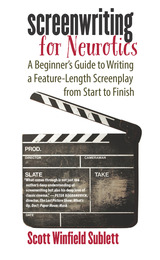
Rather than throwing you into the writing process headfirst, Sublett guides you through the various decisions you need to make—about plot, character, structure, conflict—in the order you need to make them. He explains in straightforward terms the terminology and jargon, the theory and industry standards, and dispels common myths about screenwriting that can discourage or hold back a beginning writer.
Balancing theory and practice and offering valuable and insightful examples from recognizable and well-known classic and contemporary films, ranging from Casablanca to A Christmas Story to Clerks, Sublett provides the new writer with the necessary tools to successfully write a feature-length screenplay and offers a roadmap of where to go next. With an emphasis on helping a writer not just to begin, but also to finish a script, Screenwriting for Neurotics is the screenwriting book to help you actually write one.
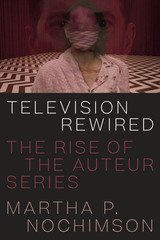
In 1990, American television experienced a seismic shift when Twin Peaks premiered, eschewing formulaic plots and clear lines between heroes and villains. This game-changing series inspired a generation of show creators to experiment artistically, transforming the small screen in ways that endure to this day.
Focusing on six shows (Twin Peaks, with a critical analysis of both the original series and the 2017 return; The Wire; Treme; The Sopranos; Mad Men; and Girls), Television Rewired explores what made these programs so extraordinary. As their writers and producers fought against canned plots and moral simplicity, they participated in the evolution of the exhilarating new auteur television while underscoring the fact that art and entertainment don't have to be mutually exclusive. Nochimson also makes provocative distinctions between true auteur television and shows that were inspired by the freedom of the auteur series but nonetheless remained entrenched within the parameters of formula. Providing opportunities for vigorous discussion, Television Rewired will stimulate debates about which of the new television series since 1990 constitute “art” and which are tweaked “business-driven storytelling.”
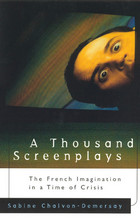
The time of crisis presented by the amateur writers was not one of war, famine, or disease—it was the millennial dilemma of representation. In a world plagued by alienation, individualization, and a lack of mobility, how can members of a society combat their declining senses of self?
Although the contestants wrote about life in France, their concerns and struggles have a distinctly universal ring. A lucid, witty writer, Chalvon-Demersay offers a clear, if still developing, photograph of the contemporary imagination.
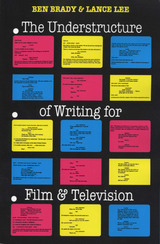
This unique, comprehensive introduction to screenwriting offers practical advice for the beginning writer, whether college student or freelancer. Based on their experience as professional writers and as teachers in a large, successful screenwriting program at California State University, Northridge, the authors provide a progression of assignments at manageable screenwriting lengths for beginners. They lead students through development of a premise, treatment, stepsheet, and, finally, miniscreenplay—essential elements in writing a longer script.
A major feature of the text is the use of many example scenes from contemporary and classic American films, such as On the Waterfront, Kramer vs. Kramer, The Godfather, The Graduate, Tootsie, and more. Other scenes are drawn from international films and dramatic literature. The criticism of these scenes invites students to develop their own comparative models, while simultaneously providing exposure to the central analytical terms of good dramatic writing.
The authors also place screenwriting within the larger tradition of dramatic writing in order to put the beginning writer in touch with the wealth of art, experience, and practical ideas the drama contains. They provide an up-to-date, practical discussion of marketing and copywriting a screenplay, with addresses of relevant professional societies. Most importantly, they never offer an ill-advised shortcut or restrict students to only one way of thinking about a character, situation, or scene. In The Understructure of Writing for Film & Television, the student's thought and creativity are central.
READERS
Browse our collection.
PUBLISHERS
See BiblioVault's publisher services.
STUDENT SERVICES
Files for college accessibility offices.
RECENTLY PUBLISHED



UChicago Accessibility Resources
home | accessibility | search | about | contact us
BiblioVault ® 2001 - 2026
The University of Chicago Press