
 A SCHOLARLY BOOK REPOSITORY
Results by Title
3 books about Thomas, Lorenzo
3 books about Thomas, Lorenzo
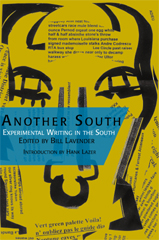
Another South
Experimental Writing in the South
Edited by Bill Lavender, with an introduction by Hank Lazer
University of Alabama Press, 2002
Gathers the best work of flourishing but often-neglected avant-garde southern poets
Another South is an anthology of poetry from contemporary southern writers who are working in forms that are radical, innovative, and visionary. Highly experimental and challenging in nature, the poetry in this volume, with its syntactical disjunctions, formal revolutions, and typographic playfulness, represents the direction of a new breed of southern writing that is at once universal in its appeal and regional in its flavor.
Focusing on poets currently residing in the South, the anthology includes both emerging and established voices in the national and international literary world. From the invocations of Andy Young’s “Vodou Headwashing Ceremony” to the blues-informed poems of Lorenzo Thomas and Honorée Jeffers, from the different voicings of John Lowther and Kalamu ya Salaam to the visual, multi-genre art of Jake Berry, David Thomas Roberts, and Bob Grumman, the poetry in Another South is rich in variety and enthusiastic in its explorations of new ways to embody place and time. These writers have made the South lush with a poetic avant-garde all its own, not only redefining southern identity and voice but also offering new models of what is possible universally through the medium of poetry.
Hank Lazer’s introductory essay about “Kudzu textuality” contextualizes the work by these contemporary innovators. Like the uncontrollable runaway vine that entwines the southern landscape, their poems are hyperfertile, stretching their roots and shoots relentlessly, at once destructive and regenerative. In making a radical departure from nostalgic southern literary voices, these poems of polyvocal abundance are closer in spirit to "speaking in tongues" or apocalyptic southern folk art—primitive, astonishing, and mystic.
Another South is an anthology of poetry from contemporary southern writers who are working in forms that are radical, innovative, and visionary. Highly experimental and challenging in nature, the poetry in this volume, with its syntactical disjunctions, formal revolutions, and typographic playfulness, represents the direction of a new breed of southern writing that is at once universal in its appeal and regional in its flavor.
Focusing on poets currently residing in the South, the anthology includes both emerging and established voices in the national and international literary world. From the invocations of Andy Young’s “Vodou Headwashing Ceremony” to the blues-informed poems of Lorenzo Thomas and Honorée Jeffers, from the different voicings of John Lowther and Kalamu ya Salaam to the visual, multi-genre art of Jake Berry, David Thomas Roberts, and Bob Grumman, the poetry in Another South is rich in variety and enthusiastic in its explorations of new ways to embody place and time. These writers have made the South lush with a poetic avant-garde all its own, not only redefining southern identity and voice but also offering new models of what is possible universally through the medium of poetry.
Hank Lazer’s introductory essay about “Kudzu textuality” contextualizes the work by these contemporary innovators. Like the uncontrollable runaway vine that entwines the southern landscape, their poems are hyperfertile, stretching their roots and shoots relentlessly, at once destructive and regenerative. In making a radical departure from nostalgic southern literary voices, these poems of polyvocal abundance are closer in spirit to "speaking in tongues" or apocalyptic southern folk art—primitive, astonishing, and mystic.
[more]
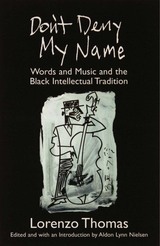
Don't Deny My Name
Words and Music and the Black Intellectual Tradition
Lorenzo Thomas; Edited and with an Introduction by Aldon Lynn Nielsen
University of Michigan Press, 2008
Black musical forms profoundly influenced the work of American poet and leading literary figure Lorenzo Thomas, and he wrote about them with keen insight---and obvious pleasure. This book, begun by Thomas before his death in 2005, collects more than a dozen of his savvy yet engagingly personal essays that probe the links between African American music, literature, and popular culture, from the Harlem Renaissance to the present. Don't Deny My Name (which takes its title from a blues song by Jelly Roll Morton) begins by laying out the case that the blues is a body of literature that captured the experience of African American migrants to the urban North and newer territories to the West. The essays that follow collectively provide a tour of the movement through classic jazz, bop, and the explosions of the free jazz era, followed by a section on R&B and soul. The penultimate essay is a meditation on rap music that attempts to bring together the extremes of emotion that hip hop elicits, and the collection ends with an unfinished preface to the volume.
[more]
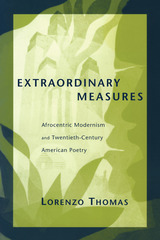
Extraordinary Measures
Afrocentric Modernism and 20th-Century American Poetry
Lorenzo Thomas
University of Alabama Press, 2000
This broad overview by an established poet and cultural critic reveals the rich tapestry of African American poetry as it has emerged over the past century.
From early 20th-century writings to present-day poetry slams, African American poetry exhibits an impressive range of style and substance. Lorenzo Thomas has written an important new history of the genre that offers a critical reassessment of its development in the 20th century within the contexts of modernism and the troubled racial history of the United States.
Basing his study on literary history, cultural criticism, and close readings, Thomas revives and appraises the writings of a number of this century's most important African American poets, including Margaret Walker, Amiri Baraka, Askia M. Toure, Harryette Mullen, and Kalamu ya Salaam. Thomas analyzes the work of Fenton Johnson within the context of emerging race consciousness in Chicago, contributes to critical appraisals of William Stanley Braithwaite and Melvin B. Tolson, and examines the Black Arts Movement of the 1960s and 1970s. Throughout the book, Thomas demonstrates the continuity within the Afrocentric tradition while acknowledging the wide range of stylistic approaches and ideological stances that the tradition embraces.
By reassessing the African American poetry tradition, Thomas effectively reassesses the history of all 20th-century American literature by exploring avenues of debate that have not yet received sufficient attention. Written with intelligence and humor, his book is itself an extraordinary measure that reflects years of scholarship and opens up African American poetry to a wider audience.
From early 20th-century writings to present-day poetry slams, African American poetry exhibits an impressive range of style and substance. Lorenzo Thomas has written an important new history of the genre that offers a critical reassessment of its development in the 20th century within the contexts of modernism and the troubled racial history of the United States.
Basing his study on literary history, cultural criticism, and close readings, Thomas revives and appraises the writings of a number of this century's most important African American poets, including Margaret Walker, Amiri Baraka, Askia M. Toure, Harryette Mullen, and Kalamu ya Salaam. Thomas analyzes the work of Fenton Johnson within the context of emerging race consciousness in Chicago, contributes to critical appraisals of William Stanley Braithwaite and Melvin B. Tolson, and examines the Black Arts Movement of the 1960s and 1970s. Throughout the book, Thomas demonstrates the continuity within the Afrocentric tradition while acknowledging the wide range of stylistic approaches and ideological stances that the tradition embraces.
By reassessing the African American poetry tradition, Thomas effectively reassesses the history of all 20th-century American literature by exploring avenues of debate that have not yet received sufficient attention. Written with intelligence and humor, his book is itself an extraordinary measure that reflects years of scholarship and opens up African American poetry to a wider audience.
[more]
READERS
Browse our collection.
PUBLISHERS
See BiblioVault's publisher services.
STUDENT SERVICES
Files for college accessibility offices.
RECENTLY PUBLISHED




UChicago Accessibility Resources
home | accessibility | search | about | contact us
BiblioVault ® 2001 - 2026
The University of Chicago Press