
 A SCHOLARLY BOOK REPOSITORY
10 start with A start with A
Abiding Grace navigates the competing Hegelian and Kierkegaardian trajectories born out of the Reformation and finds Taylor arguing from spaces in between, showing how both narratives have shaped recent philosophy and culture. For Hegel, Luther’s internalization of faith anticipated the modern principle of autonomy, which reached its fullest expression in speculative philosophy. The closure of the Hegelian system still endures in the twenty-first century in consumer society, financial capitalism, and virtual culture. For Kierkegaard, by contrast, Luther’s God remains radically transcendent, while finite human beings and their world remain fully dependent. From this insight, Heidegger and Derrida developed an alternative view of time in which a radically open future breaks into the present to transform the past, demonstrating that, far from autonomous, life is a gift from an Other that can never be known.
Offering an alternative genealogy of deconstruction that traces its pedigree back to readings of Paul by way of Luther, Abiding Grace presents a thoroughgoing critique of modernity and postmodernity’s will to power and mastery. In this new philosophical and theological vision, history is not over and the future remains endlessly open.
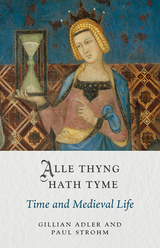
Alle Thyng Hath Tyme recreates medieval people’s experience of time as continuous, discontinuous, linear, and cyclical—from creation through judgment and into eternity. Medieval people measured time by natural phenomena such as sunrise and sunset, the motion of the stars, or the progress of the seasons, even as the late-medieval invention of the mechanical clock made time-reckoning more precise. Negotiating these mixed and competing systems, Gillian Adler and Paul Strohm show how medieval people gained a nuanced and expansive sense of time that rewards attention today.

“An act of courage and a public service.”—San Francisco Chronicle
“This beautifully synthesized and disquieting account of how hospital patients die melds disciplined description with acute analysis, incorporating the voices of doctors, nurses, social workers, and patients in a provocative analysis of the modern American quest for a ‘good death.’”—Publishers Weekly
“Kaufman exposes the bureaucratic and ethical quandaries that hover over the modern deathbed.”—Psychology Today
“Kaufman’s analysis illuminates the complexity of the care of critically ill and dying patients [and] the ambiguity of slogans such as ‘death with dignity,’ ‘quality of life,’ and ‘stopping life support.’ . . . Thought-provoking reading for everyone contemplating the fate of us all.”—New England Journal of Medicine
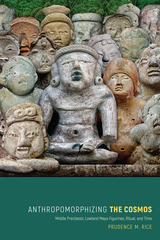
Presenting original data, Anthropomorphizing the Cosmos offers insight into the synchronous appearance of fired-clay figurines with the emergence of societal complexity in and beyond Mesoamerica. Rice situates these Preclassic Maya figurines in the broader context of Mesoamerican human figural representation, identifies possible connections between anthropomorphic figurine heads and the origins of calendrics and other writing in Mesoamerica, and examines the role of anthropomorphic figurines and zoomorphic musical instruments in Preclassic Maya ritual. The volume shows how community rituals involving the figurines helped to mitigate the uncertainties of societal transitions, including the beginnings of settled agricultural life, the emergence of social differentiation and inequalities, and the centralization of political power and decision-making in the Petén lowlands.
Literature on Maya ritual, cosmology, and specialized artifacts has traditionally focused on the Classic period, with little research centering on the very beginnings of Maya sociopolitical organization and ideological beliefs in the Middle Preclassic. Anthropomorphizing the Cosmos is a welcome contribution to the understanding of the earliest Maya and will be significant to Mayanists and Mesoamericanists as well as nonspecialists with interest in these early figurines
Academicians and journalists in Spain and abroad have recently fastened on an emerging cluster of peninsular writers who, they argue, pertain to a discernible literary generation, provisionally referred to as Generación X. These writers are distinct from their predecessors; they and their literary texts are closely related to the specific socio-political and historical circumstances in Spain and their novels relate stories of more and less proximity, more and less responsibility, and more and less temporality. In short, they trace the temporal movement of alterity through narrative.
Published by Bucknell University Press. Distributed worldwide by Rutgers University Press.
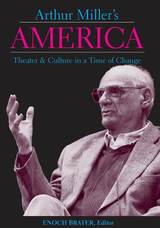
Arthur Miller's America collects new writing by leading international critics and scholars that considers the dramatic world of icon, activist, and playwright Arthur Miller's theater as it reflects the changing moral equations of his time. Written on the occasion of Miller's 85th year, the original essays and interviews in Arthur Miller's America treat the breadth of Miller's work, including his early political writings for the campus newspaper at the University of Michigan, his famous work with John Huston, Clark Gable and Marilyn Monroe on The Misfits, and his signature plays like Death of a Salesman and All My Sons.
Joshua Fogel offers an incisive historical look at Sino-Japanese relations from three different perspectives. Using first a wide lens, he suggests a new way to capture the relationship between China and Japan by characterizing the nature of their contact. From the first century CE, the primary reasons for contact moved from political and ceremonial to cultural, and on to commercial ties. This period ends at the dawn of the modern age, when contacts involved treaties, consulates, and international law.
Switching to a microhistorical view, Fogel examines several important behind-the-scenes players in the launching of the countries’ modern diplomatic relations. He focuses on the voyage of the Senzaimaru from Nagasaki to Shanghai in 1862—the first official meeting of Chinese and Japanese in the modern era—and the Dutchman who played an important intermediary role. Finally, he examines the first expatriate Japanese community in the modern era, in Shanghai from the 1860s to the mid-1890s, when the first Sino-Japanese War erupted.
Introducing the concept of “Sinosphere” to capture the nature of Sino-foreign relations both spatially and temporally, Fogel presents an original and thought-provoking study on the long, complex relationship between China and Japan.
A belief in progress is a fundamental ethos in American history and culture. The Assault on Progress probes American literary works that challenge the prevailing notion of technology as a manifestation of progress. J. Adam Johns argues that the idea of technology-as-destiny has long been explored—and undercut—in American literary works and that literature remains a crucial site for ongoing debates in this area.
Johns studies the phenomenon by which each generation comes to regard itself as the hinge upon which history turns. He explores several works by historians of technology, focusing in detail on the works of literary critic Lewis Mumford, whose examinations of Herman Melville’s novels provide an early example of critical interest in the abandonment of progress as a value.
He goes on to study the works of William Faulkner and Ralph Ellison, focusing on the convergence of technology and race—machines and slavery, and highlights the ways that these writers have portrayed humans as reduced to machines, evidence that technological “progress” is not always progressive, or liberating to humanity.
The conclusion argues for a shift in our understanding of the relationship between technology and time. According to Johns, writers like Melville, Faulkner, and Ellison help us to think of technology separate from notions of progress, and therefore help us to escape from a perilous ideological bind that forever situates humankind at the end of history.
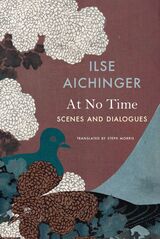
A member of the Gruppe 47 writers’ group which sought to renew German-language literature after World War II, Ilse Aichinger (1921–2016) achieved great acclaim as a writer of fiction, poetry, prose, and radio drama. The vignettes in At No Time each begin in recognizable situations, often set in Vienna or other Austrian cities, but immediately swerve into bizarre encounters, supernatural or fantastical situations. Precisely drawn yet disturbingly skewed, they are both naturalistic and disjointed, like the finest surrealist paintings. Created to be experienced on the page or on the radio rather than the stage, they echo the magic realism of her short stories. Even though they frequently take a dark turn, they remain full of humor, agility, and poetic freedom.
READERS
Browse our collection.
PUBLISHERS
See BiblioVault's publisher services.
STUDENT SERVICES
Files for college accessibility offices.
RECENTLY PUBLISHED




UChicago Accessibility Resources
home | accessibility | search | about | contact us
BiblioVault ® 2001 - 2024
The University of Chicago Press