
 A SCHOLARLY BOOK REPOSITORY
Results by Title
3 books about Traffic violations
3 books about Traffic violations
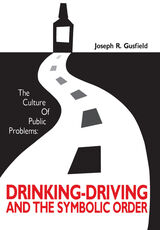
The Culture of Public Problems
Drinking-Driving and the Symbolic Order
Joseph R. Gusfield
University of Chicago Press, 1980
"Everyone knows 'drunk driving' is a 'serious' offense. And yet, everyone knows lots of 'drunk drivers' who don't get involved in accidents, don't get caught by the police, and manage to compensate adequately for their 'drunken disability.' Everyone also knows of 'drunk drivers' who have been arrested and gotten off easy. Gusfield's book dissects the conventional wisdom about 'drinking-driving' and examines the paradox of a 'serious' offense that is usually treated lightly by the judiciary and rarely carries social stigma."—Mac Marshall, Social Science and Medicine
"A sophisticated and thoughtful critic. . . . Gusfield argues that the 'myth of the killer drunk' is a creation of the 'public culture of law.' . . . Through its dramatic development and condemnation of the anti-social character of the drinking-driver, the public law strengthens the illusion of moral consensus in American society and celebrates the virtues of a sober and orderly world."—James D. Orcutt, Sociology and Social Research
"Joseph Gusfield denies neither the role of alcohol in highway accidents nor the need to do something about it. His point is that the research we conduct on drinking-driving and the laws we make to inhibit it tells us more about our moral order than about the effects of drinking-driving itself. Many will object to this conclusion, but none can ignore it. Indeed, the book will put many scientific and legal experts on the defensive as they face Gusfield's massive erudition, pointed analysis and criticism, and powerful argumentation. In The Culture of Public Problems, Gusfield presents the experts, and us, with a masterpiece of sociological reasoning."—Barry Schwartz, American Journal of Sociology
This book is truly an outstanding achievement. . . . It is sociology of science, sociology of law, sociology of deviance, and sociology of knowledge. Sociologists generally should find the book of great theoretical interest, and it should stimulate personal reflection on their assumptions about science and the kind of consciousness it creates. They will also find that the book is a delight to read."—William B. Bankston, Social Forces
"A sophisticated and thoughtful critic. . . . Gusfield argues that the 'myth of the killer drunk' is a creation of the 'public culture of law.' . . . Through its dramatic development and condemnation of the anti-social character of the drinking-driver, the public law strengthens the illusion of moral consensus in American society and celebrates the virtues of a sober and orderly world."—James D. Orcutt, Sociology and Social Research
"Joseph Gusfield denies neither the role of alcohol in highway accidents nor the need to do something about it. His point is that the research we conduct on drinking-driving and the laws we make to inhibit it tells us more about our moral order than about the effects of drinking-driving itself. Many will object to this conclusion, but none can ignore it. Indeed, the book will put many scientific and legal experts on the defensive as they face Gusfield's massive erudition, pointed analysis and criticism, and powerful argumentation. In The Culture of Public Problems, Gusfield presents the experts, and us, with a masterpiece of sociological reasoning."—Barry Schwartz, American Journal of Sociology
This book is truly an outstanding achievement. . . . It is sociology of science, sociology of law, sociology of deviance, and sociology of knowledge. Sociologists generally should find the book of great theoretical interest, and it should stimulate personal reflection on their assumptions about science and the kind of consciousness it creates. They will also find that the book is a delight to read."—William B. Bankston, Social Forces
[more]
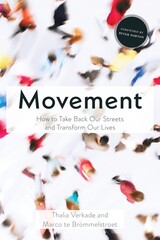
Movement
How to Take Back Our Streets and Transform Our Lives
Thalia Verkade and Marco te Brömmelstroet
Island Press, 2024
“This book will—no question—make you think in new ways. Why have we surrendered our cities to cars? What might it be like to inhabit a space designed for people instead? It’s exciting and hopeful—this we can do!”
—Bill McKibben, author of The Flag, The Cross, and the Station Wagon
Almost everywhere in the world, streets are designed for travel at the highest speed, giving precedence to the chunkiest vehicles. We take for granted that the streets outside of our homes are designed only for movement from one point to another. But what happens if we radically rethink how we use these public spaces? Could we change our lives for the better?
In Movement: How to Take Back Our Streets and Transform Our Lives, journalist Thalia Verkade and mobility expert (“the cycling professor”) Marco te Brömmelstroet take a three-year shared journey of discovery into the possibilities of our streets. They investigate and question the choices and mechanisms underpinning how these public spaces are designed and look at how they could be different. Verkade and te Brömmelstroet draw inspiration from the Netherlands and look at what other countries are doing, and could do, to diversify how they use their streets and make them safer.
During the pandemic, decision-makers in cities around the world were confronted with the questions of who our streets belong to, how we want to use them, and who gets to decide. Making our communities safer, cleaner, and greener starts with asking these fundamental questions. To truly transform mobility, we need to look far beyond the technical aspects and put people at the center of urban design. Movement will change the way that you view our streets.
—Bill McKibben, author of The Flag, The Cross, and the Station Wagon
Almost everywhere in the world, streets are designed for travel at the highest speed, giving precedence to the chunkiest vehicles. We take for granted that the streets outside of our homes are designed only for movement from one point to another. But what happens if we radically rethink how we use these public spaces? Could we change our lives for the better?
In Movement: How to Take Back Our Streets and Transform Our Lives, journalist Thalia Verkade and mobility expert (“the cycling professor”) Marco te Brömmelstroet take a three-year shared journey of discovery into the possibilities of our streets. They investigate and question the choices and mechanisms underpinning how these public spaces are designed and look at how they could be different. Verkade and te Brömmelstroet draw inspiration from the Netherlands and look at what other countries are doing, and could do, to diversify how they use their streets and make them safer.
During the pandemic, decision-makers in cities around the world were confronted with the questions of who our streets belong to, how we want to use them, and who gets to decide. Making our communities safer, cleaner, and greener starts with asking these fundamental questions. To truly transform mobility, we need to look far beyond the technical aspects and put people at the center of urban design. Movement will change the way that you view our streets.
[more]
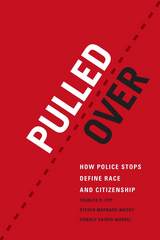
Pulled Over
How Police Stops Define Race and Citizenship
Charles R. Epp, Steven Maynard-Moody, and Donald P. Haider-Markel
University of Chicago Press, 2014
In sheer numbers, no form of government control comes close to the police stop. Each year, twelve percent of drivers in the United States are stopped by the police, and the figure is almost double among racial minorities. Police stops are among the most recognizable and frequently criticized incidences of racial profiling, but, while numerous studies have shown that minorities are pulled over at higher rates, none have examined how police stops have come to be both encouraged and institutionalized.
Pulled Over deftly traces the strange history of the investigatory police stop, from its discredited beginning as “aggressive patrolling” to its current status as accepted institutional practice. Drawing on the richest study of police stops to date, the authors show that who is stopped and how they are treated convey powerful messages about citizenship and racial disparity in the United States. For African Americans, for instance, the experience of investigatory stops erodes the perceived legitimacy of police stops and of the police generally, leading to decreased trust in the police and less willingness to solicit police assistance or to self-censor in terms of clothing or where they drive. This holds true even when police are courteous and respectful throughout the encounters and follow seemingly colorblind institutional protocols. With a growing push in recent years to use local police in immigration efforts, Hispanics stand poised to share African Americans’ long experience of investigative stops.
In a country that celebrates democracy and racial equality, investigatory stops have a profound and deleterious effect on African American and other minority communities that merits serious reconsideration. Pulled Over offers practical recommendations on how reforms can protect the rights of citizens and still effectively combat crime.
[more]
READERS
Browse our collection.
PUBLISHERS
See BiblioVault's publisher services.
STUDENT SERVICES
Files for college accessibility offices.
RECENTLY PUBLISHED


UChicago Accessibility Resources
home | accessibility | search | about | contact us
BiblioVault ® 2001 - 2025
The University of Chicago Press