front cover of Culinary Poetics and Edible Images in Twentieth-Century American Literature
Culinary Poetics and Edible Images in Twentieth-Century American Literature
Stacie Cassarino
The Ohio State University Press, 2018
In her new study, Culinary Poetics and Edible Images in Twentieth-Century American Literature, Stacie Cassarino traces the tradition of avant-garde food experimentation across the twentieth and twenty-first centuries to show how a fixation on the materiality of edible things, expressed through the language of food, became a way for American writers to respond to the culinary, political, and aesthetic tastes of the nation.
Cassarino takes the reader through the changing dynamics of food production and consumption, from wartime sensibilities of patriotic eating to the postwar excess of culinary cosmopolitanism and finally to contemporary supermarket pastorals. She pairs chefs and poets—Julia Child and Gertrude Stein, Poppy Cannon and Frank O’Hara, Vertamae Smart-Grosvenor and Harryette Mullen—to argue that each converts eating into an aesthetic opportunity that has the power to impact how people consume. In this way, Cassarino reveals the modern cookbook not just as a literary counterpart to contemporary poetry but also as vital to the literature and art occurring around it. From Futurist cookbooks to fast food lyrics, from Gullah recipes to Eat Art, she reminds us that global foodscapes are connected to aesthetic movements in literature and art.
 
[more]

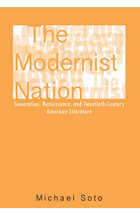
front cover of The Modernist Nation
The Modernist Nation
Generation, Renaissance, and Twentieth-Century American Literature
Michael Soto
University of Alabama Press, 2007

The Modernist Nation examines why America's modern literary movements have come to be characterized as "generations" and "renaissances," such as the Lost Generation and the Beat Generation or the Harlem, Southern, and San Francisco Renaissances. The metaphor of rebirth, Michael Soto argues, offered and continues to offer American writers a kind of shorthand for imagining American cultural history, especially as a departure from Old World (English) trappings.

Soto highlights the interracial dynamics of American literary movements, touching on authors as varied as James Weldon Johnson, Malcolm Cowley, W. E. B. DuBois, Gertrude Stein, Ernest Hemingway, Zora Neale Hurston, and Jack Kerouac. After assessing the origins of the Lost Generation and the Harlem Renaissance, Soto traces the rise of the "bohemian artist" narrative, and demonstrates how a polyethnic cast of writers and critics constructed American literary production in terms of symbolic rebirth.


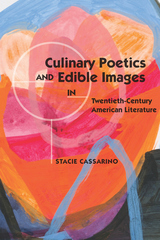


[more]

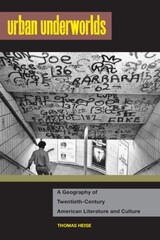
front cover of Urban Underworlds
Urban Underworlds
A Geography of Twentieth-Century American Literature and Culture
Heise, Thomas
Rutgers University Press, 2010
Urban Underworlds is an exploration of city spaces, pathologized identities, lurid fears, and American literature. Surveying the 1890s to the 1990s, Thomas Heise chronicles how and why marginalized populations immigrant Americans in the Lower East Side, gays and lesbians in Greenwich Village and downtown Los Angeles, the black underclass in Harlem and Chicago, and the new urban poor dispersed across American cities have been selectively targeted as "urban underworlds" and their neighborhoods characterized as miasmas of disease and moral ruin.

The quarantining of minority cultures helped to promote white, middle-class privilege. Following a diverse array of literary figures who differ with the assessment of the underworld as the space of the monstrous Other, Heise contends that it is a place where besieged and neglected communities are actively trying to take possession of their own neighborhoods.
[more]


Send via email Share on Facebook Share on Twitter