
 A SCHOLARLY BOOK REPOSITORY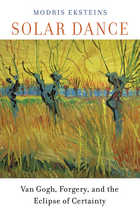
In Modris Eksteins’s hands, the interlocking stories of Vincent van Gogh and art dealer Otto Wacker reveal the origins of the fundamental uncertainty that is the hallmark of the modern era. Through the lens of Wacker’s sensational 1932 trial in Berlin for selling fake Van Goghs, Eksteins offers a unique narrative of Weimar Germany, the rise of Hitler, and the replacement of nineteenth-century certitude with twentieth-century doubt.
Berlin after the Great War was a magnet for art and transgression. Among those it attracted was Otto Wacker, a young gay dancer turned art impresario. His sale of thirty-three forged Van Goghs and the ensuing scandal gave Van Gogh’s work unprecedented commercial value. It also called into question a world of defined values and standards that had already begun to erode during the war. Van Gogh emerged posthumously as a hero who rejected organized religion and other suspect sources of authority in favor of art. Self-pitying Germans saw in his biography a series of triumphs—over defeat, poverty, and meaninglessness—that spoke to them directly. Eksteins shows how the collapsing Weimar Republic that made Van Gogh famous and gave Wacker an opportunity for reinvention propelled a third misfit into the spotlight. Taking advantage of the void left by a gutted belief system, Hitler gained power by fashioning myths of mastery.
Filled with characters who delight and frighten, Solar Dance merges cultural and political history to show how upheavals of the early twentieth century gave rise to a search for authenticity and purpose.
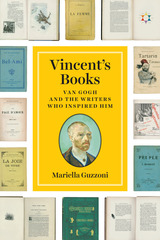
One of the most famous artists in history, Vincent van Gogh (1853–1890) was also a man with another powerful passion—for books. An insatiable reader, Van Gogh spent his life hungrily consuming as many books as he could. He read, reread, and copied out books in Dutch, English, and French. He knew many passages by heart from works by Dickens, Zola, Shakespeare, and Maupassant, among many others. As he wrote to his brother, Theo, in one of their hundreds of letters: “I have a more or less irresistible passion for books.”
In Vincent’s Books, Mariella Guzzoni explores Van Gogh’s life as a voracious bookworm, noting what he read, what he wrote about, and how his love of reading influenced his art. She walks us through his life, chapter by chapter: from the religious aspirations of his early adulthood, to his decision to be a painter, to the end of his tragically short life. He moved from Holland to Paris to Provence; at each moment, ideas he encountered in books defined and guided his thoughts and his worldview. Van Gogh wrote with eloquence and insight about what he was reading in his letters to Theo, referring to at least two hundred authors. Books and readers are frequent subjects of his paintings, and Guzzoni highlights over one hundred of these works, such as Still Life with Bible in the Van Gogh Museum and his vivid paintings of l’Arlesienne.
A gorgeously illustrated biography that will appeal to any booklover, Vincent’s Books takes us on a fresh, fascinating journey through the pages of a beloved artist’s life.
Explore Van Gogh’s musings on his favorite writers, including
Thomas à Kempis, Charles Blanc, Honoré de Balzac, Edmond and Jules de Goncourt, Guy de Maupassant, Charles Dickens, Erckmann-Chatrian, Homer, Victor Hugo, Pierre Loti, Jules Michelet, William Shakespeare, Harriet Beecher Stowe, Émile Zola
READERS
Browse our collection.
PUBLISHERS
See BiblioVault's publisher services.
STUDENT SERVICES
Files for college accessibility offices.
RECENTLY PUBLISHED



UChicago Accessibility Resources
home | accessibility | search | about | contact us
BiblioVault ® 2001 - 2026
The University of Chicago Press