front cover of Women and Work in the North-Eastern Adriatic
Women and Work in the North-Eastern Adriatic
Postwar Transitions
Marta Verginella
Central European University Press, 2025

The volume offers a comparative and transnational exploration of women's work in the twentieth century, concentrating especially on the turbulent periods after both World Wars and the Yugoslav wars in the 1990s. The spatial focus of the analysis is the northeastern Adriatic region, which includes the border areas of Italy and Austria, Croatia, and Slovenia. The study is one of the results of an international research project carried out with the support of the European Research Council.

The seven studies in the book represent a cross-section of specific professional groups of women. The spectrum ranges from female teachers, clerks, tobacco and textile workers to intellectual, artistic or entrepreneurial activities of women. Although “gender” is a central category of analysis in the book, the aspect of representativeness was also observed in relation to other social factors such as race, class, generations, educational and religious background, etc. The main question of the study was the extent to which new state affiliations, geopolitical boundaries, and the establishment of new political regimes affected the women's labor market in the three postwar constellations.

[more]

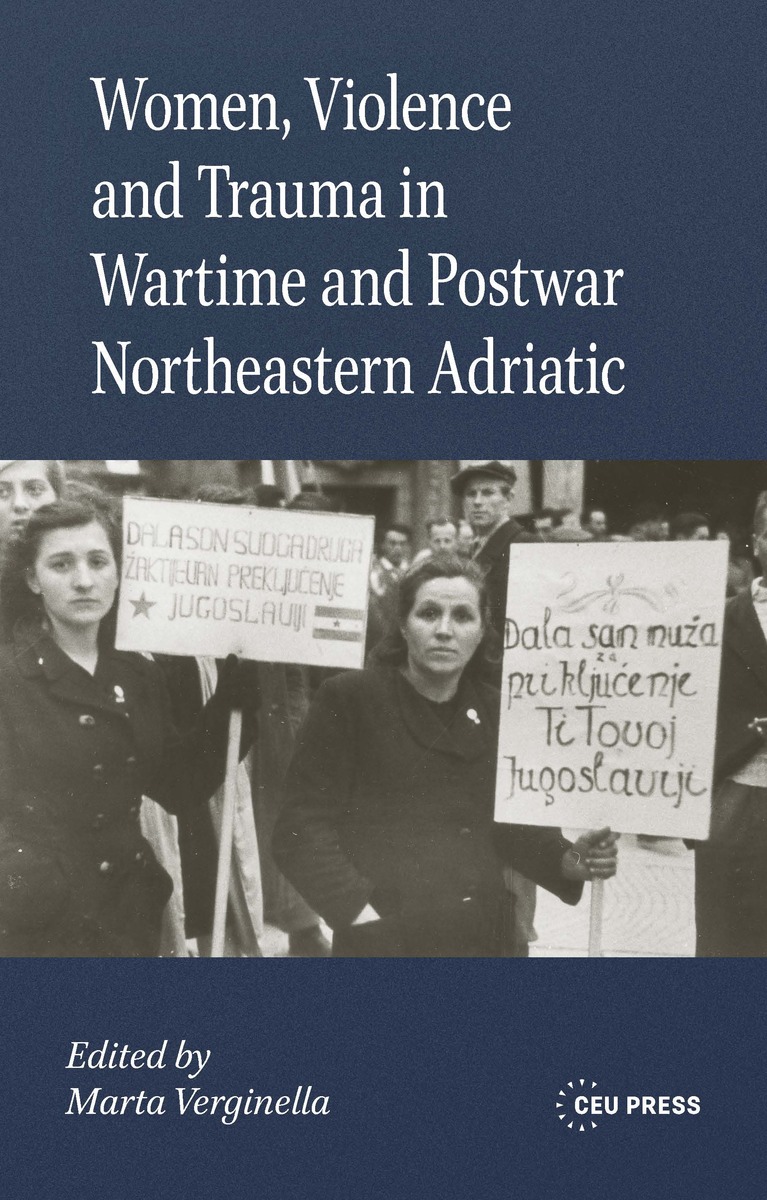
front cover of Women, Violence and Trauma in Wartime and Postwar Northeastern Adriatic
Women, Violence and Trauma in Wartime and Postwar Northeastern Adriatic
Marta Verginella
Central European University Press, 2026
Women, Violence and Trauma in Wartime and Post-War North Adriatic Region>/cite> offers a powerful rethinking of Europe’s twentieth century through women’s experiences of conflict and its long aftermath. Focusing on the North-Adriatic region while moving beyond national frames, this interdisciplinary volume uncovers how violence did not end with ceasefires but continued to shape women’s lives through displacement, sexual violence, loss, psychiatric suffering, and social exclusion.
Drawing on a rich range of sources—psychiatric records, diaries, autobiographies, oral histories, literature, film, and archival documents—the contributors foreground voices long marginalized in official histories. Together, the chapters reveal both vulnerability and resilience, tracing how trauma was lived, narrated, silenced, and politically instrumentalized across different post-war contexts, from the early Cold War to post-socialist societies. This collection reshapes debates in gender history, memory studies, and trauma research, offering new insights into how women endured, interpreted, and transformed the violent legacies of the twentieth century.
[more]


Send via email Share on Facebook Share on Twitter