
 A SCHOLARLY BOOK REPOSITORY
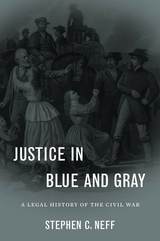
Stephen C. Neff offers the first comprehensive study of the wide range of legal issues arising from the American Civil War, many of which resonate in debates to this day.
Neff examines the lawfulness of secession, executive and legislative governmental powers, and laws governing the conduct of war. Whether the United States acted as a sovereign or a belligerent had legal consequences, including treating Confederates as rebellious citizens or foreign nationals in war. Property questions played a key role, especially when it came to the process of emancipation. Executive detentions and trials by military commissions tested civil liberties, and the end of the war produced a raft of issues on the status of the Southern states, the legality of Confederate acts, clemency, and compensation. A compelling aspect of the book is the inclusion of international law, as Neff situates the conflict within the general laws of war and details neutrality issues, where the Civil War broke important new legal ground.
This book not only provides an accessible and informative legal portrait of this critical period but also illuminates how legal issues arise in a time of crisis, what impact they have, and how courts attempt to resolve them.
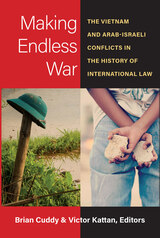
Making Endless War is built on the premise that any attempt to understand how the content and function of the laws of war changed in the second half of the twentieth century should consider two major armed conflicts, fought on opposite edges of Asia, and the legal pathways that link them together across time and space. The Vietnam and Arab-Israeli conflicts have been particularly significant in the shaping and attempted remaking of international law from 1945 right through to the present day. This carefully curated collection of essays by lawyers, historians, philosophers, sociologists, and political geographers of war explores the significance of these two conflicts, including their impact on the politics and culture of the world’s most powerful nation, the United States of America. The volume foregrounds attempts to develop legal rationales for the continued waging of war after 1945 by moving beyond explaining the end of war as a legal institution, and toward understanding the attempted institutionalization of endless war.
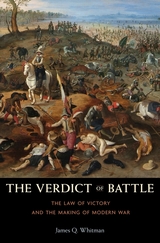
Today, war is considered a last resort for resolving disagreements. But a day of staged slaughter on the battlefield was once seen as a legitimate means of settling political disputes. James Whitman argues that pitched battle was essentially a trial with a lawful verdict. And when this contained form of battle ceased to exist, the law of victory gave way to the rule of unbridled force. The Verdict of Battle explains why the ritualized violence of the past was more effective than modern warfare in bringing carnage to an end, and why humanitarian laws that cling to a notion of war as evil have led to longer, more barbaric conflicts.
Belief that sovereigns could, by rights, wage war for profit made the eighteenth century battle’s golden age. A pitched battle was understood as a kind of legal proceeding in which both sides agreed to be bound by the result. To the victor went the spoils, including the fate of kingdoms. But with the nineteenth-century decline of monarchical legitimacy and the rise of republican sentiment, the public no longer accepted the verdict of pitched battles. Ideology rather than politics became war’s just cause. And because modern humanitarian law provided no means for declaring a victor or dispensing spoils at the end of battle, the violence of war dragged on.
The most dangerous wars, Whitman asserts in this iconoclastic tour de force, are the lawless wars we wage today to remake the world in the name of higher moral imperatives.
READERS
Browse our collection.
PUBLISHERS
See BiblioVault's publisher services.
STUDENT SERVICES
Files for college accessibility offices.
RECENTLY PUBLISHED



UChicago Accessibility Resources
home | accessibility | search | about | contact us
BiblioVault ® 2001 - 2026
The University of Chicago Press