
 A SCHOLARLY BOOK REPOSITORY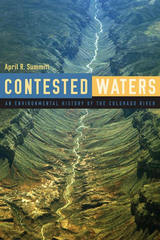
-From the conclusion
The Colorado River is a vital resource to urban and agricultural communities across the Southwest, providing water to 30 million people. Contested Waters tells the river's story-a story of conquest, control, division, and depletion.
Beginning in prehistory and continuing into the present day, Contested Waters focuses on three important and often overlooked aspects of the river's use: the role of western water law in its over-allocation, the complexity of power relationships surrounding the river, and the concept of sustainable use and how it has been either ignored or applied in recent times. It is organized in two parts, the first addresses the chronological history of the river and long-term issues, while the second examines in more detail four specific topics: metropolitan perceptions, American Indian water rights, US-Mexico relations over the river, and water marketing issues. Creating a complete picture of the evolution of this crucial yet over-utilized resource, this comprehensive summary will fascinate anyone interested in the Colorado River or the environmental history of the Southwest.
The four works selected (Animal Dreams, The Monkey Wrench Gang, The Grapes of Wrath, and The Ford) present a composite portrait of reclamation, which the author argues is one of the most important cultural and ecological phenomena in the nation's history. The tensions and contradictions presented by the novels underscore the compelling need for an ecocritique of the relationship between literature and politics. David N. Cassuto deciphers the myths of reclamation and restoration and presents a third alternative--sustainability--in their stead. The challenge is a large one, because of the size and complexity of the region and because nature continues to evolve and create itself, a process involving language, ideology, and the land.
The book is designed to be an interdisciplinary contribution both to the emerging field of literature and the environment, as well as to environmental studies. It will be welcomed by scholars as well as general readers interested in new approaches to literature and environmental issues, and by those interested in the geography and literature of the western United States.
David N. Cassuto, formerly of the English Department of the University of Missouri-Rolla, is a practicing attorney in San Francisco, specializing in environmental issues.
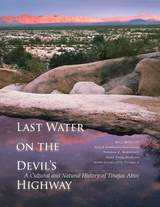
Now an expert cast of authors describes, narrates, and explains the human and natural history of this special place in a thorough and readable account. Addressing the latest archaeological and historical findings, they reveal why Tinajas Altas was so important and how it related to other waterholes in the arid borderlands. Readers can feel like pioneers, following in the footsteps of early Native Americans, Spanish priests and soldiers, gold seekers and borderland explorers, tourists, and scholars.
Combining authoritative writing with a rich array of more than 180 illustrations and maps as well as detailed appendixes providing up-to-date information on the wildlife and plants that live in the area, Last Water on the Devil’s Highway allows readers to uncover the secrets of this fascinating place, revealing why it still attracts intrepid tourists and campers today.
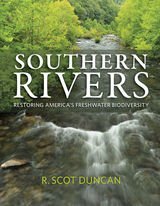
Explores the Southeast’s imperiled river systems and solutions for preserving them in the face of habitat loss, climate change, and extinction
Southern Rivers, by award-winning nature writer and biologist R. Scot Duncan, is a thoroughly crafted exploration of the perilous state of the Southeast’s rivers and the urgent need to safeguard their vitality. The region’s rivers are the epicenter of North American freshwater biodiversity and are the top global hotspot for important aquatic animals including mussels, turtles, snails, crayfish, and fish, many of which have made important contributions to southern life and culture.
Centuries of commercial development have impaired the region’s river systems, sacrificing biodiversity and compromising the rivers’ ability to provide resources essential to human life: drinking water, waste disposal, irrigation, navigation, recreation, power production, and more. Now, increased heat and drought caused by climate change are lowering water levels. As such threats increase, it may seem necessary to choose between nature conservation and human needs, but Duncan persuasively demonstrates that this is a false choice. Conservation enhances human life.
In the same engaging voice of an expert friend that won over thousands of readers of his earlier book, Southern Wonder: Alabama’s Surprising Biodiversity, Duncan explains the task of managing southeastern rivers and how river water quality affects the daily lives of the millions who hold these historic waterways dear. He shows how managing rivers wisely can meet the needs of biodiversity and humanity both. With Americans increasingly anxious about the onset of climate change and the accelerating extinction crisis, Southern Rivers illuminates actionable solutions.
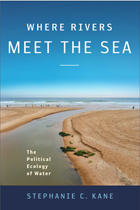
Where fresh water appears to be abundant and generally accessible, chronic pollution may be relatively ignored as a public issue. Yet there are those whose lives, livelihoods, and traditions are touched directly by the destructive albeit essential relationship between humans and water.
In her passionate and persuasively argued Where Rivers Meet the Sea, Stephanie Kane compares two cities and nations—Salvador, Brazil and Buenos Aires, Argentina—as she tells the stories of those who organize in the streets, petition the courts, and challenge their governments to implement and enforce existing laws designed to protect springs, lakes, harbors, and rivers.
Illuminating the complex and distinctive cultural forces in the South Atlantic that shape conflicts and collaborations pertaining to particular waterfront settings, Kane shows the dilemmas, inventiveness, and persistence that provide the foundation for environmental and social justice movements writ large.
READERS
Browse our collection.
PUBLISHERS
See BiblioVault's publisher services.
STUDENT SERVICES
Files for college accessibility offices.
RECENTLY PUBLISHED


UChicago Accessibility Resources
home | accessibility | search | about | contact us
BiblioVault ® 2001 - 2026
The University of Chicago Press