
 A SCHOLARLY BOOK REPOSITORY
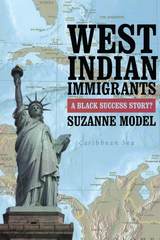
The story of West Indian immigrants to the United States is considered a great success. Many of these adoptive citizens have prospered, including General Colin Powell. But Mary Waters tells a very different story about immigrants from the West Indies, especially their children.
She finds that when the immigrants first arrive, their knowledge of English, their skills and contacts, their self-respect, and their optimistic assessment of American race relations facilitate their integration into the American economic structure. Over time, however, the realities of American race relations begin to swamp their positive cultural values. Persistent, blatant racial discrimination soon undermines the openness to whites the immigrants have when they first arrive. Discrimination in housing channels them into neighborhoods with inadequate city services and high crime rates. Inferior public schools undermine their hopes for their children's future. Low wages and poor working conditions are no longer attractive for their children, who use American and not Caribbean standards to measure success.
Ultimately, the values that gained these first-generation immigrants initial success--a willingness to work hard, a lack of attention to racism, a desire for education, an incentive to save--are undermined by the realities of life in the United States. In many families, the hard-won relative success of the parents is followed by the downward slide of their children. Contrary to long-held beliefs, Waters finds, those who resist Americanization are most likely to succeed economically, especially in the second generation.

In this groundbreaking study, William Luis analyzes the most salient and representative narrative and poetic works of the newest literary movement to emerge in Spanish American and U.S. literatures. The book is divided into three sections, each focused on representative Puerto Rican American, Cuban American, and Dominican American authors. Luis traces the writers' origins and influences from the nineteenth century to the present, focusing especially on the contemporary works of Oscar Hijuelos, Julia Alvarez, Cristina Garcia, and Piri Thomas, among others. While engaging in close readings of the texts, Luis places them in a broader social, historical, political, and racial perspective to expose the tension between text and context.
As a group, Latino Caribbeans write an ethnic literature in English that is born of their struggle to forge an identity separate from both the influences of their parents' culture and those of the United States. For these writers, their parents' country of origin is a distant memory. They have developed a culture of resistance and a language that mediates between their parents' identity and the culture that they themselves live in.
Latino Caribbeans are engaged in a metaphorical dance with Anglo Americans as the dominant culture. Just as that dance represents a coming together of separate influences to make a unique art form, so do both Hispanic and North American cultures combine to bring a new literature into being. This new body of literature helps us to understand not only the adjustments Latino Caribbean cultures have had to make within the larger U.S. environment but also how the dominant culture has been affected by their presence.
READERS
Browse our collection.
PUBLISHERS
See BiblioVault's publisher services.
STUDENT SERVICES
Files for college accessibility offices.
RECENTLY PUBLISHED





UChicago Accessibility Resources
home | accessibility | search | about | contact us
BiblioVault ® 2001 - 2025
The University of Chicago Press