
 A SCHOLARLY BOOK REPOSITORY
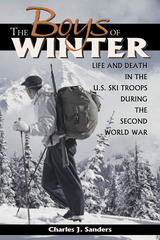
- International Ski History Association
The Boys of Winter tells the true story of three young American ski champions and their brutal, heroic, and fateful transformation from athletes to infantrymen with the 10th Mountain Division. Charles J. Sanders's fast-paced narrative draws on dozens of interviews and extensive research to trace these boys' lives from childhood to championships and from training at Mount Rainier and in the Colorado Rockies to battles against the Nazis.

Bevis addresses the most puzzling and least studied aspect of Wallace Stevens’ poetry: detachment. Stevens’ detachment, often associated by readers with asceticism, bareness, or withdrawal, is one of the distinguishing and pervasive characteristics of Stevens’ poetic work. Bevis agues that this detachment is meditative and therefore experiential in origin. Moreover, the meditative Stevens of spare syntax and clear image is in constant tension with the romantic, imaginative Stevens of dazzling metaphors and exuberant flight. Indeed, for Bevis, Stevens is a poet not of imagination and reality, but of imagination and reality, but of imagination and meditation in relation to reality.
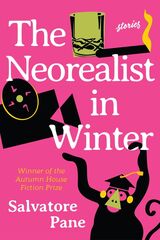
Salvatore Pane’s The Neorealist in Winter is a collection of eleven short stories that explore what it means to be human in an age of media oversaturation. Utilizing methods of speculative, historical, and postmodern storytelling, Pane grapples with legacies of immigration, poverty, toxic masculinity, and moral failures, while focusing on working-class issues, family drama, and PTSD. Following eleven Italian narrators, Pane builds a cast of cinematic characters across disparate times and places—a struggling director attends a house party in the la dolce vita of 1960s Rome, gangsters chase a low-level lottery runner in coal valley Scranton, a woman contemplates experimental surgery to purge memories of her childhood trauma in Minnesota, and a pro wrestling promoter descends into self-denial through his autobiography.
The Neorealist in Winter was selected by Venita Blackburn as the winner of the 2022 Autumn House Fiction Prize.


A picture-book journey through the Boundary Waters Canoe Area Wilderness in winter, snowshoeing the frozen lakes and silent forest with family, encountering the wonders of northern wildlife in the cold season
In winter the Boundary Waters, way up north in Minnesota, is not the same place you canoed last summer—but still it beckons and welcomes you. Grab a pack, strap on snowshoes, make a path (Oh! they take some getting used to!), and venture out across the frozen lakes and through the snowy woods. The vast wintery world here is so still and quiet, you might think you’re all alone—but no! Who made these tracks? A deer? A hare? A fox? And far off there’s a musher, making tracks with his sled dogs.
It’s a magical place. The bright sun brilliant on the snow, the sparkling silence—wait, is that a wolf calling? Try to answer! And when the dark descends, the stars and pine trees holding up the night, your nose gets cold and it’s back to camp, to your warm winter tent, where Father feeds the stove with wood you gathered, Mother snuggles into her big sleeping bag, and you curl up in the fire’s glow and know that in your dreams and memories you will return again and again to this one winter up north.
A wintery adventure that unfolds in pictures, John Owens’s delightful book gives readers a chance to discover—or rediscover—another season full of wonder in the Boundary Waters Canoe Area Wilderness.
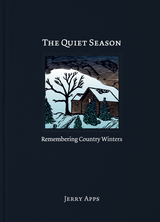
The Quiet Season
Remembering Country Winters
Jerry Apps
“As I think back to the days of my childhood, the frost-covered windows in my bedroom,
the frigid walks to the country school, the excitement of a blizzard, and a hundred other memories, I realize that these experiences left an indelible mark on me and made me who I am today.”—From the Introduction
Jerry Apps recalls winters growing up on a farm in central Wisconsin during the latter years of the Depression and through World War II. Before electricity came to this part of Waushara County, farmers milked cows by hand with the light of a kerosene lantern, woodstoves heated the drafty farm homes, and “making wood” was a major part of every winter’s work. The children in Jerry’s rural community walked to a country school that was heated with a woodstove and had no indoor plumbing. Wisconsin winters then were a time of reflection, of planning for next year, and of families drawing together. Jerry describes how winter influenced farm families and suggests that those of us who grow up with harsh northern winters are profoundly affected in ways we often are not aware.
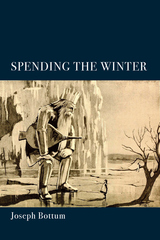
“Poems so severely beautiful that they become unforgettable after one reading. . . . If you’re a reader who loves poetry whatever mood it’s in, just open Spending the Winter anywhere to find poems that hurt, enlighten, and delight.” —Rhina P. Espaillat, author of Rehearsing Absence and winner of the T.S. Eliot Prize
“Joseph Bottum is a brilliant formalist, and to read him is to enter the world of the tried-and-true classics, all achieved with an amazingly contemporary ring. His Spending the Winter is a delight. Here is a poetry of elegy, humor, wit, political savvy, and vast learning.” —Paul Mariani, author The Great Wheel and winner of the John Ciardi Award
“Joseph Bottum’s Spending the Winter is a throwback to a time when lovers of poetry outside the literary establishment looked for poetry of depth, wit, and craft from the likes of Auden and Larkin. This is poetry from another age—an age when we expected intellectual, religious, and literary significance from our verse.” —A.M. Juster, author of Wonder and Wrath and winner of the Willis Barnstone Translation Prize
“Spending the Winter is a word-lover’s dream: Joseph Bottum’s poems pierce, probe, dazzle, and delight. They will open the eyes of your soul.” —Karen Swallow Prior, author of On Reading Well
“When reading Spending the Winter, I recalled C.S. Lewis’s description of joy as a wanting for something that is beyond this world. There’s a sense in these poems that things around us are fleeting, yet for that reason, the poems ask us to pay all the more attention.” —Jessica Hooten Wilson, author of Giving the Devil his Due
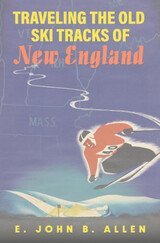
For over a century New Englanders have taken to the slopes in search of ways to enjoy the coldest months, and skiing has deep roots in the region. In the late nineteenth century Scandinavian immigrants worked to educate snowbound locals on how to ski, make equipment, and prepare trails. Soon thereafter, colleges across the Northeast built world-class ski programs, massive jumps were constructed in Brattleboro and Berlin, and dozens of ski areas—big and small—cropped up from the 1930s through the 1960s.
Traveling the Old Ski Tracks of New England offers a fascinating history of downhill, cross-country, and backcountry skiing across the region and its leading personalities. Moving from popular destinations like Stowe, Cannon, Bromley, and Mount Washington to the less intimidating hills surrounding Boston, Rhode Island, and Connecticut, E. John B. Allen also recovers the forgotten stories of ski areas that have been abandoned in the face of changing tastes and a warming climate.
Waterfowl in Winter was first published in 1988. Minnesota Archive Editions uses digital technology to make long-unavailable books once again accessible, and are published unaltered from the original University of Minnesota Press editions.
The emphasis in research on waterfowl has traditionally focused on breeding as opposed to migrant or wintering birds. Scientists have long been interested in courtship, nest sites, laying, and brood-rearing, and they have also been concerned about losses of eggs, young, nesting hens, and breeding habitats, especially as they have affected the goal of increasing populations. But lately there has been an upsurge of interest and research on the migratory and wintering phases, and this volume offers ample evidence of the knowledge gained.
The authors—105 waterfowl biologists—have contributed 47 chapters that range geographically from Alaska to northern South America, and from the Pacific Northwest to Nova Scotia and Florida. Their subjects include: distributional changes due to human influence; population trends and concerns over less common species; pairing and other behavior that occurs in the wintering areas and is vital to the success of the species; feeding ecology and body condition during winter; new habitats created by such activities as aquaculture and park development; losses of habitat due to development and drainage for alternate uses; lead poisoning and pollutants that are detrimental to waterfowl; habitat management for maintenance of successful populations now and in the future. Also presented are reports of workshop discussions outlining current issues and future research needs. Preparation of this volume was assisted by an editorial board comprising Bruce J. J. Batt, Robert H. Chabreck, Leigh H. Fredrickson, and Dennis G. Raveling.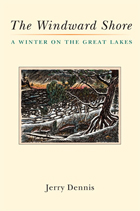
"Our country is lucky to have Jerry Dennis. A conservationist with the soul of a poet whose beat is Wild Michigan, Dennis is a kindred spirit of Aldo Leopold and Sigurd Olson. The Windward Shore---his newest effort---is a beautifully written and elegiac memoir of outdoor discovery. Highly recommended!"
---Douglas Brinkley, author of The Wilderness Warrior: Theodore Roosevelt and the Crusade for America
"Come for a journey; stay for an awakening. Jerry Dennis loves the Great Lakes, the swell of every wave, the curve of every rock. He wants you to love them too before our collective trashing of them wipes out all traces of their original character. Through his eyes, you will treasure the hidden secrets that reveal themselves only to those who linger and long. Elegant and sad at the same time, The Windward Shore is a love song for the Great Lakes and a gentle call to action to save them."
---Maude Barlow, author of Blue Covenant: The Global Water Crisis and the Coming Battle for the Right to Water
"In prose as clear as the lines in a Dürer etching, Jerry Dennis maps his home ground, which ranges outward from the back door of his farmhouse to encompass the region of vast inland seas at the heart of our continent. Along the way, inspired by the company of water in all its guises---ice, snow, frost, clouds, rain, shore-lapping waves---he meditates on the ancient questions about mind and matter, time and attention, wildness and wonder. As in the best American nature writing---a tradition that Dennis knows well---here the place and the explorer come together in brilliant conversation."
---Scott Russell Sanders, author of A Conservationist Manifesto
If you have been enchanted by Jerry Dennis’s earlier work on sailing the Great Lakes, canoeing, angling, and the natural wonders of water and sky—or you have not yet been lucky enough to enjoy his engaging prose—you will want to immerse yourself in his powerful and insightful new book on winter in Great Lakes country.
Grounded by a knee injury, Dennis learns to live at a slower pace while staying in houses ranging from a log cabin on Lake Superior’s Keweenaw Peninsula to a $20 million mansion on the northern shore of Lake Michigan. While walking on beaches and exploring nearby woods and villages, he muses on the nature of time, weather, waves, agates, books, words for snow and ice, our complex relationship with nature, and much more.
From the introduction: “I wanted to present a true picture of a complex region, part of my continuing project to learn at least one place on earth reasonably well, and trusted that it would appear gradually and accumulatively—and not as a conventional portrait, but as a mosaic that included the sounds and scents and textures of the place and some of the plants, animals, and its inhabitants. Bolstered by the notion that a book is a journey that author and reader walk together, I would search for promising trails and follow them as far as my reconstructed knee would allow.”

Swallow Press first published Winter of Artifice in 1945, following two vastly different versions from other presses. The book opens with a film star, Stella, studying her own, but alien, image on the screen. It ends in the Manhattan office of a psychoanalyst—the Voice—who, as he counsels patients suffering from the maladies of modern life, reveals himself as equally susceptible to them. The middle, title story explores one of Nin’s most controversial themes, that of a woman’s sexual relationship with her father. Elliptical, fragmented prose; unconventional structure; surrealistic psychic landscapes—Nin forged these elements into a style that engaged with the artistic concerns of her time but still registers as strikingly contemporary.
This reissue, accompanied by a new introduction by Laura Frost and the original engravings by Nin’s husband Ian Hugo, presents an important opportunity to consider anew the work of an author who laid the groundwork for later writers. Swallow Press’s Winter of Artifice represents a literary artist coming into her own, with the formal experimentation, thematic daring, and psychological intrigue that became her hallmarks.
READERS
Browse our collection.
PUBLISHERS
See BiblioVault's publisher services.
STUDENT SERVICES
Files for college accessibility offices.
RECENTLY PUBLISHED






UChicago Accessibility Resources
home | accessibility | search | about | contact us
BiblioVault ® 2001 - 2024
The University of Chicago Press