Results by title
3703 books match the query '19th century' and 28 start with a non-letter
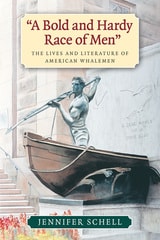
"A Bold and Hardy Race of Men"
The Lives and Literature of American WhalemenJennifer Schell
University of Massachusetts Press, 2013
In his novel Miriam Coffin, or The Whale-Fishermen (1834), Joseph C. Hart proclaimed that his characters were “a bold and hardy race of men,” who deserved the “expressive title of American Whale-Fishermen.” Hart was not the only American author to applaud these physical laborers as the embodiment of national manhood. Heroic portraits of whalers first appeared in American literature during the 1780s, and they proliferated across time. Writers as various as Lydia Howard Huntley Sigourney, Frederick Douglass, and Walt Whitman celebrated the talents of the seafarers who transformed the New England whale fishery into a globally dominant industry. But these images did not go unchallenged. Alternative visions—some of which undermined the iconic status of the trade and its workers—began to proliferate. Even so, these depictions did very little to dismantle the notion that whaling men were prime exemplars of a proud American work ethic.
To explain why this industry had such a widespread and enduring impact on American literature, Jennifer Schell juxtaposes and analyzes a wide array of eighteenth- and nineteenth-century whaling narratives. Drawing on various studies of masculinity, labor history, and transnationalism, Schell shows how this particular type of maritime work, and the traits and values associated with it, helped to shape the American literary, cultural, and historical imagination. In the process, she reveals the diverse, flexible, and often contradictory meanings of gender, class, and nation in nineteenth-century America.
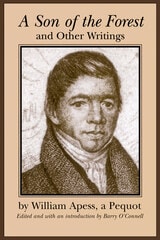
"A Son of the Forest" and Other Writings
William Apess
University of Massachusetts Press, 1997

"A Truthful Impression of the Country"
British and American Travel Writing in China, 1880-1949Nicholas R. Clifford
University of Michigan Press, 2001
Nicholas R. Clifford argues that, for a variety of reasons, travel accounts during this time claimed a particular kind of veracity that distinguished them from the work of other writers--scholars, journalists, diplomats, policymakers, or memoir-writing expatriates--who also sought to represent an unfamiliar China to the West. Yet even as the genre claims to be a "truthful impression," it contains an implicit warning that the traveler's own sensibility enters into the account and into the representation of the unfamiliar and the exotic.
"A Truthful Impression of the Country" will appeal not only to those interested in the broad phenomenon of imperialism but also to those interested in cultural studies and post-colonialism. It will likewise prove accessible to the general reader exploring Sino-Western interactions or in travel writing as a particular genre.
Nicholas R. Clifford is College Professor Emeritus, Middlebury College. He is also the author of the novel The House of Memory and of the monographs Shanghai, 1925: Urban Nationalism and the Defense of Foreign Privilege and Spoilt Children of Empire: Westerners in Shanghai and the Chinese Revolution of 1925--1927.
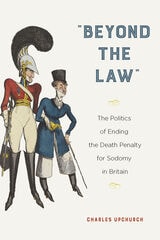
"Beyond the Law"
The Politics of Ending the Death Penalty for Sodomy in BritainCharles Upchurch
Temple University Press, 2021
In nineteenth-century England, sodomy was punishable by death; even an accusation could damage a man’s reputation for life. The last executions for this private, consensual act were in 1835, but the effort to change the law that allowed for those executions was intense and precarious, and not successful until 1861. In this groundbreaking book, “Beyond the Law,” noted historian Charles Upchurch pieces together fragments from history and uses a queer history methodology to recount the untold story of the political process through which the law allowing for the death penalty for sodomy was almost ended in 1841.
Upchurch recounts the legal and political efforts of reformers like Jeremy Bentham and Lord John Russell—the latter of whom argued that the death penalty for sodomy was “beyond the law and above the law.” He also reveals that a same-sex relationship linked the families of the two men responsible for co-sponsoring the key legislation. By recovering the various ethical, religious, and humanitarian arguments against punishing sodomy, “Beyond the Law” overturns longstanding assumptions of nineteenth-century British history. Upchurch demonstrates that social change came from an amalgam of reformist momentum, family affection, elitist politics, class privilege, enlightenment philosophy, and personal desires.
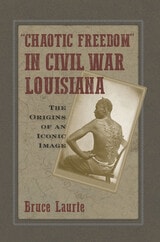
"Chaotic Freedom" in Civil War Louisiana
The Origins of an Iconic ImageBruce Laurie
University of Massachusetts Press, 2021
Bruce Laurie uncovers the people and events that created this seminal image, telling the tale of three men, two Yankee soldiers from western Massachusetts who were serving the Union Army in Louisiana and a man named Peter whose scarred back horrified all who saw it. The two soldiers were so shocked by what had been done to Peter, they sought to capture the image and document slavery's cruelty, the likes of which was all too common among those fleeing bondage in Louisiana. Meticulously researched and briskly told, this short volume unearths the story behind an iconic image.
"Doers of the Word"
African-American Women Speakers and Writers in the North (1830-1880)Peterson, Carla L
Rutgers University Press, 1998
In situating these women within the emerging African-American urban communities of the free North, Doers of the Word provides an important counterweight to the vast scholarship on Southern slavery and argues that black "Civil Rights movements" cannot be seen as a purely modern phenomenon. In particular, the book examines the ways in which this Northern black population, despite its heterogeneity, came together and established social organizations that would facilitate community empowerment; yet Peterson's analysis also acknowledges, and seeks to explain, the highly complex relationship of black women to these institutions, a relationship that rendered their stance as public intellectuals all the more bold and defiant.
Peterson begins her study in the 1830s, when a substantial body of oratory and writing by black women first emerged, and traces the development of this writing through the shifting political climate up to the end of Reconstruction. She builds her analyses upon Foucault's interdisciplinary model of discourse with an explicitly feminist approach, drawing upon sermons, spiritual autobiographies, travel and slave narratives, journalism, essays, poetry, speeches, and fiction. From these, Peterson is able to answer several key questions. First, what empowered these women to act, to speak out, and to write? Why, and in what ways, were they marginalized within both the African-American and larger American communities? Where did they act, speak, and write from?
"God Has Made Us a Kingdom"
James Strang and the Midwest MormonsVickie Cleverley Speek
Signature Books, 2006
Strang was considered the prophetic successor to Joseph Smith for the Mormons of the Midwest who later formed the nucleus for the membership of what is now the Community of Christ. Today, 150 years after Strang’s death, about 100 faithful followers in the United States still await the emergence of another prophet to succeed Strang. In the prophetic tradition of Joseph Smith, Strang similarly excavated ancient metallic plates and translated them into the Book of the Law of the Lord and the Rajah Manchou of Vorito. Like Joseph Smith, Strang instigated polygamy, secret ceremonies, baptism for the dead, and communal living. He also introduced a bloomer-like fashion for women, as well as other innovations. Like Joseph Smith, he had himself crowned king of the world.
Where previous treatments of Strang have relied either on inside or outside sources to show either a prophet or charlatan, Speek utilizes all sources, updates the record, corrects previous errors, and shows diverse perspectives. She recounts the turbulent and dramatic events of the 1840s-50s, including the plot to murder Strang and the heartbreaking exile of the Saints from Beaver Island. She traces the dispersion of this once formidable colony of Mormons to the forests of northwest Wisconsin, the far-flung outposts of southwest New Mexico, the hills of Lamoni, Iowa, and to Salt Lake City, Utah.
"It Was Play or Starve"
Acting in the Nineteenth-Century American Popular TheatreJohn Hanners
University of Wisconsin Press, 1993
"Not Altogether Human"
Pantheism and the Dark Nature of the American RenaissanceRichard Hardack
University of Massachusetts Press, 2012
Many leading American thinkers in the nineteenth century, who accepted the premises of Emersonian transcendentalism, valued the basic concept of pantheism: that God inheres in nature and in all things, and that a person could achieve a sense of belonging she or he lacked in society by seeking a oneness with all of nature. As Richard Hardack shows, however, writers such as Ralph Waldo Emerson, Nathaniel Hawthorne, and Herman Melville conceived of nature as everything “Other”—other than the white male Protestant culture of which they were a part. This conception of nature, then, became racialized, and the divine became associated with African American and Native American identities, as well as with femininity.
In "Not Altogether Human," Hardack reevaluates transcendentalism in the context of nineteenth-century concerns about individual and national racial identity. Elucidating the influence of pantheism, Hardack draws on an array of canonical and unfamiliar materials to remap the boundaries of what has long been viewed as white male transcendental discourse.
This book significantly revises notions of what transcendentalism and pantheism mean and how they relate to each other. Hardack's close analysis of pantheism and its influence on major works and lesser known writing of the nineteenth century opens up a new perspective on American culture during this key moment in the country's history.
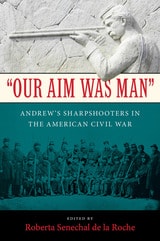
"Our Aim Was Man"
Andrew's Sharpshooters in the American Civil WarRoberta Senechal de la Roche
University of Massachusetts Press, 2016
One was a father who worried about his fellow soldiers' swearing. Another hoped to enter Harvard College. The third was a farmer whose letters home depict the later stages of the war. The fourth had turned to boot making when he did not inherit land. Based on the letters, diaries, and memoirs of four members of the First Company Massachusetts Sharpshooters, known as Andrew's Sharpshooters, this book provides a rare glimpse into the experiences of Union Army snipers. The company was one of the first units in American military history to be equipped with telescope-sighted rifles to enable long-distance targeting. Despite complaints that snipers violated codes of honorable combat, the members of Andrew's Sharpshooters generally expressed quiet pride in being an elite unit of highly skilled soldiers—"cool blooded sharpshooters," as one of them said.
Introduced and edited by Roberta Senechal de la Roche, these primary accounts include new details about the equipment, training, and deployment of snipers in the Army of the Potomac. They also reveal the challenges of covert warfare and include rich detail on the everyday problems of Civil War soldiers, including bad food, disease, punishing marches, and homesickness. The collected documents also convey the trials of those left on the home front.
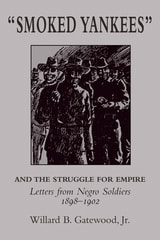
"Smoked Yankees" and the Struggle for Empire
Letters from Negro Soldiers, 1898–1902Willard Gatewood
University of Arkansas Press, 1987
Called upon for the first time to render military service outside the States, Negro soldiers (called Smoked Yankees by the Spaniards) were eager to improve their status at home by fighting for the white man in the Spanish-American War. Their story is told through countless letters sent to black U.S. newspapers that lacked resources to field their own reporters. The collection constitutes a remarkably complete and otherwise undisclosed amount of the black man’s role in—and attitude toward—America’s struggle for empire.
In first-hand reports of battles in the Philippine Islands and Cuba, Negro soldiers wrote from the perspective of dispossessed citizens struggling to obtain a larger share of the rights and privileges of Americans.
These letters provide a fuller understanding of the exploits of black troops through their reports of military activities and accounts of foreign peoples and its cultures.
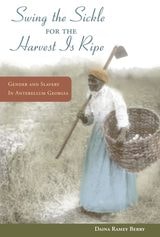
"Swing the Sickle for the Harvest is Ripe"
Gender and Slavery in Antebellum GeorgiaDaina Ramey Berry
University of Illinois Press, 2010
"Swing the Sickle for the Harvest Is Ripe" compares the work, family, and economic experiences of enslaved women and men in upcountry and lowland Georgia during the nineteenth century. Mining planters' daybooks, plantation records, and a wealth of other sources, Daina Ramey Berry shows how slaves' experiences on large plantations, which were essentially self-contained, closed communities, contrasted with those on small plantations, where planters' interests in sharing their workforce allowed slaves more open, fluid communications. By inviting readers into slaves' internal lives through her detailed examination of domestic violence, separation and sale, and forced breeding, Berry also reveals important new ways of understanding what it meant to be a female or male slave, as well as how public and private aspects of slave life influenced each other on the plantation.
A volume in the series Women in American History, edited by Anne Firor Scott, Susan Armitage, Susan K. Cahn, and Deborah Gray White
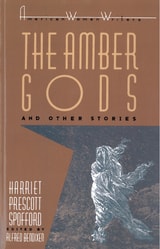
"The Amber Gods" and Other Stories by Harriet Prescott Spofford
Bendixen, Alfred
Rutgers University Press, 1989
The title story presents a self-centered and captivating woman who ruthlessly steals her orphan cousin's lover. In "Circumstance," a pioneer woman returning home through the woods at night is caught by a panther; her husband, who has come to save her, can only watch from the ground as she sings for her life, pinned in a tree. A train engineer hallucinates again and again that he is running over his wife. And Mrs. Craven, who's a bit "weak" in the head, mindlessly repeats "Three men went down cellar and only two came up." These stories combine elements of the best ghost stories—timing, detail, and character —with just enough chill to make you think twice about turning out your lights at night.
"The Disenthralled Hosts of Freedom"
Party Prophecy in the Antebellum Editions of Leaves of GrassDavid Grant
University of Iowa Press, 2021
Anti-slavery party discourse set itself the task of curing an ailing people who had grown compliant, inert, and numb; it fashioned a complete fictional world where the people could be reactivated into assuming their true role in the republic. Both as a cause and a result of this rejuvenation, they would come into their own and spread their energies over the land and over the body politic, thereby rescuing their country at the last minute from what would otherwise be the permanent dominion of slavery. Party discourse had long hinged its success on such magical transformations of the people individually and collectively, and Whitman’s celebrations of his nation’s potential need to be seen in this context: like his party, Whitman calls on the people to reject their own subordination and take command of the future, and redeem themselves as they also redeem the nation.
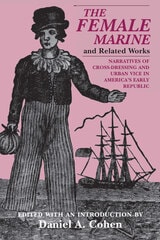
"The Female Marine" and Related Works
Narratives of Cross-Dressing and Urban Vice in America's Early RepublicDaniel A. Cohen
University of Massachusetts Press, 1997
The alternately racy and moralistic narrative recounts the adventures of a young woman from rural Massachusetts who is seduced by a false-hearted lover, flees to Boston, and is entrapped in a brothel. She eventually escapes by disguising herself as a man and serves with distinction on board the U.S. frigate Constitution during the War of 1812. After subsequent onshore adventures in and out of male dress, she is happily married to a wealthy New York gentleman.
In his introduction, Daniel A. Cohen situates the story in both its literary and historical contexts. He explains how the tale draws upon a number of popular Anglo-American literary genres, including the female warrior narrative, the sentimental novel, and the urban exposé. He then explores how The Female Marine reflects early-nineteenth-century anxieties concerning changing gender norms, the expansion of urban prostitution, the growth of Boston's African American community, and feelings of guilt aroused by New England's notoriously unpatriotic activities during the War of 1812.
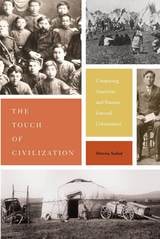
"The Touch of Civilization"
Comparing American and Russian Internal ColonizationSteven Sabol
University Press of Colorado, 2017
This critical examination of internal colonization—a form of contiguous continental expansion, imperialism, and colonialism that incorporated indigenous lands and peoples—draws a corollary between the westward-moving American pioneer and the eastward-moving Russian peasant. Sabol examines how and why perceptions of the Sioux and Kazakhs as ostensibly uncivilized peoples and the Northern Plains and the Kazakh Steppe as “uninhabited” regions that ought to be settled reinforced American and Russian government sedentarization policies and land allotment programs. In addition, he illustrates how both countries encountered problems and conflicts with local populations while pursuing their national missions of colonization, comparing the various forms of Sioux and Kazakh martial, political, social, and cultural resistance evident throughout the nineteenth century.
Presenting a nuanced, in-depth history and contextualizing US and Russian colonialism in a global framework, The Touch of Civilization will be of significant value to students and scholars of Russian history, American and Native American history, and the history of colonization.
"Theatricals of Day"
Emily Dickinson and Nineteenth-Century American Popular CultureSandra Runzo
University of Massachusetts Press, 2019
In her own private ways, Emily Dickinson participated in the popular entertainments of her time. On her piano, she performed popular musical numbers, many from the tradition of minstrelsy, and at theaters, she listened to famous musicians, including Jenny Lind and, likely, the Hutchinson Family Singers. In reading the Atlantic Monthly, the Springfield Republican, and Harper's, she kept up with the roiling conflicts over slavery and took in current fiction and verse. And, she enjoyed the occasional excursion to the traveling circus and appreciated the attractions of the dime museum. Whatever her aspirations were regarding participation in a public arena, the rich world of popular culture offered Dickinson a view of both the political and social struggles of her time and the amusements of her contemporaries.
“Theatricals of Day” explores how popular culture and entertainments are seen, heard, and felt in Dickinson's writing. In accessible prose, Sandra Runzo proposes that the presence of popular entertainment in Dickinson's life and work opens our eyes to new dimensions of the poems, illuminating the ways in which the poet was attentive to strife and conflict, to amusement, and to play.
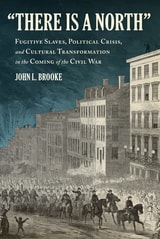
"There Is a North"
Fugitive Slaves, Political Crisis, and Cultural Transformation in the Coming of the Civil WarJohn L. Brooke
University of Massachusetts Press, 2019
How does political change take hold? In the 1850s, politicians and abolitionists despaired, complaining that the "North, the poor timid, mercenary, driveling North" offered no forceful opposition to the power of the slaveholding South. And yet, as John L. Brooke proves, the North did change. Inspired by brave fugitives who escaped slavery and the cultural craze that was Uncle Tom's Cabin, the North rose up to battle slavery, ultimately waging the bloody Civil War.
While Lincoln's alleged quip about the little woman who started the big war has been oft-repeated, scholars have not fully explained the dynamics between politics and culture in the decades leading up to 1861. Rather than simply viewing the events of the 1850s through the lens of party politics, “There Is a North” is the first book to explore how cultural action—including minstrelsy, theater, and popular literature—transformed public opinion and political structures. Taking the North's rallying cry as his title, Brooke shows how the course of history was forever changed.
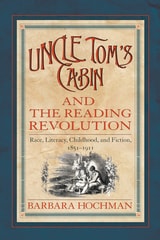
"Uncle Tom's Cabin" and the Reading Revolution
Race, Literacy, Childhood, and Fiction, 1851-1911Barbara Hochman
University of Massachusetts Press, 2011
"Uncle Tom's Cabin" and the Reading Revolution explores a transformation in the cultural meaning of Stowe's influential book by addressing changes in reading practices and a shift in widely shared cultural assumptions. These changes reshaped interpretive conventions and generated new meanings for Stowe's text in the wake of the Civil War.
During the 1850s, men, women, and children avidly devoured Stowe's novel. White adults wept and could not put the book down, neglecting work and other obligations to complete it. African Americans both celebrated and denounced the book. By the 1890s, readers understood Uncle Tom's Cabin in new ways. Prefaces and retrospectives celebrated Stowe's novel as a historical event that led directly to emancipation and national unity. Commentaries played down the evangelical and polemical messages of the book.
Illustrations and children's editions projected images of entertaining and devoted servants into an open-ended future. In the course of the 1890s, Uncle Tom's Cabin became both a more viciously racialized book than it had been and a less compelling one. White readers no longer consumed the book at one sitting; Uncle Tom's Cabin was now more widely known than read. However, in the growing silence surrounding slavery at the turn of the century, Stowe's book became an increasingly important source of ideas, facts, and images that the children of ex-slaves and other free-black readers could use to make sense of their position in U.S. culture.
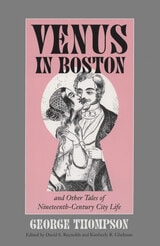
"Venus in Boston" and Other Tales of Nineteenth-Century City Life
George Thompson
University of Massachusetts Press, 2002
The three works in this volume offer a rich representative sample of Thompson's writing. The two novels—Venus in Boston and City Crimes—depict the American city as a place of dark mystery, bawdy humor, and near-universal corruption peopled with con artists and criminals of all kinds. In each novel, a complex narrative structure interweaves multiple stories of exploited labor, abuse of power, seduction, intrigue, and crime. Thompson's autobiography, My Life, presents the author's life in terms nearly as lively as his fiction.
Thompson's zestful, unconventional writings fly in the face of the stereotypical view of Victorian America as straitlaced and sentimental. Ideal for use as a classroom text, this new edition includes a scholarly introduction and an extensive bibliography.
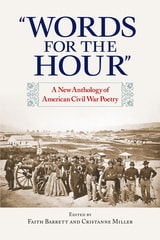
"Words for the Hour"
A New Anthology of American Civil War PoetryFaith Barrett
University of Massachusetts Press, 2005
“Words for the Hour” presents a readable and illuminating account of the Civil War, told through the words of poets North and South. From bathos to profound philosophical meditation and sorrow, the range of these poems illuminates the complexity of their era while also revealing the continuing power of this turning point in American history to speak to readers in the present day.
The volume is divided into three parts, each offering a different perspective on the poetry generated by the war. Part I samples the extraordinary range of poems written immediately preceding and during the war and published in popular periodicals, providing a kind of poetic newspaper account as one might have read it then—from the early days of optimistically heralded victory on both sides, through the mounting casualties and brutal deaths of the long middle years, to the war's conclusion and President Lincoln's assassination. Viewing the struggle from many different vantage points gives the reader access to the ways that people from various backgrounds experienced the trajectory of the war. Civilians and soldiers, free blacks and proponents of slavery, women and men from Massachusetts and Virginia and from recently admitted states and barely developed territories, writers with their eyes on the national political stage and those focused on personal domestic issues: these are the multiple voices of America responding to the war.
Part II includes substantial selections of poems by writers who published extensively in response to the conflict, providing more complex and comprehensive perceptions of the war. These poets include not just well-known figures such as Walt Whitman, Herman Melville, and John Greenleaf Whittier, but also African American poets George Moses Horton and Frances Ellen Watkins Harper and Southern poets Henry Timrod and Sarah Piatt.
Part III offers poems by two poets who did not publish during their lifetimes, but had strong imaginative responses to the conflict, thus giving a sense of the long reach of the war as a defining national experience. One of these two poets (Emily Dickinson) is now renowned while the other (Obadiah Ethelbert Baker) is first published in this volume.
“Words for the Hour” is indeed “new” among anthologies of Civil War poetry not only in its wide range of poems by popular, anonymous, and now canonical poets but also in its informational apparatus. A historical timeline listing major battles and events of the war begins the volume, and historical photographs or lithographs introduce each section of poems. The book also includes a substantial introduction, a glossary of important names and terminology relevant to understanding the poems, and biographical sketches for all the poets whose work is included.

'Twas Only an Irishman's Dream
The Image of Ireland and the Irish in American Popular Song Lyrics, 1800-1920William H. A. Williams
University of Illinois Press, 1996
Over time, the image of the Irish in the United States changed from that of hard-drinking Paddies to genial working-class citizens.
In 'Twas Only an Irishman's Dream, William H. A. Williams traces the change in this image through more than seven hundred pieces of sheet music--popular songs from the stage and for the parlor--to show how Americans' opinions of Ireland and the Irish swung from one extreme to the other.
As Williams shows, sheet music's place as a commercial item meant it had to be acceptable to the broadest possible song-buying public. Negotiations about the image of the Irish and Irish Americans involved Irish songwriters, performers, and pressured groups on one side, and non-Irish writers, publishers, and audiences on the other. Williams ties the contents of song lyrics to the history of the Irish diaspora, revealing how societies create ethnic stereotypes and how such stereotypes evolve, and even disappear, from mainstream popular culture.
1650-1850
Ideas, Aesthetics, and Inquiries in the Early Modern Era (Volume 28)Kevin L. Cope
Bucknell University Press, 2023
ISSN: 1065-3112
Published by Bucknell University Press, distributed worldwide by Rutgers University Press.
1650-1850
Ideas, Aesthetics, and Inquiries in the Early Modern Era (Volume 29)Kevin L. Cope
Bucknell University Press, 2024
Exploratory, investigative, and energetically analytical, 1650–1850 covers the full expanse of long-eighteenth-century thought, writing, and art while delivering abundant revelatory detail. Essays on well-known cultural figures combine with studies of emerging topics to unveil a vivid rendering of a dynamic period, simultaneously committed to singular genius and universal improvement. Welcoming research on all nations and language traditions, 1650–1850 invites readers into a truly global Enlightenment. Topics in volume 29 include Samuel Johnson’s notions about the education of women and a refreshing account of Sir Joseph Banks’s globetrotting. A guest-edited, illustration-rich, interdisciplinary special feature explores the cultural implications of water. As always, 1650–1850 culminates in a bevy of full-length book reviews critiquing the latest scholarship on long-established specialties, unusual subjects, and broad reevaluations of the period.
ISSN 1065-3112
Published by Bucknell University Press, distributed worldwide by Rutgers University Press.
1650-1850
Ideas, Aesthetics, and Inquiries in the Early Modern Era (Volume 30)Kevin L. Cope
Bucknell University Press, 2025
The contributors to volume 30 join with Enlightenment thinkers in pulling, pushing, and stretching the elastic boundaries of human experience. Essays on comical apocalypticism, the evolution of satire, and the Asian periphery of English literature open a volume that offers two special features on extreme aspects of a modernizing world. The first probes the undiscovered world of last wills and testaments, while the second explores the soaring world of eighteenth-century birds. As always, 1650–1850 culminates in a bevy of book reviews critiquing the latest scholarship on long-established specialties, unusual subjects, and broad reevaluations of the period.
Published by Bucknell University Press. Distributed worldwide by Rutgers University Press.
ISSN: 1065-3112
1650-1850
Ideas, Aesthetics, and Inquiries in the Early Modern Era (Volume 31)Kevin L. Cope
Bucknell University Press, 2026
Exploratory, investigative, and energetically analytical, 1650–1850 covers the full expanse of long-eighteenth-century thought, writing, and art while delivering abundant revelatory detail. Essays on well-known cultural figures combine with studies of emerging topics to unveil a vivid rendering of a dynamic period, simultaneously committed to singular genius and universal improvement. Welcoming research on all nations and language traditions, 1650–1850 invites readers into a truly global Enlightenment.
The contributors to volume 31 join with Enlightenment thinkers in charting the outposts of long eighteenth-century culture while discovering new features in seemingly familiar terrain. Essays explore outlandish but often observed activities such as medical quackery, Rosicrucian hermeticism, and the oral antics associated with the twisted “Malaprop” tradition. In happy contrast, the volume offers the second half of a sparkling special feature on the most familiar of all substances, water. Contributors lead us through an astounding assortment of aqueous topics, from the heritage of The Compleat Angler to the sanctified sprinklings of holy water. As always, 1650–1850 culminates in a bevy of full-length book reviews that robustly address the latest scholarship on long-established specialties, unusual subjects, and broad reevaluations of the period.
Published by Bucknell University Press. Distributed worldwide by Rutgers University Press.
ISSN: 1065-3112
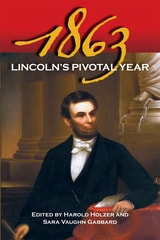
1863
Lincoln's Pivotal YearEdited by Harold Holzer and Sara Vaughn Gabbard
Southern Illinois University Press, 2013
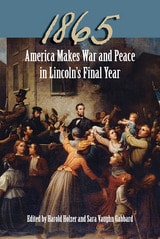
1865
America Makes War and Peace in Lincoln’s Final YearEdited by Harold Holzer and Sara Vaughn Gabbard
Southern Illinois University Press, 2015
In 1865 Americans faced some of the most important issues in the nation’s history: the final battles of the Civil War, the struggle to pass the Thirteenth Amendment, the peace process, reconstruction, the role of freed slaves, the tragedy of Abraham Lincoln's assassination, and the trials of the conspirators. In this illuminating collection, prominent historians of nineteenth-century America offer insightful overviews of the individuals, events, and issues on 1865 that shaped the future of the United States.
Following an introduction by renowned Lincoln scholar Harold Holzer, nine new essays explore the end of the Civil War, Lincoln’s death, and the start of the tentative peace in 1865. Michael Vorenberg discusses how Lincoln shepherded through the House of Representatives the resolution sending the Thirteenth Amendment to the states for ratification, John F. Marszalek and Michael B. Ballard examine the partnership of Lincoln’s war management and General Ulysses S. Grant’s crucial last thrusts against Robert E. Lee, and Richard Striner recounts how Lincoln faced down Confederate emissaries who proposed immediate armistice if Lincoln were to reverse the Emancipation Proclamation. Ronald C. White Jr. offers a fresh look at Lincoln’s second inaugural address, and Richard Wightman Fox provides a vivid narrative of Lincoln’s dramatic walk through Richmond after the Confederates abandoned their capital.
Turning to Lincoln’s assassination, Edward Steers Jr. relates the story of Booth’s organizational efforts that resulted in the events of that fateful day, and Frank J. Williams explains the conspirators’ trial and whether they should have faced military or civilian tribunals. Addressing the issue of black suffrage, Edna Greene Medford focuses on the African American experience in the final year of the war. Finally, Holzer examines the use of visual arts to preserve the life and legacy of the martyred president.
Rounding out the volume are a chronology of national and international events during 1865, a close look at Lincoln’s activities and writings from January 1 through April 14, and other pertinent materials. This thoughtful collection provides an engaging evaluation of one of the most crucial years in America’s evolution.