Results by title
183 books match the query 'Feminist' and 3 start with a non-letter
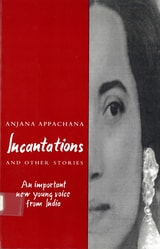
"Incantations" and Other Stories
An Important New Young Voice From IndiaAppachana, Anjana
Rutgers University Press, 1992
All life seems to be prescribed; these characters bravely or cautiously confront the rules and regulations or finally give in to them resignedly—any small triumphs they achieve are never clear-cut. One of the most unusual aspects of many of the stories is the way in which they are informed by but never ruled by the author's feminism. She never lectures her readers but lets us see for ourselves: a bride caught in a hopeless marriage where she has given up all rights to any life of her own, a hapless college student who is confined to campus for minor infractions just at the time when she had an appointment for an abortion, a young girl who keeps the dark secret of her sister's rape, a woman executive and a digruntled male clerk both trapped in the intricate bureaucracy of their business firm and the roles they must play to survive there. By turns warm, gullible, arrogant and bigoted, all of these characters live their lives amid contradictions and double standards, superstitions and impossible dreams. Appachana's vision is unique, her writing superb. Readers will thank her for allowing them to enter territory that is at once distant and exotic but also familiar and recognizable.
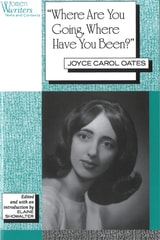
'Where Are You Going, Where Have You Been?'
Joyce Carol OatesShowalter, Elaine
Rutgers University Press, 1994
Joyce Carol Oates’s prize-winning story “Where Are You Going, Where Have You Been?” takes up troubling subjects that continue to occupy her in her fiction: the romantic longings and limited options of adolescent women; the tensions between mothers and daughters; the sexual victimization of women; and the American obsession with violence. Inspired by a magazine story about a serial killer, its remarkable portrait of the dreamy teenager Connie has made it a feminist classic. Connie’s life anticipates the emergence of American society from the social innocence of the fifties into the harsher contemporary realities of war, random violence, and crime. The story was the basis for the movie Smooth Talk, which became the subject of much feminist debate.
This casebook includes an introduction by the editor, a chronology of Oates’s life, an authoritative text of “Where Are You Going, Where Have You Been,” an essay by Oates on Smooth Talk, the original Life article about the serial killer, ten critical essays (including two about the film), and a bibliography.
The contributors are Brenda O. Daly, Christina Marsden Gillis, Don Moser, Tom Quirk, B. Ruby Rich, R.J.R. Rockwood, Larry Rubin, Gretchen Schulz, Marie Mitchell Oleson Urbanski, Joyce M. Wegs, Marilyn C. Wesley, and Joan D. Winslow.
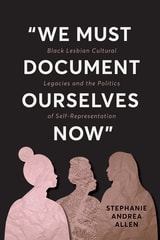
“We Must Document Ourselves Now”
Black Lesbian Cultural Legacies and the Politics of Self-RepresentationStephanie Andrea Allen
The Ohio State University Press, 2026
A long-overdue analysis of how Black lesbians have asserted their lived experience through creative practice, pushing back against heteropatriarchal systems that deny them visibility.
“We Must Document Ourselves Now” examines the essential but oft-ignored importance of Black lesbian literature and film in queer literary and film histories, arguing that Black lesbian cultural texts reflect creators’ lived experiences and resist the heteropatriarchal systems that deny Black lesbians visibility in popular culture. Stephanie Andrea Allen contends that these texts have three goals: to lay bare the experiences of Black lesbians in a raced, gendered, classed, and homophobic society; to challenge the notion that claiming Black lesbian identity is marginal or forbidden; and to take care of Black lesbians by bearing witness to their experiences through creative practice.
Insisting that Black feminist creative practice is an integral form of self and community care, Allen weaves analysis of cultural output spanning key sociocultural moments from 1974 to 2020 with interviews with Black lesbian cultural workers. “We Must Document Ourselves Now” examines the Black Arts / Black Power movement, the “boom” in lesbian and gay publishing, the so-called golden era of Black film, and twenty-first-century visual media to demonstrate how representations of Black lesbians, or lack thereof, were vital to constructing a cultural canon that focused on illuminating Black lesbian experiences in the United States.