Results by title
775 books match the query 'Germany' and 3 start with a non-letter
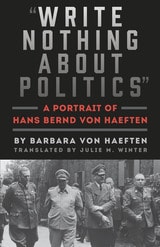
"Write Nothing about Politics"
A Portrait of Hans Bernd von HaeftenBarbara von Haeften
Michigan State University Press, 2018
1989
Revolutionary Ideas and IdealsKrishan Kumar
University of Minnesota Press, 2001
In 1989, from East Berlin to Budapest and Bucharest to Moscow, communism was falling. The walls were coming down and the world was being changed in ways that seemed entirely new. The conflict of ideas and ideals that began with the French Revolution of 1789 culminated in these revolutions, which raised the prospects of the "return to Europe" of East and Central European nations, the "restarting of their history," even, for some, the "end of history." What such assertions and aspirations meant, and what the larger events that inspired them mean-not just for the world of history and politics, but for our very understanding of that world-are the questions Krishan Kumar explores in 1989.
A well-known and widely respected scholar, Kumar places these revolutions of 1989 in the broadest framework of political and social thought, helping us see how certain ideas, traditions, and ideological developments influenced or accompanied these movements-and how they might continue to play out. Asking questions about some of the central dilemmas facing modern society in the new century, Kumar offers critical insight into how these questions might be answered and how political, social, and historical ideas and ideals can shape our destiny.
Contradictions Series, volume 12
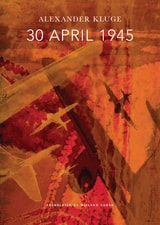
30 April 1945
The Day Hitler Shot Himself and Germany's Integration with the West BeganAlexander Kluge
Seagull Books, 2015
April 30, 1945, marked an end of sorts in the Third Reich. The last business day before a national holiday and then a series of transfers of power, April 30 was a day filled with contradictions and bewildering events that would forever define global history. It was on this day that while the Red Army occupied Berlin, Hitler committed suicide in his underground bunker, and, in San Francisco, the United Nations was being founded.
Alexander Kluge’s latest book, 30 April 1945, covers this single historic day and unravels its passing hours across the different theaters of the Second World War. Translated by Wieland Hoban, the book delves into the events happening around the world on one fateful day, including the life of a small German town occupied by American forces and the story of two SS officers stranded on the forsaken Kerguelen Islands in the South Indian Sea. Kluge is a master storyteller, and as he unfolds these disparate tales, one unavoidable question surfaces: What is the appropriate reaction to the total upheaval of the status quo?
Presented here with an afterword by Reinhard Jirgl, translated by Iain Galbraith, 30 April 1945 is a riveting collection of lives turned upside down by the deadliest war in history. The collective experiences Kluge paints here are jarring, poignant, and imbued with meaning. Seventy years later, we can still see our own reflections on the upheaval of a single day in 1945.