Results by title
941 books match the query 'Military' and 4 start with a non-letter
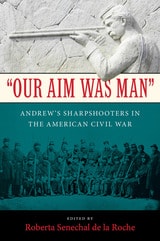
"Our Aim Was Man"
Andrew's Sharpshooters in the American Civil WarRoberta Senechal de la Roche
University of Massachusetts Press, 2016
One was a father who worried about his fellow soldiers' swearing. Another hoped to enter Harvard College. The third was a farmer whose letters home depict the later stages of the war. The fourth had turned to boot making when he did not inherit land. Based on the letters, diaries, and memoirs of four members of the First Company Massachusetts Sharpshooters, known as Andrew's Sharpshooters, this book provides a rare glimpse into the experiences of Union Army snipers. The company was one of the first units in American military history to be equipped with telescope-sighted rifles to enable long-distance targeting. Despite complaints that snipers violated codes of honorable combat, the members of Andrew's Sharpshooters generally expressed quiet pride in being an elite unit of highly skilled soldiers—"cool blooded sharpshooters," as one of them said.
Introduced and edited by Roberta Senechal de la Roche, these primary accounts include new details about the equipment, training, and deployment of snipers in the Army of the Potomac. They also reveal the challenges of covert warfare and include rich detail on the everyday problems of Civil War soldiers, including bad food, disease, punishing marches, and homesickness. The collected documents also convey the trials of those left on the home front.
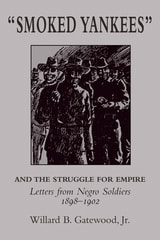
"Smoked Yankees" and the Struggle for Empire
Letters from Negro Soldiers, 1898–1902Willard Gatewood
University of Arkansas Press, 1987
Called upon for the first time to render military service outside the States, Negro soldiers (called Smoked Yankees by the Spaniards) were eager to improve their status at home by fighting for the white man in the Spanish-American War. Their story is told through countless letters sent to black U.S. newspapers that lacked resources to field their own reporters. The collection constitutes a remarkably complete and otherwise undisclosed amount of the black man’s role in—and attitude toward—America’s struggle for empire.
In first-hand reports of battles in the Philippine Islands and Cuba, Negro soldiers wrote from the perspective of dispossessed citizens struggling to obtain a larger share of the rights and privileges of Americans.
These letters provide a fuller understanding of the exploits of black troops through their reports of military activities and accounts of foreign peoples and its cultures.
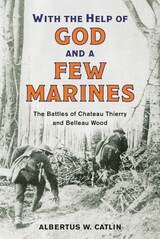
"With the Help of God and a Few Marines"
The Battles of Chateau Thierry and Belleau WoodAlbertus W. Catlin
Westholme Publishing, 2013
“The story of the marines in France is told with authority and interest.”—Booklist
“It is one of the books about the American war effort which is well worth keeping as well as reading.”—Outlook
“A well-written and complete account.”—Library Bulletin
In an area of woods smaller than New York City’s Central Park, the United States Marines made a desperate and dramatic stand against the might of the Imperial Germany Army’s final offensive in June 1918. Had the Germans broken through the lines as planned, there would have been no Allied forces between them and Paris. World War I had stagnated for nearly four years, and this last German push was a desperate, but powerful gamble to finally bring the war to a close. As at Guadalcanal during World War II, the enemy had not anticipated the ferocity and doggedness of the United States Marines. Leading this small expeditionary force was Brigadier General Albertus Wright Catlin. For most of the month of June the marines fought the Germans at close range, using their rifles effectively and engaging in hand-to-hand combat. Toward the end of the battle, Catlin was shot in the chest by a sniper and removed from the field. While recuperating, he began “With the Help of God and a Few Marines”, his account of the marines’ experience in France, including what became known as the Battle of Belleau Wood. First published in 1919, and considered among the finest American memoirs from World War I, it is notable for its description of what it means to be a United States Marine—an account as relevant today as it was nearly a century ago—and its straightforward depiction of life and death on the Western Front in the last months of the war.
1777
The Year of the HangmanJohn S. Pancake
University of Alabama Press, 1977
No one who has read the history of the War of Independence can fail to be fascinated by the campaign of Gentleman Johnny Burgoyne. The story evokes pictures in the mind's eye: scarlet-coated Englishmen; the green and blue uniforms of the German mercenaries; the flash of brass and silver and steel accoutrements; the swarms of Indians in their war paint; the whole moving through the green forests or sailing the blue waters of lakes and rivers. Even the names have a lyrical tone: Richelieu, Champlain, Oriskany, Ticonderoga, and La Chine.
Part of this fascination is the fact that the fate of the expedition marked a turning point in the history of the war. It is not surprising that there has been a host of chroniclers, scholars, and novelists, and those who fall in a category somewhere between because their artistry bridges the gaps that footnoted facts cannot, and so allows some scope for imagination (and may teach more history than the rest).
This fascination was partly responsible for Pancake’s exploration of this particular part of the history of the war. There was also the fact that no scholar since Hoffman Nickerson in his Turning Point of the Revolution (1926) has attempted a detailed study of the British invasion from Canada, although there has been a vast amount of literature on specific aspects of the campaign. No study to date has attempted to link the Canadian expedition to the concurrent operation of General Sir William Howe in Pennsylvania in such a way as to present a complete story of the campaign of 1777. From the point of its inception and launching by the American Secretary, Lord George Germain, to the point where it was reduced to a shambles at the end of the year.