Results by title
239 books match the query 'Agriculture' and 16 start with a
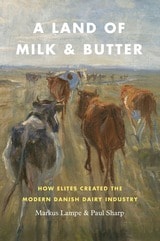
A Land of Milk and Butter
How Elites Created the Modern Danish Dairy IndustryMarkus Lampe and Paul Sharp
University of Chicago Press, 2018
This book presents a radical retelling of this story, placing (largely German-speaking) landed elites—rather than the Danish peasantry—at center stage. After acquiring estates in Denmark, these elites imported and adapted new practices from outside the kingdom, thus embarking on an ambitious program of agricultural reform and sparking a chain of events that eventually led to the emergence of Denmark’s famous peasant cooperatives in 1882. A Land of Milk and Butter presents a new interpretation of the origin of these cooperatives with striking implications for developing countries today.

A Little Bit of Land
Jessica Gigot
Oregon State University Press, 2022
From midwifing new lambs to harvesting basil, Jessica Gigot invites the reader into her life on a small farm and the uncommon road that led her there. Fascinated by farming and the burgeoning local food movement, she spent her twenties wandering the Pacific Northwest, interning at small farms and doing graduate work in horticulture, always with an eye towards learning as much as she could about how and why people farm. Despite numerous setbacks and the many challenges of farming, she created a family and farm life defined by resilience and a genuine love of the land.
In A Little Bit of Land, Gigot explores the intricacies of small-scale agriculture in the Pacific Northwest and the changing role of women in this male-dominated industry. Gigot alternates between chapters describing joys, routines, and challenges of farm life and chapters reflecting on her formative experiences in agriculture, on farms and in classrooms from Ashland to the Skagit Valley. Throughout, she explores questions of sustainability, economics, health, and food systems.
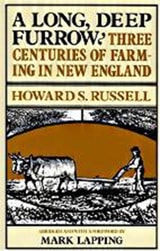
A Long, Deep Furrow
Three Centuries of Farming in New EnglandHoward S. Russell
Brandeis University Press, 1982

A People’s Green New Deal
Max Ajl
Pluto Press, 2021
'Hands-down the best book yet on the Green New Deal' - Jason Hickel
The idea of a Green New Deal was launched into popular consciousness by US Congressperson Alexandria Ocasio-Cortez in 2018. It has become a watchword in the current era of global climate crisis. But what - and for whom - is the Green New Deal?
In this concise and urgent book, Max Ajl provides an overview of the various mainstream Green New Deals. Critically engaging with their proponents, ideological underpinnings and limitations, he goes on to sketch out a radical alternative: a 'People's Green New Deal' committed to decommodification, working-class power, anti-imperialism and agro-ecology.
Ajl diagnoses the roots of the current socio-ecological crisis as emerging from a world-system dominated by the logics of capitalism and imperialism. Resolving this crisis, he argues, requires nothing less than an infrastructural and agricultural transformation in the Global North, and the industrial convergence between North and South. As the climate crisis deepens and the literature on the subject grows, A People's Green New Deal contributes a distinctive perspective to the debate.
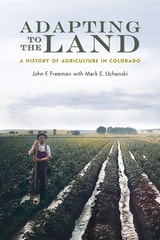
Adapting to the Land
A History of Agriculture in ColoradoJohn F. Freeman
University Press of Colorado, 2021
Ancestral Puebloans farmed and grazed within the limits of nature. Early settlers adjusted their cultivation methods through trial and error, while later agriculturists relied on research and technical advice from the Colorado Agricultural College. As part of wartime mobilization, the federal government prompted farmers to efficiently increase yields. To meet the demand for food and fiber scientific and technical innovations led to the development of new plant cultivars and livestock breeds, advances in mechanization, and widespread use of synthetic amendments. Increasing concern over soil fertility and the loss of irrigation water to urbanization contributed to more changes. Despite, or perhaps because of, what we see today along the Front Range, Colorado may still have a chance to slow or even reverse its seemingly unrestrained growth, creating a more vibrant, earth-friendly society in which agriculture plays an increasingly significant part. Scientific discoveries and innovations in regenerative cultivation are clearing the path to a more sustainable future.
Adapting to the Land adds an ecological and horticultural perspective to historical interpretations of recurring agricultural issues in the state and tracks the concept of stewardship, suggesting that spiritual beliefs continue to contribute to debates over acceptable agricultural practices and the effects of urbanization upon the land. This book will be a key resource for students, scholars, and general readers interested in agricultural and Colorado history, sustainability, and rural sociology.

African American Life in the Rural South, 1900-1950
Edited with an introduction by R. Douglas Hurt
University of Missouri Press, 2003
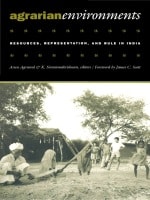
Agrarian Environments
Resources, Representations, and Rule in IndiaArun Agrawal, ed.
Duke University Press, 2000
Editors Arun Agrawal and K. Sivaramakrishnan claim that rural social change in India cannot be understood without exploring how environmental changes articulate major aspects of agrarian transformations—technological, cultural, and political—in the last two centuries. In order to examine these issues, they have reached beyond the confines of single disciplinary allegiances or methodological loyalties to bring together anthropologists, historians, political scientists, geographers, and environmental scientists who are significantly informed by interdisciplinary research. Drawing on extensive field and archival research, the contributors demonstrate the powerful political implications of blurring the boundaries between dichotomous cultural representations, combine conceptual analyses with specific case studies, and look at why competing powers chose to emphasize particular representations of land use or social relations. By providing a more textured analysis of how categories emerge and change, this work offers the possibility of creating crucial alliances across populations that have historically been assumed to lack mutual goals.
Agrarian Environments will be valuable to those in political science, Asian studies, and environmental studies.
Contributors. Arun Agrawal, Mark Baker, Molly Chattopadhyaya, Vinay Gidwani, Sumit Guha, Shubhra Gururani, Cecile Jackson, David Ludden, Haripriya Rangan, Paul Robbins, Vasant Saberwal, James C. Scott, K. Sivaramakrishnan, Ajay Skaria, Jennifer Springer, Darren Zook

Agricultural Cooperation
Selected ReadingsMartin A. Abrahamsen and Claud L. Scroggs, Editors
University of Minnesota Press, 1957
Agricultural Cooperation was first published in 1957. Minnesota Archive Editions uses digital technology to make long-unavailable books once again accessible, and are published unaltered from the original University of Minnesota Press editions.
Much has been written and published on the general subject of agricultural cooperation, but the material has been scattered and hard to find until now. The volume makes available in convenient form a selection of the most significant articles and excerpts from books, magazines, pamphlets, and other publications. It provides a comprehensive view of the development of farmers' cooperatives in the United States and an evaluation of their relation to the present economy.
The 54 articles are by 49 different contributors from various branches of cooperative activity. Among them are professors of agricultural economies, government research experts in agricultural cooperation, officers and members of cooperative organizations, as well as government officials including former Secretary of Agriculture Clinton P. Anderson and Senators Paul H. Douglas and George D. Aiken. J. K. Stern, president of the American Institute of Cooperation, contributes a foreword.
The articles deal significantly with such broad subjects as the economic and social forces that have shaped the development of cooperatives, the place of cooperative organizations in helping to meet the present-day needs of agriculture, and the role of these farmer-owned businesses in the nation's economy.
Agricultural Intensification and Prehistoric Health in the Valley of Oaxaca, Mexico
Denise C. Hodges
University of Michigan Press, 1989
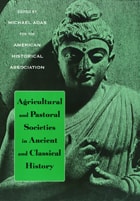
Agricultural and Pastoral Societies in Ancient and Classical History
Michael Adas
Temple University Press, 2001
By highlighting key historical transitions and recurring cultural patterns, this book provides an engaging introduction to the complexities of human development. Written by leading scholars in the field, the historiographic essays in Agricultural and Pastoral Societies in Ancient and Classical History offer students and teachers a comprehensive overview of the arguments, applications, and resources that inform comparative global history.
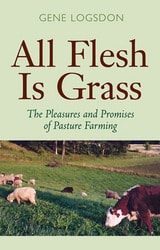
All Flesh Is Grass
The Pleasures and Promises of Pasture FarmingGene Logsdon
Ohio University Press, 2004
Amidst Mad Cow scares and consumer concerns about how farm animals are bred, fed, and raised, many farmers and homesteaders are rediscovering the traditional practice of pastoral farming. Grasses, clovers, and forbs are the natural diet of cattle, horses, and sheep, and are vital supplements for hogs, chickens, and turkeys. Consumers increasingly seek the health benefits of meat from animals raised in green paddocks instead of in muddy feedlots.
In All Flesh Is Grass: The Pleasures and Promises of Pasture Farming, Gene Logsdon explains that well-managed pastures are nutritious and palatable—virtual salads for livestock. Leafy pastures also hold the soil, foster biodiversity, and create lovely landscapes. Grass farming might be the solution for a stressed agricultural system based on an industrial model and propped up by federal subsidies.
In his clear and conversational style, Logsdon explains historically effective practices and new techniques. His warm, informative profiles of successful grass farmers offer inspiration and ideas. His narrative is enriched by his own experience as a “contrary farmer” on his artisan-scale farm near Upper Sandusky, Ohio.
All Flesh Is Grass will have broad appeal to the sustainable commercial farmer, the home-food producer, and all consumers who care about their food.
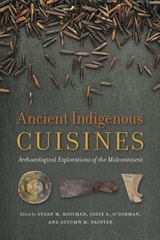
Ancient Indigenous Cuisines
Archaeological Explorations of the MidcontinentEdited by Susan M. Kooiman, Jodie A. O'Gorman, and Autumn M. Painter
University of Alabama Press, 2025
New essays from foodways archaeology related to cuisine in social, cultural, and environmental contexts.
This collection of original essays is the first to cover recent trends in foodways archaeology in the Midwest using the concept of cuisine: the selection of food ingredients and methods of food preparation, cooking, and serving/consumption in relation to their social, cultural, and environmental contexts. This work span the Early Archaic (9000 BC) to Late Precontact (up to around AD 1500) in ecological zones of present-day Michigan, Indiana, Illinois, Wisconsin, Minnesota, North Dakota, and Manitoba. Chapters trace development from hunter-gathering to horticultural practices to the more robust farming/fishing/hunting model centered on maize, squash, and other domesticates.
As Susan M. Kooiman, Jodie A. O’Gorman, and Autumn M. Painter note, identification of past cooking habits and evolving methods for foodstuffs identification can help archaeologists to reconstruct foodways and connect food behaviors with identity and associated fundamental societal beliefs. Contributors to this collection use cutting-edge methods and perspectives and consider a range of questions and outcomes that demonstrate the versatility and strength of culinary studies. To move the field forward, contributors also note areas for further analysis and improvement.
This volume targets archaeologists and students, archaeobotanists and zooarchaeologists, and those curious about Indigenous food culture. Engaging content includes chapters on the construction of earth ovens, the use-alteration of pottery and residue, a discussion of cuisine combining plant and animal data with ceramic trends, and the various contexts of plates to understand cooking methods and the social role of cuisine. Others examine faunal remains, the plant remains of feasting, the introduction of maize, the use of limestone nixtamalization, and archaeobotanical assemblages that reveal shifts in cuisine. A conclusion addresses the question, Why cuisine?
CONTRIBUTORS
Rebecca K. Albert / Alleen Betzenhauser / Jennifer R. Haas / Mary M. King / Susan M. Kooiman / Mary E. Malainey / Terrance J. Martin / Fernanda Neubauer / Kelsey Nordine / Jodie A. O’Gorman / Autumn M. Painter / Jeffrey M. Painter / Kimberly Schaefer / Mary Simon
Ancient Maya Life in the Far West Bajo
Social and Environmental Change in the Wetlands of BelizeJulie L. Kunen
University of Arizona Press, 2004
In this lively story of life in the wetlands on the outskirts of the major site of La Milpa, Julie Kunen documents a hitherto unrecognized form of intensive agriculture in the Maya lowlands—one that relied on the construction of terraces and berms to trap soil and moisture around the margins of low-lying depressions called bajos. She traces the intertwined histories of residential settlements on nearby hills and ridges and agricultural terraces and other farming-related features around the margins of the bajo as they developed from the Late Preclassic perios (400 BC-AD 250) until the area's abandonment in the Terminal Classic period (about AD 850).
Kunen examines the organization of three bajo communities with respect to the use and management of resources critical to agricultural production. She argues that differences in access to spatially variable natural resources resulted in highly patterned settlement remains and that community founders and their descendents who had acquired the best quality and most diverse set of resources maintained an elevated status in the society.
The thorough integration of three lines of evidence—the settlement system, the agricultural system, and the ancient environment—breaks new ground in landscape research and in the study of Maya non-elite domestic organization. Kunen reports on the history of settlement and farming in a small corner of the Maya world but demonstrates that for any study of human-environment interactions, landscape history consists equally of ecological and cultural strands of influence.
Animals as Food
(Re)connecting Production, Processing, Consumption, and ImpactsAmy J. Fitzgerald
Michigan State University Press, 2015

Animals under the Swastika
J. W. Mohnhaupt, translated by John R. J. Eyck
University of Wisconsin Press, 2022
Drawing from diaries, journals, school textbooks, and printed propaganda, J.W. Mohnhaupt tells these animals’ stories vividly and with an eye for everyday detail, focusing each chapter on a different facet of Nazism by way of a specific animal species: red deer, horses, cats, and more. Animals under the Swastika illustrates the complicated, thought-provoking relationship between Nazis and animals.
Aztec Science
The Genetic Origin of Maize, Pollination, and Plant Sexuality Recorded in ArtHelen Burgos-Ellis
University Press of Colorado, 2026
Supported with ample iconographic, ethnohistoric, etymological, and scientific evidence, Aztec Science is a groundbreaking endeavor introducing a new and radical approach to the study of Aztec art. It demonstrates that the Indigenous peoples of ancient Mesoamerica recorded scientific information about plants in their material culture. The detailed analysis of plant imagery in Aztec art, including in manuscripts such as the Codex Borgia, reveals that the cultural importance of maize and other plants was closely linked to scientific concepts that were well known in central Mexico centuries before they were subsequently “discovered” in Europe.
For the Nahua, Helen Burgos-Ellis argues, maize’s significance went far beyond economic value and religious importance. In Nahua art, references to maize, grass, and Quetzalcoatl reflect historic and scientifically relevant information. These images and glyphs, when studied against the ethnohistoric and scientific record of central Mexicans’ vast knowledge of plants, indicate that the Nahua understood key concepts about the maize plant, including its genetic origin from a common grass, pollination process, life cycle, and sexual reproduction. Consequently, the cultural significance of maize for the Nahuas was deeply intertwined with scientific understanding.
Aztec Science is a radical departure from bulk of the scholarship on the Codex Borgia, which has primarily been understood to contain calendrical and ritual information rather than botanical content, and is of significant interest to Pre-Columbianists and students and scholars of ethnohistory, Indigenous history and culture, traditional ecological knowledge, art history, and the history of science and botany.