Results by title
209 books match the query 'Alaska' and 27 start with a

A Kind of Alaska
Women in the Plays of O'Neill, Pinter, and ShepardAnn C. Hall
Southern Illinois University Press, 1993
In an effort to define what constitutes a feminist reading of literary works, Ann C. Hall offers an analytic technique that is both a feminist and a psychoanalytic approach, applying this technique to her study of women characters in the modern dramatic texts of Eugene O’Neill, Harold Pinter, and Sam Shepard.
This is the first study to treat these three writers in tandem, and while Hall uses the work of Jacques Lacan, Luce Irigaray, and other psychoanalytic feminist critics in her close readings of specific dramatic texts, she also brings in commentaries by critics, directors, performers, and historians. Her technique thereby provides us with a new and significant method for addressing female characters as written by male playwrights, a task that she argues is not only a valid and necessary part of feminist dramatic criticism but a part of theatrical production as well.
From Pinter’s play A Kind of Alaska, Hall extracts a metaphor for the patriarchal oppression of women, contextualizing such oppression through an examination of O’Neill’s madonnas, Pinter’s whores, and Shepard’s female saviors as they are represented in O’Neill’s Iceman Cometh, Long Day’s Journey into Night, and A Moon for theMisbegotten; Pinter’s Homecoming, No Man’s Land, Betrayal, and A Kind of Alaska; and Shepard’s Buried Child, True West, and A LieoftheMind.
Since the works of O’Neill, Pinter, and Shepard continue to be performed to popular acclaim, Hall hopes that a better understanding of the female characters in these plays will influence the performances themselves.
A Naturalist in Alaska
Adolph Murie
University of Arizona Press, 1990
"A fascinating study of the life cycles of the animals of Alaska and their inter-relationships. One venturing to capture something of the true beauty of Alaska and its fauna will probably find it in this book."—Journal of the West
"This book should be considerable aid to those who wish to preserve some of the great natural treasures still remaining in Alaska in the face of the inevitable pressures of a growing population. The writing is absolutely first rate. Highly recommended."—Library Journal
Across the Shaman's River
John Muir, the Tlingit Stronghold, and the Opening of the NorthDaniel Lee Henry
University of Alaska Press, 2017
Tucked in the corner of Southeast Alaska, the Tlingits had successfully warded off the Anglo influences that had swept into other corners of the territory. This tribe was viewed by European and American outsiders as the last wild tribe and a frustrating impediment to access. Missionaries and prospectors alike had widely failed to bring the Tlingit into their power. Yet, when John Muir arrived in 1879, accompanied by a fiery preacher, it only took a speech about “brotherhood”—and some encouragement from the revered local shaman Skandoo’o—to finally transform these “hostile heathens.”
Using Muir’s original journal entries, as well as historic writings of explorers juxtaposed with insights from contemporary tribal descendants, Across the Shaman’s River reveals how Muir’s famous canoe journey changed the course of history and had profound consequences on the region’s Native Americans.
Akulmiut Neqait / Fish and Food of the Akulmiut
Ann Fienup-Riordan, Marie Meade, and Alice Rearden
University of Alaska Press, 2019
This bilingual book details the lives of the Akulmiut living in the lake country west of Bethel, Alaska, in the villages of Kasigluk, Nunapitchuk, and Atmautluak. Akulmiut Neqait is based in conversations recorded with the people of these villages as they talk about their uniquely Yup'ik view of the world and how it has weathered periods of immense change in southwest Alaska. While many predicted that globalization would sound the death knoll for many distinctive traditions, these conversations show that Indigenous people all over the planet have sought to appropriate the world in their own terms. For all their new connectedness, the continued relevance of traditional admonitions cannot be denied.
Alaska Codfish Chronicle
A History of the Pacific Cod Fishery in AlaskaJames Mackovjak
University of Alaska Press, 2019
Alaska Codfish Chronicle is the first comprehensive history of this fishery. It looks at the early decades of the fishery’s history, a period marked by hardship and danger, as well as the dominance of foreign fishermen. And the modern era, beginning in 1976 when the United States claimed an exclusive economic zone around the Alaska coasts, “Americanizing” the fishery and replacing the foreign fleets that had been ravaging the resources in the Gulf of Alaska and the Bering Sea. Today, the Pacific cod fishery is, in terms of poundage, the second largest fishery in Alaska, and considered among the best-managed fisheries in the world.
This history is extremely well documented, does not spare details, and is accessible to general readers. It incorporates nearly a hundred photographs and illustrations and is sprinkled with numerous observations from fishing industry journals and reports, even incorporating poems and recipes, making this an especially thorough and unique account of one of Alaska’s most iconic and important industries.

Alaska Constitution
Edited by University of Alaska Press
University of Alaska Press, 2020
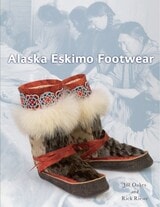
Alaska Eskimo Footwear
Jill Oakes and Rick Riewe
University of Alaska Press, 2006
For each major Alaska Eskimo group—Inupiaq, Yup’ik, Aleut, Alutiiq, St. Lawrence Islander—authors Oakes and Riewe discuss pattern, design, and techniques for skin preparation, construction, and decoration. They describe the reasons for design and decorative differences in boots used for ceremonies and dancing versus those for everyday wear and hunting, trapping, and fishing.
Developed with Eskimo seamstresses from each Alaskan region, this full-color volume features photographs from museum collections in the United States and Russia. Detailed drawings of patterns, construction techniques, and decorative details illustrate the complexity of this ancient art and provide readers with guidance in identifying regional styles. A tribute to an exquisite art and the women who practice it, Alaska Eskimo Footwear brings the beauty of the North to life.
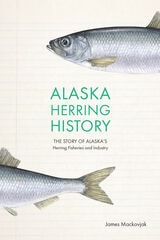
Alaska Herring History
The Story of Alaska’s Herring Fisheries and Industryby James Mackovjak
University of Alaska Press, 2022
The book is divided into three parts based on the purposes for which herring have been harvested. Part I is a history of the reduction (fertilizer/fish meal/fish oil) and cured (salted) herring industries and the
bait-herring fisheries; part II is a history of the roe-herring fisheries in Southeast Alaska, Prince William Sound, Kodiak Island, lower Cook Inlet, Togiak, and Norton Sound; and part III is a history of the herring spawn-on-kelp industry. Historical and contemporary photos and illustrations—as well as graphs and charts that help summarize the development and, in some cases, the demise of the fisheries—augment this detailed look at the evolution of Alaska's herring fisheries.
Balancing scientific details, historical facts, and personal anecdotes from experts in the field, Alaska Herring History will be of interest to historians, social scientists, biologists, and fishery managers and makes an important contribution to Alaska fisheries literature.
Alaska Native Cultures and Issues
Responses to Frequently Asked QuestionsEdited by Libby Roderick
University of Alaska Press, 2010
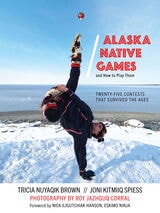
Alaska Native Games and How to Play Them
Tricia Nuyaqik Brown and Joni Kitmiiq Spiess
University of Alaska Press, 2020
As Tricia Nuyaqik Brown shows, even though today’s competitions are a big media event in Alaska, the games themselves are really no different from those of long ago. Ancestral communities once pitted their strongest, their most agile, their fastest men and women against those from neighboring villages or tribal groups. Those games never died, but rather than gathering in a sod meeting place, competitions are now held in gyms and arenas. Each game today can be linked to some aspect of surviving in a harsh environment, of drawing sustenance from the land and sea. From the Seal Hop to the Bench Reach to the Four-Man Carry, these ancient games still require athletes to be in top physical condition and possess sharp mental focus. They hold dear the traditional Native values of honoring the elders, responsibility to tribe, sportsmanship, humor, patience, and hunter success. This book offers an engaging introduction to these games and their history, inviting people to jump in and try them for themselves!

Alaska Politics and Public Policy
The Dynamics of Beliefs, Institutions, Personalities, and PowerEdited by Clive S. Thomas, with Laura Savatgy and Kristina Klimovich
University of Alaska Press, 2016
This book, the most comprehensive on the subject to date, focuses on the question of how beliefs, institutions, personalities, and power interact to shape Alaska politics and public policy. Drawing on these interactions, the contributors explain how and why certain issues get dealt with successfully and others unsuccessfully, and why some issues are taken up quickly while others are not addressed at all. This comprehensive guide to the political climate of Alaska will be essential to anyone studying the politics of America’s largest—and in some ways most unusual—state.

Alaska Trees and Shrubs
Les Viereck
University of Alaska Press, 2007

Alaska at 50
The Past, Present, and Future of Alaska StatehoodEdited by Gregory W. Kimura
University of Alaska Press, 2009
In 2009 Alaska celebrates its fiftieth anniversary of U.S. statehood. To commemorate that milestone, Alaska at 50 brings together some of today’s most noteworthy and recognizable writers and researchers to address the past, present, and future of Alaska. Divided into three overarching sections—art, culture, and humanities; law, economy, and politics; and environment, people, and place—Alaska at 50 is written in highly accessible prose. Illustrations and photographs of significant artefacts of Alaska history enliven the text. Each contributor brings a strong voice and prescription for the next fifty years, and the resulting work presents Alaskans and the nation with an overview of Alaska statehood and ideas for future development.

Alaska at War, 1941-1945
The Forgotten War RememberedEdited by Fern Chandonnet
University of Alaska Press, 2007
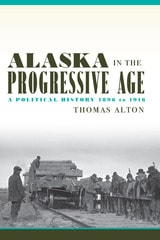
Alaska in the Progressive Age
A Political History, 1896 to 1916Thomas Alton
University of Alaska Press, 2019
Alaska in the Progressive Age looks at how this national movement affected the Alaska territory. Though the reigning view is that Alaska was neglected and even abused by the federal government, Alton argues that from 1896 to 1916 the territory benefitted richly in the age of Progressive Democracy. As the population of Alaska grew, Congress responded to the needs of the nation’s northern possession, giving the territory a delegate to Congress, a locally elected legislature, and ultimately in 1914, the federally funded Alaska Railroad.
Much has been written about the development of modern-day Alaska, especially in terms of the Gold Rush and the origins of the Alaska Railroad. But this is the first history to put this era in the context of Progressive Age American politics. This unexplored look at how Progressivism reached the furthest corners of the United States is an especially timely book as the Progressive Movement shows signs of affecting Alaska again.

Alaska on the Go
Exploring the 49th State with ChildrenErin Kirkland
University of Alaska Press, 2014
Journalist and Alaska resident Erin Kirkland knows every corner of the state, and she has crossed thousands of miles with her son. In Alaska on the Go, she offers a fresh take on exploring some of the most beautiful land in the world, with tips and tricks that only an insider knows. Serving as the perfect tour guide, Kirkland identifies the best and most kid-friendly destinations in cities across Alaska. She offers practical advice on everything from restaurants to rest stops and from weather surprises to wild animals. Photos, maps, and sample itineraries make it easy for parents to plan a trip that will delight and entertain everyone.
The only family travel guide to Alaska written by a current Alaskan, Alaska on the Go makes the state more accessible than ever. Whether traveling via car, cruise ship, or dogsled, this practical, portable guide will open up a new world of memorable adventures.

Alaska on the Go
Exploring the Alaska Marine Highway System with ChildrenErin Kirkland
University of Alaska Press, 2017
A staple of coastal transportation since the 1950s, the Alaska Marine Highway System is a vital link to cities that are often inaccessible except by air. Alaska on the Go offers fascinating accounts of both the small coastal towns and the larger population centers serviced by the highway along with easy-to-navigate route descriptions, helpful packing lists, and tips for inland and onboard adventures. Portable and personable, and covering all thirty routes that make up the Alaska Marine Highway System, Alaska on the Go is the perfect companion for the intrepid traveler.
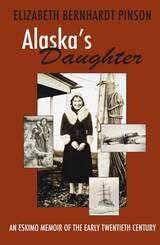
Alaska's Daughter
An Eskimo Memoir of the Early Twentieth CenturyElizabeth Pinson
Utah State University Press, 2004
Elizabeth B. Pinson shares with us her memories of Alaska's emergence into a new and modern era, bearing witness to history in the early twentieth century as she recalls it. She draws us into her world as a young girl of mixed ethnicity, with a mother whose Eskimo family had resided on the Seward Peninsula for generations and a father of German heritage. Growing up in and near the tiny village of Teller on the Bering Strait, Elizabeth at the age of six, despite a harrowing, long midwinter sled ride to rescue her, lost both her legs to frostbite when her grandparents, with whom she was spending the winter in their traditional Eskimo home, died in the 1918 influenza epidemic.
Fitted with artificial legs financed by an eastern benefactor, Elizabeth kept journals of her struggles, triumphs, and adventures, recording her impressions of the changing world around her and experiences with the motley characters she met. These included Roald Amundsen, whose dirigible landed in Teller after crossing the Arctic Circle; the ill-fated 1921 British colonists of Wrangel Island in the Arctic; trading ship captains and crews; prospectors; doomed aviators; and native reindeer herders. Elizabeth moved on to boarding school, marriage, and the state of Washington, where she compiled her records into this memoir and where, now in her 90s, she lives.
Alaska's Greatest Outdoor Legends
Colorful Characters Who Built the Fishing and Hunting IndustriesDoug Kelly
University of Alaska Press, 2016

Alaska's Hidden Wars
Secret Campaigns on the North Pacific RimOtis Hays Jr.
University of Alaska Press, 2004
Alaska's Hidden Wars tells the story of the war in the North Pacific, a story of savage weather, isolation, and sacrifice.
Two island chains, the Aleutians and the Kuriles, became the focus of a series of major campaigns that pitted the Americans against the Japanese. Alaska's Hidden Wars chronicles the role of Japanese-American intelligence specialists and reveals a Japanese eyewitness account of the defense of Attu. Two virtually unknown aspects of the North Pacific war are also exposed: the brutal North Pacific weather and the imprisonment of American airmen in Kamchatka.
In 1942, the Japanese raided Dutch Harbor in the Aleutian Islands and occupied the islands of Kiska and Attu. The Americans mounted a vigorous campaign, and the Japanese retreated to the Kuriles. For the next two years, the Americans launched air raids and fleet bombardments, while American soldiers maintained lonely outposts along Aleutian coasts. But in 1945, when Japan finally surrendered, the Kuriles were taken, not by the waiting Americans, but by the Soviets.
Alaska's Hidden Wars is a fast-moving history that brings declassified archival sources to light and draws the reader into the lonely, bitter war fought in the North Pacific.
Alaska
Reflections on Land and SpiritEdited by Robert Hedin and Gary Holthaus
University of Arizona Press, 1989
Aleutian Ethnography
Lucien Turner
University of Alaska Press, 2008
Alutiiq Villages under Russian and U.S. Rule
Sonja Luehrmann
University of Alaska Press, 2009

American Beginnings
The Prehistory and Palaeoecology of BeringiaEdited by Frederick Hadleigh West
University of Chicago Press, 1996
"An invaluable resource. . . . It will no doubt remain the key reference book for Beringia for many years to come."—Steven Mithen, Journal of Human Evolution
"Extraordinary. The fifty-six contributors . . . represent the most prominent American and Russian researchers in the region."—Choice
"Publication of this well-illustrated compendium is a great service to early American and especially Siberian Upper Paleolithic archaeology."—Nicholas Saunders, New Scientist
"This is a great book . . . perhaps the greatest contribution to the archaeology of Beringia that has yet been published. . . . This is the kind of book to which archaeology should aspire."—Herbert D.G. Maschner, Antiquity
Among Wolves
Gordon Haber's Insights into Alaska's Most Misunderstood AnimalGordon Haber and Marybeth Holleman
University of Alaska Press, 2013
He weathered brutal temperatures in the wild to document the wolves and provided exceptional insights into wolf behavior. Haber’s writings and photographs reveal an astonishing degree of cooperation between wolf family members as they hunt, raise pups, and play, social behaviors and traditions previously unknown. With the wolves at risk of being destroyed by hunting and trapping, his studies advocated for a balanced approach to wolf management. His fieldwork registered as one of the longest studies in wildlife science and had a lasting impact on wolf policies.
Haber’s field notes, his extensive journals, and stories from friends all come together in Among Wolves to reveal much about both the wolves he studied and the researcher himself. Wolves continue to fascinate and polarize people, and Haber’s work continues to resonate.
Arctic Village
A 1930's Portrait of Wiseman, AlaskaRobert Marshall
University of Alaska Press, 1991
The richness of statistical coverage in this book, and Marshall's careful descriptions of the characters he met, provide readers with a window to the world of 1930 and a nearly complete record of the Koyukuk civilization as he saw it. Readers learn what the people of Wiseman thought about sex, religion, politics, and the myriad of ways they found to cope with and enjoy life in a wilderness community.

Attu Boy
A Young Alaskan's WWII MemoirNick Golodoff
University of Alaska Press, 2015
One of those survivors, Nick Golodoff, became a prisoner of war at just six years old. He was among the dozens of Unangan Attu residents swept away to Hokkaido, and one of only twenty-five to survive. Attu Boy tells Golodoff’s story of these harrowing years as he found both friendship and cruelty at the hands of the Japanese. It offers a rare look at the lives of civilian prisoners and their captors in WWII-era Japan. It also tells of Golodoff’s bittersweet return to a homeland torn apart by occupation and forced internments. Interwoven with other voices from Attu, this richly illustrated memoir is a testament to the struggles, triumphs, and heartbreak of lives disrupted by war.