Results by title
478 books match the query 'Bible' and 26 start with a
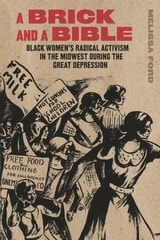
A Brick and a Bible
Black Women's Radical Activism in the Midwest during the Great DepressionMelissa Ford
Southern Illinois University Press, 2022
Uncovering the social revolution led by Black women in the heartland
In this first study of Black radicalism in midwestern cities before the civil rights movement, Melissa Ford connects the activism of Black women who championed justice during the Great Depression to those involved in the Ferguson Uprising and the Black Lives Matter movement. A Brick and a Bible examines how African American working-class women, many of whom had just migrated to “the promised land” only to find hunger, cold, and unemployment, forged a region of revolutionary potential.
A Brick and a Bible theorizes a tradition of Midwestern Black radicalism, a praxis-based ideology informed by but divergent from American Communism. Midwestern Black radicalism that contests that interlocking systems of oppression directly relates the distinct racial, political, geographic, economic, and gendered characteristics that make up the American heartland. This volume illustrates how, at the risk of their careers, their reputations, and even their lives, African American working-class women in the Midwest used their position to shape a unique form of social activism.
Case studies of Detroit, St. Louis, Chicago, and Cleveland—hotbeds of radical activism—follow African American women across the Midwest as they participated in the Ford Hunger March, organized the Funsten Nut Pickers’ strike, led the Sopkin Dressmakers’ strike, and supported the Unemployed Councils and the Scottsboro Boys’ defense. Ford profoundly reimagines how we remember and interpret these “ordinary” women doing extraordinary things across the heartland. Once overlooked, their activism shaped a radical tradition in midwestern cities that continues to be seen in cities like Ferguson and Minneapolis today.

A Catalog of Biblical Passages in the Dead Sea Scrolls
David L. Washburn
SBL Press, 2003
A Greek-English Lexicon of the New Testament and Other Early Christian Literature
Walter Bauer
University of Chicago Press, 2000
In this edition, Frederick W. Danker's broad knowledge of Greco-Roman literature, as well as papyri and epigraphs, provides a more panoramic view of the world of Jesus and the New Testament. Danker has also introduced a more consistent mode of reference citation, and has provided a composite list of abbreviations to facilitate easy access to this wealth of information.
Perhaps the single most important lexical innovation of Danker's edition is its inclusion of extended definitions for Greek terms. For instance, a key meaning of "episkopos" was defined in the second American edition as overseer; Danker defines it as "one who has the responsibility of safeguarding or seeing to it that something is done in the correct way, guardian." Such extended definitions give a fuller sense of the word in question, which will help avoid both anachronisms and confusion among users of the lexicon who may not be native speakers of English.
Danker's edition of Bauer's Wörterbuch will be an indispensable guide for Biblical and classical scholars, ministers, seminarians, and translators.
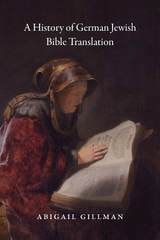
A History of German Jewish Bible Translation
Abigail Gillman
University of Chicago Press, 2018
This book is the first in English to offer a close analysis of German Jewish translations as part of a larger cultural project. Looking at four distinct waves of translations, Abigail Gillman juxtaposes translations within each that sought to achieve similar goals through differing means. As she details the history of successive translations, we gain new insight into the opportunities and problems the Bible posed for different generations and gain a new perspective on modern German Jewish history.
A History of Pentateuchal Traditions
Martin Noth
SBL Press, 1981
Now Available from Duke University Press
Originally published in German in 1948, Noth’s application of a traditio-historical approach has made this book required reading for students and scholars
A Model for the Christian Life
Hilary of Poitier's Commentary on the PsalmsPaul C. Burns
Catholic University of America Press, 2012
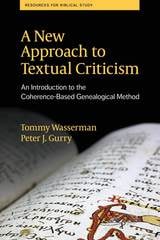
A New Approach to Textual Criticism
An Introduction to the Coherence-Based Genealogical MethodTommy Wasserman
SBL Press, 2017
An essential introduction for scholars and students of New Testament Greek
With the publication of the widely used 28th edition of Nestle-Aland’s Novum Testamentum Graece and the 5th edition of the United Bible Society Greek New Testament, a computer-assisted method known as the Coherence-Based Genealogical Method (CBGM) was used for the first time to determine the most valuable witnesses and establish the initial text. This book offers the first full-length, student-friendly introduction to this important new method. After setting out the method’s history, separate chapters clarify its key concepts, including genealogical coherence, textual flow diagrams, and the global stemma. Examples from across the New Testament are used to show how the method works in practice. The result is an essential introduction that will be of interest to students, translators, commentators, and anyone else who studies the Greek New Testament.
Features
- A clear explanation of how and why the text of the Greek New Testament is changing
- Step-by-step guidance on how to use the CBGM in textual criticism
- Diagrams, illustrations, and glossary of key terms

A Prelude to Biblical Folklore
UNDERDOGS AND TRICKSTERSSusan Niditch
University of Illinois Press, 1987
Using a unique combination of biblical scholarship and folklore methodology, Susan Niditch tracks stories of biblical characters who become heroes against the odds, either through trickery or through native wisdom, physical prowess, and the help of human or divine agents. In this volume, originally published as Underdogs and Tricksters, Niditch examines three cross-sections of the Old Testament in detail: stories in Genesis in which patriarchs pretend that their wives are really their sisters; the contrasting stories of two younger sons, the trickster Jacob and the earnest underdog Joseph; and the story of Esther as a paradigm of feminine wisdom pitted against unjust authority.
Linking these Old Testament heroes to the legendary tricksters and underdogs of other cultures, Niditch shows how the Israelites' worldview and self-image are reflected in the way biblical authors tell their stories. Through a thoughtful analysis of style, content, narrative choices, and attitudes to issues of gender and political authority in biblical narrative, A Prelude to Biblical Folklore draws persuasive conclusions about the identity, location, and provenance of the stories' authors and their audiences.
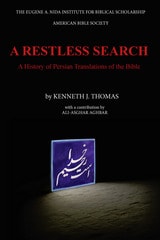
A Restless Search
A History of Persian Translations of the BibleKenneth J. Thomas
SBL Press, 2015
A literary detective story, a historical survey, and an important contribution to translation studies
This book from Kenneth J. Thomas is both a philological and linguistic analysis of Persian translations and a call for interfaith cooperation. Thomas appraises biblical translation efforts from the fifth to the twenty-first centuries of Persian history when successive translators and groups of translators, sometimes of different faiths, worked to reshape and refine versions of the Bible in the supple Persian language of their times. Restless, impelled, and wide-ranging, this is a story of translations commissioned by shahs, undertaken by Christian and Jewish communities, and produced by teams working outside the country.
Features
- Demonstration of the effects of the lack of a standard Persian vocabulary for key biblical terms on literary style and word choice
- Technical analyses and overviews of Persian biblical translations
- A careful examination of sixteen centuries' worth of Bible translations
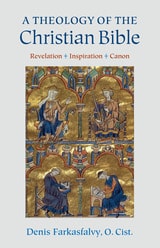
A Theology of the Christian Bible
Revelation - Inspiration - CanonDenis Farkasfalvy
Catholic University of America Press, 2018
A User's Guide to the Nestle-Aland 28 Greek New Testament
David Trobisch
SBL Press, 2013
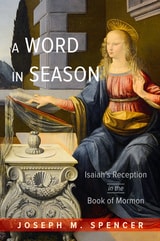
A Word in Season
Isaiah's Reception in the Book of MormonJoseph M. Spencer
University of Illinois Press, 2023
The Book of Mormon’s narrative privileges Isaiah over other sources, provocatively interpreting and at times inventively reworking the biblical text. Joseph M. Spencer sees within the Book of Mormon a programmatic investigation regarding the meaning and relevance of the Book of Isaiah in a world increasingly removed from the context of the times that produced it. Working from the crossroads of reception studies and Mormon studies, Spencer investigates and clarifies the Book of Mormon’s questions about the vitality of Isaiah’s prophetic project. Spencer’s analysis focuses on the Book of Mormon’s three interactions with the prophet: the character of Abinadi; the resurrected Jesus Christ; and the nation-founding figure of Nephi. Working from the Book of Mormon as it was dictated, Spencer details its vital and overlooked place in Isaiah’s reception while recognizing the interpretation of Isaiah as an organizing force behind the Book of Mormon.
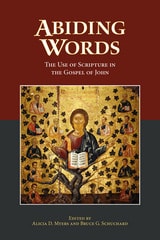
Abiding Words
The Use of Scripture in the Gospel of JohnAlicia D. Myers
SBL Press, 2015
A collection of essays by experts from around the world
Like the other New Testament Gospels, the Gospel of John repeatedly appeals to Scripture (Old Testament). Preferring allusions and “echoes” alongside more explicit quotations, however, the Gospel of John weaves Scripture as an authoritative source concerning its story of Jesus. Yet, this is the same Gospel that is often regarded as antagonistic toward “the Jews,” especially the Jewish religious leaders, depicted within it.
Features:
- Introduces and updates readers on the question of John’s employment of Scripture
- Showcases useful approaches to more general studies on the New Testament’s use of Scripture, sociological and rhetorical analyses, and memory theory
- Explores the possible implications surrounding Scripture usage for the Gospel audiences both ancient and contemporary
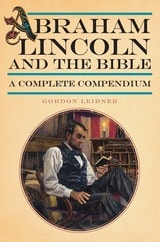
Abraham Lincoln and the Bible
A Complete CompendiumGordon Leidner
Southern Illinois University Press, 2023
How did Abraham Lincoln’s lifelong study of scripture influence him as a man and, ultimately, as president? Historian Gordon Leidner believes the impact was profound—more than previously recognized—and has investigated all the known writings of Abraham Lincoln to identify, catalog, and study every instance in which Lincoln quoted from or alluded to the Bible. Rather than dwelling on the never-ending debate about Lincoln’s religious beliefs, Leidner shows how scripture affected Lincoln personally, professionally, and politically.
Leidner offers first a short biography that focuses on Lincoln’s use of the Bible, how it shaped him as a person, how its influence changed over time, and how biblical quotations peppered his letters, speeches, and conversations. The book concludes with an unparalleled appendix that tabulates nearly 200 instances of Lincoln’s quoting from or alluding to scripture, giving locators for the Bible and Roy P. Basler’s nine volume Collected Works of Abraham Lincoln and quotations from both sources. The appendix also includes when and where Lincoln used each quote, providing valuable context, whether the use was in personal letters such as one to Queen Victoria after the death of Prince Albert, political speeches such as the Gettysburg Address, or state addresses such as the Second Inaugural Address.
By showcasing Lincoln’s specific biblical references and influences, Leidner reframes the question of Lincoln’s religious beliefs so that readers may evaluate for themselves what solace and guidance the Bible afforded the sixteenth president.
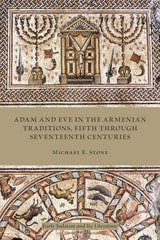
Adam and Eve in the Armenian Tradition, Fifth through Seventeenth Centuries
Michael E. Stone
SBL Press, 2013
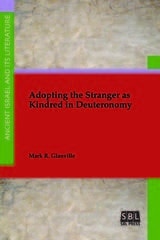
Adopting the Stranger as Kindred in Deuteronomy
Mark R. Glanville
SBL Press, 2018
Investigate how Deuteronomy incorporates vulnerable, displaced people
Deuteronomy addresses social contexts of widespread displacement, an issue affecting 65 million people today. In this book Mark R. Glanville investigates how Deuteronomy fosters the integration of the stranger as kindred into the community of Yahweh. According to Deuteronomy, displaced people are to be enfolded within the household, within the clan, and within the nation. Glanville argues that Deuteronomy demonstrates the immense creativity that communities may invest in enfolding displaced and vulnerable people. Inclusivism is nourished through social law, the law of judicial procedure, communal feasting, and covenant renewal. Deuteronomy’s call to include the stranger as kindred presents contemporary nation-states with an opportunity and a responsibility to reimagine themselves and their disposition toward displaced strangers today.
Features:
- Exploration of the relationship of ancient Israel’s social history to biblical texts
- An integrative methodology that brings together literary-historical, legal, sociological, comparative, literary, and theological approaches
- A thorough study of Israelite identity and ethnicity
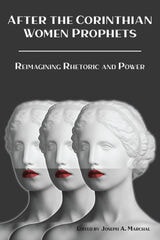
After the Corinthian Women Prophets
Reimagining Rhetoric and PowerJoseph A. Marchal
SBL Press, 2021
Rhetoric, Power, and Possibilities
Thirty years after the publication of Antoinette Clark Wire’s groundbreaking The Corinthian Women Prophets, an interdisciplinary, international, and intergenerational group of scholars reflects upon Wire’s impact on New Testament scholarship. Essays pursue further historical and theoretical possibilities, often in search of marginalized people, including the women of Corinth, using feminist, rhetorical, materialist, decolonizing, queer, and posthumanist approaches to interpret Paul’s letters and the history of ancient Mediterranean assemblies. Contributions from Cavan Concannon, Arminta Fox, Joseph A. Marchal, Shelly Matthews, Anna Miller, Jorunn Økland, and Antoinette Clark Wire reconsider how both the methods and results of Wire’s work reveal the possibilities of other people beside Paul who are worth our attention and effort. The essays in this collection introduce students and scholars to the possibilities of interdisciplinary and intersectional approaches for engaging the broader Pauline corpus.
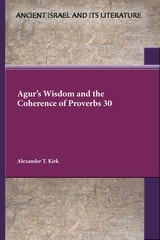
Agur's Wisdom and the Coherence of Proverbs 30
Alexander T. Kirk
SBL Press, 2024
In this first in-depth study of Proverbs 30, the Words of Agur, Alexander T. Kirk examines a puzzling text attributed to an unknown figure that has long fascinated scholars. While this material has been read as everything from a devout confession to a cry of despair, few interpreters have found any real coherence in the chapter. In this detailed philological study engaging both genre and tone, Kirk demonstrates that the chapter is best read as a coherent collection that mocks pride and greed while it commends humility and contentment. Kirk draws out many subtle literary features that augment Agur’s message, including humor and animal imagery. Ultimately, Proverbs 30 deepens the presentation of wisdom in the book of Proverbs by orienting it toward a proper relationship with God.
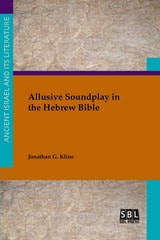
Allusive Soundplay in the Hebrew Bible
Jonathan G. Kline
SBL Press, 2016
The first study to focus exclusively on the use in the Hebrew Bible of soundplay to allude to and interpret earlier literary traditions
This book focuses on the way the biblical writers used allusive soundplay to construct theological discourse, that is, in service of their efforts to describe the nature of God and God's relationship to humanity. By showing that a variety of biblical books contain examples of allusive soundplay employed for this purpose, Kline demonstrates that this literary device played an important role in the growth of the biblical text as a whole and in the development of ancient Israelite and early Jewish theological traditions.
Features:- Demonstrates that allusive soundplay was a productive compositional technique in ancient Israel
- Identifies examples of innerbiblical allusion that have not been identified before
- A robust methodology for identifying soundplay in innerbiblical allusions
Ambrosiaster's Commentary on the Pauline Epistles
RomansTheodore S. de Bruyn
SBL Press, 2017
A new translation for scholars and students of biblical interpretation and ancient Christianity
The ancient writer dubbed Ambrosiaster was a pioneer in the revival of interest in the Pauline Epistles in the later fourth century. He was read by Latin writers, including Pelagius and Augustine, and his writings, passed on pseudonymously, had a long afterlife in the biblical commentaries, theological treatises, and canonical literature of the medieval and the early modern periods. In addition to his importance as an interpreter of scripture, Ambrosiaster provides unique perspectives on many facets of Christian life in Rome, from the emergence of clerical celibacy to the development of liturgical practices to the subordination of women.
Features
- An up-to-date overview of what is known about Ambrosiaster, the transmission of his commentary on the Pauline Epistles, his exegetical method, his theological orientation, and aspects of Christianity in Rome in the fourth century
- A scholarly translation of the final version of the commentary, along with notes that identify significant variants from prior versions of the commentary
- Bibliography thatincludes a comprehensive list of the scholarly literature on Ambrosiaster
American Prophecy
Race and Redemption in American Political CultureGeorge Shulman
University of Minnesota Press, 2008
The political meaning of prophetic language in America
Prophecy is the fundamental idiom of American politics—a biblical rhetoric about redeeming the crimes, suffering, and promise of a special people. Yet American prophecy and its great practitioners—from Frederick Douglass and Henry Thoreau to Martin Luther King, James Baldwin, and Toni Morrison—are rarely addressed, let alone analyzed, by political theorists. This paradox is at the heart of American Prophecy, a work in which George Shulman unpacks and critiques the political meaning of American prophetic rhetoric.
In the face of religious fundamentalisms that associate prophecy and redemption with dogmatism and domination, American Prophecy finds connections between prophetic language and democratic politics, particularly racial politics. Exploring how American critics of white supremacy have repeatedly reworked biblical prophecy, Shulman demonstrates how these writers and thinkers have transformed prophecy into a political language and given redemption a political meaning. To examine how antiracism is linked to prophecy as a vernacular idiom is to rethink political theology, recast democratic theory, and reassess the bearing of religion on American political culture. Still, prophetic language is not always liberatory, and American Prophecy maintains a critical dispassion about a rhetoric that is both prevalent and problematic.
An Answer Key to 'A Primer of Ecclesiastical Latin'
John R. Dunlap
Catholic University of America Press, 2006
An Introduction to Empire in the New Testament
Adam Winn
SBL Press, 2016
Explore how empire is a crucial foreground for reading and interpreting the New Testament
In the last three decades, significant attention has been given to the way in which New Testament texts engage and respond to the imperial world in which they were written. The purpose of the present volume is to introduce students and non-specialists to the growing subfield of New Testament studies known as empire studies. Contributors seek to make readers aware of the significant work that has already been produced, while also pointing them to new ways in which this field is moving forward. The contributors are Bruce W. Longenecker, Richard A. Horsley, Warren Carter, Adam Winn, Eric D. Barreto, Beth M. Sheppard, Neil Elliot, James R. Harrison, Harry O. Maier, Deborah Krause, Jason A.Whitlark, Matthew R. Hauge, Kelly D. Liebengood, and Davina C. Lopez.
Features:
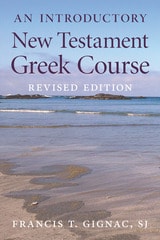
An Introductory New Testament Greek Course, Revised Edition
Francis T. Gignac, SJ
Catholic University of America Press, 2015

Ancient Sisterhood
The Lost Traditions of Hagar and SarahSavina J. Teubal
Ohio University Press, 1997
Ancient Sisterhood cites evidence that Hebrew women actually enjoyed the privileges and sanctity of their own religious practices. These practices, however, were gradually eroded and usurped by the establishment of patriarchal monarchies that were based on militaristic conquest and power. Teubal examines the figures of Hagar and Sarah from a feminist perspective that combines thorough scholarship with an informed and detailed understanding of the cultural and religious influences from which the mysterious biblical figure of Hagar emerged. She looks at Hagar's important role in the genesis of Hebrew culture, her role as mother of the Islamic nations, and her power as a matriarch as opposed to her apparent status as a concubine.
Teubal posits two distinct sources for the Hagar episodes: Hagar as companion to Sarah and an unknown woman whom she refers to as the desert matriarch. She explores whether Hagar was a slave to Abraham or Sarah, the differences between Hagar and the desert matriarch, and the obscurantism of these important elements in biblical texts. Teubal sheds considerable light on two central figures of these world religions and “the disassociation of woman from her own female religious experience.”
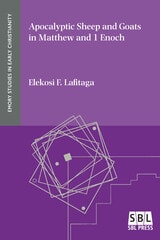
Apocalyptic Sheep and Goats in Matthew and 1 Enoch
Elekosi F. Lafitaga
SBL Press, 2022
An alternative understanding of apocalyptic eschatology in the Gospel of Matthew
Matthew’s eschatological imageries of judgment are often identified as apocalyptic and referred to as Matthew’s apocalyptic discourses. In this volume Elekosi F. Lafitaga reexamines Matthew’s vision of the sheep and goats in the judgment of the nations, which are often interpreted as metaphors for the saved and the condemned. Lafitaga views these images in the wider context of the rhetoric of apocalyptic communication stretching back to Matthew 3. This broader context reveals that the vision of Matthew 25 serves to exhort Israel in the here and now according to the torah, with salvation for Israel involving an indispensable responsibility to love and serve humanity. Central to Lafitaga’s analysis is the highly probable scenario that the material in Matthew is dependent on the Book of Dreams (1 Enoch 83–90).