Results by title
122 books match the query 'Climatic changes' and 13 start with a
A Legacy of Change
Historic Human Impact on Vegetation in the Arizona BorderlandsConrad Joseph Bahre
University of Arizona Press, 1991
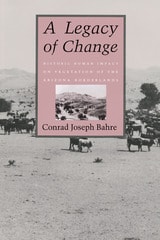
Geographer Conrad Bahre now challenges the view that these vegetation changes are due to climatic change. Correlating his own field research with archival records and photographs, Bahre demonstrates that most of the changes follow some type of human disturbance, such as cattle grazing, fuelwood cutting, wildfire suppression, agriculture, and road construction. Indeed, all available evidence suggests that Anglo settlement brought unprecedented changes to the land.
Vegetation change in the American West has long been an issue of concern. This careful scrutiny of one corner of that region—one of the most ecologically diverse areas of the United States—shows how poorly understood is the relationship between human activities and vegetation. More important, it introduces new techniques for differentiating between natural and anthropogenic factors effecting vegetation change that can be used to help ecologists understand vegetation dynamics worldwide.
A New Form of Beauty
Glen Canyon Beyond Climate ChangePhotographs by Peter Goin, Essays by Peter Friederici
University of Arizona Press, 2016
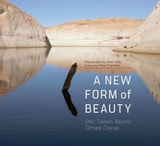
In A New Form of Beauty photographer Peter Goin and writer Peter Friederici tackle science from the viewpoint of art, creating a lyrical exploration in words and photographs, setting Glen Canyon and Lake Powell as the quintessential example of the challenges of perceiving place in a new era of radical change. Through evocative photography and extensive reporting, the two document their visits to the canyon country over a span of many years. By motorboat and kayak, they have ventured into remote corners of the once-huge reservoir to pursue profound questions: What is this place? How do we see it? What will it become?
Goin’s full-color photographs are organized in three galleries—Flora and Fauna, Artifacts, and Low Water—interspersed with three essays by Friederici, and an epilogue gallery on Fire. The book includes two foldout photographs, which allow readers to fully see Lake Powell at high water and low water points
Contemplating humanity’s role in the world it is creating, Goin and Friederici ask if the uncertainties inherent in Glen Canyon herald an unpredictable new future for every place. They challenge us to question how we look at the world, how we live in it, and what the future will be.
A Perturbed System
Religion and Climate Change from the End of a WorldSusannah Crockford
University of Chicago Press, 2026
Our ecological system is disturbed, and with it, every other system we’ve built to inhabit it. We do not face inevitable destruction, yet many of us cannot conceive of climate change as anything but the end of the world, an apocalypse with all its biblical trappings. Why?
In A Perturbed System, anthropologist Susannah Crockford argues that we must understand the climate emergency as a spiritual crisis, a result of Christian colonialism that we (religious or not) still struggle to describe without religious language. Climate discourse in the United States and northern Europe, Crockford shows, is framed by the same theological motifs that drove extraction, including ideas about prophecy, mediation, sacrifice, original sin, cult, messiah, and apocalypse. By listening to people on the edge of the crisis, A Perturbed System reveals a world in transition, what happens when worlds end—ecologically, socially, politically, and personally—and how we might live through these endings together.
A Sense of Urgency
How the Climate Crisis Is Changing RhetoricDebra Hawhee
University of Chicago Press, 2023
Why is it difficult to talk about climate change? Debra Hawhee argues that contemporary rhetoric relies on classical assumptions about humanity and history that cannot conceive of the present crisis. How do we talk about an unprecedented future or represent planetary interests without privileging our own species? A Sense of Urgency explores four emerging answers, their sheer novelty a record of both the devastation and possible futures of climate change. In developing the arts of magnitude, presence, witness, and feeling, A Sense of Urgency invites us to imagine new ways of thinking with our imperiled planet.
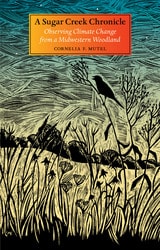
A Sugar Creek Chronicle
Observing Climate Change from a Midwestern WoodlandCornelia F. Mutel
University of Iowa Press, 2016
Moving between two timelines, Mutel pairs chapters about a single year in her Iowa woodland with chapters about her life as a fledgling and then professional student of nature. Stories of her childhood ramblings in Wisconsin and the solace she found in the Colorado mountains during early adulthood are merged with accounts of global environmental dilemmas that have redefined nature during her lifespan. Interwoven chapters bring us into her woodland home to watch nature’s cycles of life during a single year, 2012, when weather records were broken time and time again. Throughout, in a straightforward manner for a concerned general audience, Mutel integrates information about the science of climate change and its dramatic alteration of the planet in ways that clarify its broad reach, profound impact, and seemingly relentless pace.
It is not too late, she informs us: we can still prevent the most catastrophic changes. We can preserve a world full of biodiversity, one that supports human lives as well as those of our myriad companions on this planet. In the end, Mutel offers advice about steps we can all take to curb our own carbon emissions and strategies we can suggest to our policy-makers.
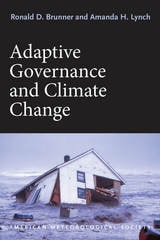
Adaptive Governance and Climate Change
Ronald D. Brunner and Amanda H. Lynch
American Meteorological Society, 2010
While recent years have seen undeniable progress in international acknowledgement both of the dangers of climate change and the importance of working to mitigate it, little has actually been done. Emissions continue to rise, and even the ambitious targets set by international accords would fall far short of the drastic cuts that are needed to prevent catastrophe.
With Adaptive Governance and Climate Change, Ronald D. Brunner and Amanda H. Lynch argue that we need to take a new tack, moving away from reliance on centralized, top-down approaches—the treaties and accords that have proved disappointingly ineffective thus far—and towards a more flexible, multi-level approach. Based in the principles of adaptive governance—which are designed to produce programs that adapt quickly and easily to new information and experimental results—such an approach would encourage diversity and innovation in the search for solutions, while at the same time pointedly recasting the problem as one in which every culture and community around the world has an inherent interest.
Aerosol Effects on Climate
S. Gerard Jennings
University of Arizona Press, 1993
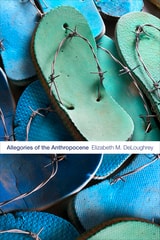
Allegories of the Anthropocene
Elizabeth M. DeLoughrey
Duke University Press, 2019
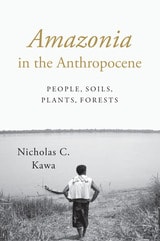
Amazonia in the Anthropocene
People, Soils, Plants, ForestsBy Nicholas C. Kawa
University of Texas Press, 2016
Widespread human alteration of the planet has led many scholars to claim that we have entered a new epoch in geological time: the Anthropocene, an age dominated by humanity. This ethnography is the first to directly engage the Anthropocene, tackling its problems and paradoxes from the vantage point of the world’s largest tropical rainforest.
Drawing from extensive ethnographic research, Nicholas Kawa examines how pre-Columbian Amerindians and contemporary rural Amazonians have shaped their environment, describing in vivid detail their use and management of the region’s soils, plants, and forests. At the same time, he highlights the ways in which the Amazonian environment resists human manipulation and control—a vital reminder in this time of perceived human dominance. Written in engaging, accessible prose, Amazonia in the Anthropocene offers an innovative contribution to debates about humanity’s place on the planet, encouraging deeper ecocentric thinking and a more inclusive vision of ecology for the future.
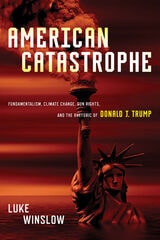
American Catastrophe
Fundamentalism, Climate Change, Gun Rights, and the Rhetoric of Donald J. TrumpLuke Winslow
The Ohio State University Press, 2020
Luke Winslow introduces the rhetorical homology as a critical tool useful for understanding how catastrophic appeals unite Americans across disparate religious, ecological, cultural, and political spheres. More specifically, the four case study chapters examining Christian fundamentalism, anti-environmentalism, gun rights messaging, and the administration of Donald Trump reveal a consistent formal pattern oriented toward catastrophe. In teasing out this orientation toward catastrophe, Winslow offers a fresh, provocative, and insightful contribution to our most pressing social challenges.
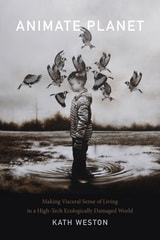
Animate Planet
Making Visceral Sense of Living in a High-Tech Ecologically Damaged WorldKath Weston
Duke University Press, 2017
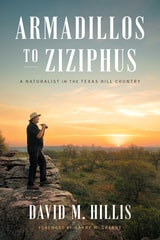
Armadillos to Ziziphus
A Naturalist in the Texas Hill CountryDavid M. Hillis, foreword by Harry W. Greene
University of Texas Press, 2023
A collection of essays on the ecology, biodiversity, and restoration of the Texas Hill Country.
For most of five decades, evolutionary biologist David Hillis has studied the biodiversity of the Texas Hill Country. Since the 1990s, he has worked to restore the natural beauty and diversity of his Mason County ranch, the Double Helix. In his excursions around his ranch and across the Edwards Plateau, Hillis came to realize how little most people know about the plants and animals around them or their importance to our everyday lives. He began thinking about how natural history is connected to our enjoyment of life, especially in a place as beautiful and beloved as the Hill Country, which, not coincidentally, happens to be one of the most biodiverse parts of Texas.
Featuring short nontechnical essays accompanied by vivid color photos, Armadillos to Ziziphus is a charming and casual introduction to the environment of the region. Whether walking the pasture with his Longhorn cattle, explaining the ecological significance of microscopic organisms in springtime mud puddles, or marveling at the local Ziziphus (aka Lotebush, a spiny shrub), Hillis guides first-time visitors and long-term residents alike in an appreciation for the Hill Country’s natural beauty and diversity.
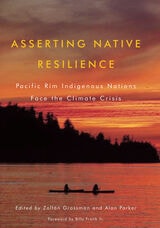
Asserting Native Resilience
Pacific Rim Indigenous Nations Face the Climate CrisisEdited by Zoltán Grossman and Alan Parker
Oregon State University Press, 2012
Native American tribes in the Pacific Northwest and Indigenous peoples around the Pacific Rim have already been deeply affected by droughts, flooding, reduced glaciers and snowmelts, seasonal shifts in winds and storms, and the northward movement of species on the land and in the ocean. Using tools of resilience, Native peoples are creating defenses to strengthen their communities, mitigate losses, and adapt where possible.
Asserting Native Resilience presents a rich variety of perspectives on Indigenous responses to the climate crisis, reflecting the voices of more than twenty contributors, including tribal leaders, scientists, scholars, and activists from the Pacific Northwest, British Columbia, Alaska, and Aotearoa / New Zealand, and beyond. Also included is a resource directory of Indigenous governments, NGOs, and communities and a community organizing booklet for use by Northwest tribes.