Results by title
118 books match the query 'College teachers' and 15 start with a
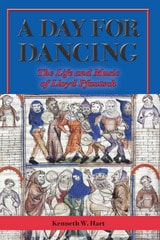
A Day for Dancing
The Life and Music of Lloyd PfautschKenneth W. Hart
University of North Texas Press, 2014
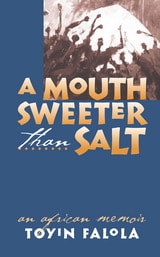
A Mouth Sweeter Than Salt
An African MemoirToyin Falola
University of Michigan Press, 2005
-Ama Ata Aidoo
"A splendid coming-of-age story so full of vivid color and emotion, the words seem to dance off the page. But this is not only Falola's memoir; it is an account of a new nation coming into being and the tensions and negotiations that invariably occur between city and country, tradition and modernity, men and women, rich and poor. A truly beautiful book."
-Robin D. G. Kelley
"More than a personal memoir, this book is a rich minihistory of contemporary Nigeria recorded in delicious detail by a perceptive eyewitness who grew up at the crossroads of many cultures."
-Bernth Lindfors
"The reader is irresistibly drawn into Falola's world. The prose is lucid. There is humor. This work is sweet. Period."
-Ngugi wa Thiongo'o
A Mouth Sweeter Than Salt gathers the stories and reflections of the early years of Toyin Falola, the grand historian of Africa and one of the greatest sons of Ibadan, the notable Yoruba city-state in Nigeria.
Redefining the autobiographical genre altogether, Falola miraculously weaves together personal, historical, and communal stories, along with political and cultural developments in the period immediately preceding and following Nigeria's independence, to give us a unique and enduring picture of the Yoruba in the mid-twentieth century. This is truly a literary memoir, told in language rich with proverbs, poetry, song, and humor.
Falola's memoir is far more than the story of one man's childhood experiences; rather, he presents us with the riches of an entire culture and community-its history, traditions, pleasures, mysteries, household arrangements, forms of power, struggles, and transformations.
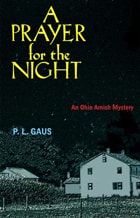
A Prayer for the Night
An Ohio Amish MysteryP. L. Gaus
Ohio University Press, 2006
Amid a whirlwind of drugs, sex, and other temptations of the “English” world, a group of Amish teenagers on their Rumschpringe test the limits of their parents’ religion to the breaking point. The murder of one and the abduction of another challenge Professor Michael Branden as he confronts the communal fear that the young people can never be brought home safely.
Along with Holmes County Sheriff Bruce Robertson and Pastor Cal Troyer, Professor Branden works against the clock to find a murderer and a kidnapper, and to break a drug ring operating in the county, determined, wherever the trail may lead him, to restore the shattered community. In his desperate search, Branden struggles with the reluctance of the Amish to trust the law to help them find the answers to their problems.
In A Prayer for the Night, his fifth Ohio Amish Mystery, P. L. Gaus deftly balances the pace and practices of Amish life in northern Ohio against the unfolding urgency of a hostage situation. As Gaus has proven before, the mystery gains from its exploration of the ever-widening chasm between the traditional life of the Amish people and their interaction with the outside world.

A Professional Professoriate
Unionization, Bureaucratization, and the AAUPPhilo A. Hutcheson
Vanderbilt University Press, 2000
Hutcheson examines how tensions between the requirements of institutional bureaucracies and the norms of the academic profession resulted in contentiousness and conflict within the national AAUP, between administrators and faculty members on individual campuses, within the ranks of faculties themselves, and even deep in the consciences of many concerned individuals. The book analyzes the association's ability to respond effectively and to balance the values of collegial representation with the powers of collective bargaining. It thus offers a detailed and authoritative examination of the AAUP's search for ways to sustain professionalism while dealing with the fundamental changes in the nature of the professoriate in the post-World War II era.
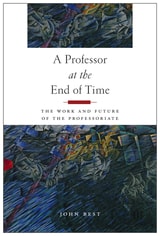
A Professor at the End of Time
The Work and Future of the ProfessoriateBest, John
Rutgers University Press, 2017
A Working Model for Contingent Faculty
Robert Samuels
University Press of Colorado, 2023
A Writer Reforms (the Teaching of) Writing
Donald Murray and the Writing Process Movement, 1963–1987Michael J. Michaud
University Press of Colorado, 2024
Academic Disciplines
Holland's Theory and the Study of College Students and FacultyJohn C. Smart
Vanderbilt University Press, 2000
Using as a framework the "theory of careers" developed by John L. Holland, the authors of this volume examine the patterns of student stability and change inherent in the college experience, as well as the variations in professional attitudes and behaviors of college faculty. Their goal is to learn more about what colleges and universities might do to facilitate the retention, satisfaction, and learning of their students.
For example, why should faculties split over student-oriented teaching strategies, one group favoring the formal, structured classroom, the other a freer, more spontaneous environment? Why do some undergraduates become independent thinkers with strong analytical, mathematical, and scientific competencies while others develop powerful interpersonal and group leadership skills?
Holland's theory--at its core a person-environment fit theory--assumes that there are six personality types and six analogous academic environments and that the educational persistence, satisfaction, and achievement of students are a function of the congruence or "fit" between students and their academic environments. The authors also assume that there are circumstances under which the environments of the major field exert more influence on students than do the students' own personality traits. Applying Holland's theory to distinctive clusters of academic disciplines, the authors have found that the answers to such fundamental questions as those asked above emanate from a basic understanding of the influences of academic disciplines and the manner by which they shape the patterns of thought and behavior of both college students and faculty.
Academic Disciplines will benefit researchers and graduate students who study college students and faculty, as well as administrators and policymakers responsible for the performance of colleges and universities.

Academic Tribes
Hazard Adams
University of Illinois Press, 1988
Adapting VALUEs
Tracing the Life of a Rubric through Institutional EthnographyJennifer Grouling
University Press of Colorado, 2023
Affirmative Action and the University
A Philosophical Inquiryedited by Steven M. Cahn
Temple University Press, 1995
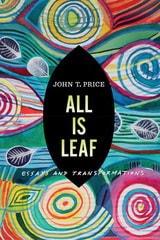
All Is Leaf
Essays and TransformationsJohn T Price
University of Iowa Press, 2022
He employs an array of forms and voices, whether penning a break-up letter to America or a literary rock-n-roll road song dedicated to prairie scientists, or giving pregame pep talks to his son’s losing football team. Here, too, are moving portrayals of his father’s last effort as a small-town lawyer to defend the rights of abused women, and his own efforts as a writing teacher to honor the personal stories of his students.
From his Iowa backyard to the edge of the Arctic Circle, from the forgotten recesses of the body to the far reaches of the solar system, this book demonstrates the ways imagination and informed compassion can, as Price describes it, expand thousandfold the boundaries of what we might “have naïvely considered an individual self.”
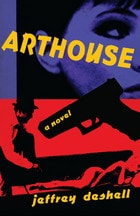
Arthouse
A NovelJeffrey DeShell
University of Alabama Press, 2011
From film to film, Jeffrey DeShell follows a forty-something failed film studies academic—The Professor. While The Professor is reinvented with each new chapter (or film), what remains is DeShell’s inventive deconstruction and representation of modern cinema. At times borrowing imagery, plot, or character elements, and at times rendering lighting, rhythm, costuming, or shot sequences into fictional language, The Professor’s journey sends him from the Southwestern town of Pueblo, Colorado, into the role of rescuer as he aids an attempted-rape victim, and finally to Italy. Ultimately though, The Professor is left alone, struggling to reconcile the real world with his life in cinema.
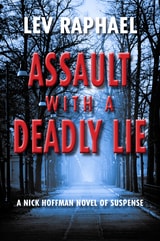
Assault with a Deadly Lie
A Nick Hoffman Novel of SuspenseLev Raphael
University of Wisconsin Press, 2014
A novel of suspense set in the academic world, Assault with a Deadly Lie probes the disturbing psychological impact of slander, harassment, stalking, police brutality, and the loss of personal safety. What will Nick do when his world threatens to collapse? How can he reestablish order in a suddenly chaotic life?
Assault with a Deadly Lie, the eighth installment of Lev Raphael's Nick Hoffman Mysteries, propels the series to a new level of danger and intrigue as Nick and Stefan are catapulted out of their tranquil existence by shocking accusations.
Finalist, Midwest Book Award for Mystery/Thriller Fiction, Midwest Independent Publishers Association
“A riveting great read for mystery/suspense fans, author Lev Raphael once again documents his impressive gifts as a storyteller, holding the reader’s rapt attention from beginning to end with unexpected plot twists and surprise twists.”—Jack Mason, Midwest Book Review
“Raphael portrays with frightening power the wrenching experience of victimization by the corporatized, PR-prioritized groves of academia, where both men teach, and by local authorities militarized into SWAT teams practicing police brutality. . . . The compelling core of this unusual novel is Raphael’s depiction of the agonizing reality of victims’ shame, in which someone ‘feels doubly exposed talking about the violation’ and so says nothing.”—Booklist
“Professor Nick Hoffman learns that even tenure can’t guarantee real security.”—Kirkus Reviews
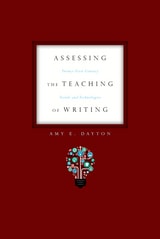
Assessing the Teaching of Writing
Twenty-First Century Trends and TechnologiesAmy E. Dayton
Utah State University Press, 2015
Although fraught with politics and other perils, teacher evaluation can contribute in important, positive ways to faculty development at both the individual and the departmental levels. Yet the logistics of creating a valid assessment are complicated. Inconsistent methods, rater bias, and overreliance on student evaluation forms have proven problematic. The essays in Assessing the Teaching of Writing demonstrate constructive ways of evaluating teacher performance, taking into consideration the immense number of variables involved.
Contributors to the volume examine a range of fundamental issues, including the political context of declining state funds in education; growing public critique of the professoriate and demands for accountability resulting from federal policy initiatives like No Child Left Behind; the increasing sophistication of assessment methods and technologies; and the continuing interest in the scholarship of teaching. The first section addresses concerns and advances in assessment methodologies, and the second takes a closer look at unique individual sites and models of assessment. Chapters collectively argue for viewing teacher assessment as a rhetorical practice.
Fostering new ways of thinking about teacher evaluation, Assessing the Teaching of Writing will be of great interest not only to writing program administrators but also to those concerned with faculty development and teacher assessment outside the writing program.