144 books match the query 'Communication' and 5 start with a
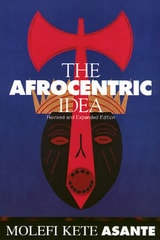
cover of Afrocentric Idea Revised

Afrocentric Idea Revised

Molefi Asante

Temple University Press, 1998
This new edition of The Afrocentric Idea boldly confronts the contemporary challenges that have been launched against Molefi Kete Asante's philosophical, social, and cultural theory. By rendering  a critique of some post-modern positions as well as the old structured Eurocentric orientations discussed in the first edition, this new edition contains lively engagements with views expressed by Mary Lefkowitz, Paul Gilroy, and Cornel West. Expanding on his core ideas, Asante has cast The Afrocentric Idea in the tradition of provocative critiques of the established social order. This is a fresh and dynamic location of culture within the context of  social change.
[more]
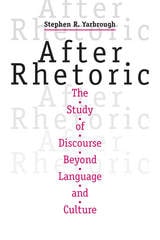
cover of After Rhetoric: The Study of Discourse Beyond Language and Culture

After Rhetoric

The Study of Discourse Beyond Language and Culture

Stephen R. Yarbrough

Southern Illinois University Press, 1999

Aware that categorical thinking imposes restrictions on the ways we communicate, Stephen R. Yarbrough proposes discourse studies as an alternative to rhetoric and philosophy, both of which are structuralistic systems of inquiry.

Discourse studies, Yarbrough argues, does not support the idea that languages, cultures, or conceptual schemes in general adequately describe linguistic competence. He asserts that a belief in languages and cultures "feeds a false dichotomy: either we share the same codes and conventions, achieving community but risking exclusivism, or we proliferate differences, achieving choice and freedom but risking fragmentation and incoherence." Discourse studies, he demonstrates, works around this dichotomy.

Drawing on philosopher Donald Davidson, Yarbrough establishes the idea that community can be a consequence of communication but is not a prerequisite for it. By disassociating our thinking from conceptual schemes, we can avoid the problems that come with believing in an abstract structure that predates any utterance.

Yarbrough also draws on Mikhail Bakhtin's dialogism to define how utterances operate in life and to show how utterances are involved with power and how power relates to understanding. His discussion of Michel Meyer's problematology treats the questions implied by a statement as the meaning of the statement.

Yarbrough introduces readers to a credible theoretical framework for focusing on discourse rather than on conceptual schemes that surround it and to the potential advantages of our using this approach in daily life.

[more]
cover of America's Favorite Radio Station: WKRP in Cincinnati

America's Favorite Radio Station

WKRP in Cincinnati

Michael B. Kassel

University of Wisconsin Press, 1993
Although it became one of the most successful programs in syndicated television history, WKRP in Cincinnati faced an uphill struggle trying to obtain prime-time success. Kassel chronicles the decisions and problems that affected WKRP's primetime success, and explores the reasons why it went on to become a classic.
[more]
cover of As for Protocols

As for Protocols

Edited by Re'al Christian, Carin Kuoni, and Eriola Pira

Amherst College Press, 2025

Explicitly—or not—protocols determine much of what we do. Far exceeding traditional notions of “good manners,” protocols are systems of language that regulate how we relate to each other, to our cultural, social, and political environments, and to the technologies that create them. The first publication to look at protocols across a wide range of disciplines, As for Protocols brings together contributions by twenty-two international artists, writers, scholars, musicians, architects, and scientists who explore protocols across various fields, foregrounding opportunities for creating new protocols that are inclusive and equitable. Through essays, artworks, interviews, and scores, the book speaks to protocols as practice—neither conventional mannerisms nor abstract concepts, but material processes, relational affinities, shared responsibilities, and mutual care.

Edited by Re’al Christian, Carin Kuoni, and Eriola Pira, an opening score by Raven Chacon and contributions by Salome Asega, Carolina Caycedo with Lupita Limón Corrales, Raven Chacon, Jesse Chun, Asia Dorsey, Taraneh Fazeli and Cannach MacBride, Pablo Helguera, Emmanuel Iduma, Mary Maggic, Shannon Mattern, V. Mitch McEwen with Nadir Jeevanjee, Rashaun Mitchell with Silas Riener, Romy Opperman, Rasheedah Phillips, Leanne Betasamosake Simpson with Maria Hupfield, Ultra-red with Robert Sember, and Underground Resistance.

[more]
cover of Assembly Codes: The Logistics of Media

Assembly Codes

The Logistics of Media

Matthew Hockenberry, Nicole Starosielski, and Susan Zieger, editors

Duke University Press, 2021

The contributors to Assembly Codes examine how media and logistics set the conditions for the circulation of information and culture. They document how logistics—the techniques of organizing and coordinating the movement of materials, bodies, and information—has substantially impacted the production, distribution, and consumption of media. At the same time, physical media, such as paperwork, along with media technologies ranging from phone systems to software are central to the operations of logistics. The contributors interrogate topics ranging from the logistics of film production and the construction of internet infrastructure to the environmental impact of the creation, distribution, and sale of vinyl records. They also reveal how logistical technologies have generated new aesthetic and performative practices. In charting the specific points of contact, dependence, and friction between media and logistics, Assembly Codes demonstrates that media and logistics are co-constitutive and that one cannot be understood apart from the other.

Contributors
Ebony Coletu, Kay Dickinson, Stefano Harney, Matthew Hockenberry, Tung-Hui Hu, Shannon Mattern, Fred Moten, Michael Palm, Ned Rossiter, Nicole Starosielski, Liam Cole Young, Susan Zieger
 
[more]