Results by title
851 books match the query 'Congresses' and 55 start with a
A New Architecture for the U.S. National Accounts
Edited by Dale W. Jorgenson, J. Steven Landefeld, and William D. Nordhaus
University of Chicago Press, 2006
Since the United States economy accounts for almost thirty percent of the world economy, it is not surprising that accounting for this huge and diverse set of economic activities requires a decentralized statistical system. This volume outlines the major assignments among institutions that include the Bureau of Economic Analysis, the Bureau of Labor Statistics, the Department of Labor, the Census Bureau, and the Governors of the Federal Reserve System.
An important part of the motivation for the new architecture is to integrate the different components and make them consistent. This volume is the first step toward achieving that goal.
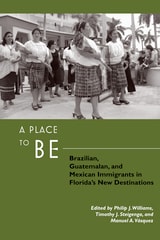
A Place to Be
Brazilian, Guatemalan, and Mexican Immigrants in Florida's New DestinationsEdited by Philip J. Williams, Timothy J. Steigenga, and Manuel A. Vásquez
Rutgers University Press, 2009
Contributors to this volume include Patricia Fortuny Loret de Mola, Carol Girón Solórzano, Silvia Irene Palma, Lúcia Ribeiro, Mirian Solfs Lizama, José Claúdio Souza Alves, Timothy J. Steigenga, Manuel A. Vásquez, and Philip J. Williams.
A Retrospective on the Classical Gold Standard, 1821-1931
Edited by Michael D. Bordo and Anna J. Schwartz
University of Chicago Press, 1984
The volume includes a review of the literature on the classical gold standard; studies the experience with gold in England, Germany, Italy, Sweden, and Canada; and perspectives on international linkages and the stability of price-level trends under the gold standard. The articles and commentaries reflect strong, conflicting views among hte participants on issues of central bank behavior, purchasing-power an interest-rate parity, independent monetary policies, economic growth, the "Atlantic economy," and trends in commodity prices and long-term interest rates. This is a thoughtful and provocative book.

A Society for International Development
Prospectus 1984Ann Mattis, ed.
Duke University Press, 1983

A Tanizaki Feast
The International Symposium in VeniceAdriana Boscaro and Anthony Hood Chambers, Editors
University of Michigan Press, 1998

Abstract Expressionism
The International ContextMarter, Joan
Rutgers University Press, 2007
Bringing together fifteen original and path-breaking essays by world-class authorities on Abstract Expressionism as well as by younger scholars, this anthology looks beyond the canonical painters to explore the broader connections among abstract artists of the post–World War II era. Moving from the margins to the center, the essays recognize the contributions of artists working far beyond New York City. Topics include Jackson Pollock’s contact with Mexican muralists and the legacy of Abstract Expressionism for leftist artists in Latin America, the relevance of Jean-Paul Sartre and Samuel Beckett as sources of philosophical thought, the significance of northern European CoBrA painters such as Asger Jorn, the impact of Japanese Gutai artists, and connections with the revolutionary art of Italy, Belgium, and France. Abstract Expressionism is also described as a model for contemporaneous developments in the former Soviet Union.
As the first book to consider the movement in relation to post–World War II abstraction on four continents, this book brings a fresh perspective to this widely studied school of painting. Scholars and students alike will find this anthology essential reading in creating a more complete and nuanced understanding of Abstract Expressionism.
Accumulation
The Art, Architecture, and Media of Climate ChangeNick Axel
University of Minnesota Press, 2022
Examines how images of accumulation help open up the climate to political mobilization
The current epoch is one of accumulation: not only of capital but also of raw, often unruly material, from plastic in the ocean and carbon in the atmosphere to people, buildings, and cities. Alongside this material growth, image-making practices embedded within the fields of art and architecture have proven to be fertile, mobile, and capacious. Images of accumulation help open up the climate to cultural inquiry and political mobilization and have formed a cultural infrastructure focused on the relationships between humans, other species, and their environments.
The essays in Accumulation address this cultural infrastructure and the methodological challenges of its analysis. They offer a response to the relative invisibility of the climate now seen as material manifestations of social behavior. Contributors outline opportunities and ambitions of visual scholarship as a means to encounter the challenges emergent in the current moment: how can climate become visible, culturally and politically? Knowledge of climatic instability can change collective behavior and offer other trajectories, counteraccumulations that draw the present into a different, more livable, future.
Contributors: Emily Apter, New York U; Hans Baumann; Amanda Boeztkes, U of Guelph; Dominic Boyer, Rice U; Lindsay Bremner, U of Westminster; Nerea Calvillo, U of Warwick; Beth Cullen, U of Westminster; T. J. Demos, U of California, Santa Cruz; Jeff Diamanti, U of Amsterdam; Jennifer Ferng, U of Sydney; Jennifer Gabrys, U of Cambridge; Ian Gray, U of California, Los Angeles; Gökçe Günel, Rice U; Orit Halpern, Concordia U; Gabrielle Hecht, Stanford U; Cymene Howe, Rice U; Wendy Hui Kyong Chun, Simon Fraser U; Robin Kelsey, Harvard U; Bruno Latour, Sciences Po, Paris; Hannah le Roux, U of the Witwatersrand, Johannesburg; Stephanie LeMenager, U of Oregon; Nashin Mahtani; Kiel Moe, McGill U; Karen Pinkus, Cornell U; Stephanie Wakefield, Life U; McKenzie Wark, The New School; Kathryn Yusoff, Queen Mary U of London.
Adapting the Past to Reimagine Possible Futures
Celebrating and Critiquing WAC at 50Megan J. Kelly
University Press of Colorado, 2024
Administrative Aspects of Investment-Based Social Security Reform
Edited by John B. Shoven
University of Chicago Press, 2000

Advances in Cognition, Education, and Deafness
David S. Martin
Gallaudet University Press, 2001
The Second International Symposium on Cognition, Education, and Deafness in 1989 broadened and deepened the scope of investigation initiated at the first conference held five years earlier. Advances in Cognition, Education, and Deafness provides the results in a single integrated volume. The 39 scholars from 14 nations who attended offered consistent progress from the first symposium and new areas of research, especially in the study of applications in education and the new field of neuro-anatomical dimensions of cognition and deafness.
This important book has been organized under six major themes: Cognitive Assessment; Language and Cognition; Cognitive Development; Neuroscientific Issues; Cognitive Processes; and Cognitive Intervention Programs. This useful study also features programs designed to facilitate the learning of deaf individuals in cognitive realms, and questions about methodological problems facing researchers in deafness.
Advances in Cognition, Education, and Deafness also synthesizes this wealth of data with the added value of the objective perspective of a cognitive psychologist not directly involved in the field of deafness. Teachers, students, scholars, and researchers will consider this an indispensable reference for years to come.
Advances in Communications Satellite Systems
Proceedings of The 36th International Communications Satellite Systems Conference (ICSSC-2018)Ifiok Otung
The Institution of Engineering and Technology, 2020

Advances in Legume Science
R. J. Summerfield and A. H. Bunting
Royal Botanic Gardens, Kew, 2001
Advances in Modal Logic, Volume 1
Edited by Marcus Kracht, Maarten de Rijke, Heinrich Wansing, and Michael Zakhary
CSLI, 1998
Advances in the Economics of Aging
Edited by David A. Wise
University of Chicago Press, 1996
Specific topics include the effect of labor market rigidities on the employment of older workers; the effect on retirement of the availability of continuation coverage benefits; and the influence of the prospective payment system (PPS) on rising Medicare costs. Also considered are the effects of health and wealth on living arrangement decisions; the incentive effects of employer-provided pension plans; the degree of substitution between 401(k) plans and other employer-provided retirement saving arrangements; and the extent to which housing wealth determines how much the elderly save and consume.
Two final studies use simulations that describe the implications of stylized economic models of behavior among the elderly. This timely volume will be of interest to anyone concerned with the economics of aging.
Advertising and Popular Culture
Studies in Variety and VersatilitySammy R. Danna
University of Wisconsin Press, 1992
Aesthetic Subjects
Pamela R. Matthews
University of Minnesota Press, 2003
Demonstrates the remarkable resurgence of interest in the aesthetic
Recent calls for a return to aesthetics occur precisely at a moment when it is increasingly evident that nothing concerning aesthetics is self-evident anymore. Determined to recover the value of aesthetic experience for artistic, cultural, and social analysis, the contributors to this volume—prominent scholars in literature, philosophy, art history, architecture, history, and anthropology—begin from a shared recognition that ideological readings of the aesthetic have provided invaluable insights, in particular, that analyses of aesthetics within historical and social contexts tell us a great deal about the experience of aesthetic encounters.
From multiple and complementary perspectives, the contributors address topics as varied as Nabokov and Dickens, Caravaggio and Shelley Winters, gender and sexuality, advertising and AIDS. Taken together, their essays constitute a sustained and multifarious effort to resituate aesthetic pleasure in the mixed, impure conditions characteristic of every social practice and experience, however privileged or marginalized, and to ask what happens to the aesthetic if we consider it apart from—or at least in tension with—its historically dominant discursive formulations. As such, this volume establishes a renewed sense of aesthetic discourse and its usefulness as a tool for understanding culture. Contributors: Leo Bersani, U of California, Berkeley; Susan Bordo, U of Kentucky; Bill Brown, U of Chicago; Beatriz Colomina, Princeton U; Ulysse Dutoit, U of California, Berkeley; Lee Edelman, Tufts U; Maureen Harkin, Reed College; Howard Horwitz, U of Utah; Audrey Jaffe, U of California, Santa Cruz; Martin Jay, U of California, Berkeley; Kay Bea Jones, Ohio State U; Robert Kaufman, Stanford U; Alphonso Lingis, Pennsylvania State U; Joseph Litvak, Tufts U; Douglas Mao, Cornell U; Barbara Stafford, U of Chicago; Kathleen Stewart, U of Texas; Kathryn Bond Stockton, U of Utah; Judith Stoddart, Michigan State U; Michael Taussig, Columbia U.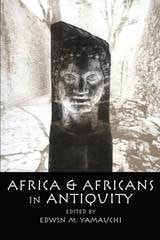
Africa & Africans in Antiquity
Edwin M. Yamauchi
Michigan State University Press, 2001
Africa and Africans in Antiquity assesses recent historical research and archaeology under way in Egypt, North Africa, the Sudan, and the Horn of Africa. Whereas many European and American scholars of earlier generations believed that Egyptian contacts with Africa to the south were not culturally significant, research contained in this important collection rejects such notions. At the same time, the volume takes issue with Afrocentric scholars who argue that most Egyptians were 'black' and that blacks are the rightful heirs to Egypt's past grandeur. These ten thought-provoking essays demonstrate that this large region was an ethnic and cultural mosaic in antiquity, a place where Phoenicians, Berbers, Greeks, as well as Egyptians and Nubians interacted.
African Futures
Essays on Crisis, Emergence, and PossibilityEdited by Brian Goldstone and Juan Obarrio
University of Chicago Press, 2017
The experts in this book address Africa’s future as it is embedded within various social and cultural forms emerging on the continent today: the reconfiguration of the urban, the efflorescence of signs and wonders and gospels of prosperity, the assorted techniques of legality and illegality, lotteries and Ponzi schemes, apocalyptic visions, a yearning for exile, and many other phenomena. Bringing together social, political, religious, and economic viewpoints, the book reveals not one but multiple prospects for the future of Africa. In doing so, it offers a pathbreaking model of pluralistic and open-ended thinking and a powerful tool for addressing the vexing uncertainties that underlie so many futures around the world.
After Collapse
The Regeneration of Complex SocietiesEdited by Glenn M. Schwartz and John J. Nichols
University of Arizona Press, 2006
Ranging widely across the Near East, the Aegean, East Asia, Mesoamerica, and the Andes, these cross-cultural studies expand our understanding of social evolution by examining how societies were transformed during the period of radical change now termed “collapse.” They seek to discover how societal complexity reemerged, how second-generation states formed, and how these re-emergent states resembled or differed from the complex societies that preceded them.
The contributors draw on material culture as well as textual and ethnohistoric data to consider such factors as preexistent institutions, structures, and ideologies that are influential in regeneration; economic and political resilience; the role of social mobility, marginal groups, and peripheries; and ethnic change. In addition to presenting a number of theoretical viewpoints, the contributors also propose reasons why regeneration sometimes does not occur after collapse. A concluding contribution by Norman Yoffee provides a critical exegesis of “collapse” and highlights important patterns found in the case histories related to peripheral regions and secondary elites, and to the ideology of statecraft.
After Collapse blazes new research trails in both archaeology and the study of social change, demonstrating that the archaeological record often offers more clues to the “dark ages” that precede regeneration than do text-based studies. It opens up a new window on the past by shifting the focus away from the rise and fall of ancient civilizations to their often more telling fall and rise.
CONTRIBUTORS
Bennet Bronson
Arlen F. Chase
Diane Z. Chase
Christina A. Conlee
Lisa Cooper
Timothy S. Hare
Alan L. Kolata
Marilyn A. Masson
Gordon F. McEwan
Ellen Morris
Ian Morris
Carlos Peraza Lope
Kenny Sims
Miriam T. Stark
Jill A. Weber
Norman Yoffee
After Communism
Perspectives on DemocracyDonald R. Kelley
University of Arkansas Press, 2003
After Parsons
A Theory of Social Action for the Twenty-First CenturyRenee C. Fox
Russell Sage Foundation, 2005
After the Flood
How the Great Recession Changed Economic ThoughtEdited by Edward L. Glaeser, Tano Santos, and E. Glen Weyl
University of Chicago Press, 2017
A momentous collection of the best recent scholarship, After the Flood illustrates both the scope of the crises’ impact on our understanding of global financial markets and the innovative processes whereby scholars have adapted their research to gain a greater understanding of them. Among the contributors are José Scheinkman and Lars Peter Hansen, who bring up to date decades of collaborative research on the mechanisms that tie financial markets to the broader economy; Patrick Bolton, who argues that limiting bankers’ pay may be more effective than limiting the activities they can undertake; Edward Glaeser and Bruce Sacerdote, who study the social dynamics of markets; and E. Glen Weyl, who argues that economists are influenced by the incentives their consulting opportunities create.
Agglomeration Economics
Edited by Edward L. Glaeser
University of Chicago Press, 2010
Aging Issues in the United States and Japan
Edited by Seiritsu Ogura, Toshiaki Tachibanaki, and David A. Wise
University of Chicago Press, 2001
Given the undeniable global importance of the Japanese and U.S. economies, these innovative essays shed welcome new light on the complex correlations between aging and economic behavior. This insightful work not only deepens our understanding of the Japanese and American economic landscapes but, through careful examination of the comparative social and economic data, clarifies the complex relation between aging societies, public policies, and economic outcomes.
Aging in the United States and Japan
Economic TrendsEdited by Yukio Noguchi and David A. Wise
University of Chicago Press, 1994
With essays on labor force participation and retirement, housing equity and the economic status of the elderly, budget implications of an aging population, and financing social security and health care in the 1990s, this volume covers a broad spectrum of issues related to the economics of aging. Among the book's findings are that workers are retiring at an increasingly earlier age in both countries and that, as the populations age, baby boomers in the United States will face diminishing financial resources as the ratio of retirees to workers sharply increases.
The result of a joint venture between the National Bureau of Economic Research and the Japan Center for Economic Research, this book complements Housing Markets in the United States and Japan (1994) by integrating research on housing markets with economic issues of the aged in the United States and Japan.

Agricultural Productivity and Producer Behavior
Edited by Wolfram Schlenker
University of Chicago Press, 2019
Alabama and the Borderlands
From Prehistory To StatehoodEdited by R. Reid Badger and Lawrence A. Clayton
University of Alabama Press, 1985
Brings together the nation's leading scholars on the prehistory and early history of Alabama and the southeastern US
This fascinating collection was born of a concern with Alabama's past and the need to explore and explain that legacy, so often hidden by the veils of time, ignorance, or misunderstanding. In 1981 The University of Alabama celebrated its 150th anniversary, and each College contributed to the celebration by sponsoring a special symposium. The College of Arts and Sciences brought together the nation's leading scholars on the prehistory and early history of Alabama and the Southeastern United States, and for two memorable days in September 1981 several hundred interested listeners heard those scholars present their interpretations of Alabama's remarkable past.
The organizers of the symposium deliberately chose to focus on Alabama's history before statehood. Alabama as a constituent state of the Old South is well known. Alabama as a home of Indian cultures and civilizations of a high order, as an object of desire, exploration, and conquest in the sixteenth century, and as a borderland disputed by rival European nationalities for almost 300 years is less well known. The resulting essays in this collection prove as interesting, enlightening, and provocative to the casual reader as to the professional scholar, for they are intended to bring to the general reader artifacts and documents that reveal the realities and romance of that older Alabama.
Topics in the collection range from the Mississippian Period in archaeology and the de Soto expedition (and other early European explorations and settlements of Alabama) to the 1780 Siege of Mobile.

Aliens
An Anthropology of Science FictionEdited by George E. Slusser and Eric S. Rabkin
Southern Illinois University Press, 1987
How and when does there come to be an “anthropology of the alien?” This set of essays, written for the eighth J. Lloyd Eaton Conference on Fantasy and Science Fiction, is concerned with the significance of that question. “[Anthropology] is the science that must designate the alien ifit is to redefine a place for itself in the universe,” according to the Introduction.
The idea of the alien is not new. In the Renaissance, Montaigne’s purpose in describing an alien encounter was excorporation—mankind was the “savage” because the artificial devices of nature controlled him. Shakespeare’s version of the alien encounter was incorporation; his character of Caliban is brought to the artificial, political world of man and incorporated into the body politic
“The essays in this volume . . . show, in their general orientation, that the tribe of
This book is divided into three parts: “Searchings: The Quest for the Alien” includes “The Aliens in Our Mind,” by Larry Niven; “Effing the Ineffable,” by Gregory Benford; “Border Patrols,” by Michael Beehler; “Alien Aliens,” by Pascal Ducommun; and “Metamorphoses of the Dragon,” by George E. Slusser.
“Sightings: The Aliens among Us” includes “Discriminating among Friends,” by John Huntington; “Sex, Superman, Sociobiology,” by Joseph D. Miller; “Cowboys and Telepaths,” by Eric S. Rabkin; “Robots,” by Noel Perrin; “Aliens in the Supermarket,” by George R. Guffey; and “Aliens ‘R’ U.S.,” by Zoe Sofia.

Alternative Conceptions of Phrase Structure
Edited by Mark R. Baltin and Anthony S. Kroch
University of Chicago Press, 1989
Altruism, Morality, and Economic Theory
Edmund S. Phelps
Russell Sage Foundation, 1975
Amazonian Linguistics
Studies in Lowland South American LanguagesEdited by Doris L. Payne
University of Texas Press, 1990
Lowland South American languages have been among the least studied ln the world. Consequently, their previous contribution to linguistic theory and language universals has been small. However, as this volume demonstrates, tremendous diversity and significance are found in the languages of this region.
These nineteen essays, originally presented at a conference on Amazonian languages held at the University of Oregon, offer new information on the Tupian, Cariban, Jivaroan, Nambiquaran, Arawakan, Tucanoan, and Makuan languages and new analyses of previously recalcitrant Tupí-Guaraní verb agreement systems.
The studies are descriptive, but typological and theoretical implications are consistently considered. Authors invariably indicate where previous claims must be adjusted based on the new information presented. This is true in the areas of nonlinear phonological theory, verb agreement systems and ergativity, grammatical relations and incorporation, and the uniqueness of Amazonian noun classification systems. The studies also contribute to the now extensive interest in grammatical change.
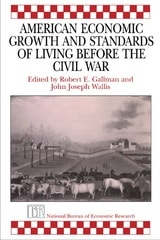
American Economic Growth and Standards of Living before the Civil War
Edited by Robert E. Gallman and John Joseph Wallis
University of Chicago Press, 1992
Despite the dramatic economic growth and rise in income levels, questions remain as to the general quality of life during this era. Was the improvement in income widely shared? How did economic growth affect the nature of work? Did higher levels of income lead to improved health and longevity? The authors address these questions by analyzing new estimates of labor force participation, real wages, and productivity, as well as of the distribution of income, height, and nutrition.
American Economic Policy in the 1980s
Edited by Martin Feldstein
University of Chicago Press, 1994
In his introduction, Martin Feldstein provides compelling analysis of policies with which he was closely involved as chairman of the Council of Economic Advisers during the Reagan administration: monetary and exchange rate policy, tax policy, and budget issues. Other leading economists and policymakers examine a variety of domestic and international issues, including monetary and exchange rate policy, regulation and antitrust, as well as trade, tax, and budget policies.
The contributors to this volume are Alberto Alesina, Phillip Areeda, Elizabeth Bailey, William F. Baxter, C. Fred Bergsten, James Burnley, Geoffrey Carliner, Christopher DeMuth, Douglas W. Elmendorf, Thomas O. Enders, Martin Feldstein, Jeffrey A. Frankel, Don Fullerton, William M. Isaac, Paul L Joskow, Paul Krugman, Robert E. Litan, Russell B. Long, Michael Mussa, William A. Niskanen, Roger G. Noll, Lionel H. Olmer, Rudolph Penner, William Poole, James M. Poterba, Harry M. Reasoner, William R. Rhodes, J. David Richardson, Charles Schultze, Paula Stern, David Stockman, William Taylor, James Tobin, W. Kip Viscusi, Paul A. Volcker, Charles E. Walker, David A. Wise, and Richard G. Woodbury.
American Missionaries and the Middle East
Foundational EncountersMehmet Ali Dogan
University of Utah Press, 2010
During the nineteenth and early twentieth centuries, American missionary encounters in the Middle East set foundations for later U.S.-Middle Eastern relations. Missionaries presented examples of American culture to Middle Eastern peoples, just as they interpreted the Middle East for Americans back home. These engagements prompt larger questions about the consequences of American Christian cultural projection into the wider world.
This volume focuses on regions that were once part of the Ottoman Empire in western Asia, the Balkans, and North Africa. Contributors explain the distinctly American dimensions of these missionary encounters, the cultural influences they exerted on the region, and their consequences for local nationalism, print culture, education, and more. This is an excellent resource for specialists in history, Middle Eastern studies, American studies, religious studies, missiology, and anyone interested more broadly in American engagement in the Middle East.
An African Perspective on the Thought of Benedict XVI
Agbaw-ebai
St. Augustine's Press, 2023
An American Dilemma Revisited
Race Relations in a Changing WorldObie, Jr. Clayton
Russell Sage Foundation, 1996
Analyses in the Economics of Aging
Edited by David A. Wise
University of Chicago Press, 2005
The volume begins with a discussion of the risks and merits of 401(k) plans. Subsequent chapters present recent analysis of the growth of Medicare costs; the different aspects of disability; and the evolution of health, wealth, and living arrangements over the life course. Keeping with the global tradition of previous volumes, Analyses in the Economics of Aging also includes comparative studies on savings behavior in Italy, the Netherlands, and the United States; an examination of household savings among different age groups in Germany; and a chapter devoted to population aging and the plight of widows in India.
Carefully compiled and containing some of the most cutting-edge research and analysis available, this volume should be of interest to any specialist or policymaker concerned with ongoing changes in savings and retirement behaviors.

Analytical and Negotiating Issues in the Global Trading System
Alan Deardorff and Robert M. Stern, Editors
University of Michigan Press, 1994
Ancient Households of the Americas
Conceptualizing What Households DoJohn G. Douglass
University Press of Colorado, 2012
Several different cultures-Iroquois, Coosa, Anasazi, Hohokam, San Agustín, Wankarani, Formative Gulf Coast Mexico, and Formative, Classic, Colonial, and contemporary Maya-are analyzed through the lens of household archaeology in concrete, data-driven case studies. The text is divided into three sections: Section I examines the spatial and social organization and context of household production; Section II looks at the role and results of households as primary producers; and Section III investigates the role of, and interplay among, households in their greater political and socioeconomic communities.
In the past few decades, household archaeology has made substantial contributions to our understanding and explanation of the past through the documentation of the household as a social unit-whether small or large, rural or urban, commoner or elite. These case studies from a broad swath of the Americas make Ancient Households of the Americas extremely valuable for continuing the comparative interdisciplinary study of households.
Ancient Maya Commoners
Edited by Jon C. Lohse and Fred Valdez, Jr.
University of Texas Press, 2004
Much of what we currently know about the ancient Maya concerns the activities of the elites who ruled the societies and left records of their deeds carved on the monumental buildings and sculptures that remain as silent testimony to their power and status. But what do we know of the common folk who labored to build the temple complexes and palaces and grew the food that fed all of Maya society?
This pathfinding book marshals a wide array of archaeological, ethnohistorical, and ethnographic evidence to offer the fullest understanding to date of the lifeways of ancient Maya commoners. Senior and emerging scholars contribute case studies that examine such aspects of commoner life as settlement patterns, household organization, and subsistence practices. Their reports cover most of the Maya area and the entire time span from Preclassic to Postclassic. This broad range of data helps resolve Maya commoners from a faceless mass into individual actors who successfully adapted to their social environment and who also held primary responsibility for producing the food and many other goods on which the whole Maya society depended.
Ancient Traditions
Shamanism in Central Asia and the AmericasGary Seaman
University Press of Colorado, 1994
Over the centuries, shamanism has endured as an abiding topic of interest not only because of a human concern with the past but also because of a common yearning to acknowledge life lived in closer symbolic relationship to the earth. For readers interested in indigenous cultures and religions, this collection of essays clarifies much of the New Age speculation on universals in shamanism, offering solid research on specific ethnic and historical expressions.
In Ancient Traditions, prominent scholars in ethnography, anthropology, and the study of world religions bring to bear their diverse perspectives on this singularly fascinating topic. Contributors include Vladimir N. Basilov, Robert S. Carlsen, James A. Clifton, Jane S. Day, Vladimir Diachenko, Vera P. Diakonova, Peter T. Furst, Larisa R. Pavlinskaya, Martin Prechtel, Gary Seaman, Omer C. Stewart, Lawrence E. Sullivan, Robert J. Theodoratus, and Johannes Wilbert. Co-published with the Denver Museum of Nature and Science.

Anthropological Demography
Toward a New SynthesisEdited by David I. Kertzer and Tom Fricke
University of Chicago Press, 1997
Showing that the two disciplines have much to offer each other, this book bridges the demography/anthropology divide. The editors begin the volume with an in-depth historical account of the relations between the fields. Eminent contributors from both disciplines then examine the major issues and controversies in anthropological demography, including the demographic implications of differing family and kinship systems; the influence of new developments in cultural, gender, and identity theory on population study; the limits of quantitative approaches in demographic study; and demographers' views of the limits of anthropological methods.

Anxiety in and about Africa
Multidisciplinary Perspectives and ApproachesAndrea Mariko Grant
Ohio University Press, 2021
How does anxiety impact narratives about African history, culture, and society?
This volume demonstrates the richness of anxiety as an analytical lens within African studies. Contributors call attention to ways of thinking about African spaces—physical, visceral, somatic, and imagined—as well as about time and temporality. Through a multidisciplinary approach, the volume also brings histories of anxiety in colonial settings into conversation with work on the so-called negative emotions in disciplines beyond history. While anxiety has long been acknowledged for its ability to unsettle colonial narratives, to reveal the vulnerability of the colonial enterprise, this volume shows it can equally complicate contemporary narratives, such as those of sustainable development, migration, sexuality, and democracy. These essays therefore highlight the need to take emotions seriously as contemporary realities with particular histories that must be carefully mapped out.
Apachean Culture History and Ethnology
Keith H. Basso
University of Arizona Press, 1971

Applied General Equilibrium and Economic Development
Present Achievements and Future TrendsJean Mercenier and T. N. Srinivasan, Editors
University of Michigan Press, 1994
Approaches to Social Theory
Stewart Lindenberg
Russell Sage Foundation, 1986
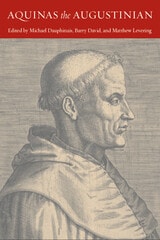
Aquinas the Augustinian
Michael Dauphinais
Catholic University of America Press, 2007
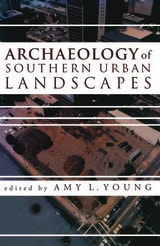
Archaeology of Southern Urban Landscapes
Amy L Young
University of Alabama Press, 2000
Groundbreaking essays in urban archaeology highlight the impact of towns and cities on the southern landscape.
The rapid growth and development of urban areas in the South have resulted in an increase in the number of urban archaeology projects required by federal and state agencies. These projects provide opportunities not only to investigate marginal areas between the town and countryside but also to recover information long buried beneath the earliest urban structures. Such projects have also created a need for a one-volume update on archaeology as it is practiced in the urban areas of the southeastern United States.
Archaeology of Southern Urban Landscapes will assist practitioners and scholars in the burgeoning fields of urban and landscape archaeology by treating the South as a distinctive social, geographic, and material entity and by focusing on the urban South rather than the stereotypical South of rural plantations. The case studies in this volume span the entire southeastern United States, from Annapolis to New Orleans and from colonial times to the 19th century. The authors address questions involving the function of cities, interregional diversity, the evolution of the urban landscape, and the impact of the urban landscape on southern culture. By identifying the relationship between southern culture and the South's urban landscapes, this book will help us understand the built landscape of the past and predict future growth in the region.
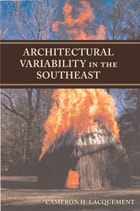
Architectural Variability in the Southeast
Edited by Cameron H. Lacquement
University of Alabama Press, 2007
Some of the most visible expressions of human culture are illustrated architecturally. Unfortunately for archaeologists, the architecture being studied is not always visible and must be inferred from soil inconsistencies or charred remains. This study deals with research into roughly a millennium of Native American architecture in the Southeast and includes research on the variation of construction techniques employed both above and below ground. Most of the architecture discussed is that of domestic houses with some emphasis on large public buildings and sweat lodges. The authors use an array of methods and techniques in examining native architecture including experimental archaeology, ethnohistory, ethnography, multi-variant analysis, structural engineering, and wood science technology. A major portion of the work, and probably the most important in terms of overall significance, is that it addresses the debate of early Mississippian houses and what they looked like above ground and the changes that occurred both before and after the arrival of Europeans.
Argumentation Theory and the Rhetoric of Assent
David Williams
University of Alabama Press, 1990
The eleven essays coalesce around the general question of "When, if ever, is assent justified?" And, as Professor Cox astutely notes in his introduction, such a question immediately leads into considerations of argument and power. In these considerations, many differing perspectives are represented in this volume: aesthetic and symbolist approaches, rationalistic and formalistic approaches, field theory perspectives, orientations toward various conceptualizations of a public sphere, etc.
Argumentation Theory and the Rhetoric of Assent is intended not as a primer on argument theory but rather as a look at American approaches to a philosophy of argumentation and argument criticism. As such, the essays probe the implications of both current practices and theoretical approaches: the objective is not to map the terrain argumentation theory has traversed in recent years but rather to plot a route for the direction in which argumentation studies should move. The concluding essays by James Arnt Aune and G. Thomas Goodnight confront these concerns explicitly.