Results by title
103 books match the query 'Conversations' and 7 start with a
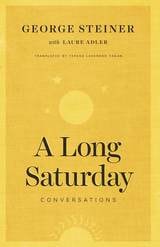
A Long Saturday
ConversationsGeorge Steiner with Laure Adler
University of Chicago Press, 2017
George Steiner is one of the preeminent intellectuals of our time. The Washington Post has declared that no one else “writing on literature can match him as polymath and polyglot, and few can equal the verve and eloquence of his writing,” while the New York Times says of his works that “the erudition is almost as extraordinary as the prose: dense, knowing, allusive.” Reading in many languages, celebrating the survival of high culture in the face of modern barbarisms, Steiner probes the ethics of language and literature with unparalleled grace and authority. A Long Saturday offers intimate insight into the questions that have absorbed him throughout his career.
In a stimulating series of conversations, Steiner and journalist Laure Adler discuss a range of topics, including Steiner’s boyhood in Vienna and Paris, his education at the University of Chicago and Harvard, and his early years in academia. Books are a touchstone throughout, but Steiner and Adler’s conversations also range over music, chess, psychoanalysis, the place of Israel in Jewish life, and beyond. Blending thoughts on subjects of broad interest in the humanities—the issue of honoring Richard Wagner and Martin Heidegger in spite of their politics, or Virginia Woolf’s awareness of the novel as a multivocal form, for example—with personal reflections on life and family, Steiner demonstrates why he is considered one of today’s greatest minds. Revealing and exhilarating, A Long Saturday invites readers to pull up a chair and listen in on a conversation with a master.
In a stimulating series of conversations, Steiner and journalist Laure Adler discuss a range of topics, including Steiner’s boyhood in Vienna and Paris, his education at the University of Chicago and Harvard, and his early years in academia. Books are a touchstone throughout, but Steiner and Adler’s conversations also range over music, chess, psychoanalysis, the place of Israel in Jewish life, and beyond. Blending thoughts on subjects of broad interest in the humanities—the issue of honoring Richard Wagner and Martin Heidegger in spite of their politics, or Virginia Woolf’s awareness of the novel as a multivocal form, for example—with personal reflections on life and family, Steiner demonstrates why he is considered one of today’s greatest minds. Revealing and exhilarating, A Long Saturday invites readers to pull up a chair and listen in on a conversation with a master.
[more]
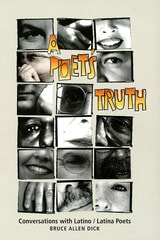
A Poet's Truth
Conversations with Latino/Latina PoetsBruce Allen Dick
University of Arizona Press, 2003
Among students and aficionados of contemporary literature, the work of Latina and Latino poets holds a particular fascination. Through works imbued with fire and passion, these writers have kindled new enthusiasm in their compatriots and admiration in non-Latino readers. This book brings together recent interviews with fifteen Latino/a poets, a cross-section of Chicano, Puerto Rican, and Cuban voices who discuss not only their work but also related issues that help define their place in American literature. Each talks at length about the craft of his or her poetry—both the influences and the process behind it—and takes a stand on social and political issues affecting Latinos across the United States. The interviews feature both established writers published as early as the 1960s and emerging artists, each of whom has enjoyed success in other literary forms also.
As Bruce Dick's insightful questions reveal, the key threads linking these writers are their connections to their families and communities and their concern for civil rights—believing like Chicana writer Pat Mora that "the work of the poet is for the people." The interviews also reveal diversity among and within the three communities, from Victor Hernández Cruz, who traces Latino collective identity to Africa and claims that all Latinos are "swimming in olive oil," to Cuban writer Gustavo Perez Firmat, who considers nationality more important than ethnicity and says that "the term Latino erases [his] nationality."
The dialogues also offer new insights on the place of Chicano/a writings in the U.S.-Mexico borderlands, on the Puerto Rican/Nuyorican establishment, and on the anti-Castro stand of Cuban-born poets. As these writers answer questions about their work, background, ethnic identity, and political ideology, they provide a wealth of biographical, intellectual, and literary material collected here for the first time. A Poet's Truth is a provocative and revealing book that not only conveys the fire of these writers' passions but also sheds important light on a whole literary movement.Interviews with:
Miguel Algarín
Martín Espada
Sandra María Esteves
Victor Hernández Cruz
Carolina Hospital and Carlos Medina
Demetria Martínez
Pat Mora
Judith Ortiz Cofer
Ricardo Pau-Llosa
Gustavo Pérez Firmat
Leroy Quintana
Aleida Rodríguez
Luis Rodríguez
Benjamin Alire Sáenz
Virgil Suárez
[more]

Acting Now
Conversations on Craft and CareerVilga, Edward
Rutgers University Press, 1997
If you thought the most challenging aspects of a career in acting would involve choosing the "right" roles and dodging the paparatzzi, think again. Success requires a tremendous amount of hard work, creativity, and dedication, as you'll learn from some of the industry's most respected name, in Acting Now.
[more]
Acts of Mind
Conversations with Contemporary PoetsRichard Jackson
University of Alabama Press, 1984
A good poem is, to borrow from Wallace Stevens, a “poem of the mind in the act of finding / What will suffice” (“Of Modern Poetry”), a poem of the mind that both thinks and feels
Acts of Mind grew out of interviews conducted by the author for Poetry Miscellany. The aim of which was to help develop a method for talking about the work of contemporary poets.
The poets whose views appear in this volume represent a fair cross-section of the more important tendencies and impulses to be found in contemporary poetry and poetics.
[more]
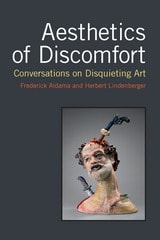
Aesthetics of Discomfort
Conversations on Disquieting ArtFrederick Aldama and Herbert Lindenberger
University of Michigan Press, 2016
Through a series of provocative conversations, Frederick Luis Aldama and Herbert Lindenberger, who have written widely on literature, film, music, and art, locate a place for the discomforting and the often painfully unpleasant within aesthetics. The conversational format allows them to travel informally across many centuries and many art forms. They have much to tell one another about the arts since the advent of modernism soon after 1900—the nontonal music, for example, of the Second Vienna School, the chance-directed music and dance of John Cage and Merce Cunningham, the in-your-faceness of such diverse visual artists as Francis Bacon, Pablo Picasso, Willem de Kooning, Egon Schiele, Otto Dix, and Damien Hirst. They demonstrate as well a long tradition of discomforting art stretching back many centuries, for example, in the Last Judgments of innumerable Renaissance painters, in Goya’s so-called “black” paintings, in Wagner’s Tristan chord, and in the subtexts of Shakespearean works such as King Lear and Othello. This book is addressed at once to scholars of literature, art history, musicology, and cinema. Although its conversational format eschews the standard conventions of scholarly argument, it provides original insights both into particular art forms and into individual works within these forms. Among other matters, it demonstrates how recent work in neuroscience may provide insights in the ways that consumers process difficult and discomforting works of art. The book also contributes to current aesthetic theory by charting the dialogue that goes on—especially in aesthetically challenging works—between creator, artifact, and consumer.
[more]
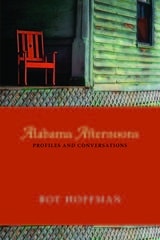
Alabama Afternoons
Profiles and ConversationsRoy Hoffman
University of Alabama Press, 2011
A collection of portraits of many remarkable Alabamians, famous and obscure, profiled by award-winning journalist and novelist Roy Hoffman
Alabama Afternoons is a collection of portraits of many notable Alabamians, famous and obscure, profiled by award-winning journalist and novelist Roy Hoffman. Written as Sunday feature stories for the Mobile Press-Register with additional pieces from the New York Times, Preservation, and Garden & Gun, these profiles preserve the individual stories—and the individual voices within the stories—that help to define one of the most distinctive states in the union.
Hoffman recounts his personal visits with writer Mary Ward Brown in her library in Hamburg, with photographer William Christenberry in a field in Newbern, and with storyteller Kathryn Tucker Windham and folk artist Charlie “Tin Man” Lucas at their neighboring houses in Selma. Also highlighted are the lives of numerous alumni of The University of Alabama—among them Mel Allen, the “Voice of the Yankees” from 1939 to 1964; Forrest Gump author Winston Groom; and Vivian Malone and James Hood, the two students who entered the schoolhouse door in 1963. Hoffman profiles distinguished Auburn University alumni as well, including Eugene Sledge, renowned World War II veteran and memoirist, and Neil Davis, the outspoken, nationally visible editor of the Lee County Bulletin.
Hoffman also profiles major and minor players in the civil rights movement, from Johnnie Carr, raised in segregated Montgomery and later president of the Montgomery Improvement Association; and George Wallace Jr., son of the four-time governor; to Theresa Burroughs, a Greensboro beautician trampled in the march over the Edmund Pettus Bridge; and Diane McWhorter, whose award- winning book explores the trouble- filled Birmingham civil rights experience. Juxtaposed with these are accounts of lesser-known individuals, such as Sarah Hamm, who attempts to preserve the fading Jewish culture in Eufaula; Edward Carl, who was butler and chauffeur to Bellingrath Gardens founder Walter Bellingrath in Theodore; and cousins William Bolton and Herbert Henson, caretakers of the coon dog cemetery in Russellville.
Hoffman’s compilation of life stories creates an engaging and compelling look into what it means to be from, and shaped by, Alabama. “Alabama Afternoons,” he writes in the introduction, “is a small part of the even bigger question of what it means to be an American.”
Read an article about domestic lives by Roy Hoffman in the New York Times here: http://www.nytimes.com/2010/11/25/garden/25Domestic.html
[more]
Anarchy—In a Manner of Speaking
Conversations with Mehdi Belhaj Kacem, Nika Dubrovsky, and Assia Turquier-ZaubermanDavid Graeber
Diaphanes, 2020
David Graeber was not only one of today’s most important living thinkers, but also one of the most influential. He was also one of the very few engaged intellectuals who has a proven track record of effective militancy on a world scale, and his impact on the international left cannot be overstated.
Graeber has offered up perhaps the most credible path for exiting capitalism—as much through his writing about debt, bureaucracy, or “bullshit jobs” as through his crucial involvement in the Occupy Wall Street movement, which led to his more-or-less involuntary exile from the American academy. In short, Anarchy—In a Manner of Speaking presents a series of interviews with a first-rate intellectual, a veritable modern hero on the order of Julian Assange, Edward Snowden, Linus Torvald, Aaron Swartz, and Elon Musk.
Interviewers Mehdi Belhaj Kacem and Assia Turquier-Zauberman asked Graeber not only about the history of anarchy, but also about its contemporary relevance and future. Their conversation also explores the ties between anthropology and anarchism, and the traces of its DNA in the Occupy Wall Street and Yellow Vest movements. Finally, Graeber discussed the meaning of anarchist ethics—not only in the political realm, but also in terms of art, love, sexuality, and more. With astonishing humor, verve, and erudition, this book redefines the contours of what could be (in the words of Peter Kropotkin) “anarchist morality” today.
[more]