Results by title
476 books match the query 'Criticism' and 39 start with a
A Basic Christian Theology
A. J. Conyers
St. Augustine's Press, 2019
A. J. Conyers was an evangelical, Baptist theologian who helped found Truett Seminary at Baylor university. Conyers’s theology drank deeply from the wells of the Christian tradition. In this volume, he provides what he found to be the most basic elements of Christian theology and demonstrates a methodology that is biblically informed, traditionally grounded, and contextually aware. this revised edition makes this excellent work available again, with some modified study questions, additional unpublished material from Conyers’s archives, and helpful reflection and tributes from two of Conyers’s best students—Brian Brewer and Brad Green—who carry on his legacy
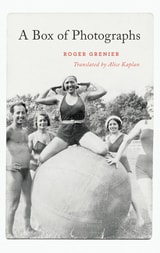
A Box of Photographs
Roger Grenier
University of Chicago Press, 2013
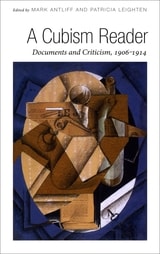
A Cubism Reader
Documents and Criticism, 1906-1914Mark Antliff and Patricia Leighten
University of Chicago Press, 2008
This definitive anthology covers the historical genesis of cubism from 1906 to 1914, with documents that range from manifestos and poetry to exhibition prefaces and reviews to articles that address the cultural, political, and philosophical issues related to the movement. Most of the texts Mark Antliff and Patricia Leighten have selected are from French sources, but their inclusion of carefully culled German, English, Czech, Italian, and Spanish documents speaks to the international reach of cubist art and ideas. Equally wide-ranging are the writers represented—a group that includes Guillaume Apollinaire, Gertrude Stein, Jean Metzinger, Albert Gleizes, Fernand Léger, Francis Picabia, André Salmon, Raymond Duchamp-Villon, Henri Le Fauconnier, and many others.
These diverse selections—unabridged and freshly translated—represent a departure from the traditional view of cubism as shaped almost exclusively by Picasso and Braque. Augmented by Antliff and Leighten’s insightful commentary on each entry, as well as many of the articles’ original illustrations, A Cubism Reader ultimately broadens the established history of the movement by examining its monumental contributions from a variety of contemporary perspectives.
A Defense of Judgment
Michael W. Clune
University of Chicago Press, 2021
Michael W. Clune’s provocative book challenges these objections to judgment and offers a positive account of literary studies as an institution of aesthetic education. It is impossible, Clune argues, to separate judgments about literary value from the practices of interpretation and analysis that constitute any viable model of literary expertise. Clune envisions a progressive politics freed from the strictures of dogmatic equality and enlivened by education in aesthetic judgment, transcending consumer culture and market preferences. Drawing on psychological and philosophical theories of knowledge and perception, Clune advocates for the cultivation of what John Keats called “negative capability,” the capacity to place existing criteria in doubt and to discover new concepts and new values in artworks. Moving from theory to practice, Clune takes up works by Keats, Emily Dickinson, Gwendolyn Brooks, Samuel Beckett, and Thomas Bernhard, showing how close reading—the profession’s traditional key skill—harnesses judgment to open new modes of perception.
A Little History of Photography Criticism; or, Why Do Photography Critics Hate Photography?
Susie Linfield
University of Chicago Press, 2010
A Pragmatist Philosophy of Life in Ortega y Gasset
John T. Graham
University of Missouri Press, 1994
Jose Ortega y Gasset (1883-1955), the most widely known and well liked of Spanish philosophers, was much admired in the United States from the 1930s through the 1960s for Revolt of the Masses, History as a System, and Dehumanization of Art, among other works. Those popular works, however, poorly reflected the complexity of Ortega's philosophy. In this first historical analysis of all the parts of Ortega's total thought, John Graham explores the extent to which Ortega's metaphysics was built not only on a native Spanish realism but also upon the pragmatism of William James. Graham details the extent to which Ortega developed an existentialsim before Martin Heidegger and a new historicism less absolute than Benedetto Croce's, by means of a phenomenological method-all within a comprehensive philosophy of life similar to Wilhelm Dilthey's, but more realist and social. In addition, an extensive bibliographical essay examines how Ortega's philosophy, as a whole and in each part, has stood in the estimation of critics worldwide from the 1920s to the present.
Over ten years in preparation, A Pragmatist Philosophy of Life in Ortega y Gasset reveals how open, adaptable, and inventive was pragmatism as Ortega elaborated its philosophical implications and applications for Spain, Europe, and the Americas. It is based on extensive use of the twelve volumes of Ortega's Obras completas, the eighty microfilm reels of his archive in the Library of Congress, and his private library of fifteen hundred volumes in Madrid. These sources, many of which have not been available previously, provide the essential evidence needed to demonstrate the novelty and subtlety, the diversity and unity, of Ortega's thematic "system" of thought.
Students and scholars of intellectual history, Spanish literature, and philosophy will welcome this important new study.
A William V. Spanos Reader
Humanist Criticism and the Secular ImperativeEdited by Daniel T. O'Hara, Donald E. Pease, Michelle Martin
Northwestern University Press, 2015
The American critic William V. Spanos, a pioneer of postmodern theory and co-founder of one of its principal organs, the journal boundary 2, is, in the words of A William V. Spanos Reader coeditor Daniel T. O’Hara, everything that current post-modern theory is accused of not being: polemical, engaged, prophetic, passionate. Informed by his experience as a prisoner of war in Dresden, Spanos saw dire con-sequences for life in modernist aesthetic experiments, and he thereafter imbued his work with a constructive aspect ever in the name of more life.
Accumulation
The Art, Architecture, and Media of Climate ChangeNick Axel
University of Minnesota Press, 2022
Examines how images of accumulation help open up the climate to political mobilization
The current epoch is one of accumulation: not only of capital but also of raw, often unruly material, from plastic in the ocean and carbon in the atmosphere to people, buildings, and cities. Alongside this material growth, image-making practices embedded within the fields of art and architecture have proven to be fertile, mobile, and capacious. Images of accumulation help open up the climate to cultural inquiry and political mobilization and have formed a cultural infrastructure focused on the relationships between humans, other species, and their environments.
The essays in Accumulation address this cultural infrastructure and the methodological challenges of its analysis. They offer a response to the relative invisibility of the climate now seen as material manifestations of social behavior. Contributors outline opportunities and ambitions of visual scholarship as a means to encounter the challenges emergent in the current moment: how can climate become visible, culturally and politically? Knowledge of climatic instability can change collective behavior and offer other trajectories, counteraccumulations that draw the present into a different, more livable, future.
Contributors: Emily Apter, New York U; Hans Baumann; Amanda Boeztkes, U of Guelph; Dominic Boyer, Rice U; Lindsay Bremner, U of Westminster; Nerea Calvillo, U of Warwick; Beth Cullen, U of Westminster; T. J. Demos, U of California, Santa Cruz; Jeff Diamanti, U of Amsterdam; Jennifer Ferng, U of Sydney; Jennifer Gabrys, U of Cambridge; Ian Gray, U of California, Los Angeles; Gökçe Günel, Rice U; Orit Halpern, Concordia U; Gabrielle Hecht, Stanford U; Cymene Howe, Rice U; Wendy Hui Kyong Chun, Simon Fraser U; Robin Kelsey, Harvard U; Bruno Latour, Sciences Po, Paris; Hannah le Roux, U of the Witwatersrand, Johannesburg; Stephanie LeMenager, U of Oregon; Nashin Mahtani; Kiel Moe, McGill U; Karen Pinkus, Cornell U; Stephanie Wakefield, Life U; McKenzie Wark, The New School; Kathryn Yusoff, Queen Mary U of London.
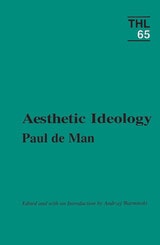
Aesthetic Ideology
Paul De Man
University of Minnesota Press, 1996
An important reconsideration of ideology by one of this century’s most eminent theorists.
This long-awaited volume by one of the major figures of twentieth-century thought represents perhaps the most provocative, serious, and important rethinking of “ideology” since the publication of Althusser's essays in the 1960s and 1970s. Aesthetic Ideology offers the definitive resource to de Man's thoughts on philosophy, politics, and history.
The core of Aesthetic Ideology is a rigorous inquiry into the relation of rhetoric, epistemology, and aesthetics, one that presents radical notions of materiality. De Man reads Kant and Hegel with a combination of philosophical rigor, interpretive pressure, speculative daring, and ironic good humor that is unique to him, ultimately reaching the heart of philosophical aesthetics. The texts collected here were written or delivered as lectures during the last years of de Man's life, between 1977 and 1983. Many of them have never been available previously in any form; these include essays on Kant's materialism, his relation to Schiller, and the concept of irony. A culmination of de Man's thinking on these central issues, Aesthetic Ideology is a necessary and vital component of your humanities bookshelf. ContentsIntroduction: Allegories of ReferenceThe Epistemology of MetaphorPascal's Allegory of PersuasionPhenomenality and Materiality in KantSign and Symbol in Hegel's AestheticsHegel on the SublimeKant's MaterialismKant and SchillerThe Concept of IronyReply to Raymond Geuss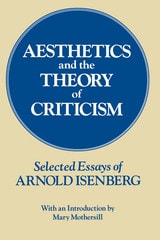
Aesthetics and the Theory of Criticism
Selected Essays of Arnold IsenbergArnold Isenberg
University of Chicago Press, 1973
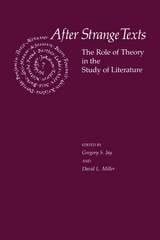
After Strange Texts
The Role of Theory in the Study of LiteratureGregory S. Jay and David L. Miller
University of Alabama Press, 1985
In this collection of essays by seven outstanding American scholars, interests as diverse as feminism, Marxism, deconstruction, and cultural poetics are brought together around a central question: how does the choice of a particular theory alter the practice of reading and do altered practices of reading in turn call forth more theory?
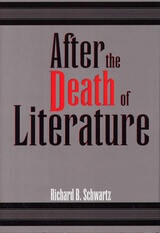
After the Death of Literature
Richard B. Schwartz
Southern Illinois University Press, 1997
Calling Samuel Johnson the greatest literary critic since Aristotle, Richard B. Schwartz assumes the perspective of that quintessential eighteenth-century man of letters to examine the critical and theoretical literary developments that gained momentum in the 1970s and stimulated the culture wars of the 1980s and 1990s.
Schwartz speculates that Johnson—who revered hard facts, a wide cultural base, and common sense—would have exhibited scant patience with the heavily academic approaches currently favored in the study of literature. He considers it probable that the combatants in the early struggles of the culture wars are losing energy and that, in the wake of Alvin Kernan’s declaration of the death of literature, new battlegrounds are developing. Ironically admiring the orchestration and staging of battles old and new—"superb" he calls them—he characterizes the entire cultural war as a "battle between straw men, carefully constructed by the combatants to sustain a pattern of polarization that could be exploited to provide continuing professional advancement."
In seven diverse essays, Schwartz calls for both the broad cultural vision and the sanity of a Samuel Johnson from those who make pronouncements about literature. Running through and unifying these essays is the conviction that the cultural elite is clearly detached from life: "Academics, fleeing in horror from anything smacking of the bourgeois, offer us something far worse: bland sameness presented in elitist terms in the name of the poor." Another theme is that the either/or absolutism of many of the combatants is "absurd on its face [and] belies the complexities of art, culture, and humanity."
Like Johnson, Schwartz would terminate the divorce between literature and life, make allies of literature and criticism, and remove poetry from the province of the university and return it to the domain of readers. Texts would carry meaning, embody values, and have a serious impact on life.
After the New Criticism
Frank Lentricchia
University of Chicago Press, 1981
Lentricchia's critical intention is in evidence in his sustained attack on the more or less hidden formalist premises inherited from the New Critical fathers. Even in the name of historical consciousness, he contends, contemporary theorists have often cut literature off from social and temporal processes. By so doing he believes that they have deprived literature of its relevant values and turned the teaching of both literature and theory into a rarefied activity. All along the way, with the help of such diverse thinkers as Saussure, Barthes, Foucault, Derrida, and Bloom, Lentricchia indicates a strategy by which future critical theorists may resist the mandarin attitudes of their fathers.
Against Literature
John Beverley
University of Minnesota Press, 1993
Is there a way of thinking about literature that is “outside” or “against” literature? In Against Literature, John Beverly brilliantly responds to this question, arguing for a negation of the literary that would allow nonliterary forms of cultural practice to displace literature’s hegemony.
Reminding us that most contemporary theorist speak today of literature with historically and socially specific conditions of production and reading formations, Beverley begins with a provocative exploration of Latin American literature, which he says the legacy of Columbus (discovery, conquest, and colonization) has endowed with an ambiguous cultural function, making it both a colonial institution and a historical agent of nation formation. He moves from this consideration to an extensive discussion of the postcolonial testimonio, poised between literature and the dynamics of subaltern culture. Beverley’s demonstration of how the internal logic that has always driven the dominant conception f literature must of necessity explode int cultural politics is a significant intervention into current debates about cultural studies, the canon, and multiculturalism.
Against Theory
Literary Studies and the New PragmatismW. J. T. Mitchell
University of Chicago Press, 1985
The argument is directed against both sides of the current debates in literary theory, criticizing theoretical "objectivists" like E. D. Hirsch, Jr., on the one hand, and proponents of indeterminacy like Paul de Man on the other. The attack is not just on a particular way of doing theory but on the entire project of literary theory. The challenge is not only to a way of thinking and writing but to a way of making a living.
The resulting controversy has drawn so much attention among literary critics that it has been collected in a single volume so that the debate can be followed from start to finish. This collection includes the essay "Against Theory," seven responses to it, and a rejoinder by Knapp and Michaels (originally published in Critical Inquiry 9:4); in addition, there are two new statements plus a final reply by Knapp and Michaels.
The debate chronicled in this volume raises the most fundamental issues in the theory of meaning and the practice of interpretation. Are Knapp and Michaels confronting literary theory with a new "pragmatic" form of theory? Or are they (as some of their respondents suggest) arguing for a new form of nihilism? "If it is a nihilism," writes editor W. J. T. Mitchell, "it is one that demands an answer, not easy polemical dismissal, one that calls for theory to clarify its claims, not to mystify them and the easy assurance of intellectual fashion and institutional authority." It is the intention of Against Theory to aid in that clarification.
All Is True
The Claims and Strategies of Realist FictionLilian R. Furst
Duke University Press, 1995
In close textual analyses of works ranging across European and American literature, including paradigmatic texts by Balzac, Flaubert, George Eliot, Zola, Henry James, and Thomas Mann, Furst shows how the handling of time, the presentation of place, and certain narrational strategies have served the realists’ claim. She demonstrates how readers today, like those a hundred years ago, are convinced of the authenticity of the created illusion by such means as framing, voice, perspective, and the slippage from metonymy to metaphor. Further, Furst reveals the pains the realists took to conceal these devices, and thus to protect their claim to be employing a simple form. Taking into account both the claims and the covert strategies of these writers, All Is True puts forward an alternative to the conventional polarized reading of the realist text—which emerges here as neither strictly an imitation of an extraneous model nor simply a web of words but a brilliantly complex imbrication of the two.
A major statement on one of the most enduring forms in cultural history, this book promises to alter not only our view of realist fiction but our understanding of how we read it.

Amateurs, Photography, and the Mid-Victorian Imagination
Grace Seiberling
University of Chicago Press, 1986
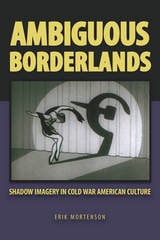
Ambiguous Borderlands
Shadow Imagery in Cold War American CultureErik Mortenson
Southern Illinois University Press, 2016
After contextualizing the postwar use of shadow imagery in the wake of the atomic bomb, Ambiguous Borderlands looks at shadows in print works, detailing the reemergence of the pulp fiction crime fighter the Shadow in the late-1950s writings of Sylvia Plath, Amiri Baraka, and Jack Kerouac. Using Freudian and Jungian conceptions of the unconscious, Mortenson then discusses Kerouac’s and Allen Ginsberg’s shared dream of a “shrouded stranger” and how it shaped their Beat aesthetic. Turning to the visual, Mortenson examines the dehumanizing effect of shadow imagery in the Cold War photography of Robert Frank, William Klein, and Ralph Eugene Meatyard. Mortenson concludes with an investigation of the use of chiaroscuro in 1950s film noir and the popular television series The Twilight Zone, further detailing how the complexities of Cold War society were mirrored across these media in the ubiquitous imagery of light and dark.
From comics to movies, Beats to bombs, Ambiguous Borderlands provides a novel understanding of the Cold War cultural context through its analysis of the image of the shadow in midcentury media. Its interdisciplinary approach, ambitious subject matter, and diverse theoretical framing make it essential reading for anyone interested in American literary and popular culture during the fifties and sixties.
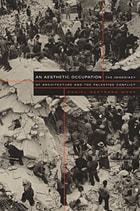
An Aesthetic Occupation
The Immediacy of Architecture and the Palestine ConflictDaniel Bertrand Monk
Duke University Press, 2002
In An Aesthetic Occupation Daniel Bertrand Monk unearths the history of the unquestioned political immediacy of “sacred” architecture in the conflict between Palestinians and Israelis. Monk combines groundbreaking archival research with theoretical insights to examine in particular the Mandate era—the period in the first half of the twentieth century when Britain held sovereignty over Palestine. While examining the relation between monuments and mass violence in this context, he documents Palestinian, Zionist, and British attempts to advance competing arguments concerning architecture’s utility to politics.
Succumbing neither to the view that monuments are autonomous figures onto which political meaning has been projected, nor to the obverse claim that in Jerusalem shrines are immediate manifestations of the political, Monk traces the reciprocal history of both these positions as well as describes how opponents in the conflict debated and theorized their own participation in its self-representation. Analyzing controversies over the authenticity of holy sites, the restorations of the Dome of the Rock, and the discourse of accusation following the Buraq, or Wailing Wall, riots of 1929, Monk discloses for the first time that, as combatants looked to architecture and invoked the transparency of their own historical situation, they simultaneously advanced—and normalized—the conflict’s inability to account for itself.
This balanced and unique study will appeal to anyone interested in Israel or Zionism, the Palestinians, the Middle East conflict, Jerusalem, or its monuments. Scholars of architecture, political theory, and religion, as well as cultural and critical studies will also be informed by its arguments.

An Innocent Abroad
Lectures in ChinaJ. Hillis Miller
Northwestern University Press, 2015
Since 1988, J. Hillis Miller has traveled to China to lecture on literary theory, especially the role of globalization in literary theory. Over time, he has assisted in the development of distinctively Chinese forms of literary theory, Comparative Literature, and World Literature. The fifteen lectures gathered in An Innocent Abroad span both time and geographic location, reflecting his work at universities across China for more than twenty-five years. More important, they reflect the evolution of Miller’s thinking and of the lectures’ contexts in China as these have markedly changed over the years, especially on either side of Tiananmen Square and in light of China’s economic growth and technological change. A foreword by the leading theorist Fredric Jameson provides additional context.

Anarchitectural Experiments
When Unbuilt Designs Turn to FilmMaciej Stasiowski
Intellect Books, 2022
This book outlines the impact of film and animation on architectural representation through key projects. The opening analysis is useful in contextualizing speculative architectural projects, while the later chapters link the theory to imagery. To support his argument, Maciej Stasiowski here curates a diverse collection of interesting case studies that are accessible and easy to read.
Through its comprehensive review of speculative architecture and various media that describe it, Stasiowski’s book sets itself apart from other works in the discipline by discussing speculative projects that engage with cinematic strategies of portrayal and specifically the effect that modern technologies have on the subject now and in its potential futures. This thorough examination of the use of cinema and animation as a method of architectural visualization offers insights into a converging field of architectural and filmic disciplines and will appeal to architects and designers, filmmakers, academics, artists, set designers, and film production designers.
Anecdotal Theory
Jane Gallop
Duke University Press, 2002
Published during the 1990s, these essays are united through a common methodological engagement—writing that recounts a personal anecdote and then attempts to read that anecdote for the theoretical insights it affords. Gallop addresses many of the major questions of feminist theory, regularly revisiting not only ‘70s feminism, but also poststructuralism and the academy, for, as Gallop explains, the practice of anecdotal theory derives from psychoanalysis, deconstruction, and feminism. Whether addressing issues of pedagogy, the sexual position one occupies when on the academic job-market, bad-girl feminists, or the notion of sisterhood, these essays exemplify theory grappling with its own erotics, theory connected to the real. They are bold, illuminating, and—dare we say—fun.

Anthropocene Poetics
Deep Time, Sacrifice Zones, and ExtinctionDavid Farrier
University of Minnesota Press, 2019
How poetry can help us think about and live in the Anthropocene by reframing our intimate relationship with geological time
The Anthropocene describes how humanity has radically intruded into deep time, the vast timescales that shape the Earth system and all life-forms that it supports. The challenge it poses—how to live in our present moment alongside deep pasts and futures—brings into sharp focus the importance of grasping the nature of our intimate relationship with geological time. In Anthropocene Poetics, David Farrier shows how contemporary poetry by Elizabeth Bishop, Seamus Heaney, Evelyn Reilly, and Christian Bök, among others, provides us with frameworks for thinking about this uncanny sense of time.
Looking at a diverse array of lyric and avant-garde poetry from three interrelated perspectives—the Anthropocene and the “material turn” in environmental philosophy; the Plantationocene and the role of global capitalism in environmental crisis; and the emergence of multispecies ethics and extinction studies—Farrier rethinks the environmental humanities from a literary critical perspective. Anthropocene Poetics puts a concern with deep time at the center, defining a new poetics for thinking through humanity’s role as geological agents, the devastation caused by resource extraction, and the looming extinction crisis.
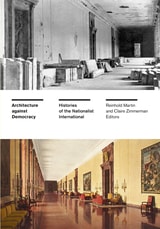
Architecture against Democracy
Histories of the Nationalist InternationalReinhold Martin
University of Minnesota Press, 2024
Examining architecture’s foundational role in the repression of democracy
Reinhold Martin and Claire Zimmerman bring together essays from an array of scholars exploring the troubled relationship between architecture and antidemocratic politics. Comprising detailed case studies throughout the world spanning from the early nineteenth century to the present, Architecture against Democracy analyzes crucial occasions when the built environment has been harnessed as an instrument of authoritarian power.
Alongside chapters focusing on paradigmatic episodes from twentieth-century German and Italian fascism, the contributors examine historic and contemporary events and subjects that are organized thematically, including the founding of the Smithsonian Institution, Ellis Island infrastructure, the aftermath of the Paris Commune, Cold War West Germany and Iraq, Frank Lloyd Wright’s domestic architecture, and Istanbul’s Taksim Square. Through the range and depth of these accounts, Architecture against Democracy presents a selective overview of antidemocratic processes as they unfold in the built environment throughout Western modernity, offering an architectural history of the recent “nationalist international.”
As new forms of nationalism and authoritarian rule proliferate across the globe, this timely collection offers fresh understandings of the role of architecture in the opposition to democracy.
Contributors: Esra Akcan, Cornell U; Can Bilsel, U of San Diego; José H. Bortoluci, Getulio Vargas Foundation; Charles L. Davis II, U of Texas at Austin; Laura diZerega; Eve Duffy, Duke U; María González Pendás, Cornell U; Paul B. Jaskot, Duke U; Ana María León, Harvard U; Ruth W. Lo, Hamilton College; Peter Minosh, Northeastern U; Itohan Osayimwese, Brown U; Kishwar Rizvi, Yale U; Naomi Vaughan; Nader Vossoughian, New York Institute of Technology and Columbia U; Mabel O. Wilson, Columbia U.
Architecture and Fire
A Psychoanalytic Approach to ConservationStamatis Zografos
University College London, 2019
Founded in inventive interdisciplinary research that ranges across architecture and conservation, archival theory, classical mythology, evolutionary theory, philosophy, and psychoanalysis, Architecture and Fire draws on the insights of psychoanalysis to offer such a reassessment. Among the topics discussed are the ambivalent nature of fire, seen through the conflicting philosophies of Gaston Bachelard and Henri Bergson; the ways in which architecture evolves by absorbing and accommodating fire; and the destruction of buildings by fire as a critical moment of architectural evolution, with a focus on the tragic disaster at London’s Grenfell Tower in 2017. Stamatis Zografos concludes with thoughts on Freud’s drive theory. He argues that the practice of architectural conservation is an expression of the life drive and a simultaneous repression of the death drive, which suggests controlled destruction should be an integral part of the conservation agenda.
Architecture and Objects
Graham Harman
University of Minnesota Press, 2022
Thinking through object-oriented ontology—and the work of architects such as Rem Koolhaas and Zaha Hadid—to explore new concepts of the relationship between form and function
Object-oriented ontology has become increasingly popular among architectural theorists and practitioners in recent years. Architecture and Objects, the first book on architecture by the founder of object-oriented ontology (OOO), deepens the exchange between architecture and philosophy, providing a new roadmap to OOO’s influence on the language and practice of contemporary architecture and offering new conceptions of the relationship between form and function.
Graham Harman opens with a critique of Heidegger, Derrida, and Deleuze, the three philosophers whose ideas have left the deepest imprint on the field, highlighting the limits of their thinking for architecture. Instead, Harman contends, architecture can employ OOO to reconsider traditional notions of form and function that emphasize their relational characteristics—form with a building’s visual style, function with its stated purpose—and constrain architecture’s possibilities through literalism. Harman challenges these understandings by proposing de-relationalized versions of both (zero-form and zero-function) that together provide a convincing rejoinder to Immanuel Kant’s dismissal of architecture as “impure.”
Through critical engagement with the writings of Peter Eisenman and fresh assessments of buildings by Rem Koolhaas, Frank Gehry, and Zaha Hadid, Architecture and Objects forwards a bold vision of architecture. Overcoming the difficult task of “zeroing” function, Harman concludes, would place architecture at the forefront of a necessary revitalization of exhausted aesthetic paradigms.
Architecture and Suburbia
From English Villa to American Dream House, 1690-2000John Archer
University of Minnesota Press, 2008
The American suburban dream house-a single-family, detached dwelling, frequently clustered in tight rows and cul-de-sacs-has been attacked for some time as homogeneous and barren, yet the suburbs are home to half of the American population. Architectural historian John Archer suggests the endurance of the ideal house is deeply rooted in the notions of privacy, property, and selfhood that were introduced in late seventeenth-century England and became the foundation of the American nation and identity.
Spanning four centuries, Architecture and Suburbia explores phenomena ranging from household furnishings and routines to the proliferation of the dream house in parallel with Cold War politics. Beginning with John Locke, whose Enlightenment philosophy imagined individuals capable of self-fulfillment, Archer examines the eighteenth-century British bourgeois villa and the earliest London suburbs. He recounts how early American homeowners used houses to establish social status and how twentieth-century Americans continued to flock to single-family houses in the suburbs, encouraged by patriotism, fueled by consumerism, and resisting disdain by disaffected youths, designers, and intellectuals. Finally, he recognizes “hybridized” or increasingly diverse American suburbs as the dynamic basis for a strengthened social fabric.
From Enlightenment philosophy to rap lyrics, from the rise of a mercantile economy to discussions over neighborhoods, sprawl, and gated communities, Archer addresses the past, present, and future of the American dream house.
John Archer is professor of cultural studies and comparative literature at the University of Minnesota. His book The Literature of British Domestic Architecture, 1715-1842, is the standard reference on the subject, and he also contributed to the Encyclopedia of Urban America and the Encyclopedia of Twentieth-Century Architecture.
Architecture in Dialogue with an Activated Ground
Unreasonable CreaturesUrs Bette
University College London, 2020
Using case study projects, architect Urs Bette gives an insight into the epistemological processes of his creative practice and unveils the strategies he deploys in order to facilitate the poetic aspects of architecture within a discourse whose evaluation parameters predominantly involve reason. Themes discussed include the emergence of space from the staged opposition between the architectural object and the site, and the relationship between emotive cognition and analytic synthesis in the design act. In both cases, there is a necessary engagement with forms of ‘unreasonable’ thought, action or behaviors.
By arguing for the usefulness and validity of the unreasonable in architecture, and by investigating the performative relationship between object and ground, Bette contributes to the discourse on extensions, growth and urban densification that tap into local histories and voices, including those of the seemingly inanimate – the architecture itself and the ground it sits upon – to inform the site-related production of architectural character and space. In doing so, he raises debates about the values pursued in design approval processes and the ways in which site-relatedness is both produced and judged.
Architecture of the Well-Tempered Environment
Reyner Banham
University of Chicago Press, 1984
Architecture, Means and Ends
Vittorio Gregotti
University of Chicago Press, 2010
Vittorio Gregotti—the architect of Barcelona’s Olympic Stadium, Milan’s Arcimboldi Opera Theater, and Lisbon’s Centro Cultural de Belém, among many other noted constructions—is not only a designer of international repute but an acclaimed theorist and critic. Architecture, Means and Ends is his practical and imaginative reflection on the role of the technical aspects of architectural design, both as part of the larger process of innovation and in relation to the mythic opposition between vision and construction.
Interweaving the seemingly irreconcilable concerns of aesthetics, meaning, and construction, Architecture, Means and Ends reflects Gregotti’s overarching claim that buildings always have a symbolic, cultural content. In this book, he argues that by making symbolic expression a primary objective in the design of a project, the designer will produce a practical aesthetic as well as an ethical solution. Architecture, Means and Ends embraces that philosophy and will appeal to those, like Gregotti, working at the intersections of the history of design, art criticism, and architectural theory.
Architectures of Embodiment
Disclosing New IntelligibilitiesEdited by Alex Arteaga
Diaphanes, 2021
Architectures of Embodiment is a constellation of coexisting autonomous artifacts: texts by Alex Arteaga, Mika Elo, Ana García Varas, Lidia Gasperoni, Jonathan Hale, Susanne Hauser, Dieter Mersch and Gerard Vilar in dialogue with one another through comments and comments on the comments. It is conceived as a dialogical research dispositive: an invitation to participate in an open-ended process of research within a growing ecology of research practices.
Argentine, Mexican, and Guatemalan Photography
Feminist, Queer, and Post-Masculinist PerspectivesBy David William Foster
University of Texas Press, 2014
One of the important cultural responses to political and sociohistorical events in Latin America is a resurgence of urban photography, which typically blends high art and social documentary. But unlike other forms of cultural production in Latin America, photography has received relatively little sustained critical analysis. This pioneering book offers one of the first in-depth investigations of the complex and extensive history of gendered perspectives in Latin American photography through studies of works from Argentina, Mexico, and Guatemala.
David William Foster examines the work of photographers ranging from the internationally acclaimed artists Graciela Iturbide, Pedro Meyer, and Marcos López to significant photographers whose work is largely unknown to English-speaking audiences. He grounds his essays in four interlocking areas of research: the experience of human life in urban environments, the feminist matrix and gendered cultural production, Jewish cultural production, and the ideological principles of cultural works and the connections between the works and the sociopolitical and historical contexts in which they were created. Foster reveals how gender-marked photography has contributed to the discourse surrounding the project of redemocratization in Argentina and Guatemala, as well as how it has illuminated human rights abuses in both countries. He also traces photography’s contributions to the evolution away from the masculinist-dominated post–1910 Revolution ideology in Mexico. This research convincingly demonstrates that Latin American photography merits the high level of respect that is routinely accorded to more canonical forms of cultural production.
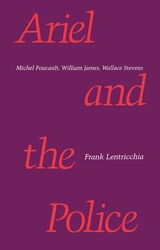
Ariel and the Police
Frank Lentricchia
University of Wisconsin Press, 1989
In Ariel and the Police, Frank Lentricchia searches through the totalizing desires for power that have built and help to maintain tangible and intangible structures of confinement and purification within, and sometimes as, the house of modernism. And what he finds, in his lyrical effort to redeem the subject for history, is that someone lives there, slyly, sometimes even playfully defiant.
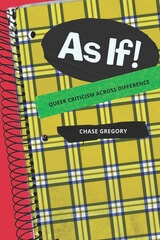
As If!
Queer Criticism Across DifferenceChase Gregory
Duke University Press, 2025
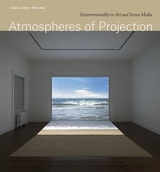
Atmospheres of Projection
Environmentality in Art and Screen MediaGiuliana Bruno
University of Chicago Press, 2022
Projection has long been transforming space, from shadow plays to camera obscuras and magic lantern shows. Our fascination with projection is alive on the walls of museums and galleries and woven into our daily lives. Giuliana Bruno explores the histories of projection and atmosphere in visual culture and their continued importance to contemporary artists who are reinventing the projective imagination with atmospheric thinking and the use of elemental media.
To explain our fascination with projection and atmosphere, Bruno traverses psychoanalysis, environmental philosophy, architecture, the history of science, visual art, and moving image culture to see how projective mechanisms and their environments have developed over time. She reveals how atmosphere is formed and mediated, how it can change, and what projection can do to modify a site. In so doing, she gives new life to the alchemic possibilities of transformative projective atmospheres. Showing how their “environmentality” produces sites of exchange and relationality, this book binds art to the ecology of atmosphere.
Australian Film Theory and Criticism
Volume 1: Critical PositionsNoel King, Constantine Verevis, and Deane Williams
Intellect Books, 2013
Australian Film Theory and Criticism
Volume 2: InterviewsEdited by Noel King and Deane Williams
Intellect Books, 2014
Australian Film Theory and Criticism
Volume 3: DocumentsEdited by Deane Williams and Constantine Verevis
Intellect Books, 2017

Avant-Garde Performance and the Limits of Criticism
Approaching the Living Theatre, Happenings/Fluxus, and the Black Arts MovementMike Sell
University of Michigan Press, 2005
Mike Sell's study is groundbreaking in its consideration of the avant-garde in relationship to a crucial but rarely considered agent: the scholar and critic. The book examines the role of the scholar and critic in the cultural struggles of radical artists and activists and reveals how avant-garde performance identifies the very limits of critical consideration. The book also explores the popularization of the avant-garde: how formerly subversive art is eventually discovered by the mass media, is gobbled up by the marketplace, and eventually finds its way onto the syllabi of college and university courses. Avant-Garde Performance and the Limits of Criticism is a timely and significant book that will become a standard reference for scholars in the fields of avant-garde literary criticism, theater history, critical theory, and performance studies.
"A provocative exploration of relations between the historical avant-garde and Cold War vanguard art and theatre. Sell's compelling historical and cultural narrative shows how the connections between the two exist at a very deep level of radical politics and aesthetics--an amazing concoction of rigorous scholarship, interdisciplinary learning, and progressive theorizing."
--Michael Vanden Heuvel, University of Wisconsin, Madison
"One of the most sophisticated, engaged, and engaging studies of the avant-garde in the United States that I've read-an important study that will raise the bar not only on scholarship of the Black Arts Movement, but on U.S. avant-gardism generally."
--James Smethurst, University of Massachusetts
A volume in the series Theater: Theory/Text/Performance. A list of recent titles in the series appears at the front of this volume.