429 books match the query 'Development' and 32 start with a
cover of A Civil Economy: Transforming the Marketplace in the Twenty-First Century

A Civil Economy

Transforming the Marketplace in the Twenty-First Century

Severyn T. Bruyn

University of Michigan Press, 2000
A civil society is one in which a democratic government and a market economy operate together. The idea of the civil economy--encompassing a democratic government and a market economy--presumes that people can solve social problems within the market itself. This book explores the relationship between the two, examining the civil underpinnings of capitalism and investigating the way a civil economy evolves in history and is developed for the future by careful planning.
Severyn T. Bruyn describes how people in three sectors--government, business, and the Third Sector (nonprofits and civil groups)--can develop an accountable, self-regulating, profitable, humane, and competitive system of markets that could be described as a civil economy. He examines how government officials can organize markets to reduce government costs; how local leaders deal with global corporations that would unfairly exploit their community resources; and how employees can become coparticipants in the development of human values in markets.
A Civil Economy is oriented to interdiciplinary studies of the economy, assisting scholars in diverse fields, such as business management, sociology, political science, and economics, in developing a common language to examine civic problems in the marketplace.
As an undergraduate text, it evokes a mode of thought about the development of a self-accountable system of markets. Students learn to understand how the market economy becomes socially accountable and self-reliant, while remaining productive, competitive, and profitable.
Sveryn T. Bruyn is Professor of Sociology, Boston College.
[more]
cover of A Critical History of Poverty Finance: Colonial Roots and Neoliberal Failures

A Critical History of Poverty Finance

Colonial Roots and Neoliberal Failures

Nick

Pluto Press, 2022

A comprehensive historical tracing of how the contemporary finance-poverty-development nexus emerged.

'The definitive account of the history of poverty finance' - Susanne Soederberg

Finance, mobile, and digital technologies - or 'fintech' - are being heralded in the world of development by the likes of the IMF and World Bank as a silver bullet in the fight against poverty. But should we believe the hype?

A Critical History of Poverty Finance demonstrates how newfangled 'digital financial inclusion' efforts suffer from the same essential flaws as earlier iterations of neoliberal 'financial inclusion.' Relying on artificially created markets that simply aren't there among the world's most disadvantaged economic actors, they also reinforce existing patterns of inequality and uneven development, many of which date back to the colonial era.

Bernards offers an astute analysis of the current fintech fad, contextualized through a detailed colonial history of development finance, that ultimately reveals the neoliberal vision of poverty alleviation for the pipe dream it is.

[more]
cover of A Good Position for Birth: Pregnancy, Risk, and Development in Southern Belize

A Good Position for Birth

Pregnancy, Risk, and Development in Southern Belize

Aminata Maraesa

Vanderbilt University Press, 2018

In order to understand the local realities of health and development initiatives undertaken to reduce maternal and infant mortality, the author accompanied rural health nurses as they traveled to villages accessible only by foot over waterlogged terrain to set up mobile prenatal and well-child clinics. Through sustained interactions with pregnant women, midwives, traditional birth attendants, and bush doctors, Maraesa encountered reproductive beliefs and practices ranging from obeah pregnancy to 'nointing that compete with global health care workers' directives about risk, prenatal care, and hospital versus home birth.

Fear and shame are prominent affective tropes that Maraesa uses to understand women's attitudes toward reproduction that are at times contrary to development discourse but that make sense in the lived experiences of the women of southern Belize.
[more]
cover of A New Architecture for the U.S. National Accounts

A New Architecture for the U.S. National Accounts

Edited by Dale W. Jorgenson, J. Steven Landefeld, and William D. Nordhaus

University of Chicago Press, 2006

A New Architecture for the U.S. National Accounts brings together a distinguished group of contributors to initiate the development of a comprehensive and fully integrated set of United States national accounts. The purpose of the new architecture is not only to integrate the existing systems of accounts, but also to identify gaps and inconsistencies and expand and incorporate systems of nonmarket accounts with the core system. 

Since the United States economy accounts for almost thirty percent of the world economy, it is not surprising that accounting for this huge and diverse set of economic activities requires a decentralized statistical system. This volume outlines the major assignments among institutions that include the Bureau of Economic Analysis, the Bureau of Labor Statistics, the Department of Labor, the Census Bureau, and the Governors of the Federal Reserve System. 

An important part of the motivation for the new architecture is to integrate the different components and make them consistent. This volume is the first step toward achieving that goal.

[more]
cover of A People’s Green New Deal

A People’s Green New Deal

Max Ajl

Pluto Press, 2021

'Hands-down the best book yet on the Green New Deal' - Jason Hickel

The idea of a Green New Deal was launched into popular consciousness by US Congressperson Alexandria Ocasio-Cortez in 2018. It has become a watchword in the current era of global climate crisis. But what - and for whom - is the Green New Deal?

In this concise and urgent book, Max Ajl provides an overview of the various mainstream Green New Deals. Critically engaging with their proponents, ideological underpinnings and limitations, he goes on to sketch out a radical alternative: a 'People's Green New Deal' committed to decommodification, working-class power, anti-imperialism and agro-ecology.

Ajl diagnoses the roots of the current socio-ecological crisis as emerging from a world-system dominated by the logics of capitalism and imperialism. Resolving this crisis, he argues, requires nothing less than an infrastructural and agricultural transformation in the Global North, and the industrial convergence between North and South. As the climate crisis deepens and the literature on the subject grows, A People's Green New Deal contributes a distinctive perspective to the debate.
[more]
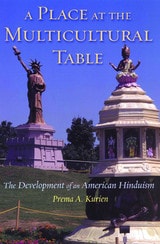
cover of A Place at the Multicultural Table: The Development of an American Hinduism

A Place at the Multicultural Table

The Development of an American Hinduism

Kurien, Prema

Rutgers University Press, 2007

Multiculturalism in the United States is commonly lauded as a positive social ideal celebrating the diversity of our nation. But, in reality, immigrants often feel pressured to create a singular formulation of their identity that does not reflect the diversity of cultures that exist in their homeland. Hindu Americans have faced this challenge over the last fifteen years, as the number of Indians that have immigrated to this country has more than doubled.

In A Place at the Multicultural Table, Prema A. Kurien shows how various Hindu American organizations--religious, cultural, and political--are attempting to answer the puzzling questions of identity outside their homeland. Drawing on the experiences of both immigrant and American-born Hindu Americans, Kurien demonstrates how religious ideas and practices are being imported, exported, and reshaped in the process. The result of this transnational movement is an American Hinduism--an organized, politicized, and standardized version of that which is found in India.

This first in-depth look at Hinduism in the United States and the Hindu Indian American community helps readers to understand the private devotions, practices, and beliefs of Hindu Indian Americans as well as their political mobilization and activism. It explains the differences between immigrant and American-born Hindu Americans, how both understand their religion and their identity, and it emphasizes the importance of the social and cultural context of the United States in influencing the development of an American Hinduism.

[more]
cover of A Report of the International Commission for Central American Recovery and Development

A Report of the International Commission for Central American Recovery and Development

William L. Ascher and Ann Hubbard, editors

Duke University Press, 1989

The 1980s were one of the most turbulent decades in Central America’s history, a history that has been marked by more than its share of strife and upheaval. The wars, economic hardship, and political unrest and instability that have dominated news of the region have been years in the making, the products of flawed and inequitable economic, social, and political structures.
The International Commission for Central American Recovery and Development (ICCARD) was formed to provide a thorough diagnosis and analysis of Central America’s problems and to draft a comprehensive long-term strategy to move the region from decline to development. In this report ICCARD—through forty-five international experts in economics, public policy, management, and development it assembled for this purpose—attempts to rise above rhetoric and simplistic remedies to focus on well-reasoned, thorough, and realistic approaches to economic and social development.
This volume reviews the unequal access of marginal groups to political and economic participation, the precarious situation of Central American financial institutions, the international debt situation, the prospects for regional political and economic integration, and other aspects of regional development. Each of these challenges is addressed by specific recommendations to the Central American governments, the governments of the industrialized nations, and international organizations.

[more]
cover of A Second Chicago School?: The Development of a Postwar American Sociology

A Second Chicago School?

The Development of a Postwar American Sociology

Edited by Gary Alan Fine

University of Chicago Press, 1995

From 1945 to about 1960, the University of Chicago was home to a group of faculty and graduate students whose work has come to define what many call a second "Chicago School" of sociology.

Like its predecessor earlier in the century, the postwar department was again the center for qualitative social research—on everything from mapping the nuances of human behavior in small groups to seeking solutions to problems of race, crime, and poverty. Howard Becker, Joseph Gusfield, Herbert Blumer, David Riesman, Erving Goffman, and others created a large, enduring body of work.

In this book, leading sociologists critically confront this legacy. The eight original chapters survey the issues that defined the department's agenda: the focus on deviance, race and ethnic relations, urban life, and collective behavior; the renewal of participant observation as a method and the refinement of symbolic interaction as a guiding theory; and the professional and institutional factors that shaped this generation, including the leadership of Louis Wirth and Everett C. Hughes; the role of women; and the competition for national influence Chicago sociology faced from survey research at Columbia and grand theory at Harvard. The contributors also discuss the internal conflicts that call into question the very idea of a unified "school."

[more]
cover of A Society for International Development: Prospectus 1984

A Society for International Development

Prospectus 1984

Ann Mattis, ed.

Duke University Press, 1983
A Society for International Development: Prospectus 1984 is a collection of studies that examines the current problems of world development in light of the past twenty-five years but goes beyond an examination of that experience to project practical and workable plans for the future. In this book the authors ask the question "what is development?" and they invite the people of the world to respond. Is development economic growth, or is it the creation of a new basis for preserving cultural identity? Who should determine developmental policies? On whom should we rely to see these policies through? Combining broad questions with specific case studies, the authors suggest that a new world order is both attainable and desirable.
[more]
cover of Advice and Consent: The Development of the Policy Sciences

Advice and Consent

The Development of the Policy Sciences

Peter DeLeon

Russell Sage Foundation, 1988
Policy analysis, as a practical matter, is hardly new. Throughout history, rulers have sought advice from priests or sages, and monarchs have conferred with counselors. The emergence of empirical social research in the nineteenth century laid the groundwork for policy advice that was more than an idiosyncratic political exercise, but it was not until well into this century that the systematic examination of policy issues became feasible. Advice and Consent traces the recent course of the "policy sciences," a term coined in 1951 to describe an analytic approach that draws on political science, sociology, law, economics, psychology, and operations research to examine specific social problems in context. Peter deLeon's unique contribution is to delineate two separate but related currents in the development of the policy sciences: first, the evolution of intellectual tools for analysis ("advice"); and second, the evolution of a perceived need for policy research as prompted by events such as the war on poverty ("consent"). Peter deLeon's concise and literate account of how these two trends shaped the policy sciences and affected each other clarifies the present state of policy research, explores its failure to realize fully its ideals, and frames the challenges facing the policy sciences as they struggle to complete their transformation from academic fancy to institutional fact.
[more]
cover of Africa as a Living Laboratory: Empire, Development, and the Problem of Scientific Knowledge, 1870-1950

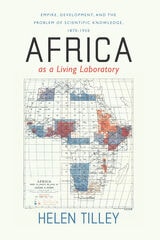
Africa as a Living Laboratory

Empire, Development, and the Problem of Scientific Knowledge, 1870-1950

Helen Tilley

University of Chicago Press, 2011

Tropical Africa was one of the last regions of the world to experience formal European colonialism, a process that coincided with the advent of a range of new scientific specialties and research methods. Africa as a Living Laboratory is a far-reaching study of the thorny relationship between imperialism and the role of scientific expertise—environmental, medical, racial, and anthropological—in the colonization of British Africa.

A key source for Helen Tilley’s analysis is the African Research Survey, a project undertaken in the 1930s to explore how modern science was being applied to African problems. This project both embraced and recommended an interdisciplinary approach to research on Africa that, Tilley argues, underscored the heterogeneity of African environments and the interrelations among the problems being studied. While the aim of British colonialists was unquestionably to transform and modernize Africa, their efforts, Tilley contends, were often unexpectedly subverted by scientific concerns with the local and vernacular. Meticulously researched and gracefully argued, Africa as a Living Laboratory transforms our understanding of imperial history, colonial development, and the role science played in both.
[more]
cover of African Motors: Technology, Gender, and the History of Development

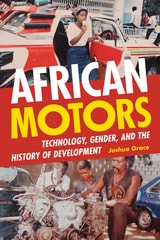
African Motors

Technology, Gender, and the History of Development

Joshua Grace

Duke University Press, 2021

In African Motors, Joshua Grace examines how Tanzanian drivers, mechanics, and passengers reconstituted the automobile into a uniquely African form between the late 1800s and the early 2000s. Drawing on hundreds of oral histories, extensive archival research, and his ethnographic fieldwork as an apprentice in Dar es Salaam's network of garages, Grace counters the pervasive narratives that Africa is incompatible with technology and that the African use of cars is merely an appropriation of technology created elsewhere. Although automobiles were invented in Europe and introduced as part of colonial rule, Grace shows how Tanzanians transformed them, increasingly associating their own car use with maendeleo, the Kiswahili word for progress or development. Focusing on the formation of masculinities based in automotive cultures, Grace also outlines the process through which African men remade themselves and their communities by adapting technological objects and systems for local purposes. Ultimately, African Motors is an African-centered story of development featuring everyday examples of Africans forging both individual and collective cultures of social and technological wellbeing through movement, making, and repair.
[more]
cover of African Successes, Volume I: Government and Institutions

African Successes, Volume I

Government and Institutions

Edited by Sebastian Edwards, Simon Johnson, and David N. Weil

University of Chicago Press, 2016

Studies of African economic development frequently focus on the daunting challenges the continent faces. From recurrent crises to ethnic conflicts and long-standing corruption, a raft of deep-rooted problems has led many to regard the continent as facing many hurdles to raise living standards. Yet Africa has made considerable progress in the past decade, with a GDP growth rate exceeding five percent in some regions. The African Successes series looks at recent improvements in living standards and other measures of development in many African countries with an eye toward identifying what shaped them and the extent to which lessons learned are transferable and can guide policy in other nations and at the international level.
           
The first volume in the series, African Successes: Governments and Institutions considers the role governments and institutions have played in recent developments and identifies the factors that enable economists to predict the way institutions will function.
[more]
cover of African Successes, Volume II: Human Capital

African Successes, Volume II

Human Capital

Edited by Sebastian Edwards, Simon Johnson, and David N. Weil

University of Chicago Press, 2016

Studies of African economic development frequently focus on the daunting challenges the continent faces. From recurrent crises to ethnic conflicts and long-standing corruption, a raft of deep-rooted problems has led many to regard the continent as facing many hurdles to raise living standards. Yet Africa has made considerable progress in the past decade, with a GDP growth rate exceeding five percent in some regions. The African Successes series looks at recent improvements in living standards and other measures of development in many African countries with an eye toward identifying what shaped them and the extent to which lessons learned are transferable and can guide policy in other nations and at the international level.
           
The second volume in the series, African Successes: Human Capital turns the focus toward Africa’s human capital deficit, measured in terms of health and schooling. It offers a close look at the continent’s biggest challenges, including tropical disease and the spread of HIV.

         
[more]
cover of African Successes, Volume III: Modernization and Development

African Successes, Volume III

Modernization and Development

Edited by Sebastian Edwards, Simon Johnson, and David N. Weil

University of Chicago Press, 2016

Studies of African economic development frequently focus on the daunting challenges the continent faces. From recurrent crises to ethnic conflicts and long-standing corruption, a raft of deep-rooted problems has led many to regard the continent as facing many hurdles to raise living standards. Yet Africa has made considerable progress in the past decade, with a GDP growth rate exceeding five percent in some regions. The African Successes series looks at recent improvements in living standards and other measures of development in many African countries with an eye toward identifying what shaped them and the extent to which lessons learned are transferable and can guide policy in other nations and at the international level.
           
The third volume in the series, African Successes: Modernization and Development looks at the rise in private production in spite of difficult institutional and physical environments. The volume emphasizes the ways that technologies, including mobile phones, have made growth in some areas especially dynamic.
       
[more]
cover of African Successes, Volume IV: Sustainable Growth

African Successes, Volume IV

Sustainable Growth

Edited by Sebastian Edwards, Simon Johnson, and David N. Weil

University of Chicago Press, 2016

Studies of African economic development frequently focus on the daunting challenges the continent faces. From recurrent crises to ethnic conflicts and long-standing corruption, a raft of deep-rooted problems has led many to regard the continent as facing many hurdles to raise living standards. Yet Africa has made considerable progress in the past decade, with a GDP growth rate exceeding five percent in some regions. The African Successes series looks at recent improvements in living standards and other measures of development in many African countries with an eye toward identifying what shaped them and the extent to which lessons learned are transferable and can guide policy in other nations and at the international level.
           
The fourth volume in the series, African Successes: Sustainable Growth combines informative case studies with careful empirical analysis to consider the prospects for future African growth.

[more]
cover of After Neoliberalism: What Next for Latin America?

After Neoliberalism

What Next for Latin America?

Lance Taylor, Editor

University of Michigan Press, 1999

In the past twenty years, economic policy in Latin America has veered toward neoliberalism, or market friendliness. State interventions in the economy were cut back in many areas, in the form of reductions in fiscal deficits; privatization of public enterprises; reductions of import quotas and tariffs and export subsidies; removal of barriers to foreign capital flow; and increased faith in the private sector and market processes.
This book offers an intellectual and historical background for these policy choices, specifically in Argentina, Brazil, Chile, Colombia, Mexico, and Peru. The contributors detail the structural reform and economic policies in Latin America and discuss the various and often contradictory effects neoliberalism, such as fluctuating growth rates and saving-investment balances, worsened corruption, growth of exports, falling wages, and rising unemployment. In addition, each case study forecasts the effects of neoliberal policies on future growth and income distribution in the respective countries. Finally, it offers policy alternatives to neoliberalism.
The essays in this volume are: an introduction by Lance Taylor; "The Argentine Experience with Stabilization and Structural Reform," by José María Fanelli and Roberto Frenkel; "Opening, Stabilization, and Macroeconomic Sustainability in Brazil," by Edward Amadeo, "An Ongoing Structural Transformation: The Colombian Economy, 1986-96," by José Antonio Ocampo; "Economic Reforms, Stabilization Policies, and the 'Mexican Disease,'" by Nora Claudia Lustig and Jaime Ros; and "Structural Reforms and Macroeconomic Policy in Peru: 1990-96," by Oscar Dancourt.
Lance Taylor is the Arnhold Professor of International Cooperation and Development, New School for Social Research.

[more]
cover of After the Berlin Wall: A History of the EBRD, Volume 1

After the Berlin Wall

A History of the EBRD, Volume 1

Andrew Kilpatrick

Central European University Press, 2020

After the Berlin Wall tells the inside story of an international financial institution, the European Bank for Reconstruction and Development (EBRD), created in the aftermath of communism to help the countries of central and eastern Europe transition towards open market-oriented democratic economies. 

The first volume of a history in two parts, After the Berlin Wall charts the EBRD’s life from a fledgling high-risk start-up investing in former socialist countries from 1991 to become an established member of the international financial community, which (as of April 2020) operates in almost 40 countries across three continents. 

This volume describes the multilateral negotiations that created this cosmopolitan institution with a ‘European character’ and the emergence of the EBRD’s unique business model: a focus on the private sector and a mission to deliver development impact with sustainable financial returns. The author recounts the challenges that ‘transition’ countries faced in moving from a defunct to a functioning economic system and maps the EBRD’s response to critical events, from the dissolution of the Soviet Union, to the safe confinement of the Chernobyl disaster site, the debt default in Russia and the onset of the global financial crisis in 2008.
[more]
cover of Agglomeration Economics

Agglomeration Economics

Edited by Edward L. Glaeser

University of Chicago Press, 2010

When firms and people are located near each other in cities and in industrial clusters, they benefit in various ways, including by reducing the costs of exchanging goods and ideas. One might assume that these benefits would become less important as transportation and communication costs fall. Paradoxically, however, cities have become increasingly important, and even within cities industrial clusters remain vital.

Agglomeration Economics brings together a group of essays that examine the reasons why economic activity continues to cluster together despite the falling costs of moving goods and transmitting information. The studies cover a wide range of topics and approach the economics of agglomeration from different angles. Together they advance our understanding of agglomeration and its implications for a globalized world.
[more]
cover of Aging in the United States and Japan: Economic Trends

Aging in the United States and Japan

Economic Trends

Edited by Yukio Noguchi and David A. Wise

University of Chicago Press, 1994

Japanese and American economists assess the present economic status of the elderly in the United States and Japan, and consider the impact of an aging population on the economies of the two countries.
With essays on labor force participation and retirement, housing equity and the economic status of the elderly, budget implications of an aging population, and financing social security and health care in the 1990s, this volume covers a broad spectrum of issues related to the economics of aging. Among the book's findings are that workers are retiring at an increasingly earlier age in both countries and that, as the populations age, baby boomers in the United States will face diminishing financial resources as the ratio of retirees to workers sharply increases.

The result of a joint venture between the National Bureau of Economic Research and the Japan Center for Economic Research, this book complements Housing Markets in the United States and Japan (1994) by integrating research on housing markets with economic issues of the aged in the United States and Japan.
[more]
cover of Agrarian Environments: Resources, Representations, and Rule in India

Agrarian Environments

Resources, Representations, and Rule in India

Arun Agrawal, ed.

Duke University Press, 2000

Agrarian Environments questions the dichotomies that have structured earlier analyses of environmental processes in India and offers a new way of looking at the relationship between agrarian transformation and environmental change. The contributors claim that attempts to explain environmental conflicts in terms of the local versus the global, indigenous versus outsiders, women versus men, or the community versus the market or state obscure vital dynamics of mobilization and organization that critically influence thought and policy.
Editors Arun Agrawal and K. Sivaramakrishnan claim that rural social change in India cannot be understood without exploring how environmental changes articulate major aspects of agrarian transformations—technological, cultural, and political—in the last two centuries. In order to examine these issues, they have reached beyond the confines of single disciplinary allegiances or methodological loyalties to bring together anthropologists, historians, political scientists, geographers, and environmental scientists who are significantly informed by interdisciplinary research. Drawing on extensive field and archival research, the contributors demonstrate the powerful political implications of blurring the boundaries between dichotomous cultural representations, combine conceptual analyses with specific case studies, and look at why competing powers chose to emphasize particular representations of land use or social relations. By providing a more textured analysis of how categories emerge and change, this work offers the possibility of creating crucial alliances across populations that have historically been assumed to lack mutual goals.
Agrarian Environments will be valuable to those in political science, Asian studies, and environmental studies.

Contributors. Arun Agrawal, Mark Baker, Molly Chattopadhyaya, Vinay Gidwani, Sumit Guha, Shubhra Gururani, Cecile Jackson, David Ludden, Haripriya Rangan, Paul Robbins, Vasant Saberwal, James C. Scott, K. Sivaramakrishnan, Ajay Skaria, Jennifer Springer, Darren Zook

[more]
cover of Aid to Africa: So Much To Do, So Little Done

Aid to Africa

So Much To Do, So Little Done

Carol Lancaster

University of Chicago Press, 1999

Why, despite decades of high levels of foreign aid, has development been so disappointing in most of Sub-Saharan Africa, leading to rising numbers of poor and fueling political instabilities? While not ignoring the culpability of Africans in these problems, Carol Lancaster finds that much of the responsibility is in the hands of the governments and international aid agencies that provide assistance to the region. The first examination of its kind, Aid to Africa investigates the impact of bureaucratic politics, special interest groups, and public opinion in aid-giving countries and agencies. She finds that aid agencies in Africa often misdiagnosed problems, had difficulty designing appropriate programs that addressed the local political environment, and failed to coordinate their efforts effectively.

This balanced but tough-minded analysis does not reject the potential usefulness of foreign aid but does offer recommendations for fundamental changes in how governments and multilateral aid agencies can operate more effectively.

[more]
cover of Amazonia at the Crossroads: The Challenge of Sustainable Development

Amazonia at the Crossroads

The Challenge of Sustainable Development

Edited by Anthony Hall

University of London Press, 2000

At the dawn of the 1990s, it seemed that Amazonia had become irrevocably trapped in a downward spiral of deforestation, environmental destruction and social conflict. Yet over the past ten years a more acute awareness has emerged at all levels, national and international, of the need to encourage more sustainable policies and practices. That is, measures that provide for the economic development needs of Amazonia's diverse population, while at the same time conserving and managing the region's natural resource base. At a major conference, organised in London in June 1998 by the Institute of Latin American Studies (Amazonia 2000: Development, Environment and Geopolitics), over twenty international scholars traced the evolution of this gradual shift in thinking. The present volume, based on that conference, examines past patterns of destructive resource extraction in Amazonia and, more importantly, critically analyses a series of newer initiatives that offer more sustainable options. These include, amongst others, new production strategies, such as agroforestry, innovative resource governance models such as inland fisheries co-management and agro-ecological zoning.
The challenge at this critical juncture is how to integrate such policies and practices into mainstream development within Amazonia. Contributors: David Cleary, Rene Dreifuss, Philip Fearnside, Jessica Groenendijk, Anthony Hall, Judith Kimerling, Tom Lovejoy, Dennis Mahar, David McGrath, Emilio Moran, Darrel Posey, Nigel Smith, and Wouter Veening.

[more]
cover of America's Healthcare Transformation: Strategies and Innovations

America's Healthcare Transformation

Strategies and Innovations

Phillips, Robert A.

Rutgers University Press, 2016

A revolution in American medicine is in full swing, with the race from fee-for-service to fee-for-value at the front line in an epic battle that will transform healthcare delivery for decades to come. In America’s Healthcare Transformation, eminent physician leader Robert A. Phillips brings together key thought leaders and trail-blazing practitioners, who provide a wide-ranging exploration of the strategies, innovations, and paradigm shifts that are driving this healthcare transformation.
 
The contributors offer a panoramic look at the dramatic changes happening in the field of medicine, changes that put the patient at the heart of the process. Among other subjects, the essays evaluate innovative high quality and low cost care delivery solutions from around the United States and abroad, describe fundamental approaches to measuring the safety of care and the impact that guidelines have on improving quality of care and outcomes, and make a strong case that insurance reform will fundamentally and irreversibly drive delivery reform. In addition, America’s Healthcare Transformation reviews the role of health information technology in creating safer healthcare, provides a primer on the development of a culture of safety, and highlights ground-breaking new ways to train providers in patient safety and quality. Finally, the book looks at reports from Stanford Health Care and Houston Methodist which outline how successful behaviorally based strategies, anchored in values, can energize and empower employees to deliver a superior patient experience.
 
Drawing on the wisdom and vision of today’s leading healthcare innovators, America’s Healthcare Transformation provides a roadmap to the future of American healthcare. This book is essential reading for all health care providers, health care administrators, and health policy professionals, and it will be an invaluable resource in the effort to improve the practice of medicine and the delivery of healthcare in our communities and nation. 
 
[more]
cover of American Theatrical Film: Stages of Development

American Theatrical Film

Stages of Development

University of Wisconsin Press, 1985

This book provides needed information on the collaborations between filmmakers and theater personnel before 1930 and completes our understanding of how two art forms influenced each other. It begins with the vaudeville and "faerie" dramas captured in brief films by the Edison and Biograph companies; follows the development of feature-length Sarah Bernhardt and James O'Neill films after 1912; examines the formation of theater/film combination companies in 1914-15; and details later collaborations during the talking picture revolution of 1927. Includes detailed analyses of important theatrical films like The Count of Monte Cristo, The Virginian, Coquette, and Paramount on Parade.
[more]
cover of Anthropology and Development: Challenges for the Twenty-First Century

Anthropology and Development

Challenges for the Twenty-First Century

Katy Gardner and David Lewis

Pluto Press, 2015

Western aid is in decline. New forms of aid, from within the developing countries themselves and elsewhere, are in the ascent, and a new set of global economic and political processes are shaping development in the twenty-first century. Katy Gardner and David Lewis have completely rewritten and updated their earlier, influential work, bringing it up to the present day. They engage with nearly two decades of continuity and change in the development industry, arguing in particular that while international development has expanded since the 1990s, it has become more rigidly technocratic. Anthropology & Development will serve as a reformulation of the field and as an excellent textbook for both graduate and undergraduates alike.
[more]
cover of Anti-Politics Machine: Development, Depoliticization, and Bureaucratic Power in Lesotho

Anti-Politics Machine

Development, Depoliticization, and Bureaucratic Power in Lesotho

James Ferguson

University of Minnesota Press, 1994
Development, it is generally assumed, is good and necessary, and in its name the West has intervened, implementing all manner of projects in the impoverished regions of the world. When these projects fail, as they do with astonishing regularity, they nonetheless produce a host of regular and unacknowledged effects, including the expansion of bureaucratic state power and the translation of the political realities of poverty and powerlessness into "technical" problems awaiting solution by "development" agencies and experts. It is the political intelligibility of these effects, along with the process that produces them, that this book seeks to illuminate through a detailed case study of the workings of the "development" industry in one country, Lesotho, and in one "development" project.Using an anthropological approach grounded in the work of Foucault, James Ferguson analyzes the institutional framework within which such projects are crafted and the nature of "development discourse," revealing how it is that, despite all the "expertise" that goes into formulating development projects, they nonetheless often demonstrate a startling ignorance of the historical and political realities of the locale they are intended to help. In a close examination of the attempted implementation of the Thaba-Tseka project in Lesotho, Ferguson shows how such a misguided approach plays out, how, in fact, the "development" apparatus in Lesotho acts as an "anti-politics machine," everywhere whisking political realities out of sight and all the while performing, almost unnoticed, its own pre-eminently political operation of strengthening the state presence in the local region.James Ferguson is an associate professor of anthropology at the University of California at Irvine.
[more]
cover of Apartheid’s Leviathan: Electricity and the Power of Technological Ambivalence

Apartheid’s Leviathan

Electricity and the Power of Technological Ambivalence

Faeeza Ballim

Ohio University Press, 2023

A fascinating study that shows how the intersection of technology and politics has shaped South African history since the 1960s. This book details the development of an interconnected technological system of a coal mine and of the Matimba and Medupi power stations in the Waterberg, a rural region of South Africa near the country’s border with Botswana. South Africa’s state steel manufacturing corporation, Iscor, which has since been privatized, developed a coal mine in the region in the 1970s. This set the stage for the national electricity provider, Eskom, to build coal-fueled power stations in the Waterberg. Faeeza Ballim follows the development of these technological systems from the late 1960s, a period of heightened repression as the apartheid government attempted to realize its vision of racial segregation, to the deeply fraught construction of the Medupi power station in postapartheid South Africa. The Medupi power station was planned toward the end of the first decade of the twenty-first century as a measure to alleviate the country’s electricity shortage, but the continued delay of its completion and the escalation of its costs meant that it failed to realize those ambitions while public frustration and electricity outages grew. By tracing this story, this book highlights the importance of technology to our understanding of South African history. This characterization challenges the idea that the technological state corporations were proxies for the apartheid government and highlights that their activities in the Waterberg did not necessarily accord with the government’s strategic purposes. While a part of the broader national modernization project under apartheid, they also set the stage for worker solidarity and trade union organization in the Waterberg and elsewhere in the country. This book also argues that the state corporations, their technology, and their engineers enjoyed ambivalent relationships with the governments of their time, relationships that can be characterized as both autonomous and immersive. In the era of democracy, while Eskom has been caught up in government corruption—a major scourge to the fortunes of South Africa—it has also retained a degree of organizational autonomy and offered a degree of resistance to those who sought to further corruption. The examination of the workings of these technological systems, and the state corporations responsible for them, complicates conventional understandings of the transition from the authoritarian rule of apartheid to democratic South Africa, which coincided with the transition from state-led development to neoliberalism. This book is an indispensable case study on the workings of industrial and political power in Africa and beyond.
[more]
cover of Approaching the Assumption, 1863-1950: Revelation, Scripture, and the Laity in the Development of a Marian Dogma

Approaching the Assumption, 1863-1950

Revelation, Scripture, and the Laity in the Development of a Marian Dogma

Eric Lafferty

Catholic University of America Press, 2026
The Assumption of Mary refers to the ancient Christian belief that the Mother of God was taken up into Heaven, body and soul, at the end of her earthly life. For centuries, Catholics and other Christians celebrated the Assumption as a liturgical feast and meditated on the miraculous event in the Rosary. Nevertheless, its relationship to Revelation remained undefined. This changed in 1950 when Pope Pius XII declared the Assumption of Mary a dogma of the Catholic Church. In this rare exercise of papal authority, Pius XII infallibly and irrevocably taught that the Assumption was a truth revealed by God. This book explores how the definition of this Marian dogma came to fruition. After a brief history of the prior three Marian dogmas — Mother of God, Ever-Virgin, and the Immaculate Conception — this book narrates the major moments in the effort to obtain a dogmatic definition of the Assumption. The beginning of this “Assumptionist movement” can be dated to 1863 when Queen Isabel II of Spain petitioned the pope to declare the Assumption a dogma. Subsequently, petitionary efforts and scholarly inquiry increased and spread throughout the world. In addition to the narrative of this movement, this book gives special consideration to three vital aspects: debate over the Assumption’s definability as a dogma, if and how Scripture reveals the Assumption, and the contribution of the laity on a matter of doctrine. Collectively, the Assumptionist movement emerges as a critical event in the nineteenth- and twentieth-century Catholic Church. Culminating in a dogmatic definition shortly before the opening of Vatican II, it also serves as a key point of inquiry for continuity and development of doctrine. A final chapter argues that the operative beliefs pertaining to Revelation, Scripture, and the laity during the Assumptionist movement stand in continuity with the teachings of Vatican II.
[more]
cover of Architecture and Development: Israeli Construction in Sub-Saharan Africa and the Settler Colonial Imagination, 1958-1973

Architecture and Development

Israeli Construction in Sub-Saharan Africa and the Settler Colonial Imagination, 1958-1973

Ayala Levin

Duke University Press, 2022
In Architecture and Development Ayala Levin charts the settler colonial imagination and practices that undergirded Israeli architectural development aid in Africa. Focusing on the “golden age” of Israel’s diplomatic relations in and throughout the continent from 1958 to 1973, Levin finds that Israel positioned itself as a developing-nation alternative in the competition over aid and influence between global North and global South. In analyses of the design and construction of prestigious governmental projects in Nigeria, Sierra Leone, and Ethiopia, Levin details how architects, planners, and a trade union--owned construction company staged Israel as a new center of nonaligned expertise. These actors and professionals paradoxically capitalized on their settler colonial experience in Palestine, refashioning it as an alternative to Western colonial expertise. Levin traces how Israel became involved in the modernization of governance, education, and agriculture in Africa, as well as how African leaders chose to work with Israel to forge new South-South connections. In so doing, she offers new ways of understanding the role of architecture as a vehicle of postcolonial development and in the mobilization of development resources.
[more]
cover of Art, Politics, and Development

Art, Politics, and Development

Philipp H Lepenies

Temple University Press, 2013

In his groundbreaking study, Art, Politics and Development, Philipp Lepenies contributes to the ongoing controversy about why the track record of development aid is so dismal. He asserts that development aid policies are grounded in a specific way of literally looking at the world. This “worldview” is the result of a mental conditioning that began with the invention of linear perspective in Renaissance art. It not only triggered the emergence of modern science and brought forth our Western notion of progress, but ultimately, development as well.
Art, Politics, and Development examines this process by pulling from a range of disciplines, including art history, philosophy, literature, and social science. Lepenies not only explains the shortcomings of modern aid in a novel fashion, he also proposes how aid could be done differently.

In the series Politics, History and Social Change, edited by John C. Torpey

[more]
cover of Aymara Indian Perspectives on Development in the Andes

Aymara Indian Perspectives on Development in the Andes

Amy Eisenberg

University of Alabama Press, 2013

Explores the relationship between indigenous people, the management of natural resources, and the development process in a modernizing region of Chile
 
Aymara Indians are a geographically isolated, indigenous people living in the Andes Mountains near Chile’s Atacama Desert, one of the most arid regions of the world. As rapid economic growth in the area has begun to divert scarce water to hydroelectric and agricultural projects, the Aymara struggle to maintain their sustainable and traditional systems of water use, agriculture, and pastoralism.

In Aymara Indian Perspectives on Development in the Andes, Amy Eisenberg provides a detailed exploration of the ethnoecological dimensions of the tension between the Aymara, whose economic, spiritual, and social life are inextricably tied to land and water, and three major challenges: the paving of Chile Highway 11, the diversion of the Altiplano waters of the Río Lauca for irrigation and power-generation, and Chilean national park policies regarding Aymara communities, their natural resources, and cultural properties within Parque Nacional Lauca, the International Biosphere Reserve.

Pursuing collaborative research, Eisenberg performed ethnographic interviews with Aymara people in more than sixteen Andean villages, some at altitudes of 4,600 meters. Drawing upon botany, agriculture, natural history, physical and cultural geography, history, archaeology, and social and environmental impact assessment, she presents deep, multifaceted insights from the Aymara’s point of view.

Illustrated with maps and dramatic photographs by John Amato, Aymara Indian Perspectives on Development in the Andes provides an account of indigenous perspectives and concerns related to economic development that will be invaluable to scholars and policy-makers in the fields of natural and cultural resource preservation in and beyond Chile.
 
[more]