Results by title
204 books match the query 'Direction & Production' and 13 start with a
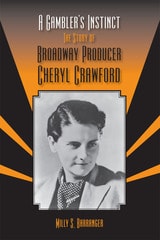
A Gambler’s Instinct
The Story of Broadway Producer Cheryl CrawfordMilly S. Barranger
Southern Illinois University Press, 2010
Broadway producer Cheryl Crawford (1902–1986) declared in her 1977 autobiography, “The theatre has been my life.” Crawford was notoriously circumspect about her private life, and only now, with Milly S. Barranger’s insightful biography, is her full story revealed.
A major Broadway producer in an era when women producers were exceedingly rare, Crawford found unprecedented success with the plays of Tennessee Williams, including The Rose Tattoo and Sweet Bird of Youth, but her enduring legend is as a musical producer, having brought Kurt Weill’s One Touch of Venus, Lerner and Loewe’s Brigadoon and Paint Your Wagon to the stage. Her commercial success, though, was balanced with the founding of studios that would enable actors to explore their art outside the strictures of commercial theater. She cofounded the Group Theatre with Harold Clurman and Lee Strasberg, the American Repertory Theatre with Margaret Webster and Eva Le Gallienne, and the Actors Studio with Elia Kazan and Robert Lewis, but her idealism was constantly frustrated by unfulfilled artistic promises from her male counterparts and by the chronic shortage of funding for the nonprofit enterprises.
As Barranger traces Crawford’s career as an independent producer, she tells the parallel story of American theater in the mid-twentieth century, making A Gambler’s Instinct both an enjoyable and informative biography of a remarkable woman and an important addition to the literature of the modern theater.
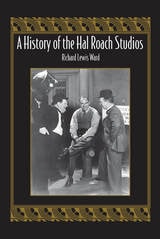
A History of the Hal Roach Studios
Richard Lewis Ward
Southern Illinois University Press, 2006
Once labeled the “lot that laugher built,” the Hal Roach Studios launched the comedic careers of such screen icons as Harold Lloyd, Our Gang, and Laurel and Hardy. With this stable of stars, the Roach enterprise operated for forty-six years on the fringes of the Hollywood studio system during a golden age of cinema and gained notoriety as a producer of short comedies, independent features, and weekly television series. Many of its productions are better remembered today than those by its larger contemporaries. In A History of the Hal Roach Studios, Richard Lewis Ward meticulously follows the timeline of the company’s existence from its humble inception in 1914 to its close in 1960 and, through both its obscure and famous productions, traces its resilience to larger trends in the entertainment business.
In the first few decades of the twentieth century, the motion picture industry was controlled by an elite handful of powerful firms that allowed very little room for new competition outside of their established cartel. The few independents that garnered some measure of success despite their outsider status usually did so by specializing in underserved or ignored niche markets. Here, Ward chronicles how the Roach Studios, at the mercy of exclusive distribution practices, managed to repeatedly redefine itself in order to survive for nearly a half-century in a cutthroat environment.
Hal Roach’s tactic was to nurture talent rather than exhaust it, and his star players spent the prime of their careers shooting productions on his lot. Even during periods of decline or misdirection, the Roach Studios turned out genuinely original material, such as the screwball classic Topper (1937), the brutally frank Of Mice and Men (1940), and the silent experiment One Million B.C. (1940). Ward’s exploration yields insight into the production and marketing strategies of an organization on the periphery of the theatrical film industry and calls attention to the interconnected nature of the studio system during the classic era. The volume also looks to the early days of television when the prolific Roach Studios embraced the new medium to become, for a time, the premier telefilm producer.
Aided by a comprehensive filmography and twenty-seven illustrations, A History of the Hal Roach Studios recounts an overlooked chapter in American cinema, not only detailing the business operations of Roach’s productions but also exposing the intricate workings of Hollywood’s rivalrous moviemaking establishment.
A Student Guide to Play Analysis
David Rush
Southern Illinois University Press, 2005
With the skills of a playwright, the vision of a producer, and the wisdom of an experienced teacher, David Rush offers a fresh and innovative guide to interpreting drama in A Student Guide to Play Analysis, the first undergraduate teaching tool to address postmodern drama in addition to classic and modern. Covering a wide gamut of texts and genres, this far-reaching and user-friendly volume is easily paired with most anthologies of plays and is accessible even to those without a literary background.
Contending that there are no right or wrong answers in play analysis, Rush emphasizes the importance of students developing insights of their own. The process is twofold: understand the critical terms that are used to define various parts and then apply these to a particular play. Rush clarifies the concepts of plot, character, and language, advancing Aristotle’s concept of the Four Causes as a method for approaching a play through various critical windows. He describes the essential difference between a story and a play, outlines four ways of looking at plays, and then takes up the typical structural devices of a well-made play, four primary genres and their hybrids, and numerous styles, from expressionism to postmodernism.
For each subject, he defines critical norms and analyzes plays common to the canon. A Student Guide to Play Analysis draws on thoughtful examinations of such dramas as The Cherry Orchard, The Good Woman of Setzuan, Fences, The Little Foxes, A Doll House, The Glass Menagerie, and The Emperor Jones. Each chapter ends with a list of questions that will guide students in further study.
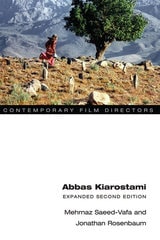
Abbas Kiarostami
Expanded Second EditionMehrnaz Saeed-Vafa and Jonathan Rosenbaum
University of Illinois Press, 2018
In this expanded second edition, award-winning Iranian filmmaker Mehrnaz Saeed-Vafa and film critic Jonathan Rosenbaum renew their illuminating cross-cultural dialogue on Kiarostami's work. The pair chart the filmmaker's late-in-life turn toward art galleries, museums, still photography, and installations. They also bring their distinct but complementary perspectives to a new conversation on the experimental film Shirin. Finally, Rosenbaum offers an essay on watching Kiarostami at home while Saeed-Vafa conducts a deeply personal interview with the director on his career and his final feature, Like Someone in Love.
Abel Ferrara
Nicole Brenez. Translated from the French by Adrian Martin
University of Illinois Press, 2006
Nicole Brenez argues for Abel Ferrara’s place in a line of grand inventors who have blurred distinctions between industry and avant-garde film, including Orson Welles, Monte Hellman, and Nicholas Ray. Rather than merely reworking genre film, Brenez understands Ferrara’s oeuvre as formulating new archetypes that depict the evil of the modern world. Focusing as much on the human figure as on elements of storytelling, she argues that films such as Bad Lieutenant express this evil through visionary characters struggling against the inadmissible (inadmissible behavior, morality, images, and narratives).
Adapturgy
The Dramaturg's Art and Theatrical AdaptationJane Barnette
Southern Illinois University Press, 2018
The dual nature of dramaturgy and adaptation as both process and product is reflected in the structure and organization of the book. Part 1 explores the ways that linking adaptation to dramaturgy advances our understanding of both practices. Part 2 demonstrates three different methods—each grounded in a detailed case study—for analyzing theatrical adaptations. Part 3 offers concrete strategies for the dramaturg: dramaturgy for the adapted script; the production dramaturgy of stage adaptations; and the role of the dramaturg in the postmortem for a production. Rounding out the book are two appendixes containing interviews with adapters and theatre-makers and representative program notes from different play adaptations.
Plays adapted from literature and other media represent a rapidly growing part of the theatre. This book offers both practical and theoretical tools for understanding and creating these new works.
Alejandro González Iñárritu
Celestino Deleyto and Maria del Mar Azcona
University of Illinois Press, 2010
All about Almodóvar
A Passion for CinemaBrad Epps
University of Minnesota Press, 2009
All about Almodóvar offers new perspectives on the filmmaker’s artistic vision and cinematic preoccupations, influences, and techniques. Through overviews of his oeuvre and in-depth analyses of specific films, the essays here explore a diverse range of subjects: Almodóvar’s nuanced use of television and music in his films; his reworkings of traditional film genres such as comedy, horror, and film noir; his penchant for melodrama and its relationship to melancholy, violence, and coincidence; his intricate questioning of sexual and national identities; and his increasingly sophisticated inquiries into visuality and its limits.
Closing with Almodóvar’s own diary account of the making of Volver and featuring never-before-seen photographs from El Deseo production studio, All about Almodóvar both reflects and illuminates its subject’s dazzling eclecticism.
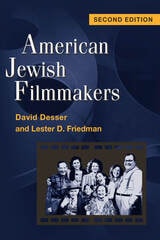
American Jewish Filmmakers
David Desser and Lester D. Friedman
University of Illinois Press, 2003
The effects of the Holocaust linger, both in gripping dramatic form (Mazursky's Enemies, a Love Story) and in black comedy (Brooks's The Producers). In his trilogy consisting of Serpico, Prince of the City, and Q&A, Lumet focuses on the failure of society's institutions to deliver social justice. Woody Allen portrays urban life and family relationships (Manhattan and Hannah and Her Sisters), sometimes with a nostalgic twist (Radio Days).
This edition concludes with a newly written discussion of the careers of other prominent Jewish filmmakers such as Steven Spielberg, Barry Levinson, Brian Singer, and Darren Aronofsky.
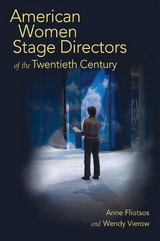
American Women Stage Directors of the Twentieth Century
Anne Fliotsos and Wendy Vierow
University of Illinois Press, 2007
Presenting a historical overview of female stage directors in the United States, this valuable reference tool focuses on fifty women who have made significant contributions to professional directing during the twentieth century. Anne Fliotsos and Wendy Vierow collect biographical details and important directing data on each woman, including information on training and career path, notable productions, critical reception, directing style, major awards, and bibliographic materials. Insightful commentary from the directors themselves also provides rich details on the theatre business and working process. This collection recognizes the much overlooked contributions of women directors and is an essential introductory tool for students and researchers of American theatre.

Amplifying Theatrical Horizons
Rethinking the Value of Waste in PerformanceLisa Hall
Intellect Books, 2026
A reexamination of the role of waste in theatrical practices, from escape rooms to traditional proscenium theater.
Amplifying Theatrical Horizons reimagines live performance through the lens of economy, value, excess, and waste, asking what it means to shower resources—material, sensory, and symbolic—on audiences beyond utilitarian calculation. It examines how waste operates within the theatrical relationship between audience, performer, genre, and space, focusing on excessive deployments of value.
Drawing on scholarship in theater studies, economics, philosophy, and performance practice, Lisa Hall proposes what she calls the Wasteful Theatre Equation, distinguishing waste as a surplus that amplifies experience rather than diminishing it. Case studies span immersive environments, haunted attractions, escape rooms, site-specific productions, and traditional proscenium theater, demonstrating how space, participation, sensation, and fear operate as sites of wasteful excess.
Key chapters pose practical questions for makers, reframing contracts of performance, proximity, and risk as tools for creating singular experiences. Across examples from Robert Wilson to Punchdrunk, Grand-Guignol to theme parks, the book positions waste as both disruptive and generative. Ultimately, it argues that wasteful excess enchants, reorienting theater toward presence, wonder, and transformative exchange.
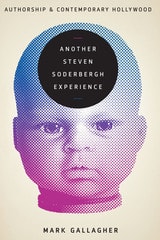
Another Steven Soderbergh Experience
Authorship and Contemporary HollywoodBy Mark Gallagher
University of Texas Press, 2013
How do we determine authorship in film, and what happens when we look in-depth at the creative activity of living filmmakers rather than approach their work through the abstract prism of auteur theory? Mark Gallagher uses Steven Soderbergh’s career as a lens through which to re-view screen authorship and offer a new model that acknowledges the fundamentally collaborative nature of authorial work and its circulation. Working in film, television, and digital video, Soderbergh is the most prolific and protean filmmaker in contemporary American cinema. At the same time, his activity typifies contemporary screen industry practice, in which production entities, distribution platforms, and creative labor increasingly cross-pollinate.
Gallagher investigates Soderbergh’s work on such films as The Limey, Erin Brockovich, Ocean’s Eleven and its sequels, Solaris, The Good German, Che, and The Informant!, as well as on the K Street television series. Dispensing with classical auteurist models, he positions Soderbergh and authorship in terms of collaborative production, location filming activity, dealmaking and distribution, textual representation, genre and adaptation work, critical reception, and other industrial and cultural phenomena. Gallagher also addresses Soderbergh’s role as standard-bearer for U.S. independent cinema following 1989’s sex, lies and videotape, as well as his cinephilic dialogues with different forms of U.S. and international cinema from the 1920s through the 1970s. Including an extensive new interview with the filmmaker, Another Steven Soderbergh Experience demonstrates how industries and institutions cultivate, recognize, and challenge creative screen artists.
Art Direction and Production Design
Fischer, Lucy
Rutgers University Press, 2015