Results by title
108 books match the query 'Diseases & Conditions' and 10 start with a
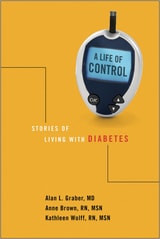
A Life of Control
Stories of Living with DiabetesAlan L. Graber
Vanderbilt University Press, 2010
The people who describe their experiences with diabetes range from teenagers to physicians, immigrants, athletes, pregnant women, accountants, a prisoner, and a dairy farmer. They speak of the variety of ways they handle monitoring, diet, insurance coverage, sports, and fashion. Some talk of how they manage to drive trucks for a living or, for recreation, fly airplanes or go spelunking. Many speak frankly of their anxieties and frustrations.
The authors acknowledge that both the patient and clinician have a story about their relationship, and describe the richness and tension in their interaction. Families, too, are sources of both support and conflict. These relationships are acknowledged in the organization of the book, which is divided into sections defined by the main elements of diabetes control: patient self-determination, the role of the family, the social situation, and the patient-clinician encounter.
The book provides a wealth of information about diabetes, including material on prevention, complications, and new technology, as well as a superb glossary, but it is not intended as a textbook on diabetes or as a self-care manual for patients. Rather the book provides a textured account of the health professional's view of diabetes control and the perspective of the patient whose life is complicated by diabetes.
A Plague on All Our Houses
Medical Intrigue, Hollywood, and the Discovery of AIDSBruce J. Hillman
University Press of New England, 2016

A Planet of Viruses
Second EditionCarl Zimmer
University of Chicago Press, 2015
Fortunately, science writer Carl Zimmer is here to guide us. In this compact volume, he tells the story of how the smallest living things known to science can bring an entire planet of people to a halt--and what we can learn from how we've defeated them in the past.
Planet of Viruses covers such threats as Ebola, MERS, and chikungunya virus; tells about recent scientific discoveries, such as a hundred-million-year-old virus that infected the common ancestor of armadillos, elephants, and humans; and shares new findings that show why climate change may lead to even deadlier outbreaks. Zimmer’s lucid explanations and fascinating stories demonstrate how deeply humans and viruses are intertwined. Viruses helped give rise to the first life-forms, are responsible for many of our most devastating diseases, and will continue to control our fate for centuries. Thoroughly readable, and, for all its honesty about the threats, as reassuring as it is frightening, A Planet of Viruses is a fascinating tour of a world we all need to better understand.
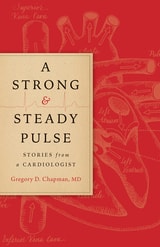
A Strong and Steady Pulse
Stories from a CardiologistGregory D. Chapman, MD
University of Alabama Press, 2021
A seasoned cardiologist shares his experiences, opinions, and recommendations about heart disease and other cardiac problems.
A Strong and Steady Pulse: Stories from a Cardiologist provides an insider’s perspective on the field of cardiovascular medicine told through vignettes and insights drawn from Gregory D. Chapman’s three decades as a cardiologist and professor of medicine. In twenty-six bite-sized chapters based on real-life patients and experiences, Chapman provides an overview of contemporary cardiovascular diseases and treatments, illuminating the art and science of medical practice for lay audiences and professionals alike.
With A Strong and Steady Pulse, Chapman provides medical students and general readers with a better understanding of cardiac disease and its contributing factors in modern life, and he also provides insights on the diagnostic process, medical decision making, and patient care. Each chapter presents a patient and their initial appearance, described in clear detail as Chapman gently walks us through his evaluation and the steps he and his associates take to determine the underlying problem. Chapman’s stories are about real people dealing with life and death situations—including the physicians, nurses, medical students, and other team members who try to save lives in emergent, confusing conditions.
The sometimes hard-won solutions to these medical challenges combine new technology and cutting-edge research together with insights drawn from Chapman’s past experiences as an intern and resident in Manhattan during the AIDS epidemic, as a postdoctoral fellow at Duke University in the 1990s, and in practice in Nashville, Tennessee, and Birmingham, Alabama. Conditions addressed include the recognition and management of heart attack, heart failure, arrhythmia, valvular heart disease, cardiac transplantation, broken heart syndrome, hypertension, and the depression some people experience after a heart attack, as well as related topics like statin drugs, the Apple Watch ECG feature, and oral anticoagulants. Finally, the emergence of the COVID-19 virus and its disruption of normal hospital routines as the pandemic unfolded is addressed in an epilogue.
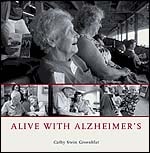
Alive with Alzheimer's
Cathy Stein Greenblat
University of Chicago Press, 2004
This small, tender volume of 85 photographs and accompanying discussion powerfully shows the limitations of this view. Cathy Stein Greenblat, an internationally respected sociologist and photographer, demonstrates in Alive with Alzheimer's that, while the ravages of the disease are real, Alzheimer's sufferers can do more than survive, they can thrive. Her images, interviews, and observations attest to the possibility of their being "alive" with Alzheimer's far beyond the expectations of the general public and even of many physicians with long experience with the disease.
Greenblat offers a new vision, taking us into a world of life-enhancing institutional care. Nursing homes and similar facilities don't have to be a last resort; as Greenblat shows, with a dedicated and experienced staff and an enriched environment (that includes respect, choices, pets, and music), extraordinary changes can be effected in Alzheimer's patients. Alive with Alzheimer's, the first photographic book on the disease, offers hope and inspiration. Moreover, its vivid, impressive evidence that ongoing stimulation in a good institutional setting can sustain Alzheimer's patients at a far higher level than is generally believed has significant implications for personal and policy decisions.
The new standard of care chronicled in Alive with Alzheimer's will provide hope and inspiration to those touched by the disease. As Dr. Enid Rockwell writes in her Afterword to Greenblat's moving book, "These photographs are extraordinary for practitioners, for family members, for everyone to see what's going on with these people. The stimulation pictured in this book is more powerful than any medication that we will have in our lifetime. . . . They so vividly show us that there are people inside these bodies, people with personalities, who experience emotion, and they show that there is life after Alzheimer's."

All God's Mistakes
Genetic Counseling in a Pediatric HospitalCharles L. Bosk
University of Chicago Press, 1992
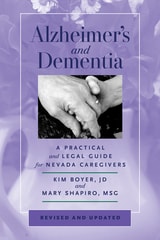
Alzheimer's and Dementia
A Practical and Legal Guide for Nevada Caregivers, Revised and UpdatedKim Boyer
University of Nevada Press, 2025
The book, specific to Nevada, covers state laws including Medicaid planning, asset protection, guardianship, probate, advance directives, and patient rights. It also addresses estate and financial planning, and provides a detailed list of resources available to assist caregivers. Written by an elder law attorney and a gerontologist, Alzheimer’s and Dementiaoffers insights from two professionals who provide practical solutions to common obstacles faced by caregivers, helping them support the needs and overcome the challenges facing those coping with these diseases.
Boyer and Shapiro coauthored The Essential Eldercare Handbook for Nevada also available from the University of Nevada Press.
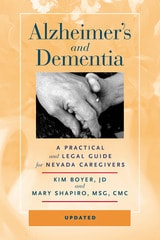
Alzheimer’s and Dementia
A Practical and Legal Guide for Nevada CaregiversKim Boyer
University of Nevada Press, 2012
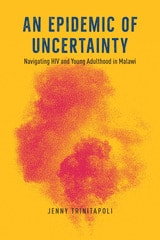
An Epidemic of Uncertainty
Navigating HIV and Young Adulthood in MalawiJenny Trinitapoli
University of Chicago Press, 2023
An Epidemic of Uncertainty advances a new framework for studying social life by emphasizing something social scientists routinely omit from their theories, models, and measures–what people know they don’t know. Taking Malawi’s ongoing AIDS epidemic as an entry point, Jenny Trinitapoli shows that despite admirable declines in new HIV infections and AIDS-related mortality, an epidemic of uncertainty persists; at any given point in time, fully half of Malawian young adults don’t know their HIV status. Reckoning with the impact of this uncertainty within the bustling trading town of Balaka, Trinitapoli argues that HIV-related uncertainty is measurable, pervasive, and impervious to biomedical solutions, with consequences that expand into multiple domains of life, including relationship stability, fertility, and health. Over the duration of a groundbreaking decade-long longitudinal study, rich survey data and poignant ethnographic vignettes vividly depict how individual lives and population patterns unfold against the backdrop of an ever-evolving epidemic. Even as HIV is transformed from a progressive, fatal disease to a chronic and manageable condition, the accompanying epidemic of uncertainty remains fundamental to understanding social life in this part of the world.
Insisting that known unknowns can and should be integrated into social-scientific models of human behavior, An Epidemic of Uncertainty treats uncertainty as an enduring aspect, a central feature, and a powerful force in everyday life.