Results by title
154 books match the query 'East' and 23 start with a
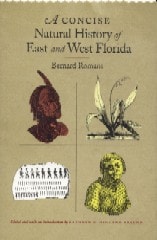
A Concise Natural History of East and West Florida
Bernard Romans, edited and with an introduction by Kathryn E. Holland Braund
University of Alabama Press, 2013
Braund presents the only annotated edition of Bernard Romans's rare and valuable 18th-century account of his observations in the southeastern United States.
Bernard Romans's A Concise Natural History of East and West Florida, William Bartram's Travels, and James Adair's History of the American Indian are the three most significant accounts of the southeastern United States published during the late 18th century. This new edition of Romans's Concise Natural History, edited by historian Kathryn Braund, provides the first fully annotated edition of this early and rare description of both the European settled areas and the adjoining Indian lands in what are now the states of Florida, Georgia, Alabama, Mississippi, and Louisiana.
Romans's purpose in producing his Concise Natural History was twofold: to aid navigators and shippers by detailing the sailing passages of the region and to promote trade and settlement in the region. To those ends, he provided detailed scientific observations on the natural history of the area, a summary of the region's political history, and an assessment of the potential for economic growth in the Floridas based on the area's natural resources.
A trained surveyor and cartographer and a self-taught naturalist, Romans supplied detailed descriptions of the region's topography and environment, including information about the climate and weather patterns, plants, animals, and diseases. He provided information about the state of scientific inquiry in the South and touched on many of the most important intellectual arguments of the day, such as the origin of the races, the practice of slavery, and the benefits and drawbacks of monopoly on trade.
In addition, Concise Natural History can be placed firmly in the genre of colonial promotional literature. Romans's book was an enthusiastic guide aimed at those seeking to establish modest holdings in the region:
"What a field is open here! . . . No country ever had such inexhaustible resources; no empire had ever half so many advantages combining in its behalf!" Romans explained how settlers should travel to the area, what they would need in terms of provisions and tools, and what it would cost to have their land surveyed. In addition to providing an abundance of practical advice, Romans also offered information about the history of earlier settlements, including the earliest and most complete account of New Smyrna near St. Augustine.
Romans also presented unique information about the various Indian tribes he encountered. In fact, historians agree that among the most useful portions of the book are Romans's descriptions of the largest Indian tribes in the 18th-century Southeast: the Creeks, Choctaws, and Chickasaws. Romans's account of the diet of the Creeks and Choctaws is one of the most complete available. And his description of the location of Choctaw village sites is one of the best sources for this information.
A History of Modern Ethiopia, 1855–1991
Second EditionBahru Zewde
Ohio University Press, 2002
Bounded by Sudan to the west and north, Kenya to the south, Somalia to the southeast, and Eritrea and Djibouti to the northeast, Ethiopia is a pivotal country in the geopolitics of the region. Yet it is important to understand this ancient and often splintered country in its own right.
In A History of Modern Ethiopia, Bahru Zewde, one of Ethiopia’s leading historians, provides a compact and comprehensive history of his country, particularly the last two centuries. Of importance to historians, political scientists, journalists, and Africanists alike, Bahru’s A History of Modern Ethiopia, now with additional material taking it up to the last decade, will be the preeminent overview of present-day Ethiopia.
A Journey to the East
Li Gui's A New Account of a Trip Around the GlobeCharles Desnoyers
University of Michigan Press, 2004
A representative to the U.S. Centennial in Philadelphia, Li Gui went on to style himself as the first Chinese official to circle the globe, and his travel diary offers a revealing window into the Chinese view of the West in the late nineteenth century. As the first full-length English translation of this landmark excursion, A Journey to the East provides a welcome addition to primary source material on this time period.
Li Gui's experiences traveling through the United States offer a unique perspective on the newest technological and urban developments of the day in Philadelphia, New York, Washington, D.C., and other major U.S. cities. In his day, these observations on Japan, the United States, Great Britain, France, and their colonial possessions helped the Chinese government construct a more accurate picture of imperial power and statecraft abroad. Later, the diary became required reading for reformers and revolutionaries from Li Hongzhang to Mao Zedong.
Li's journal also provides rich material for exploring a number of theoretical issues stemming from the Sino-foreign encounter. He devotes considerable space to debunking the views of his colleagues regarding the importance of technology, finance, and communication. Most striking of all are his thoughts on gender and education, which place him within the ranks of "progressive" thinkers in any nineteenth-century society.
Undoubtedly important to China specialists, A Journey to the East will also appeal to anyone with an interest in American history, Asian studies, world history and Asian-American studies.
Charles Desnoyers is Associate Professor and Chair in the Department of History and Director of Asian Studies at La Salle University.
A Modern History of the Somali
Nation and State in the Horn of AfricaI. M. Lewis
Ohio University Press, 2002
This latest edition of A Modern History of the Somali brings I. M. Lewis’s definitive history up to date and shows the amazing continuity of Somali forms of social organization. Lewis’s history portrays the ingeniousness with which the Somali way of life has been adapted to all forms of modernity.
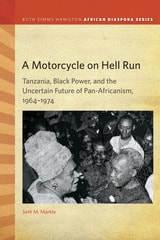
A Motorcycle on Hell Run
Tanzania, Black Power, and the Uncertain Future of Pan-Africanism, 1964–1974Seth M. Markle
Michigan State University Press, 2017
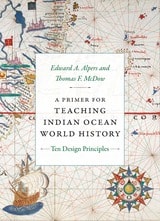
A Primer for Teaching Indian Ocean World History
Ten Design PrinciplesEdward A. Alpers and Thomas F. McDow
Duke University Press, 2024
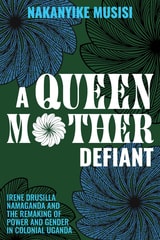
A Queen Mother Defiant
Irene Drusilla Namaganda and the Remaking of Power and Gender in Colonial UgandaNakanyike B. Musisi
University of Wisconsin Press, 2026
In 1941, Irene Drusilla Namaganda, the reigning queen mother of British-occupied Buganda, shocked the kingdom when she revealed she was six months pregnant—only fifteen months after the king’s death. The father of her child, a schoolteacher nearly two decades her junior, quickly became the focal point for a scandal that engulfed the monarchy. The ensuing political crisis led to Namaganda’s removal from the office of queen mother (Nnamasole) and her companion’s exile, spurring her own departure.
Drawing from extensive archival research and in-depth oral interviews, this long-awaited biography analyzes Namaganda’s roles as wife, mother, widow, and prominent yet controversial cultural-political icon. Nakanyike Musisi moves beyond the scandal to explore how the monarch’s character and personal choices defied expectations of royal women and redefined motherhood, power, and tradition. She challenges dominant narratives in African political history and gender studies to show how African women navigated competing systems of authority and in doing so reshaped both the institution of monarchy and broader cultural and historical landscapes.
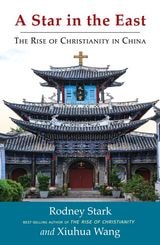
A Star in the East
The Rise of Christianity in ChinaRodney Stark
Templeton Press, 2015
What is the state of Christianity in China? Some scholars say that China is invulnerable to religion. In contrast, others say that past efforts of missionaries have failed, writing off those converted as nothing more than “rice Christians” or cynical souls who had frequented the missions for the benefits they provided. Some wonder if the Cultural Revolution extinguished any chances of Christianity in China.
Rodney Stark and Xiuhua Wang offer a different perspective, arguing that Christianity is alive, well, and on the rise. Stark approaches the topic from an extensive research background in Christianity and Chinese history, and Wang provides an inside look at Christianity and its place in her home country of China. Both authors cover the history of religion in China, disproving older theories concerning the number of Christians and the kinds of Christians that have emerged in the past 155 years. Stark and Wang claim that when just considering the visible Christians—those not part of underground churches—thousands of Chinese are still converted to Christianity daily, and forty new churches are opening each week.
A Star in the East draws on two major national surveys to sketch a close-up of religion in China. A reliable estimate is that by 2007 there were approximately 60 million Christians in China. If the current growth rate were to hold until 2030, there would be more Christians in China—about 295 million—than in any other nation. This trend has significant implications, not just for China but for the greater world order. It is probable that Chinese Christianity will splinter into denominations, likely leading to the same political, social, and economic ramifications seen in the West today.
Whether you’re new to studying Christianity in China or whether this has been your area of interest for years, A Star in the East provides a reliable, thought-provoking, and engaging account of the resilience of the Christian faith in China and the implications it has for the future.
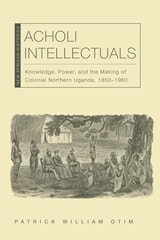
Acholi Intellectuals
Knowledge, Power, and the Making of Colonial Northern Uganda, 1850–1960Patrick William Otim
Ohio University Press, 2024
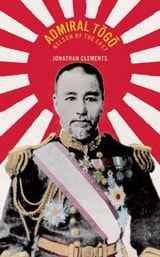
Admiral Togo
Nelson of the EastJonathan Clements
Haus Publishing, 2010
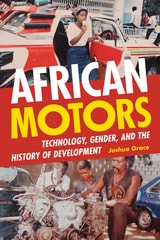
African Motors
Technology, Gender, and the History of DevelopmentJoshua Grace
Duke University Press, 2021
African Underclass
Urbanization, Crime & Colonial Order in Dar es Salaam 1919-61Andrew Burton
Ohio University Press, 2005
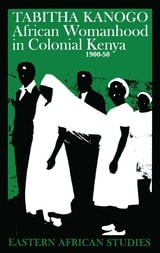
African Womanhood in Colonial Kenya, 1900–1950
1900-1950Tabitha Kanogo
Ohio University Press, 2000
This book explores the history of African womanhood in colonial Kenya. By focussing on key sociocultural institutions and practices around which the lives of women were organized, and on the protracted debates that surrounded these institutions and practices during the colonial period, it investigates the nature of indigenous, mission, and colonial control of African women.
The pertinent institutions and practices include the legal and cultural status of women, clitoridectomy, dowry, marriage, maternity and motherhood, and formal education. By following the effects of the all-pervasive ideological shifts that colonialism produced in the lives of women, the study investigates the diverse ways in which a woman’s personhood was enhanced, diminished, or placed in ambiguous predicaments by the consequences, intended and unintended, of colonial rule as administered by both the colonizers and the colonized. The study thus tries to historicize the reworkings of women’s lives under colonial rule. The transformations that resulted from these reworkings involved the negotiation and redefinition of the meaning of individual liberties and of women’s agency, along with the reconceptualization of kinship relations and of community.
These changes resulted in—and often resulted from—increased mobility for Kenyan women, who were enabled to cross physical, cultural, economic, social, and psychological frontiers that had been closed to them prior to colonial rule. The conclusion to which the experiences of women in colonial Kenya points again and again is that for these women, the exercise of individual agency, whether it was newly acquired or repeatedly thwarted, depended in large measure on the unleashing of forces over which no one involved had control. Over and over, women found opportunities to act amid the conflicting policies, unintended consequences, and inconsistent compromises that characterized colonial rule.
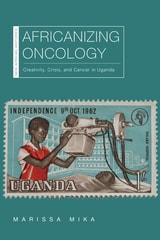
Africanizing Oncology
Creativity, Crisis, and Cancer in UgandaMarissa Mika
Ohio University Press, 2021
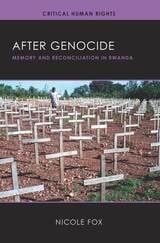
After Genocide
Memory and Reconciliation in RwandaNicole Fox
University of Wisconsin Press, 2023
In the wake of unthinkable atrocities, it is reasonable to ask how any population can move on from the experience of genocide. Simply remembering the past can, in the shadow of mass death, be retraumatizing. So how can such momentous events be memorialized in a way that is productive and even healing for survivors? Genocide memorials tell a story about the past, preserve evidence of the violence that occurred, and provide emotional support to survivors. But the goal of amplifying survivors’ voices can fade amid larger narratives entrenched in political motivations.
In After Genocide,Nicole Fox investigates the ways memorials can shape the experiences of survivors decades after mass violence has ended. She examines how memorializations can both heal and hurt, especially when they fail to represent all genders, ethnicities, and classes of those afflicted. Drawing on extensive interviews with Rwandans, Fox reveals their relationships to these spaces and uncovers those voices silenced by the dominant narrative—arguing that the erasure of such stories is an act of violence itself. The book probes the ongoing question of how to fit survivors in to the dominant narrative of healing and importantly demonstrates how memorials can shape possibilities for growth, national cohesion, reconciliation, and hope for the future.

Al Qaeda Declares War
The African Embassy Bombings and America’s Search for JusticeTod Hoffman
University Press of New England, 2014
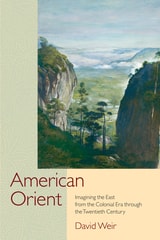
American Orient
Imagining the East from the Colonial Era through the Twentieth CenturyDavid Weir
University of Massachusetts Press, 2011
Surveying the American fascination with the Far East since the mid-eighteenth century, this book explains why the Orient had a fundamentally different meaning in the United States than in Europe or Great Britain. David Weir argues that unlike their European counterparts, Americans did not treat the East simply as a site of imperialist adventure; on the contrary, colonial subjugation was an experience that early Americans shared with the peoples of China and India.
In eighteenth-century America, the East was, paradoxically, a means of reinforcing the enlightenment values of the West: Franklin, Jefferson, and other American writers found in Confucius a complement to their own political and philosophical beliefs. In the nineteenth century, with the shift from an agrarian to an industrial economy, the Hindu Orient emerged as a mystical alternative to American reality. During this period, Emerson, Thoreau, and other Transcendentalists viewed the “Oriental” not as an exotic other but as an image of what Americans could be, if stripped of all the commercialism and materialism that set them apart from their ideal. A similar sense of Oriental otherness informed the aesthetic discoveries of the early twentieth century, as Pound, Eliot, and other poets found in Chinese and Japanese literature an artistic purity and intensity absent from Western tradition. For all of these figures the Orient became a complex fantasy that allowed them to overcome something objectionable, either in themselves or in the culture of which they were a part, in order to attain some freer, more genuine form of philosophical, religious, or artistic expression.
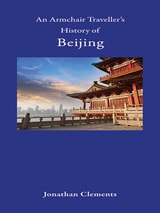
An Armchair Traveller's History of Beijing
Jonathan Clements
Haus Publishing, 2016
Home to capitals of several states over time, the site of modern Beijing has been ruled by Mongolian chiefs and the glorious Ming emperors, whose tombs can still be found on its outskirts. Through Beijing, we can experience Chinese history itself, including its more famous residents—including Khubilai Khan, Mulan, and Marco Polo. Special emphasis is placed on Beijing’s precarious heritage in the twenty-first century, as modern construction wipes out much of the old city to make way for homes for twenty million people.
This book also offers detailed information on sites of tourist interest, including the pros and cons of different sections of the Great Wall and the best ways to see the Forbidden City and the fast-disappearing relics of the city’s Manchu and Maoist eras. A chapter on food and drink examines not only local delicacies, but the many other Chinese dishes that form part of Beijing’s rich dining traditions. With its blend of rich history and expert tips, An Armchair Traveller’s History of Beijing is an essential introduction to one of the world’s most remarkable cities.
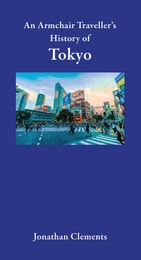
An Armchair Traveller's History of Tokyo
Jonathan Clements
Haus Publishing, 2018
Tokyo, meaning “Eastern Capital,” has only enjoyed that name and status for 150 years. Before that, it was a medieval outpost designed to keep watch over rich farmlands. But this seemingly unassuming geographical location ultimately led to its status as a supercity. Though the imperial court ruled Japan from the sleepy city of Kyoto, the landowners of the Kanto plain where Tokyo lies held the true wealth and power in Japan, which they eventually asserted in a series of bloody civil wars. The Tokyo region became the administrative center of Japan’s Shogun overlords and the site of a vibrant urban culture home to theaters, taverns, and brothels. After the Meiji Restoration in 1868, it became Japan’s true capital, home to the emperors, the seat of government, and a site of rapid urban growth.
Anyone who’s ever longed to look upon Mount Fuji, embody the bravery of the Samurai, or savor the world’s finest sushi will find themselves transported from the comfort of their armchair while reading Clements’s account of Tokyo.
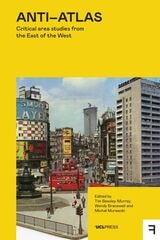
Anti-Atlas
Critical Area Studies from the East of the WestEdited by Tim Beasley-Murray, Wendy Bracewell, and Michal Murawski
University College London, 2025
Anti-Atlas uses the upheavals of Eastern Europe as a lens through which to rethink the politics of area studies. This collection unsettles traditional hierarchies, questioning how knowledge is produced, who controls it, and how we divide the world into “areas.”
Consisting of an eclectic mix of scholars from Europe, the UK, and North America, the book experiments with diverse genres—from academic essays and autobiographical reflections to travel guides and data visualizations. Through this innovative approach, the editors propose a manifesto for area studies to be more critical and reflexive; to be undisciplined and deeply engaged with local perspectives.
By dismantling the assumptions embedded in atlases and disciplinary boundaries, Anti-Atlas invites readers to think differently about how we construct and categorize the world. Of particular interest to scholars of area studies and critical theory, this work reassesses what it means to study places in an era of geopolitical rupture.
Architecture of Migration
The Dadaab Refugee Camps and Humanitarian SettlementAnooradha Iyer Siddiqi
Duke University Press, 2024

As Áreas Importantes de Plantas de Moçambique
Edited by Iain Darbyshire, Sophie Richards, and Jo Osborne
Royal Botanic Gardens, Kew, 2024
The Important Plant Areas of Mozambique is based on the Mozambique TIPAs project run in collaboration between Royal Botanic Gardens, Kew, Mozambique’s Agricultural Research Institute (Instituto de Investigação Agrária de Moçambique – IIAM), and the University Eduardo Mondlane. Drawing on information from the TIPAs database, The Important Plant Areas of Mozambique includes color maps and photographs, site descriptions, and tables to present information on the botanical significance, habitat, and geology of the region. The book will also address conservation issues and ecosystem services to promote Mozambique’s critical plant sites and inform conservation leaders in government, NGOs, universities, and local communities about Mozambique’s threatened habitats.
At the Pivot of East and West
Ethnographic, Literary, and Filmic ArtsMichael M. J. Fischer
Duke University Press, 2023