Results by title
1038 books match the query 'Economic conditions' and 73 start with a
A City At War
Milwaukee Labor During World War IIRichard L. Pifer
Wisconsin Historical Society Press, 2003
A Day in "The Hole"
Risk, Loss, and Excess in Downtown LimaDaniella Gandolfo
University of Chicago Press, 2025
A single day in a semilegal market in Lima, Peru, reveals a social world that defies conventional economic logic.
In the heart of Lima’s historic center, the markets of El Hueco (“The Hole”) and sprawling Mesa Redonda pulse with life, with thousands of vendors selling everything from knockoff electronics to religious icons. In A Day in “The Hole,” anthropologist Daniella Gandolfo immerses readers in a single, tumultuous day—the thirty-fourth anniversary of a vendors’ cooperative—while examining the dynamics that sustain these marketplaces.
Through a blend of cinematic storytelling and incisive anthropological insight, Gandolfo reveals a world with its own unique codes. She inspects how vendors embrace expenditure over profit and instability over order, and moving through the sights and sounds of El Hueco and Mesa Redonda, she finds a dissident economy that is as much about survival as it is about spectacle. Gandolfo redefines how we think about urban economies and the unexpected ways these defiant communities thrive in this textured portrait of Lima’s markets and the people who animate them.

A Feminist Reading of Debt
Luci Cavallero
Pluto Press, 2021
***Winner of an English PEN Award 2021***
In this sharp intervention, authors Lucí Cavallero and Verónica Gago defiantly develop a feminist understanding of debt, showing its impact on women and members of the LGBTQ+ community and examining the relationship between debt and social reproduction.
Exploring the link between financial activity and the rise of conservative forces in Latin America, the book demonstrates that debt is intimately linked to gendered violence and patriarchal notions of the family. Yet, rather than seeing these forces as insurmountable, the authors also show ways in which debt can be resisted, drawing on concrete experiences and practices from Latin America and around the world.
Featuring interviews with women in Argentina and Brazil, the book reveals the real-life impact of debt and how it falls mainly on the shoulders of women, from the household to the wider effects of national debt and austerity. However, through discussions around experiences of work, prisons, domestic labour, agriculture, family, abortion and housing, a narrative of resistance emerges.
Translated by Liz Mason-Deese.

A Feminist Reading of Debt
Luci Cavallero
Pluto Press, 2021
***Winner of an English PEN Award 2021***
"Of great value to those interested in the financialisation of everyday life and social reproduction."—LSE Review of Books
In this sharp evaluation and call to action, authors Lucí Cavallero and Verónica Gago defiantly develop a feminist understanding of debt, showing its impact on women and members of the LGBTQ+ community and examining the relationship between debt and social reproduction.
Exploring the link between financial activity and the rise of conservative forces in Latin America, the book demonstrates that debt is intimately linked to gendered violence and patriarchal notions of the family. Yet, rather than seeing these forces as insurmountable, the authors also show ways in which debt can be resisted, drawing on concrete experiences and practices from Latin America and around the world. Chapters include:
*Debt and Social Reproduction
*Debt as a “Counter-revolution” of Everyday Life
*The writing on the Body of Women
*Neither Victims not Entrepreneurs
*Feminist Insubordination and Fascist Neoliberalism
*The Patriarchy Has My Missing Contributions
*Hunger and Gender Mandates
*Us Against Debt
The authors state in their Introduction, “Our investigations and activism show that there is an urgent need to develop a specifically feminist analysis of finance. Here we do so by bringing together methodological elements, political hypotheses, and narratives of practices elaborated by the feminist movement that are challenging finance.”
Featuring interviews with women in Argentina and Brazil, the book reveals the real-life impact of debt and how it falls mainly on the shoulders of women, from the household to the wider effects of national debt and austerity. However, through discussions around experiences of work, prisons, domestic labor, agriculture, family, abortion and housing, a narrative of resistance emerges.
A Great Basin Mosaic
The Cultures of Rural NevadaJames W. Hulse
University of Nevada Press, 2017
The Nevada of lesser-known cities, towns, and outposts deserve their separate chronicles, and here Hulse fills a wide gap. He contributes in a text rich with memories tramping through rural Nevada as a child, then as a journalist seeking news and gossip, then later as an academic historian and a parent trying to share the wonders of the high desert with his family. Nobody is more qualified to write about the cultural nuances of rural Nevada than Hulse, who retired after 35 years as a professor of history at University of Nevada, Reno.
Robert Laxalt wrote an article in National Geographic in 1974 entitled “The Other Nevada” in which he referred to “the Nevada that has been eclipsed by the tinsel trimmings of Las Vegas, the round-the-clock casinos, the ski slopes of the Sierra. It is a Nevada that few tourists see.” With this book Hulse reflects on Laxalt’s insights and shows changes—often slow-moving and incremental—that have occurred since then. Much of the terrain of rural Nevada has not changed at all, while others have adapted to technological revolutions of recent times. Hulse states that there is no single “other” Nevada, but several subcultures with distinct features. He offers a tour of sorts to what John Muir called the “bewildering abundance” of the Nevada landscape.
A History of Trust in Ancient Greece
Steven Johnstone
University of Chicago Press, 2011
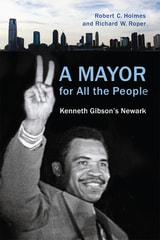
A Mayor for All the People
Kenneth Gibson's NewarkRobert C. Holmes
Rutgers University Press, 2020
In 1970, Kenneth Gibson was elected as Newark, New Jersey’s first African-American mayor, a position he held for an impressive sixteen years. Yet even as Gibson served as a trailblazer for black politicians, he presided over a troubled time in the city’s history, as Newark’s industries declined and its crime and unemployment rates soared.
This book offers a balanced assessment of Gibson’s leadership and his legacy, from the perspectives of the people most deeply immersed in 1970s and 1980s Newark politics: city employees, politicians, activists, journalists, educators, and even fellow big-city mayors like David Dinkins. The contributors include many of Gibson’s harshest critics, as well as some of his closest supporters, friends, and family members—culminating in an exclusive interview with Gibson himself, reflecting on his time in office.
Together, these accounts provide readers with a compelling inside look at a city in crisis, a city that had been rocked by riots three years before Gibson took office and one that Harper’s magazine named “America’s worst city” at the start of his second term. At its heart, it raises a question that is still relevant today: how should we evaluate a leader who faced major structural and economic challenges, but never delivered all the hope and change he promised voters?
A Monetary and Fiscal History of Latin America, 1960–2017
Timothy J. Kehoe
University of Minnesota Press, 2021
A major, new, and comprehensive look at six decades of macroeconomic policies across the region
What went wrong with the economic development of Latin America over the past half-century? Along with periods of poor economic performance, the region’s countries have been plagued by a wide variety of economic crises. This major new work brings together dozens of leading economists to explore the economic performance of the ten largest countries in South America and of Mexico. Together they advance the fundamental hypothesis that, despite different manifestations, these crises all have been the result of poorly designed or poorly implemented fiscal and monetary policies.
Each country is treated in its own section of the book, with a lead chapter presenting a comprehensive database of the country’s fiscal, monetary, and economic data from 1960 to 2017. The chapters are drawn from one-day academic conferences—hosted in all but one case, in the focus country—with participants including noted economists and former leading policy makers. Cowritten with Nobel Prize winner Thomas J. Sargent, the editors’ introduction provides a conceptual framework for analyzing fiscal and monetary policy in countries around the world, particularly those less developed. A final chapter draws conclusions and suggests directions for further research.
A vital resource for advanced undergraduate and graduate students of economics and for economic researchers and policy makers, A Monetary and Fiscal History of Latin America, 1960–2017 goes further than any book in stressing both the singularities and the similarities of the economic histories of Latin America’s largest countries.
Contributors: Mark Aguiar, Princeton U; Fernando Alvarez, U of Chicago; Manuel Amador, U of Minnesota; Joao Ayres, Inter-American Development Bank; Saki Bigio, UCLA; Luigi Bocola, Stanford U; Francisco J. Buera, Washington U, St. Louis; Guillermo Calvo, Columbia U; Rodrigo Caputo, U of Santiago; Roberto Chang, Rutgers U; Carlos Javier Charotti, Central Bank of Paraguay; Simón Cueva, TNK Economics; Julián P. Díaz, Loyola U Chicago; Sebastian Edwards, UCLA; Carlos Esquivel, Rutgers U; Eduardo Fernández Arias, Peking U; Carlos Fernández Valdovinos (former Central Bank of Paraguay); Arturo José Galindo, Banco de la República, Colombia; Márcio Garcia, PUC-Rio; Felipe González Soley, U of Southampton; Diogo Guillen, PUC-Rio; Lars Peter Hansen, U of Chicago; Patrick Kehoe, Stanford U; Carlos Gustavo Machicado Salas, Bolivian Catholic U; Joaquín Marandino, U Torcuato Di Tella; Alberto Martin, U Pompeu Fabra; Cesar Martinelli, George Mason U; Felipe Meza, Instituto Tecnológico Autónomo de México; Pablo Andrés Neumeyer, U Torcuato Di Tella; Gabriel Oddone, U de la República; Daniel Osorio, Banco de la República; José Peres Cajías, U of Barcelona; David Perez-Reyna, U de los Andes; Fabrizio Perri, Minneapolis Fed; Andrew Powell, Inter-American Development Bank; Diego Restuccia, U of Toronto; Diego Saravia, U de los Andes; Thomas J. Sargent, New York U; José A. Scheinkman, Columbia U; Teresa Ter-Minassian (formerly IMF); Marco Vega, Pontificia U Católica del Perú; Carlos Végh, Johns Hopkins U; François R. Velde, Chicago Fed; Alejandro Werner, IMF.
A Network of Converso Families in Early Modern Toledo
Assimilating a MinorityLinda Martz
University of Michigan Press, 2003
Linda M. Martz focuses on families that were immersed in the worlds of business and finance. They formed the backbone of the trade industry and, during the economic expansion of the sixteenth century, enjoyed a high degree of affluence. The seventeenth century, however, brought harder times. How these families rose to positions of commercial eminence and then adapted to this economic downturn is one of the questions addressed in this insightful book.
A Network of Converso Families in Early Modern Toledo relies heavily on archival evidence--notarial, parish, and city records--that offers new insights into the families' histories. Business endeavors, marriage alliances, involvement in local politics, and the pursuit of improved social status are all subjected to Martz's keen analysis.
These families appear to have been well integrated into their contemporary society; aside from their business and financial activities, many were members of the city's governing council. But how well did they integrate with the lower classes? Assimilating minorities in the majority culture is a task that confronts most modern societies, so the experience of Spain and this particular minority may serve as an example of how earlier societies viewed and confronted this challenge.
This book will appeal to historians of medieval and Renaissance Spain and those interested in the Inquisition's effect on Renaissance Spain. It will also prove to be indispensable for those interested in the history of the Jewish race, as well as for those pursuing the question of marginalization.
Linda M. Martz is an independent historian as well as a freelance editor and writer.
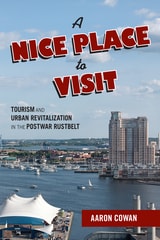
A Nice Place to Visit
Tourism and Urban Revitalization in the Postwar RustbeltAaron Cowan
Temple University Press, 2016
How did tourism gain a central role in the postwar American Rustbelt city? And how did tourism development reshape the meaning and function of these cities? These are the questions at the heart of Aaron Cowan’s groundbreaking book, A Nice Place to Visit.
Cowan provides an insightful, comparative look at the historical development of Cincinnati, St. Louis, Pittsburgh, and Baltimore in the post–World War II period to show how urban tourism provided a potential solution to the economic woes of deindustrialization. A Nice Place to Visit chronicles the visions of urban leaders who planned hotels, convention centers, stadiums, and festival marketplaces to remake these cities as tourist destinations. Cowan also addresses the ever-present tensions between tourist development and the needs and demands of residents in urban communities.
A Nice Place to Visit charts how these Rustbelt cities adapted to urban decline and struggled to meet the challenge of becoming an appealing place to visit, as well as good and just communities in which to live.
A People's History of Detroit
Mark Jay and Philip Conklin
Duke University Press, 2020

A Prison in the Woods
Environment and Incarceration in New York's North CountryClarence Jefferson Hall
University of Massachusetts Press, 2020
Clarence Jefferson Hall Jr. reveals that the introduction of correctional facilities—especially in the last three decades of the twentieth century—unearthed long-standing conflicts over the proper uses of Adirondack nature, particularly since these sites have contributed to deforestation, pollution, and habitat decline, even as they've provided jobs and spurred economic growth. Additionally, prison plans have challenged individuals' commitment to environmental protection, tested the strength of environmental regulations, endangered environmental and public health, and exposed tensions around race, class, place, and belonging in the isolated prison towns of America's largest state park.
A Rebellious People
Basques, Protests, And PoliticsCyrus Ernesto Zirakzadeh
University of Nevada Press, 1991
In this scholarly work, Zirakzadeh argues that there is a calculated reasoning behind ETA's political violence that is often overlooked by researchers. His book is a comprehensive account of the Basque region's grassroots politics.
A Revolution in Fragments
Traversing Scales of Justice, Ideology, and Practice in BoliviaMark Goodale
Duke University Press, 2019
A Society Transformed
Hungary in Time-Space PerspectiveRichard Rose
Central European University Press, 1999
A Store Almost in Sight
The Economic Transformation of Missouri from the Lousiana Purchase to the Civil WarJeff Bremer
University of Iowa Press, 2014
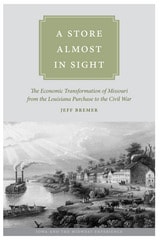
Most Missourians welcomed the opportunity to take part in commercial markets. Farmwomen sold eggs or butter to peddlers and in nearby towns, while men took surplus corn or pork to stores for credit. Immigrants searched for the most fertile land closest to waterways, to ensure they would have large harvests and an easy way to ship them to market. Families floated farm goods downriver until steamboats transformed rural life by drastically reducing the cost of transportation and boosting farm production and consumption. Traders also trekked west across the plains to trade at the inland entrepôt of Santa Fe. The waves of migrants headed for Oregon and California in the 1840s and 1850s further encouraged commercial development. However, most white settlers lacked the necessary financial means to be capitalists in a technical sense, seeking instead a “competency,” or comfortable independence.
This fresh reinterpretation of the American frontier will interest anyone who wants to understand the economic and social significance of westward migration in U.S. history. It gives the reader a gritty, grassroots sense of how ordinary people made their livings and built communities in the lands newly opened to American settlement.
A/MORAL ECONOMICS
CLASSICAL POLITICAL ECONOMY AND CULTURAL AUTHORITY IN NINETEENTH-CENTURY ENGLANDClaudia C. Klaver
The Ohio State University Press, 2003
A/Moral Economics is an interdisciplinary historical study that examines the ways which social “science” of economics emerged through the discourse of the literary, namely the dominant moral and fictional narrative genres of early and mid-Victorian England. In particular, this book argues that the classical economic theory of early-nineteenth-century England gained its broad cultural authority not directly, through the well- known texts of such canonical economic theorists as David Ricardo, but indirectly through the narratives constructed by Ricardo’s popularizers John Ramsey McCulloch and Harriet Martineau.
By reexamining the rhetorical and institutional contexts of classical political economy in the nineteenth century, A/Moral Economics repositions the popular writings of both supporters and detractors of political economy as central to early political economists’ bids for a cultural voice. The now marginalized economic writings of McCulloch, Martineau, Henry Mayhew, and John Ruskin, as well as the texts of Charles Dickens and J. S. Mill, must be read as constituting in part the entities they have been read as merely criticizing. It is this repressed moral logic that resurfaces in a range of textual contradictions—not only in the writings of Ricardo’s supporters, but, ironically, in those of his critics as well.

Aboriginal Resource Use in Canada
Historical and Legal AspectsKerry Abel
University of Manitoba Press, 1991
Accidental Occidental
Economics and Culture of Transition in Mitteleuropa, the Baltic and the Balkan AreaLajos Bokros
Central European University Press, 2013
Across The Pacific
Asian Americans and GlobalizationEvelyn Hu-Dehart, E
Temple University Press, 2000
Members of the Asian American community have always been trans-Pacific, but are now more than ever, since the 1965 change in U.S. immigration law. Entering the U.S. at the culmination of the Civil Rights movement, Asians becoming Asian Americans have joined a self-consciously multicultural society. Asian economies roared onto the world stage, creating new markets while circulating capital and labor at an unprecedented scale and intensity, thereby helping drive the forces of modern globalization. These essays by well-known scholars in the field of Asian American studies consider such topics as the impact of new migrations on Asian American subjectivity and politics, Asian American activism and U.S. foreign policy, and the role of Asian Americans in Pacific Rim economies.
Considering issues of diaspora, transmigrancy, assimilation, institutionalized racism, and community, Across the Pacific covers such cutting-edge subjects as the cultural expressions of dislocation among contemporary Asian American writers, as well as the impact of the new migrations on Asian American subjectivity and politics.
Advances in the Economics of Aging
Edited by David A. Wise
University of Chicago Press, 1996
Specific topics include the effect of labor market rigidities on the employment of older workers; the effect on retirement of the availability of continuation coverage benefits; and the influence of the prospective payment system (PPS) on rising Medicare costs. Also considered are the effects of health and wealth on living arrangement decisions; the incentive effects of employer-provided pension plans; the degree of substitution between 401(k) plans and other employer-provided retirement saving arrangements; and the extent to which housing wealth determines how much the elderly save and consume.
Two final studies use simulations that describe the implications of stylized economic models of behavior among the elderly. This timely volume will be of interest to anyone concerned with the economics of aging.
Africa's Last Colonial Currency
The CFA Franc StoryFanny Pigeaud
Pluto Press, 2021
Africa's Last Colonial Currency
The CFA Franc StoryFanny Pigeaud
Pluto Press, 2021
African Miracle, African Mirage
Transnational Politics and the Paradox of Modernization in Ivory CoastAbou B. Bamba
Ohio University Press, 2016
Throughout the 1960s and 1970s, Ivory Coast was touted as an African miracle, a poster child for modernization and the ways that Western aid and multinational corporations would develop the continent. At the same time, Marxist scholars—most notably Samir Amin—described the capitalist activity in Ivory Coast as empty, unsustainable, and incapable of bringing real change to the lives of ordinary people. To some extent, Amin’s criticisms were validated when, in the 1980s, the Ivorian economy collapsed.
In African Miracle, African Mirage, Abou B. Bamba incorporates economics, political science, and history to craft a bold, transnational study of the development practices and intersecting colonial cultures that continue to shape Ivory Coast today. He considers French, American, and Ivorian development discourses in examining the roles of hydroelectric projects and the sugar, coffee, and cocoa industries in the country’s boom and bust. In so doing, he brings the agency of Ivorians themselves to the fore in a way not often seen in histories of development. Ultimately, he concludes that the “maldevelopment” evident by the mid-1970s had less to do with the Ivory Coast’s “insufficiently modern” citizens than with the conflicting missions of French and American interests within the context of an ever-globalizing world.
African Successes, Volume I
Government and InstitutionsEdited by Sebastian Edwards, Simon Johnson, and David N. Weil
University of Chicago Press, 2016
The first volume in the series, African Successes: Governments and Institutions considers the role governments and institutions have played in recent developments and identifies the factors that enable economists to predict the way institutions will function.
African Successes, Volume II
Human CapitalEdited by Sebastian Edwards, Simon Johnson, and David N. Weil
University of Chicago Press, 2016
The second volume in the series, African Successes: Human Capital turns the focus toward Africa’s human capital deficit, measured in terms of health and schooling. It offers a close look at the continent’s biggest challenges, including tropical disease and the spread of HIV.
African Successes, Volume III
Modernization and DevelopmentEdited by Sebastian Edwards, Simon Johnson, and David N. Weil
University of Chicago Press, 2016
The third volume in the series, African Successes: Modernization and Development looks at the rise in private production in spite of difficult institutional and physical environments. The volume emphasizes the ways that technologies, including mobile phones, have made growth in some areas especially dynamic.
African Successes, Volume IV
Sustainable GrowthEdited by Sebastian Edwards, Simon Johnson, and David N. Weil
University of Chicago Press, 2016
The fourth volume in the series, African Successes: Sustainable Growth combines informative case studies with careful empirical analysis to consider the prospects for future African growth.
After Capitalism
Horizons of Finance, Culture, and CitizenshipFerguson, Kennan
Rutgers University Press, 2016
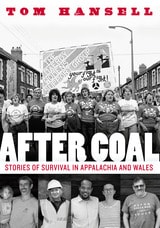
After Coal
Stories of Survival in Appalachia and WalesTom Hansell
West Virginia University Press, 2018
What happens when fossil fuels run out? How do communities and cultures survive?
Central Appalachia and south Wales were built to extract coal, and faced with coal’s decline, both regions have experienced economic depression, labor unrest, and out-migration. After Coal focuses on coalfield residents who chose not to leave, but instead remained in their communities and worked to build a diverse and sustainable economy. It tells the story of four decades of exchange between two mining communities on opposite sides of the Atlantic, and profiles individuals and organizations that are undertaking the critical work of regeneration.
The stories in this book are told through interviews and photographs collected during the making of After Coal, a documentary film produced by the Center for Appalachian Studies at Appalachian State University and directed by Tom Hansell. Considering resonances between Appalachia and Wales in the realms of labor, environment, and movements for social justice, the book approaches the transition from coal as an opportunity for marginalized people around the world to work toward safer and more egalitarian futures.
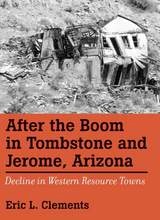
After The Boom In Tombstone And Jerome, Arizona
Decline In Western Resource TownsEric L. Clements
University of Nevada Press, 2014

After the Berlin Wall
A History of the EBRD, Volume 1Andrew Kilpatrick
Central European University Press, 2020
After the Berlin Wall tells the inside story of an international financial institution, the European Bank for Reconstruction and Development (EBRD), created in the aftermath of communism to help the countries of central and eastern Europe transition towards open market-oriented democratic economies.
The first volume of a history in two parts, After the Berlin Wall charts the EBRD’s life from a fledgling high-risk start-up investing in former socialist countries from 1991 to become an established member of the international financial community, which (as of April 2020) operates in almost 40 countries across three continents.
This volume describes the multilateral negotiations that created this cosmopolitan institution with a ‘European character’ and the emergence of the EBRD’s unique business model: a focus on the private sector and a mission to deliver development impact with sustainable financial returns. The author recounts the challenges that ‘transition’ countries faced in moving from a defunct to a functioning economic system and maps the EBRD’s response to critical events, from the dissolution of the Soviet Union, to the safe confinement of the Chernobyl disaster site, the debt default in Russia and the onset of the global financial crisis in 2008.
Against Austerity
How we Can Fix the Crisis they MadeRichard Seymour
Pluto Press, 2014
Five years into capitalism's deepest crisis, which has led to cuts and economic pain across the world, Against Austerity addresses a puzzling aspect of the current conjuncture: why are the rich still getting away with it? Why is protest so ephemeral? Why does the left appear to be marginal to political life?
In an analysis which challenges our understanding of capitalism, class and ideology, Richard Seymour shows how ‘austerity’ is just one part of a wider elite plan to radically re-engineer society and everyday life in the interests of profit, consumerism and speculative finance.
But Against Austerity is not a gospel of despair. Seymour argues that once we turn to face the headwinds of this new reality, dispensing with reassuring dogmas, we can forge new collective resistance and alternatives to the current system. Following Brecht, Against Austerity argues that the good old things are over, it's time to confront the bad new ones.
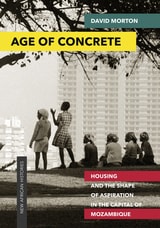
Age of Concrete
Housing and the Shape of Aspiration in the Capital of MozambiqueDavid Morton
Ohio University Press, 2019
Age of Concrete is a history of the making of houses and homes in the subúrbios of Maputo (Lourenço Marques), Mozambique, from the late 1940s to the present. Often dismissed as undifferentiated, ahistorical “slums,” these neighborhoods are in fact an open-air archive that reveals some of people’s highest aspirations. At first people built in reeds. Then they built in wood and zinc panels. And finally, even when it was illegal, they risked building in concrete block, making permanent homes in a place where their presence was often excruciatingly precarious.
Unlike many histories of the built environment in African cities, Age of Concrete focuses on ordinary homebuilders and dwellers. David Morton thus models a different way of thinking about urban politics during the era of decolonization, when one of the central dramas was the construction of the urban stage itself. It shaped how people related not only to each other but also to the colonial state and later to the independent state as it stumbled into being.
Original, deeply researched, and beautifully composed, this book speaks in innovative ways to scholarship on urban history, colonialism and decolonization, and the postcolonial state. Replete with rare photographs and other materials from private collections, Age of Concrete establishes Morton as one of a handful of scholars breaking new ground on how we understand Africa’s cities.
Aging Issues in the United States and Japan
Edited by Seiritsu Ogura, Toshiaki Tachibanaki, and David A. Wise
University of Chicago Press, 2001
Given the undeniable global importance of the Japanese and U.S. economies, these innovative essays shed welcome new light on the complex correlations between aging and economic behavior. This insightful work not only deepens our understanding of the Japanese and American economic landscapes but, through careful examination of the comparative social and economic data, clarifies the complex relation between aging societies, public policies, and economic outcomes.
Aging in the United States and Japan
Economic TrendsEdited by Yukio Noguchi and David A. Wise
University of Chicago Press, 1994
With essays on labor force participation and retirement, housing equity and the economic status of the elderly, budget implications of an aging population, and financing social security and health care in the 1990s, this volume covers a broad spectrum of issues related to the economics of aging. Among the book's findings are that workers are retiring at an increasingly earlier age in both countries and that, as the populations age, baby boomers in the United States will face diminishing financial resources as the ratio of retirees to workers sharply increases.
The result of a joint venture between the National Bureau of Economic Research and the Japan Center for Economic Research, this book complements Housing Markets in the United States and Japan (1994) by integrating research on housing markets with economic issues of the aged in the United States and Japan.
Aid to Africa
So Much To Do, So Little DoneCarol Lancaster
University of Chicago Press, 1999
This balanced but tough-minded analysis does not reject the potential usefulness of foreign aid but does offer recommendations for fundamental changes in how governments and multilateral aid agencies can operate more effectively.

AlabamaNorth
African-American Migrants, Community, and Working-Class Activism in Cleveland, 1915-45Kimberley L. Phillips
University of Illinois Press, 1999
Langston Hughes called it "a great dark tide from the South": the unprecedented influx of blacks into Cleveland that gave the city the nickname "Alabama North." Kimberley L. Phillips reveals the breadth of working class black experiences and activities in Cleveland and the extent to which these were shaped by traditions and values brought from the South.
Migrants' moves north established complex networks of kin and friends and infused Cleveland with a highly visible southern African American culture. Phillips examines the variety of black fraternal, benevolent, social, and church-based organizations that working class migrants created and demonstrates how these groups prepared the way for new forms of individual and collective activism in workplaces and the city. Giving special consideration to the experiences of working class black women, AlabamaNorth reveals how migrants' expressions of tradition and community gave them a new consciousness of themselves as organized workers and created the underpinning for new forms of black labor activism.

Alaska at 50
The Past, Present, and Future of Alaska StatehoodEdited by Gregory W. Kimura
University of Alaska Press, 2009
In 2009 Alaska celebrates its fiftieth anniversary of U.S. statehood. To commemorate that milestone, Alaska at 50 brings together some of today’s most noteworthy and recognizable writers and researchers to address the past, present, and future of Alaska. Divided into three overarching sections—art, culture, and humanities; law, economy, and politics; and environment, people, and place—Alaska at 50 is written in highly accessible prose. Illustrations and photographs of significant artefacts of Alaska history enliven the text. Each contributor brings a strong voice and prescription for the next fifty years, and the resulting work presents Alaskans and the nation with an overview of Alaska statehood and ideas for future development.
Alt-Finance
How the City of London Bought DemocracyMarlène Benquet
Pluto Press, 2022
Powerful financial forces have supported the neoliberal project since the 1980s to advance their interests, but there are now signs that these forces have a new face and a new strategy.
The majority of the British finance sector threw its support behind Britain leaving the European Union, a flagship institution of neoliberalism. Beyond this counterintuitive move, what was really happening and why? Alt-Finance examines a new authoritarian turn in financialised democracies, focusing on the City of London, revealing a dangerous alternative political project in the making.
In a clash with traditional finance, the new behemoths of financial capital - hedge funds, private equity firms, and real estate funds - have started to cohere around a set of political beliefs, promoting libertarian, authoritarian, climate-denying, and Eurosceptic views. Protecting investments, suppressing social dissent, and reducing state interference is at the core of their mission for a new world order.
By following the money, the authors provide indisputable evidence of these worrying developments. Through a clear analysis of the international dealings of this new authoritarian-libertarian regime, not just in Britain but in the US and Brazil, we can understand how our world is being shaped against our will by struggles between dominant groups.

Amazon Sweet Sea
Land, Life, and Water at the River's MouthBy Nigel J. H. Smith
University of Texas Press, 2002
Far into the Atlantic Ocean, the outflow from the Amazon River creates a "sweet sea" of fresh water. At the river's mouth, a vast delta of river channels and marshes, floodplain and upland forests, open and scrub savannas, floating meadows, and mangrove swamps hosts an astonishingly diverse assemblage of plant and animal life. So rich is this biological treasure house that early European explorers deemed it inexhaustible.
In this highly readable book, Nigel Smith explores how human use of the Amazon estuary's natural resources has been affected by technological change, rapid urban growth, and accelerated market integration. Avoiding alarmist rhetoric, he shows how human intervention in the estuary has actually diversified agriculture and helped save floodplain forests from wanton destruction. His findings underscore the importance of understanding the history of land use and the ecological knowledge of local people when formulating development and conservation policies. The book will be of interest to everyone concerned with the fate of tropical forests, conserving biodiversity, and developing natural resources in a sustainable manner.
Ambition and Adjustment
The Making and Unmaking of Postcolonial Development in AfricaPriya Lal
University of Chicago Press, 2026
How the best intentions of African socialism became the useful tools of capitalism.
In the mid-twentieth century, skilled labor was seen as the key to national development. For newly independent African countries, this posed a formidable challenge: to build thriving economies, they needed to rapidly educate workers. As it turns out, that wasn’t their only obstacle.
Ambition and Adjustment reveals how responses to this human capital problem from the political left and right converged in unlikely ways to block Africa’s postcolonial progress. Focusing on nation-building projects in Zambia and Tanzania, Priya Lal recounts how the first generations of Africa’s professional class faced pressures on all sides—from foreign planners prioritizing economic growth and from local socialists decrying higher education and professionalization as wasteful and elitist. When African development stalled, international institutions like the World Bank took up parts of both approaches, justifying structural adjustment programs that defunded African universities and hospitals in the name of social equity. Indeed, Lal shows that neoliberal austerity in the 1990s was packaged in Africa’s socialist narratives from the 1960s.
By unearthing this forgotten history, Ambition and Adjustment upends traditional accounts of postcolonial development, exposing how socialism and capitalism both conflicted and overlapped to shape Africa’s trajectory since independence.
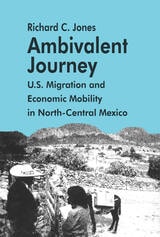
Ambivalent Journey
U.S. Migration and Economic Mobility in North-Central MexicoRichard C. Jones
University of Arizona Press, 1995
Jones's study focuses on the ways in which U.S. migration affects the lives of families in these two subregions. Migrants from Zacatecas have traditionally come from rural areas and have gone to California and Illinois. Migrants from Coahuila, on the other hand, usually come from urban areas and have almost exclusively preferred locations in nearby Texas. The different motivations of both groups for migrating, and the different economic and social effects upon their home areas realized by migrating, form the core of this book. The comparison also lends the book its uniqueness, since no other study has made such an in-depth comparison of two areas.
Jones addresses the basic dichotomy of structuralists (who maintain that dependency and disinvestment are the rule for families and communities in sending areas) and functionalists (who believe that autonomy and reinvestment are the case of migrants and their families in home regions). Jones finds that much of the primary literature is based on uneven and largely outdated data that leans heavily on two sending states, Jalisco and Michoacan. His fresh analysis shows that communities and regions of Mexico, rather than families only, account for differing migration patterns and differing social and economic results of these patterns.
Jones's study will be of value not only to scholars and practitioners working in the field of Mexican migration, but also, for its innovative methodology, to anthropologists, sociologists, political scientists, and historians whose interests include human migration patterns in any part of the world
American Economic Growth and Standards of Living before the Civil War
Edited by Robert E. Gallman and John Joseph Wallis
University of Chicago Press, 1992
Despite the dramatic economic growth and rise in income levels, questions remain as to the general quality of life during this era. Was the improvement in income widely shared? How did economic growth affect the nature of work? Did higher levels of income lead to improved health and longevity? The authors address these questions by analyzing new estimates of labor force participation, real wages, and productivity, as well as of the distribution of income, height, and nutrition.
American Idle
Late-Career Job Loss in a Neoliberal EraAnnette Nierobisz
Rutgers University Press, 2025
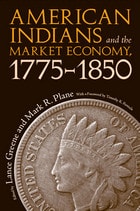
American Indians and the Market Economy, 1775-1850
Edited by Lance Greene and Mark R. Plane,with a foreword by Timothy K. Perttula
University of Alabama Press, 2011
The last quarter of the 18th century was a period of extensive political, economic, and social change in North America, as the continent-wide struggle between European superpowers waned. Native groups found themselves enmeshed in the market economy and new state forms of control, among other new threats to their cultural survival. Native populations throughout North America actively engaged the expanding marketplace in a variety of economic and social forms. These actions, often driven by and expressed through changes in material culture, were supported by a desire to maintain distinctive ethnic identities.
Illustrating the diversity of Native adaptations in an increasingly hostile and marginalized world, this volume is continental in scope—ranging from Connecticut to the Carolinas, and westward through Texas and Colorado. Calling on various theoretical perspectives, the authors provide nuanced perspectives on material culture use as a manipulation of the market economy. A thorough examination of artifacts used by Native Americans, whether of Euro-American or Native origin, this volume provides a clear view of the realities of the economic and social interactions between Native groups and the expanding Euro-American population and the engagement of these Native groups in determining their own fate.
American Unemployment
Past, Present, and FutureFrank Stricker
University of Illinois Press, 2020
- Workers do not normally choose to be unemployed.
- In our current system, persistent unemployment is not an aberration. It is much more common than full employment, and the outcome of elite policy choices.
- Labor surpluses propped up by flawed unemployment numbers have helped to keep real wages stagnant for more than forty years.
- Prior to the New Deal and the era of big government, laissez-faire policies repeatedly led to depressions with heavy, even catastrophic, job losses.
- Undercounting the unemployed sabotages the creation of government job programs that can lead to more high-paying jobs and full employment.

American Value
Migrants, Money, and Meaning in El Salvador and the United StatesDavid Pedersen
University of Chicago Press, 2012
American Women in Transition
Suzanne M. Bianchi
Russell Sage Foundation, 1986
An American Dilemma Revisited
Race Relations in a Changing WorldObie, Jr. Clayton
Russell Sage Foundation, 1996