Results by title
453 books match the query 'Economic policy' and 22 start with a
A Civil Economy
Transforming the Marketplace in the Twenty-First CenturySeveryn T. Bruyn
University of Michigan Press, 2000
A Critical History of Poverty Finance
Colonial Roots and Neoliberal FailuresNick
Pluto Press, 2022
A comprehensive historical tracing of how the contemporary finance-poverty-development nexus emerged.
'The definitive account of the history of poverty finance' - Susanne Soederberg
Finance, mobile, and digital technologies - or 'fintech' - are being heralded in the world of development by the likes of the IMF and World Bank as a silver bullet in the fight against poverty. But should we believe the hype?
A Critical History of Poverty Finance demonstrates how newfangled 'digital financial inclusion' efforts suffer from the same essential flaws as earlier iterations of neoliberal 'financial inclusion.' Relying on artificially created markets that simply aren't there among the world's most disadvantaged economic actors, they also reinforce existing patterns of inequality and uneven development, many of which date back to the colonial era.
Bernards offers an astute analysis of the current fintech fad, contextualized through a detailed colonial history of development finance, that ultimately reveals the neoliberal vision of poverty alleviation for the pipe dream it is.
A Feminist Reading of Debt
Luci Cavallero
Pluto Press, 2021
***Winner of an English PEN Award 2021***
In this sharp intervention, authors Lucí Cavallero and Verónica Gago defiantly develop a feminist understanding of debt, showing its impact on women and members of the LGBTQ+ community and examining the relationship between debt and social reproduction.
Exploring the link between financial activity and the rise of conservative forces in Latin America, the book demonstrates that debt is intimately linked to gendered violence and patriarchal notions of the family. Yet, rather than seeing these forces as insurmountable, the authors also show ways in which debt can be resisted, drawing on concrete experiences and practices from Latin America and around the world.
Featuring interviews with women in Argentina and Brazil, the book reveals the real-life impact of debt and how it falls mainly on the shoulders of women, from the household to the wider effects of national debt and austerity. However, through discussions around experiences of work, prisons, domestic labour, agriculture, family, abortion and housing, a narrative of resistance emerges.
Translated by Liz Mason-Deese.

A Feminist Reading of Debt
Luci Cavallero
Pluto Press, 2021
***Winner of an English PEN Award 2021***
"Of great value to those interested in the financialisation of everyday life and social reproduction."—LSE Review of Books
In this sharp evaluation and call to action, authors Lucí Cavallero and Verónica Gago defiantly develop a feminist understanding of debt, showing its impact on women and members of the LGBTQ+ community and examining the relationship between debt and social reproduction.
Exploring the link between financial activity and the rise of conservative forces in Latin America, the book demonstrates that debt is intimately linked to gendered violence and patriarchal notions of the family. Yet, rather than seeing these forces as insurmountable, the authors also show ways in which debt can be resisted, drawing on concrete experiences and practices from Latin America and around the world. Chapters include:
*Debt and Social Reproduction
*Debt as a “Counter-revolution” of Everyday Life
*The writing on the Body of Women
*Neither Victims not Entrepreneurs
*Feminist Insubordination and Fascist Neoliberalism
*The Patriarchy Has My Missing Contributions
*Hunger and Gender Mandates
*Us Against Debt
The authors state in their Introduction, “Our investigations and activism show that there is an urgent need to develop a specifically feminist analysis of finance. Here we do so by bringing together methodological elements, political hypotheses, and narratives of practices elaborated by the feminist movement that are challenging finance.”
Featuring interviews with women in Argentina and Brazil, the book reveals the real-life impact of debt and how it falls mainly on the shoulders of women, from the household to the wider effects of national debt and austerity. However, through discussions around experiences of work, prisons, domestic labor, agriculture, family, abortion and housing, a narrative of resistance emerges.
A Mandarin and the Making of Public Policy
ReflectionsTong Dow Ngiam
National University of Singapore Press, 2001

A Nation of Takers
America’s Entitlement EpidemicNicholas Eberstadt
Templeton Press, 2012
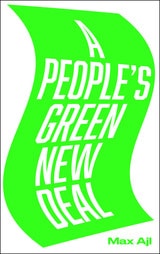
A People’s Green New Deal
Max Ajl
Pluto Press, 2021
'Hands-down the best book yet on the Green New Deal' - Jason Hickel
The idea of a Green New Deal was launched into popular consciousness by US Congressperson Alexandria Ocasio-Cortez in 2018. It has become a watchword in the current era of global climate crisis. But what - and for whom - is the Green New Deal?
In this concise and urgent book, Max Ajl provides an overview of the various mainstream Green New Deals. Critically engaging with their proponents, ideological underpinnings and limitations, he goes on to sketch out a radical alternative: a 'People's Green New Deal' committed to decommodification, working-class power, anti-imperialism and agro-ecology.
Ajl diagnoses the roots of the current socio-ecological crisis as emerging from a world-system dominated by the logics of capitalism and imperialism. Resolving this crisis, he argues, requires nothing less than an infrastructural and agricultural transformation in the Global North, and the industrial convergence between North and South. As the climate crisis deepens and the literature on the subject grows, A People's Green New Deal contributes a distinctive perspective to the debate.
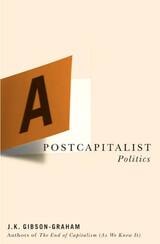
A Postcapitalist Politics
J. K. Gibson-Graham
University of Minnesota Press, 2006
A Postcapitalist Politics reveals a prolific landscape of economic diversity—one that is not exclusively or predominantly capitalist—and examines the challenges and successes of alternative economic interventions. Gibson-Graham bring together political economy, feminist poststructuralism, and economic activism to foreground the ethical decisions, as opposed to structural imperatives, that construct economic “development” pathways. Marshalling empirical evidence from local economic projects and action research in the United States, Australia, and Asia, they produce a distinctive political imaginary with three intersecting moments: a politics of language, of the subject, and of collective action. In the face of an almost universal sense of surrender to capitalist globalization, this book demonstrates that postcapitalist subjects, economies, and communities can be fostered. The authors describe a politics of possibility that can build different economies in place and over space. They urge us to confront the forces that stand in the way of economic experimentation and to explore different ways of moving from theory to action.
J. K. Gibson-Graham is the pen name of Katherine Gibson and Julie Graham, feminist economic geographers who work, respectively, at the Australian National University in Canberra and the University of Massachusetts Amherst.
A Report of the International Commission for Central American Recovery and Development
William L. Ascher and Ann Hubbard, editors
Duke University Press, 1989
The International Commission for Central American Recovery and Development (ICCARD) was formed to provide a thorough diagnosis and analysis of Central America’s problems and to draft a comprehensive long-term strategy to move the region from decline to development. In this report ICCARD—through forty-five international experts in economics, public policy, management, and development it assembled for this purpose—attempts to rise above rhetoric and simplistic remedies to focus on well-reasoned, thorough, and realistic approaches to economic and social development.
This volume reviews the unequal access of marginal groups to political and economic participation, the precarious situation of Central American financial institutions, the international debt situation, the prospects for regional political and economic integration, and other aspects of regional development. Each of these challenges is addressed by specific recommendations to the Central American governments, the governments of the industrialized nations, and international organizations.
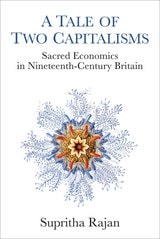
A Tale of Two Capitalisms
Sacred Economics in Nineteenth-Century BritainSupritha Rajan
University of Michigan Press, 2015
A Tolerance for Inequality
American Public Opinion and Economic PolicyAndrew J. Taylor
University of Chicago Press, 2025
A nuanced reassessment of US democratic responsiveness and public opinion on economic policy that explores the real reasons government does not do more to mitigate inequality.
Many believe that the United States’ growing economic inequality is the result of a political system that has been captured by wealthy elites. But is economic capture actually the problem? In A Tolerance for Inequality, Andrew J. Taylor examines this question from multiple angles, drawing on public opinion data and analyses of representation in Congress. Taylor finds that economic policy outcomes are more reflective of public opinion than the common wisdom suggests.
Broadly, less-affluent Americans’ policy preferences are not meaningfully different from the preferences of other Americans, and Washington is responsive to these preferences. Although politicians are more affluent, on average, than most Americans, this does not prevent them from representing the economic views of their poorer constituents. Today’s Democratic Party is more interested in regulation and supplying public goods than redistributing wealth downwards, and political reforms designed to provide more equal outcomes are largely misguided. In short, Americans get the kind of economy they at least say they want.
Accidental Occidental
Economics and Culture of Transition in Mitteleuropa, the Baltic and the Balkan AreaLajos Bokros
Central European University Press, 2013
Administrative Burden
Policymaking by Other MeansPamela Herd
Russell Sage Foundation, 2018
Winner of the 2020 Outstanding Book Award Presented by the Public and Nonprofit Section of the National Academy of Management
Winner of the 2019 Louis Brownlow Book Award from the National Academy of Public Administration
Through in-depth case studies of federal programs and controversial legislation, the authors show that administrative burdens are the nuts-and-bolts of policy design. Regarding controversial issues such as voter enfranchisement or abortion rights, lawmakers often use administrative burdens to limit access to rights or services they oppose. For instance, legislators have implemented administrative burdens such as complicated registration requirements and strict voter-identification laws to suppress turnout of African American voters. Similarly, the right to an abortion is legally protected, but many states require women seeking abortions to comply with burdens such as mandatory waiting periods, ultrasounds, and scripted counseling. As Herd and Moynihan demonstrate, administrative burdens often disproportionately affect the disadvantaged who lack the resources to deal with the financial and psychological costs of navigating these obstacles.
However, policymakers have sometimes reduced administrative burdens or shifted them away from citizens and onto the government. One example is Social Security, which early administrators of the program implemented in the 1930s with the goal of minimizing burdens for beneficiaries. As a result, the take-up rate is about 100 percent because the Social Security Administration keeps track of peoples’ earnings for them, automatically calculates benefits and eligibility, and simply requires an easy online enrollment or visiting one of 1,200 field offices. Making more programs and public services operate this efficiently, the authors argue, requires adoption of a nonpartisan, evidence-based metric for determining when and how to institute administrative burdens, with a bias toward reducing them. By ensuring that the public’s interaction with government is no more onerous than it need be, policymakers and administrators can reduce inequality, boost civic engagement, and build an efficient state that works for all citizens.
African Miracle, African Mirage
Transnational Politics and the Paradox of Modernization in Ivory CoastAbou B. Bamba
Ohio University Press, 2016
Throughout the 1960s and 1970s, Ivory Coast was touted as an African miracle, a poster child for modernization and the ways that Western aid and multinational corporations would develop the continent. At the same time, Marxist scholars—most notably Samir Amin—described the capitalist activity in Ivory Coast as empty, unsustainable, and incapable of bringing real change to the lives of ordinary people. To some extent, Amin’s criticisms were validated when, in the 1980s, the Ivorian economy collapsed.
In African Miracle, African Mirage, Abou B. Bamba incorporates economics, political science, and history to craft a bold, transnational study of the development practices and intersecting colonial cultures that continue to shape Ivory Coast today. He considers French, American, and Ivorian development discourses in examining the roles of hydroelectric projects and the sugar, coffee, and cocoa industries in the country’s boom and bust. In so doing, he brings the agency of Ivorians themselves to the fore in a way not often seen in histories of development. Ultimately, he concludes that the “maldevelopment” evident by the mid-1970s had less to do with the Ivory Coast’s “insufficiently modern” citizens than with the conflicting missions of French and American interests within the context of an ever-globalizing world.

After Neoliberalism
What Next for Latin America?Lance Taylor, Editor
University of Michigan Press, 1999
This book offers an intellectual and historical background for these policy choices, specifically in Argentina, Brazil, Chile, Colombia, Mexico, and Peru. The contributors detail the structural reform and economic policies in Latin America and discuss the various and often contradictory effects neoliberalism, such as fluctuating growth rates and saving-investment balances, worsened corruption, growth of exports, falling wages, and rising unemployment. In addition, each case study forecasts the effects of neoliberal policies on future growth and income distribution in the respective countries. Finally, it offers policy alternatives to neoliberalism.
The essays in this volume are: an introduction by Lance Taylor; "The Argentine Experience with Stabilization and Structural Reform," by José María Fanelli and Roberto Frenkel; "Opening, Stabilization, and Macroeconomic Sustainability in Brazil," by Edward Amadeo, "An Ongoing Structural Transformation: The Colombian Economy, 1986-96," by José Antonio Ocampo; "Economic Reforms, Stabilization Policies, and the 'Mexican Disease,'" by Nora Claudia Lustig and Jaime Ros; and "Structural Reforms and Macroeconomic Policy in Peru: 1990-96," by Oscar Dancourt.
Lance Taylor is the Arnhold Professor of International Cooperation and Development, New School for Social Research.
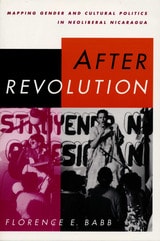
After Revolution
Mapping Gender and Cultural Politics in Neoliberal NicaraguaBy Florence E. Babb
University of Texas Press, 2001
Nicaragua's Sandinista revolution (1979-1990) initiated a broad program of social transformation to improve the situation of the working class and poor, women, and other non-elite groups through agrarian reform, restructured urban employment, and wide access to health care, education, and social services. This book explores how Nicaragua's least powerful citizens have fared in the years since the Sandinista revolution, as neoliberal governments have rolled back these state-supported reforms and introduced measures to promote the development of a market-driven economy.
Drawing on ethnographic research conducted throughout the 1990s, Florence Babb describes the negative consequences that have followed the return to a capitalist path, especially for women and low-income citizens. In addition, she charts the growth of women's and other social movements (neighborhood, lesbian and gay, indigenous, youth, peace, and environmental) that have taken advantage of new openings for political mobilization. Her ethnographic portraits of a low-income barrio and of women's craft cooperatives powerfully link local, cultural responses to national and global processes.

Aging and Old Age
Richard A. Posner
University of Chicago Press, 1995
Aging and Old Age offers fresh insight into a wide range of social and political issues relating to the elderly, such as health care, crime, social security, and discrimination. From the dread of death to the inordinate law-abidingness of the old, from their loquacity to their penny-pinching, Posner paints a surprisingly rich, revealing, and unsentimental portrait of the millions of elderly people in the United States. He explores issues such as age discrimination in employment, creativity and leadership as functions of age, and the changing social status of the elderly. Why are old people, presumably with less to lose, more unwilling to take risks than young people? Why don't the elderly in the United States command the respect and affection they once did and still do in other countries? How does aging affect driving and criminal records? And how does aging relate to creativity across different careers?
Aid to Africa
So Much To Do, So Little DoneCarol Lancaster
University of Chicago Press, 1999
This balanced but tough-minded analysis does not reject the potential usefulness of foreign aid but does offer recommendations for fundamental changes in how governments and multilateral aid agencies can operate more effectively.
Alaska Politics and Public Policy
The Dynamics of Beliefs, Institutions, Personalities, and PowerEdited by Clive S. Thomas, with Laura Savatgy and Kristina Klimovich
University of Alaska Press, 2016
This book, the most comprehensive on the subject to date, focuses on the question of how beliefs, institutions, personalities, and power interact to shape Alaska politics and public policy. Drawing on these interactions, the contributors explain how and why certain issues get dealt with successfully and others unsuccessfully, and why some issues are taken up quickly while others are not addressed at all. This comprehensive guide to the political climate of Alaska will be essential to anyone studying the politics of America’s largest—and in some ways most unusual—state.
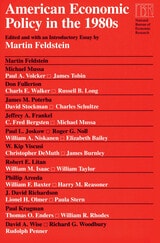
American Economic Policy in the 1980s
Edited by Martin Feldstein
University of Chicago Press, 1994
In his introduction, Martin Feldstein provides compelling analysis of policies with which he was closely involved as chairman of the Council of Economic Advisers during the Reagan administration: monetary and exchange rate policy, tax policy, and budget issues. Other leading economists and policymakers examine a variety of domestic and international issues, including monetary and exchange rate policy, regulation and antitrust, as well as trade, tax, and budget policies.
The contributors to this volume are Alberto Alesina, Phillip Areeda, Elizabeth Bailey, William F. Baxter, C. Fred Bergsten, James Burnley, Geoffrey Carliner, Christopher DeMuth, Douglas W. Elmendorf, Thomas O. Enders, Martin Feldstein, Jeffrey A. Frankel, Don Fullerton, William M. Isaac, Paul L Joskow, Paul Krugman, Robert E. Litan, Russell B. Long, Michael Mussa, William A. Niskanen, Roger G. Noll, Lionel H. Olmer, Rudolph Penner, William Poole, James M. Poterba, Harry M. Reasoner, William R. Rhodes, J. David Richardson, Charles Schultze, Paula Stern, David Stockman, William Taylor, James Tobin, W. Kip Viscusi, Paul A. Volcker, Charles E. Walker, David A. Wise, and Richard G. Woodbury.
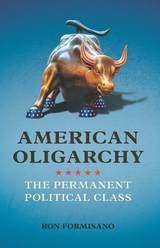
American Oligarchy
The Permanent Political ClassRon Formisano
University of Illinois Press, 2017
Austerity Ireland
The Failure of Irish CapitalismKieran Allen and Brian O'Boyle
Pluto Press, 2013
In Austerity Ireland, Kieran Allen challenges this official image and argues that the Irish state's response to the crash has primarily been designed to protect economic privilege. The resulting austerity has been a failure and is likely to produce a decade of hardship.
The book offers a deeply informed and penetrating diagnosis of Ireland's current socio-economic and political malaise, suggesting that a political earthquake is underway which may benefit the left. Austerity Ireland is essential reading for all students of Irish politics and economics, as well as those interested in the politics of austerity and the eurozone crisis.