Results by title

13 books match the query 'Humanists'
cover of A Thomas More Source Book

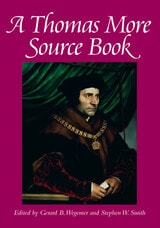
A Thomas More Source Book

Gerard B. Wegemer

Catholic University of America Press, 2004
This Source Book brings together classic texts by and about Thomas More--poet, scholar, statesman, family man, educational reformer, philosopher, historian, and saint
[more]
cover of Collected Letters of a Renaissance Feminist

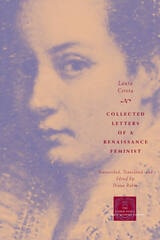
Collected Letters of a Renaissance Feminist

Laura Cereta

University of Chicago Press, 1997

Renaissance writer Laura Cereta (1469–1499) presents feminist issues in a predominantly male venue—the humanist autobiography in the form of personal letters. Cereta's works circulated widely in Italy during the early modern era, but her complete letters have never before been published in English. In her public lectures and essays, Cereta explores the history of women's contributions to the intellectual and political life of Europe. She argues against the slavery of women in marriage and for the rights of women to higher education, the same issues that have occupied feminist thinkers of later centuries.

Yet these letters also furnish a detailed portrait of an early modern woman’s private experience, for Cereta addressed many letters to a close circle of family and friends, discussing highly personal concerns such as her difficult relationships with her mother and her husband. Taken together, these letters are a testament both to an individual woman and to enduring feminist concerns.
[more]
cover of Commerce with the Classics: Ancient Books and Renaissance Readers

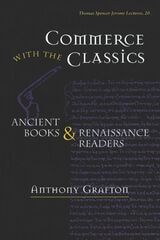
Commerce with the Classics

Ancient Books and Renaissance Readers

Anthony Grafton

University of Michigan Press, 1997
The style of reading in Renaissance Europe, as seen in the margins of books and in the texts of Renaissance intellectuals themselves, is deftly charted in this welcome volume from Anthony Grafton. Growing out of the Thomas Spencer Jerome Lectures that Anthony Grafton gave at the University of Michigan in 1992, this book describes the interaction between books and readers in the Renaissance, as seen in four major case studies.Humanists Alberti, Pico, Budé, and Kepler, all major figures of their time and now major figures in intellectual history, are examined in the light of their distinctive ways of reading. Investigating a period of two centuries, Grafton vividly portrays the ways in which book/scholar interactions--and the established traditions that were reflected in these interactions--were part of and helped shape the subjects' Humanistic philosophy. The book also indicates how these traditions have implications for the modern literary scene.Commerce with the Classics: Ancient Books and Renaissance Readers illustrates the immense variety of the humanist readers of the Renaissance. Grafton describes life in the Renaissance library, how the act of reading was shaped by the physical environment, and various styles of reading during the time. A strong sense of what skilled reading was like in the past is built up through anecdotes, philological analysis, and documents from a wide variety of sources, many of them unpublished.This volume will be of special interest to Renaissance and intellectual historians, students of Renaissance literature, and classicists who concern themselves with the afterlife of their texts.Anthony Grafton is Henry Putnam University Professor of History, Princeton University.
[more]
cover of Complete Writings: Letterbook, Dialogue on Adam and Eve, Orations

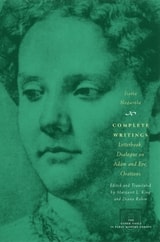
Complete Writings

Letterbook, Dialogue on Adam and Eve, Orations

Isotta Nogarola

University of Chicago Press, 2004

Renowned in her day for her scholarship and eloquence, Isotta Nogarola (1418-66) remained one of the most famous women of the Italian Renaissance for centuries after her death. And because she was one of the first women to carve out a place for herself in the male-dominated republic of letters, Nogarola served as a crucial role model for generations of aspiring female artists and writers.

This volume presents English translations of all of Nogarola's extant works and highlights just how daring and original her convictions were. In her letters and orations, Nogarola elegantly synthesized Greco-Roman thought with biblical teachings. And striding across the stage in public, she lectured the Veronese citizenry on everything from history and religion to politics and morality. But the most influential of Nogarola's works was a performance piece, Dialogue on Adam and Eve, in which she discussed the relative sinfulness of Adam and Eve—thereby opening up a centuries-long debate in Europe on gender and the nature of woman and establishing herself as an important figure in Western intellectual history. This book will be a must read for teachers and students of Women's Studies as well as of Renaissance literature and history.
[more]
cover of Dreamland of Humanists: Warburg, Cassirer, Panofsky, and the Hamburg School

Dreamland of Humanists

Warburg, Cassirer, Panofsky, and the Hamburg School

Emily J. Levine

University of Chicago Press, 2013

Deemed by Heinrich Heine a city of merchants where poets go to die, Hamburg was an improbable setting for a major intellectual movement. Yet it was there, at the end of World War I, at a new university in this commercial center, that a trio of twentieth-century pioneers in the humanities emerged. Working side by side, Aby Warburg, Ernst Cassirer, and Erwin Panofsky developed new avenues in art history, cultural history, and philosophy, changing the course of cultural and intellectual history in Weimar Germany and throughout the world.

In Dreamland of Humanists, Emily J. Levine considers not just these men, but the historical significance of the time and place where their ideas took form. Shedding light on the origins of their work on the Renaissance and the Enlightenment, Levine clarifies the social, political, and economic pressures faced by German-Jewish scholars on the periphery of Germany’s intellectual world. By examining the role that context plays in our analysis of ideas, Levine confirms that great ideas—like great intellectuals—must come from somewhere.
 
[more]
cover of Latin Classics in Medieval Hungary: Eleventh Century

Latin Classics in Medieval Hungary

Eleventh Century

Elod Nemerkényi

Central European University Press, 2004
The first comprehensive study on the influence of Latin classical texts and traditions in medieval Hungary based on philological and historical analysis of eleventh century sources. The author proves that the Latin classics had a stronger impact on the formation of Latin literacy in medieval Hungary than it has been acknowledges before. The four chapters of the book (The Cathedral School, The Admonitions of King Saint Stephen of Hungary, The Deliberato of Bishop Saint Gerard of Csanad, The Monastic School) provide important contributions to the philological study of Medieval Latin and the classical tradition in medieval Central Europe.
[more]
cover of Letters and Orations

Letters and Orations

Cassandra Fedele

University of Chicago Press, 2000
By the end of the fifteenth century, Cassandra Fedele (1465-1558), a learned middle-class woman of Venice, was arguably the most famous woman writer and scholar in Europe. A cultural icon in her own time, she regularly corresponded with the king of France, lords of Milan and Naples, the Borgia pope Alexander VI, and even maintained a ten-year epistolary exchange with Queen Isabella and King Ferdinand of Spain that resulted in an invitation for her to join their court. Fedele's letters reveal the central, mediating role she occupied in a community of scholars otherwise inaccessible to women. Her unique admittance into this community is also highlighted by her presence as the first independent woman writer in Italy to speak publicly and, more importantly, the first to address philosophical, political, and moral issues in her own voice. Her three public orations and almost all of her letters, translated into English, are presented here for the first time.
[more]
cover of Lucian and the Latins: Humor and Humanism in the Early Renaissance

Lucian and the Latins

Humor and Humanism in the Early Renaissance

David Marsh

University of Michigan Press, 1998

The works of the second-century Greek satirist Lucian enjoyed a tremendous vogue in the early Renaissance. His Greek prose furnished one of the first texts in the Florentine classroom around 1400, and it aroused as much interest as Plato. At first praised as an eloquent rhetorician, Lucian was soon appreciated for his irreverent wit, which inspired new satirical and paradoxical currents in Renaissance literature.
Until now, no study has attempted to connect the Latin translators and imitators of Lucian with his wider European influence. In Lucian and the Latins, David Marsh describes how Renaissance authors rediscovered the comic writings of Lucian. He traces how Lucianic themes and structures made an essential contribution to European literature beginning with a survey of Latin translations and imitations, which gave new direction to European letters in the fifteenth and sixteenth centuries. The Lucianic dialogues of the dead and dialogues of the gods were immensely popular, despite the religious backlash of the sixteenth century. The paradoxical encomium, represented by Lucian's "The Fly" and "The Parasite," inspired so-called serious humanists like Leonardo Bruni and Guarino of Verona. Lucian's "True Story" initiated the genre of the fantastic journey, which enjoyed considerable popularity during the Renaissance age of discovery. Humanist descendants of this work include Thomas More's Utopia and much of Rabelais' Pantagruel.
Lucian and the Latins will attract readers interested in a wide variety of subjects: the classical tradition, the early Italian Renaissance, the origins of modern European literature, and the uses of humor and satire as instruments of cultural critique.
David Marsh is Professor of Italian, Rutgers University.
[more]
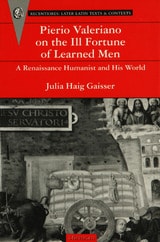
cover of Pierio Valeriano on the Ill Fortune of Learned Men: A Renaissance Humanist and His World

Pierio Valeriano on the Ill Fortune of Learned Men

A Renaissance Humanist and His World

Julia Haig Gaisser

University of Michigan Press, 1999
Julia Haig Gaisser provides us with a highly readable translation of and context for the interesting and little known sixteenth-century dialogue, De Litteratorum Infelicitate (On the Ill-Fortune of Learned Men) by Pierio Valeriano. The dialogue between several humanists takes place during Lent, 1529, less than two years after the Sack of Rome and just before the stirrings of the Counter Reformation. These humanists, including Valeriano, are gathered together discussing the lives and unhappy fortunes of humanists from 1470 to 1540. The stories are interesting not only for the direct historical information they provide, but also because they are colored by the knowledge that the glory days of humanism have passed, and the speakers are memorializing a lost era. This first English translation of Valeriano's work contains three sections: an introduction on Valeriano, Roman humanism, and the dialogue; the Latin text and facing English translation with historical notes; and biographies of the humanists involved. Gaisser's delightful book will satisfy all those interested in the world of the Roman humanist, for it elegantly provides a roster of major and minor figures, and the individual stories and characters are shown to be threads of a whole social and intellectual fabric.
[more]
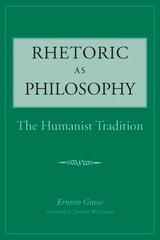
cover of Rhetoric as Philosophy: The Humanist Tradition

Rhetoric as Philosophy

The Humanist Tradition

Ernesto Grassi. Foreword by Timothy W. Crusius

Southern Illinois University Press, 2001

Originally published in English in 1980, Rhetoric as Philosophy has been out of print for some time. The reviews of that English edition attest to the importance of Ernesto Grassi’s work.

By going back to the Italian humanist tradition and aspects of earlier Greek and Latin thought, Ernesto Grassi develops a conception of rhetoric as the basis of philosophy. Grassi explores the sense in which the first principles of rational thought come from the metaphorical power of the word. He finds the basis for his conception in the last great thinker of the Italian humanist tradition, Giambattista Vico (1668–1744). He concentrates on Vico’s understanding of imagination and the sense of human ingenuity contained in metaphor. For Grassi, rhetorical activity is the essence and inner life of thought when connected to the metaphorical power of the word.
[more]
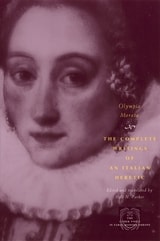
cover of The Complete Writings of an Italian Heretic

The Complete Writings of an Italian Heretic

Olympia Morata

University of Chicago Press, 2003

Winner of the 2004 Josephine Roberts Edition Prize from the Society for the Study of Early Modern Women.

A brilliant scholar and one of the finest writers of her day, Olympia Morata (1526-1555) was attacked by some as a "Calvinist Amazon" but praised by others as an inspiration to all learned women. This book publishes, for the first time, all her known writings—orations, dialogues, letters, and poems—in an accessible English translation.

Raised in the court of Ferrara in Italy, Morata was educated alongside the daughters of the nobility. As a youth she gave public lectures on Cicero, wrote commentaries on Homer, and composed poems, dialogues, and orations in both Latin and Greek. She also became a prominent Protestant evangelical, studying the Bible extensively and corresponding with many of the leading theologians of the Reformation. After fleeing to Germany in search of religious freedom, Morata tutored students in Greek and composed what many at the time felt were her finest works—a series of translations of the Psalms into Greek hexameters and sapphics.

Feminists and historians will welcome these collected writings from one of the most important female humanists of the sixteenth century.
[more]
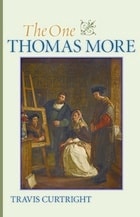
cover of The One Thomas More

The One Thomas More

Travis Curtright

Catholic University of America Press, 2012
The One Thomas More carefully studies the central humanist and polemical texts written by More to illustrate a coherent development of thought.
[more]
cover of The Spanish Disquiet: The Biblical Natural Philosophy of Benito Arias Montano

The Spanish Disquiet

The Biblical Natural Philosophy of Benito Arias Montano

María M. Portuondo

University of Chicago Press, 2019

In this book, historian María M. Portuondo takes us to sixteenth-century Spain, where she identifies a community of natural philosophers and biblical scholars. They shared what she calls the “Spanish Disquiet”—a preoccupation with the perceived shortcomings of prevailing natural philosophies and empirical approaches when it came to explaining the natural world.
 
Foremost among them was Benito Arias Montano—Spain’s most prominent biblical scholar and exegete of the sixteenth century. He was also a widely read member of the European intellectual community, and his motivation to reform natural philosophy shows that the Spanish Disquiet was a local manifestation of greater concerns about Aristotelian natural philosophy that were overtaking Europe on the eve of the Scientific Revolution. His approach to the study of nature framed the natural world as unfolding from a series of events described in the Book of Genesis, ultimately resulting in a new metaphysics, cosmology, physics, and even a natural history of the world. By bringing Arias Montano’s intellectual and personal biography into conversation with broader themes that inform histories of science of the era, The Spanish Disquiet ensures an appreciation of the variety and richness of Arias Montano’s thought and his influence on early modern science.
[more]