Results by title
681 books match the query 'English language' and 61 start with a

A Barrel of Monkeys
A Compendium of Collective Nouns for AnimalsCompiled by Samuel Fanous
Bodleian Library Publishing, 2015
A Barrel of Monkeys brings together more than one hundred collective nouns for animals, from a bloat of hippopotamuses to a caravan of camels, a tower of giraffes, and a leap of leopards. The rivalry between male rhinoceroses becomes especially apt when the rowdy ungulates are characterized as a crash of rhinos. An ambush of tigers is an apt characterization of the skillful hunters that silently stalk their prey. A blend of wordplay, puns, and alliteration, some of the terms collected here are now commonplace, like a pride of lions. Others aren’t heard much these days, but many—like a dazzle of zebras or a prickle of porcupines—richly deserve a comeback.
With charming illustrations by the eighteenth-century artist and naturalist Thomas Bewick, A Barrel of Monkeys is the perfect follow-up to A Conspiracy of Ravens, the Bodleian Library’s book of bird words. Not even a crash of rhinos can stop readers from smiling at this second collection.
A Casebook for Second Language Teacher Education
Reflecting on the Language ClassroomAmy B. Gooden and Maria N. Zlateva
University of Michigan Press, 2018
The cases represent a range of classroom contexts: K–12 ESL/sheltered English immersion, modern foreign language, and post-secondary EAP; private, charter, and public schools; and urban and suburban settings. The book is ideally suited to College/School of Education and MA TESOL courses but will also be useful in professional development workshops for all types of language teachers.
A Communion of Friendship
Literacy, Spiritual Practice, and Women in RecoveryBeth Daniell
Southern Illinois University Press, 2003
Drawing on interviews and an array of scholarly work, Beth Daniell maps out the relations of literacy and spirituality in A Communion of Friendship: Literacy, Spiritual Practice, and Women in Recovery. Daniell tells the story of a group of women in “Mountain City” who use reading and writing in their search for spiritual growth. Diverse in socioeconomic status, the Mountain City women are, or have been, married to alcoholics. In Al-Anon, they use literacy to practice the Twelve Steps of Alcoholics Anonymous in order to find spiritual solutions to their problems.
In addition, Daniell demonstrates that in the lives of these women, reading, writing, and speaking are intertwined, embedded in one another in rich and complex ways. For the women, private literate practice is of the utmost importance because it aids the development and empowerment of the self. These women engage in literate practices in order to grow spiritually and emotionally, to live more self-aware lives, to attain personal power, to find or make meaning for themselves, and to create community. By looking at the changes in the women’s reading, Daniell shows that Al-Anon doctrine, particularly its oral instruction, serves as an interpretive tool. This discussion points out the subtle but profound transformations in these women’s lives in order to call for an inclusive notion of politics.
Foregrounding the women’s voices, A Communion of Friendship addresses a number of issues important in composition studies and reading instruction. This study examines the meaning of literacy within one specific community, with implications both for pedagogy and for empirical research in composition inside and outside the academy.
A Grammar and Dictionary of the Timucua Language
Julian Granberry
University of Alabama Press, 1993
Preserving the voice of a vanished people through language, history, and scholarship.
Taken from the surviving contemporary documentary sources, Julian Granberry's volume describes the grammar and lexicon for the extinct 17th-century Timucua language of Central and North Florida and traces the origins of the 17th-century Timucua speakers and their language. Originally privately published in 1987, with limited circulation, this is the only available publication on the Timucuan language. It provides full grammatical analysis and complete lexical data, and it synthesizes both linguistic and archaeological data in order to provide a coherent picture of the Timucua peoples. Granberry traces the probable historical origins of Timucua speakers to a central Amazonian homeland at approximately 2,500 B.C. and proposes that Timucua speakers were responsible for introducing ceramic wares into North America.
A History of Free Verse
Chris Beyers
University of Arkansas Press, 2001
A Minefield of Dreams
Triumphs and Travails of Independent Writing ProgramsJustin Everett
University Press of Colorado, 2017
A Pedagogy of Possibility
Bakhtinian Perspectives on Composition StudiesKay Halasek
Southern Illinois University Press, 1999
In a book that itself exemplifies the dialogic scholarship it proposes, Kay Halasek reconceives composition studies from a Bakhtinian perspective, focusing on both the discipline's theoretical assumptions and its pedagogies.
Framing her discussions at every level of the discipline—theoretical, historical, pedagogical—Halasek provides an overview of portions of the Bakhtinian canon relevant to composition studies, explores the implications of Mikhail Bakhtin's work in the teaching of writing and for current debates about the role of theory in composition studies, and provides a model of scholarship that strives to maintain dialogic balance between practice and theory, between composition studies and Bakhtinian thought.
Halasek's study ranges broadly across the field of composition, painting in wide strokes a new picture of the discipline, focusing on the finer details of the rhetorical situation, and teasing out the implications of Bakhtinian thought for classroom practice by examining the nature of critical reading and writing, the efficacy and ethics of academic discourse, student resistance, and critical and conflict pedagogy. The book ends by setting out a pedagogy of possibility, what Halasek terms elsewhere a "post-critical pedagogy" that redefines and redirects current discussions of home versus academic literacies and discourses.
A Practical Guide to Assessing English Language Learners
Christine Coombe, Keith Folse, and Nancy Hubley
University of Michigan Press, 2007
Tips to improve students’ test-taking strategies are offered, and each chapter ends with a helpful list of Ten Things to Remember, as well as informative case studies featuring two teachers and their assessment decisions. Incorporating its own principles, A Practical Guide to Assessing English Language Learners opens with a short quiz for the reader called Are You Testwise? that quickly determines how each teacher will benefit from this indispensable guide.

A Rhetoric of Doing
Essays on Written Discourse in Honor of James L. KinneavyEdited by Stephen P. Witte, Neil Nakadate, and Roger D. Cherry
Southern Illinois University Press, 1992
Concerned with both the nature and the practice of discourse, the eighteen essays collected here treat rhetoric as a dynamic enterprise of inquiry, exploration, and application, and in doing so reflect James L. Kinneavy’s firm belief in the vital relationship between theory and practice, his commitment to a spirit of accommodation and assimilation that promotes the development of ever more powerful theories and ever more useful practices.
A thorough introduction provides the reader with clear summaries of the essays by leading-edge theorists, researchers, and teachers of writing and rhetoric. A "field context" for the ideas presented in this book is provided through the division of the various chapters into four major sections that focus on classical rhetoric and rhetorical theory in historical contexts; on dimensions of discourse theory, aspects of discourse communities, and the sorts of knowledge people access and use in producing written texts; on writing in school-related contexts; and on several dimensions of nonacademic writing. A fifth section contains a bibliographic survey and an appreciation of James Kinneavy’s work. The exceptional range of these essays makes A Rhetoric of Doing an ecumenical examination of the current state of mind in rhetoric and written communication, a survey and description of what discourse and those in the field of discourse are, in fact, doing.
A Shared History
Writing in the High School, College, and University, 1856-1886Amy J. Lueck
Southern Illinois University Press, 2020
Lueck explores Civil War- and Reconstruction-era challenges to the University of Louisville and nearby local high schools, their curricular transformations, and their fate in regard to national education reform efforts. These institutions reflect many of the educational trends and developments of the day: college and university building, the emergence of English education as the dominant curriculum for higher learning, student-centered pedagogies and educational theories, the development and transformation of normal schools, the introduction of manual education and its mutation into vocational education, and the extension of advanced education to women, African American, and working-class students.
Lueck demonstrates a complex genealogy of interconnections among high schools, colleges, and universities that demands we rethink our categories and standards of assessment and our field’s history. A shift in our historical narrative would promote a move away from an emphasis on the preparation, transition, and movement of student writers from high school to college or university and instead allow a greater focus on the fostering of rich rhetorical practices and pedagogies at all educational levels. As the definition of college-level writing becomes increasingly contested once again, Lueck invites a reassessment of the discipline’s understanding of contemporary programs based in high schools like dual-credit and concurrent enrollment.
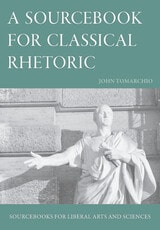
A Sourcebook for Classical Rhetoric
John Tomarchio
Catholic University of America Press, 2023
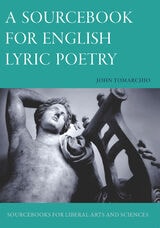
A Sourcebook for English Lyric Poetry
John Tomarchio
Catholic University of America Press, 2023

A Tallgrass Prairie Alphabet
Claudia McGehee
University of Iowa Press, 2004
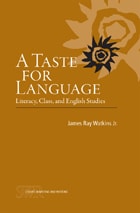
A Taste for Language
Literacy, Class, and English StudiesJames Ray Watkins Jr.
Southern Illinois University Press, 2009
“This is a book about the American Dream as it has become embodied in the university in general and in the English department in particular,” writes James Ray Watkins at the start of A Taste for Language: Literacy, Class, and English Studies. In it, Watkins argues that contemporary economic and political challenges require a clear understanding of the identity of English studies, making elementary questions about literacy, language, literature, education, and class once again imperative.
A personal history of university-level English studies in the twentieth century, A Taste for Language combines biography, autobiography, and critical analysis to explore the central role of freshman English and literary studies in the creation and maintenance of the middle class. It tells a multi-generational story of the author and his father, intertwined with close reading of texts and historical analysis. The story moves from depression-era Mississippi, where the author's father was born, to a contemporary English department, where the author now teaches.
Watkins looks at not only textbooks, scholars, and the academy but also at families and other social institutions. A rich combination of biography, autobiography, and critical analysis, A Taste for Language questions what purpose an education in English language and literature serves in the lives of the educated in a class-based society and whether English studies has become wholly irrelevant in the twenty-first century.
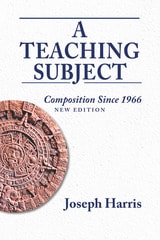
A Teaching Subject
Composition Since 1966, New EditionJoseph Harris
Utah State University Press, 2012
In this classic text, Joseph Harris traces the evolution of college writing instruction since the Dartmouth Seminar of 1966. A Teaching Subject offers a brilliant interpretive history of the first decades during which writing studies came to be imagined as a discipline separable from its partners in English studies. Postscripts to each chapter in this new edition bring the history of composition up to the present.
Reviewing the development of the field through five key ideas, Harris unfolds a set of issues and tensions that continue to shape the teaching of writing today. Ultimately, he builds a case, now deeply influential in its own right, that composition defines itself through its interest and investment in the literacy work that students and teachers do together. Unique among English studies fields, composition is, Harris contends, a teaching subject.
A Writer Reforms (the Teaching of) Writing
Donald Murray and the Writing Process Movement, 1963–1987Michael J. Michaud
University Press of Colorado, 2024
A Writer's Guide to Mindful Reading
Ellen C. Carillo
University Press of Colorado, 2017

Academic Listening Strategies
A Guide to Understanding LecturesJulia Salehzadeh
University of Michigan Press, 2005
Unit 1 begins with a diagnostic exercise to help students identify areas of lecture comprehension that may be most difficult for them. In Unit 2, students are introduced to some key bottom-up features (sound or word-level patterns) in everyday speech and given helpful strategies to begin unscrambling the stream of language that they will encounter in lectures. Unit 3 gives students a detailed look at common patterns in lectures and presents additional strategies that will help them to understand definitions, opinions, and jokes.
By the end of the book, students will gain the skills necessary to:
" Prepare for lectures
" Listen more effectively during lectures
" Recognize what information may have been missed
" Compensate for missed information with methods other than reading and rereading the assigned texts.
The book is also sold packaged with the DVDs. The DVDs are NOT sold separately.
Academic Writing for Graduate Students, 3rd Edition
Essential Tasks and SkillsJohn M. Swales & Christine B. Feak
University of Michigan Press, 2012
Among the many changes in the third edition:
*newer, longer, and more authentic texts and examples
*greater discipline variety in texts (added texts from hard sciences and engineering)
*more in-depth treatment of research articles
*greater emphasis on vocabulary issues
*revised flow-of-ideas section
*additional tasks that require students to do their own research
*more corpus-informed content
*binding that allows the book to lay flat when open.
The Commentary (teacher's notes and key) (978-0-472-03506-9) has been revised expanded.
Across Property Lines
Textual Ownership in Writing GroupsCandace Spigelman
Southern Illinois University Press, 2000
Candace Spigelman investigates the dynamics of ownership in small group writing workshops, basing her findings on case studies involving two groups: a five-member creative writing group meeting monthly at a local Philadelphia coffee bar and a four-member college-level writing group meeting in their composition classroom. She explores the relationship between particular notions of intellectual property within each group as well as the effectiveness of writing groups that embrace these notions. Addressing the negotiations between the public and private domains of writing within these groups, she discovers that for both the committed writers and the novices, “values associated with textual ownership play a crucial role in writing group performance.”
Spigelman discusses textual ownership, intellectual property, and writing group processes and then reviews theories relating to authorship and knowledge making. After introducing the participants in each group, discussing their texts, and describing their workshop sessions, she examines the writers’ avowed and implied beliefs about exchanging ideas and protecting individual property rights.
Spigelman stresses the necessary tension between individual and social aspects of writing practices: She argues for the need to foster more collaborative activity among student writers by replicating the processes of writers working in nonacademic settings but also contends that all writers must be allowed to imagine their individual agency and authority as they compose.
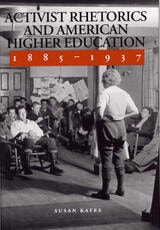
Activist Rhetorics and American Higher Education, 1885-1937
Susan Kates
Southern Illinois University Press, 2000
In this study of the history of rhetoric education, Susan Kates focuses on the writing and speaking instruction developed at three academic institutions founded to serve three groups of students most often excluded from traditional institutions of higher education in late-nineteenth-and early-twentieth-century America: white middle-class women, African Americans, and members of the working class.
Kates provides a detailed look at the work of those students and teachers ostracized from rhetorical study at traditional colleges and universities. She explores the pedagogies of educators Mary Augusta Jordan of Smith College in Northhampton, Massachusetts; Hallie Quinn Brown of Wilberforce University in Wilberforce, Ohio; and Josephine Colby, Helen Norton, and Louise Budenz of Brookwood Labor College in Katonah, New York.
These teachers sought to enact forms of writing and speaking instruction incorporating social and political concerns in the very essence of their pedagogies. They designed rhetoric courses characterized by three important pedagogical features: a profound respect for and awareness of the relationship between language and identity and a desire to integrate this awareness into the curriculum; politicized writing and speaking assignments designed to help students interrogate their marginalized standing within the larger culture in terms of their gender, race, or social class; and an emphasis on service and social responsibility.
Adam Smith
The Rhetoric of ProprietyStephen J. McKenna
Southern Illinois University Press, 2006
Adapting VALUEs
Tracing the Life of a Rubric through Institutional EthnographyJennifer Grouling
University Press of Colorado, 2023
Adapting the Past to Reimagine Possible Futures
Celebrating and Critiquing WAC at 50Megan J. Kelly
University Press of Colorado, 2024
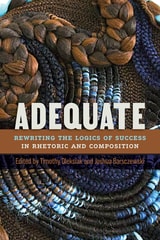
Adequate
Rewriting the Logics of Success in Rhetoric and CompositionTimothy Oleksiak
Utah State University Press, 2025
Fourteen essays from established scholars, ranging from deeply personal, to darkly humorous, to impassioned and blunt, offer theoretical and pragmatic resources for responding to unjust labor extraction and the discipline’s demands that teachers do it all. Drawing on an array of intellectual traditions including labor studies, feminist rhetoric, disability studies, Jewish rhetoric, and theories of writing program administrations, authors assert the reasonable position of being enough and thriving outside of work in the face of growing demands for professional excellence and even perfection.
Adequate reimagines what the concept of adequacy holds for the future of academic work. An invaluable resource for scholars, graduate students, and advanced undergraduate students in the rhetoric and composition field, this volume covers the realities of teaching rhetoric and composition in the modern college environment, as well as potential paths forward for educators in need of a better work-life balance.
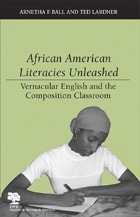
African American Literacies Unleashed
Vernacular English and the Composition ClassroomArnetha F. Ball and Ted Lardner
Southern Illinois University Press, 2005
This pioneering study of African American students in the composition classroom lays the groundwork for reversing the cycle of underachievement that plagues linguistically diverse students. African American Literacies Unleashed: Vernacular English and the Composition Classroom approaches the issue of African American Vernacular English (AAVE) in terms of teacher knowledge and prevailing attitudes, and it attempts to change current pedagogical approaches with a highly readable combination of traditional academic discourse and personal narratives.
Realizing that composition is a particular form of social practice that validates some students and excludes others, Arnetha Ball and Ted Lardner acknowledge that many African American students come to writing and composition classrooms with talents that are not appreciated. To empower and inform practitioners, administrators, teacher educators, and researchers, Ball and Lardner provide knowledge and strategies that will help unleash the potential of African American students and help them imagine new possibilities for their successes as writers.
African American Literacies Unleashed asserts that necessary changes in theory and practice can be addressed by refocusing attention from teachers’ knowledge deficits to the processes through which teachers engage information relevant to culturally informed pedagogy. Providing strategies for unlearning racism in the classroom and changing the status quo, this volume stresses the development and maintenance of a real sense of teaching efficacy—teachers’ beliefs in their abilities to connect with and work effectively with all students—and reflective optimism—teachers’ informed expectations that all students have the potential to succeed.
After Plato
Rhetoric, Ethics, and the Teaching of WritingJohn Duffy
Utah State University Press, 2020
After Plato redefines the relationships of rhetoric for scholars, teachers, and students of rhetoric and writing in the twenty-first century. Featuring essays by some of the most accomplished scholars in the field, the book explores the diversity of ethical perspectives animating contemporary writing studies—including feminist, postmodern, transnational, non-Western, and virtue ethics—and examines the place of ethics in writing classrooms, writing centers, writing across the curriculum programs, prison education classes, and other settings.
When truth is subverted, reason is mocked, racism is promoted, and nationalism takes center stage, teachers and scholars of writing are challenged to articulate the place of rhetorical ethics in the writing classroom and throughout the field more broadly. After Plato demonstrates the integral place of ethics in writing studies and provides a roadmap for future conversations about ethical rhetoric that will play an essential role in the vitality of the field.
Contributors: Fred Antczak, Patrick W. Berry, Vicki Tolar Burton, Rasha Diab, William Duffy, Norbert Elliot, Gesa E. Kirsch, Don J. Kraemer, Paula Mathieu, Robert J. Mislevy, Michael A. Pemberton, James E. Porter, Jacqueline Jones Royster, Xiaoye You, Bo Wang
After the Public Turn
Composition, Counterpublics, and the Citizen BricoleurFrank Farmer
Utah State University Press, 2013
Farmer examines two very different kinds of publics, cultural and disciplinary, and discusses two counterpublics within those broad categories: zine discourses and certain academic discourses. By juxtaposing these two significantly different kinds of publics, Farmer suggests that each discursive world can be seen, in its own distinct way, as a counterpublic, an oppositional social formation that has a stake in widening or altering public life as we know it.
Drawing on major figures in rhetoric and cultural theory, Farmer builds his argument about composition teaching and its relation to the public sphere, leading to a more sophisticated understanding of public life and a deeper sense of what democratic citizenship means for our time.
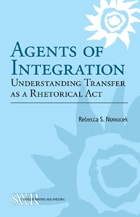
Agents of Integration
Understanding Transfer as a Rhetorical ActRebecca S. Nowacek
Southern Illinois University Press, 2011
While many studies of transfer are longitudinal, with data collected over several years, Nowacek’s is synchronous, a rich cross-section of the writing and classroom discussions produced by a team-taught learning community—three professors and eighteen students enrolled in a one-semester general education interdisciplinary humanities seminar that consisted of three linked courses in history, literature, and religious studies. With extensive field notes, carefully selected student and teacher self-reports in the form of interviews and focus groups, and thorough examinations of recorded classroom discussions, student papers with professor comments, and student notebooks, Nowacek presents a nuanced and engaging analysis that outlines how transfer is not simply a cognitive act but a rhetorical one that involves both seeing connections and presenting them to the instructors who are institutionally positioned to recognize and value them.
Considering the challenges facing instructors teaching for transfer and the transfer of writing-related knowledge, Nowacek develops and outlines a new theoretical framework and methodological model of transfer and illustrates the practical implications through case studies and other classroom examples. She proposes transfer is best understood as an act of recontextualization, and she builds on this premise throughout the book by drawing from previous work in cognitive psychology, activity theory, and rhetorical genre theory, as well as her own analyses of student work.
This focused examination complements existing longitudinal studies and will help readers better understand not only the opportunities and challenges confronting students as they work to become agents of integration but also the challenges facing instructors as they seek to support that student work.

All the Fun’s in How You Say a Thing
An Explanation of Meter and VersificationTimothy Steele
Ohio University Press, 1999
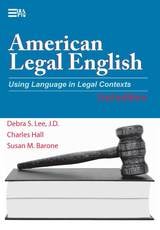
American Legal English, 2nd Edition
Using Language in Legal ContextsDebra S. Lee, J.D., Charles Hall, and Susan M. Barone
University of Michigan Press, 2012
Law is a profession that requires the ability to read critically, write well, synthesize sources from research, and speak concisely and clearly. American Legal English was developed to help non-native speakers improve their ability to understand and communicate in English with their legal counterparts around the world. The text is an introduction to basic legal information and the U.S. legal system that addresses the major areas of law and provides actual cases and statutes so that students can become familiar with legal syntax and legal vocabulary.
Each chapter addresses a particular area of the law and has three parts:
- Discovering Connections is a warm-up activity that focuses on non-legal concepts that lead into a discussion of the law.
- Legal Listening and Legally Speaking offer the opportunity to practice new vocabulary terms before they are used in context later in the chapter.
- Legal Thumbnail provides a simplified summary of the law with actual statutory and case materials.
In the second edition, the language development activities have been moved to the back of the book and are organized in the categories of writing, reading, oral communication, grammar, and culture.
Supplemental listening activities (21 tracks) are available via an audio CD (978-0-472-00325-9) or MP3 download (978-0-472-00360-0) is available for use in conjunction with this textbook. Running time: 000:40:02.
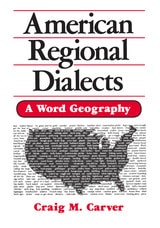
American Regional Dialects
A Word GeographyCraig M. Carver
University of Michigan Press, 1987
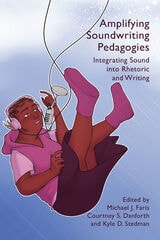
Amplifying Soundwriting Pedagogies
Integrating Sound into Rhetoric and WritingMichael J. Faris
University Press of Colorado, 2022
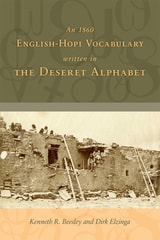
An 1860 English-Hopi Vocabulary Written in the Deseret Alphabet
Kenneth R. Beesley
University of Utah Press, 2014
The volume reproduces all 486 vocabulary entries of the original manuscript, presenting the Deseret and the modern English and Hopi translations. It explains the history of the Deseret Alphabet as well as that of the Mormon missions to the Hopi, while fleshing out the background of the two missionaries, Marion Jackson Shelton, who wrote the manuscript, and his companion, Thales Hastings Haskell. The book will be of interest to linguists, historians, ethnographers, and others who are curious about the unique combination of topics this work connects.
An Alternate Pragmatism for Going Public
Jim Webber
Utah State University Press, 2017
An Alternate Pragmatism for Going Public interrogates composition’s most prominent responses to contemporary K–16 education reform. By “going public,” teachers, scholars, and administrators rightfully reassert their expertise against corporate-political standards and assessments like the Common Core, Complete College America, and the Collegiate Learning Assessment. However, author Jim Webber shows that composition’s professional imperative for self-defense only partly fulfils the broader aims of “going public,” which include fostering public participation that can assess and potentially affirm the public good of professional judgment.
Drawing on the pragmatic/democratic tradition, Webber envisions an alternate rhetoric of professionalism, one that not only reasserts compositionists’ expertise but also expands opportunities for publics to authorize this expertise. While this public inquiry and engagement may not safeguard professional standing against neoliberal reform, it reorients composition toward an equally important goal, enabling publics to gauge the adequacy of the educational standardization so often advocated by contemporary reform.
An Alternate Pragmatism for Going Public shows how public engagement can serve composition’s efforts related to “going public.”
An Introductory Grammar of Old English with an Anthology of Readings
Robert D. Fulk
Arizona Center for Medieval and Renaissance Studies, 2014
Analyzing Syntax & Semantics Textbook
Virginia Heidinger
Gallaudet University Press, 1984
Analyzing Syntax and Semantics features the Personalized System of Instruction (PSI) approach. This method uses student performance objectives, practice, feedback, individualization of pace, and repeatable testing as instructional strategies.
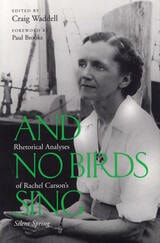
And No Birds Sing
Rhetorical Analyses of Rachel Carson's Silent SpringEdited by Craig Waddell. Foreword by Paul Brooks. Afterword by Linda Lear
Southern Illinois University Press, 2000
Craig Waddell presents essays investigating Rachel Carson’s influential 1962 book, Silent Spring. In his foreword, Paul Brooks, Carson’s editor at Houghton Mifflin, describes the process that resulted in Silent Spring. In an afterword, Linda Lear, Carson’s recent biographer, recalls the end of Carson’s life and outlines the attention that Carson’s book and Carson herself received from scholars and biographers, attention that focused so minutely on her life that it detracted from a focus on her work. The foreword by Brooks and the afterword by Lear frame this exploration within the context of Carson’s life and work.
Contributors are Edward P. J. Corbett, Carol B, Gartner, Cheryll Glotfelty, Randy Harris, M. Jimmie Killingsworth, Linda Lear, Ralph H. Lutts, Christine Oravec, Jacqueline S. Palmer, Markus J. Peterson, Tarla Rai Peterson, and Craig Waddell. Together, these essays explore Silent Spring’seffectiveness in conveying its disturbing message and the rhetorical strategies that helped create its wide influence.
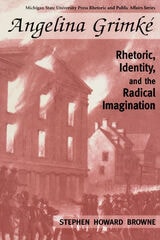
Angelina Grimke
Rhetoric, Identity, and the Radical ImaginationStephen H. Browne
Michigan State University Press, 1999
Abolitionist, women's rights activist, and social reformer, Angelina Grimké (1805-79) was among the first women in American history to seize the public stage in pursuit of radical social reform. "I will lift up my voice like a trumpet," she proclaimed, "and show this people their transgressions." And when she did lift her voice in public, on behalf of the public, she found that, in creating herself, she might transform the world. In the process, Grimké crossed the wires of race, gender, and power, and produced explosions that lit up the world of antebellum reform. Among the most remarkable features of Angelina Grimké's rhetorical career was her ability to stage public contests for the soul of America—bringing opposing ideas together to give them voice, depth, and range to create new and more compelling visions of social change.
Angelina Grimké: Rhetoric, Identity, and the Radical Imagination is the first full-length study to explore the rhetorical legacy of this most unusual advocate for human rights. Stephen Browne examines her epistolary and oratorical art and argues that rhetoric gave Grimké a means to fashion not only her message but her very identity as a moral force.
Anglo-American Feminist Challenges to the Rhetorical Traditions
Virginia Woolf, Mary Daly, Adrienne RichKrista Ratcliffe
Southern Illinois University Press, 1996
Although women and men have different relationships to language and to each other, traditional theories of rhetoric do not foreground such gender differences. Krista Ratcliffe argues that because feminists generally have not conceptualized their language theories from the perspective of rhetoric and composition studies, rhetoric and composition scholars must construct feminist theories of rhetoric by employing a variety of interwoven strategies: recovering lost or marginalized texts; rereading traditional rhetoric texts; extrapolating rhetorical theories from such nonrhetoric texts as letters, diaries, essays, cookbooks, and other sources; and constructing their own theories of rhetoric.
Focusing on the third option, Ratcliffe explores ways in which the rhetorical theories of Virginia Woolf, Mary Daly, and Adrienne Rich may be extrapolated from their Anglo-American feminist texts through examination of the interrelationship between what these authors write and how they write. In other words, she extrapolates feminist theories of rhetoric from interwoven claims and textual strategies. By inviting Woolf, Daly, and Rich into the rhetorical traditions and by modeling the extrapolation strategy/methodology on their writings, Ratcliffe shows how feminist texts about women, language, and culture may be reread from the vantage point of rhetoric to construct feminist theories of rhetoric. She also outlines the pedagogical implications of these three feminist theories of rhetoric, thus contributing to ongoing discussions of feminist pedagogies.
Traditional rhetorical theories are gender-blind, ignoring the reality that women and men occupy different cultural spaces and that these spaces are further complicated by race and class, Ratcliffe explains. Arguing that issues such as who can talk, where one can talk, and how one can talk emerge in daily life but are often disregarded in rhetorical theories, Ratcliffe rereads Roland Barthes’ "The Old Rhetoric" to show the limitations of classical rhetorical theories for women and feminists. Discovering spaces for feminist theories of rhetoric in the rhetorical traditions, Ratcliffe invites readers not only to question how women have been located as a part of— and apart from—these traditions but also to explore the implications for rhetorical history, theory, and pedagogy.
Annotated Bibliography of Southern American English
James B. McMillan
University of Alabama Press, 1989
The only book-length bibliography on the speech of the American South, this volume focuses on the pronunciation, vocabulary, grammar, naming practices, word play, and other aspects of language that have interested researchers and writers for two centuries. Compiled here are the works of linguists, historians, anthropologists, sociologists, and educators, as well as popular commentators.
With over 3,800 entries, this invaluable resource is a testament to the significance of Southern speech, long recognized as a distinguishing feature of the South, and the abiding interest of Southerners in their speech as a mark of their identity. The entries encompass Southern dialects in all their distinctive varieties—from Appalachian to African American, and sea islander to urbanite.
Appalachian Englishes in the Twenty-First Century
Kirk Hazen
West Virginia University Press, 2020
A portal to the language scholarship of the last thirty years, Appalachian Englishes in the Twenty-First Century translates state-of-the-art research for a nonspecialist audience, while setting the agenda for further study of language in one of America’s most recognized regions.
Appeals in Modern Rhetoric
An Ordinary Language ApproachM. Jimmie Killingsworth
Southern Illinois University Press, 2005
Appeals in Modern Rhetoric: An Ordinary-Language Approach introduces students to current issues in rhetorical theory through an extended treatment of the rhetorical appeal, a frequently used but rarely discussed concept at the core of rhetorical analysis and criticism. Shunning the standard Aristotelian approach that treats ethos, pathos, and logos as modes of appeal, M. Jimmie Killingsworth uses common, accessible language to explain the concept of the rhetorical appeal—meaning the use of language to plead and to please. The result is a practical and innovative guide to understanding how persuasion works that is suitable for graduate and undergraduate courses yet still addresses topics of current interest to specialists.
Supplementing the volume are practical and theoretical approaches to the construction and analysis of rhetorical messages and brief and readable examples from popular culture, academic discourse, politics, and the verbal arts. Killingsworth draws on close readings of primary texts in the field, referencing theorists to clarify concepts, while he decodes many of the basic theoretical constructs common to an understanding of identification. Beginning with examples of the model of appeals in social criticism, popular film, and advertising, he covers in subsequent chapters appeals to time, place, the body, gender, and race. Additional chapters cover the use of common tropes and rhetorical narrative, and each chapter begins with definitions of key concepts.
Applied Pedagogies
Strategies for Online Writing InstructionDaniel Ruefman
Utah State University Press, 2016
This is a practical text, providing ways to employ the best instructional strategies possible for today’s diverse and dynamic digital writing courses. Organized into three sections—Course Conceptualization and Support, Fostering Student Engagement, and MOOCs—chapters explore principles of rhetorically savvy writing crossed with examples of effective digital teaching contexts and genres of digital text. Contributors consider not only pedagogy but also the demographics of online students and the special constraints of the online environments for common writing assignments.
The scope of online learning and its place within higher education is continually evolving. Applied Pedagogies offers tools for the online writing classrooms of today and anticipates the needs of students in digital contexts yet to come. This book is a valuable resource for established and emerging writing instructors as they continue to transition to the digital learning environment.
Contributors: Kristine L. Blair, Jessie C. Borgman, Mary-Lynn Chambers, Katherine Ericsson, Chris Friend, Tamara Girardi, Heidi Skurat Harris, Kimberley M. Holloway, Angela Laflen, Leni Marshall, Sean Michael Morris, Danielle Nielsen, Dani Nier-Weber, Daniel Ruefman, Abigail G. Scheg, Jesse Stommel
Approaches to Lifespan Writing Research
Generating an Actionable CoherenceRyan J. Dippre
University Press of Colorado, 2020
Copublished with CSU Open Press
This edited collection builds on the three themes that emerged from the 2018 inaugural lifespan writing conference—identity, society, and theory—to further the study of writing through the lifespan. The contributors to this collection provide a framework within which the reader can develop a dynamic, interdisciplinary, multifaceted understanding of the limits and possibilities of studying lifespan writing. Recognizing that such research requires methodological rigor and flexibility as well as theoretical precision and adaptability, Approaches to Lifespan Writing Research draws on a range of methodological and theoretical approaches, from autoethnography to longitudinal structural equation modeling. This methodological and theoretical flexibility reflects the challenges inherent in studying lifespan writing—in particular, the need to develop an integrated framework that enables the “translation” of research findings for use by other lifespan writing researchers. Approaches to Lifespan Writing Research begins that process.
This book is also available as an open access ebook through the WAC Clearinghouse
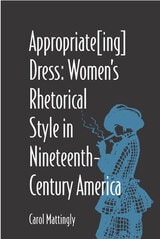
Appropriate[Ing] Dress
Women's Rhetorical Style in Nineteenth-Century AmericaCarol Mattingly
Southern Illinois University Press, 2002
Carol Mattingly examines the importance of dress and appearance for nineteenth-century women speakers and explores how women appropriated gendered conceptions of dress and appearance to define the struggle for representation and power that is rhetoric. Although crucial to women’s effectiveness as speakers, Mattingly notes, appearance has been ignored because it was taken for granted by men.
Because women rarely spoke in public before the nineteenth century, no guidelines existed regarding appropriate dress when they began to speak to audiences. Dress evoked immediate images of gender, an essential consideration for women speakers because of its strong association with place, locating women in the domestic sphere and creating a primary image that women speakers would work with—and against—throughout the century. Opposition to conspicuous change for women often necessitated the subtle transfer of comforting images when women sought to inhabit traditionally masculine spaces. The most successful women speakers carefully negotiated expectations by highlighting some conventions even as they broke others.
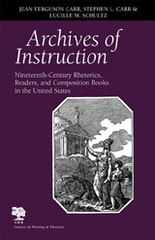
Archives of Instruction
Nineteenth-Century Rhetorics, Readers, and Composition Books in the United StatesJean Ferguson Carr, Stephen L. Carr, and Lucille M. Schultz
Southern Illinois University Press, 2005
Both a historical recovery and a critical rethinking of the functions and practices of textbooks, Archives of Instruction: Nineteenth-Century Rhetorics, Readers, and Composition Books in the United States argues for an alternative understanding of our rhetorical traditions. The authors describe how the pervasive influence of nineteenth-century literacy textbooks demonstrate the early emergence of substantive instruction in reading and writing. Tracing the histories of widespread educational practices, the authors treat the textbooks as an important means of cultural formation that restores a sense of their distinguished and unique contributions.
At the beginning of the nineteenth century, few people in the United States had access to significant school education or to the materials of instruction. By century’s end, education was a mass—though not universal—experience, and literacy textbooks were ubiquitous artifacts, used both in home and in school by a growing number of learners from diverse backgrounds. Many of the books have been forgotten, their contributions slighted or dismissed, or they are remembered through a haze of nostalgia as tokens of an idyllic form of schooling. Archives of Instruction suggests strategies for re-reading the texts and details the watersheds in the genre, providing a new perspective on the material conditions of schooling, book publication, and emerging practices of literacy instruction. The volume includes a substantial bibliography of primary and secondary works related to literacy instruction at all levels of education in the United States during the nineteenth century.
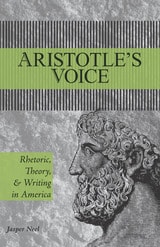
Aristotle's Voice
Rhetoric, Theory, and Writing in AmericaJasper Neel
Southern Illinois University Press, 1994
In this book, Jasper Neel’s sure-to-be-controversial resituating of Aristotle centers around three questions that have been constants in his twenty-two years of teaching experience: What does itmean to teach writing? What should one know before teaching writing? And, if there is such a thing as "research in the teaching of writing," what is it?
Believing that all composition teachers are situated politically and socially, both as part of the institution in which they teach and as beings with lived histories, Neel examines his own life and the life of composition studies as a discipline in the context of Aristotle. Neel first situates the Rhetoric as a political document; he then situates the Rhetoric in the Aristotelian system and describes how professional discourse came to know itself through Aristotle’s way of studying the world; finally, he examines the operation of the Rhetoric inside itself before arguing the need to turn to Aristotle’s notion of sophistry as a way of negating his system.
By pointing out the connections among Aristotelian rhetoric, the contemporary university, and the contemporary writing teacher, Neel shows that Aristotle’s frightening social theories are as alive today as are Aristotelian notions of discourse.
Neel explains that by their very nature teachers must speak with a professional voice. It is through showing how to "hear" one’s professional voice that Neel explores the notion of professional discourse that originates with Aristotle. In maintaining that one must pay a high price in order to speak through Aristotle’s theory or to assume the role of "professional," he argues that no neutral ground exists either for pedagogy or for the analysis of pedagogy. Neel concludes this discussion by proposing that Aristotelian sophistry is both an antidote to Aristotelian racism, sexism, and bigotry and a way of allowing Aristotelian categories of discourse to remain useful.
Finally, as an Aristotelian, a teacher, and a writer, Neel responds both to Aristotle and to professionalism by rethinking the influence of the past and reviving the voice of Aristotelian sophistry.
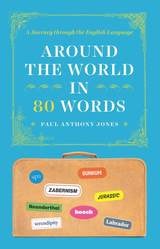
Around the World in 80 Words
A Journey through the English LanguagePaul Anthony Jones
University of Chicago Press, 2018
Surprising, entertaining, and illuminating, this is essential reading for armchair travelers and word nerds. Our dictionaries are full of hidden histories, tales, and adventures from all over the world—if you know where to look.
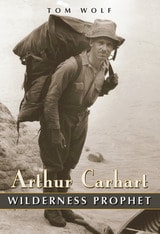
Arthur Carhart
Wilderness ProphetTom Wolf
University Press of Colorado, 2025
Arthur Carhart (1892-1978), America's first champion of wilderness, the first Forest Service landscape architect, and the most popular conservation writer of mid-century America, never won the titan status of his contemporary, Aldo Leopold. A political maverick, he refused to side with any major advocacy group and none has made him its saint. Carhart was a grassroots thinker in a top-down era.
Arthur Carhart, the first biography of this Republican environmentalist and major American thinker, writer, and activist, reveals the currency of his ideas. Tom Wolf elucidates Carhart 's vision of conservation as "a job for all of us," with citizens, municipal authorities, and national leaders all responsible for the environmental effects of their decisions. Carhart loved the local and decried interest groups—from stockmens' associations to wilderness lobbies—as cliques attempting blanket control. He pressured land management agencies to base decisions on local ecology and local partnerships. A lifelong wilderness advocate who proposed the first wilderness preserve at Trappers Lake, Colorado, in 1919, Carhart chose to oppose the Wilderness Act, heartsick at its compromises with lobbies.
Because he shifted his stance and changed his views in response to new information, Carhart is not an easy subject for a biography. Wolf traces Carhart's twists and turns to show a man whose voice was distinctive and contrary and who spoke from a passionate concern for the land and couldn't be counted on for anything else. Readers of American history and outdoor writing will enjoy this portrait of a historic era in conservation politics and the man who so often eschewed politics in favor of the land and people he loved.