Results by title
134 books match the query 'English-speaking countries' and 14 start with a
A New Species
GENDER AND SCIENCE IN SCIENCE FICTIONRobin Roberts
University of Illinois Press, 1993
A Poetics of Resistance
Women Writing in El Salvador, South Africa, and the United StatesMary DeShazer
University of Michigan Press, 1994
Engaging the works of critics such as Chandra Mohanty, Barbara Harlow, Claribel Alegria, Albie Sachs, and Audre Lorde, among others, Mary DeShazer reconceptualizes traditional notions of resistance and literature and the relationship between them. She argues that women’s voices have been underrepresented in previous analyses of Third World resistance poetry, and that when examined collectively, their work reveals overtly gendered concerns that distinguish it from that of their male counterparts.
DeShazer defines resistance as an active quest for justice and a means of collective empowerment. She looks at the diasporic consciousness of exiled and dislocated women, examines the tensions between claims of identity and claims of difference, and explores the ways in which gender and struggle connect women across nationalities and historical imperatives. Her analysis of Salvadoran and South African women’s poetry reveal the ways in which poetic conventions can be seen as “political declarations of privilege,” casting a new light on women’s resistance poetry in the United States.
A Stage of Their Own
Feminist Playwrights of the Suffrage EraSheila Stowell
University of Michigan Press, 1994
A THOUSAND WORDS
PORTRAITURE, STYLE, AND QUEER MODERNISMJaime Hovey
The Ohio State University Press, 2006
Portraiture speaks to the complex relationship between identity, sexuality, and art, and the presence of so many portraits in this era suggests that sexual, gender, and racial aspects of character, personality, and personal identity were of major concern to most modernist writers. Yet it took most of the twentieth century for critical work to appear that meaningfully explored these themes, and very little has been said about the queerness of literary portraiture. This book demonstrates that literary portraiture is enamored of its own self-consciousness, with the pleasures of looking at itself seeing itself, and that its texts circulate this pleasure between writers, narrators and other characters, and readers as a perverse aesthetics

Abortion, Choice, and Contemporary Fiction
The Armageddon of the Maternal InstinctJudith Wilt
University of Chicago Press, 1990
In the opening of the book, Wilt discusses real case histories of several women. After studying the ambiguities of their decisions, she turns to their counterpoints depicted in contemporary fiction. Working from a feminist perspective, Wilt traces the theme of maternal choice in works by Margaret Atwood, Margaret Drabble, Joan Didion, Mary Gordon, Alice Walker, Toni Morrison, Gloria Naylor, Marge Piercy, Thomas Keneally, Graham Swift, Ernest Hemingway, William Faulkner, John Barth, John Irving, and others.
Behind the political, medical, and moral debates on abortion, Wilt argues, is a profound psychocultural shock at the recognition that maternity is passing from the domain of instinct to that of conscious choice. Although never wholly instinctual, maternity's potential capture by consciousness raises complex questions. The novels Wilt discusses portray worlds in which principles are endangered by sexual inequality, male power and hidden male fear of abandonment, impotence, female submission, and covert rage, and, in the case of black maternity, the hideous aftermath of slavery.
Wilt provides a resonant new context for debates—whether political or personal—on the issue of abortion and maternal choice. Ultimately she enables us to rethink how we shape our own identities and lives.
After Strange Texts
The Role of Theory in the Study of LiteratureGregory S. Jay and David L. Miller
University of Alabama Press, 1985
In this collection of essays by seven outstanding American scholars, interests as diverse as feminism, Marxism, deconstruction, and cultural poetics are brought together around a central question: how does the choice of a particular theory alter the practice of reading and do altered practices of reading in turn call forth more theory?
Analogical Thinking
Post-Enlightenment Understanding in Language, Collaboration, and InterpretationRonald Schleifer
University of Michigan Press, 2001
The book traces this mode of thinking in linguistics, collaborative intellectual work in the arts and sciences, and interpretations of literary and sacred texts, concluding with a reading of the concept of Enlightenment in a comparison of Descartes and Foucault. The book examines the poststructuralism of Derrida; the collaborations of information theory and modern science as opposed to the individualism of Adam Smith and others, and analogical interpretations of Yeats, Dinesen, the Bible, Dreiser, and Mailer. Its overall aim is to present an interdisciplinary examination of a particular kind of understanding that responds to the experiences of our time.
Ronald Schleifer is Professor of English, University of Oklahoma. His books include Rhetoric and Death: The Language of Modernism and Postmodern Discourse Theory, Criticism and Culture; and Culture and Cognition: The Boundaries of Literary and Scientific Inquiry.
Anatomy of Murder
Mystery, Detective, and Crime FictionCarl D. Malmgren
University of Wisconsin Press, 2001

And Then There Were Nine. . .
More Women of MysteryUniversity of Wisconsin Press, 1985
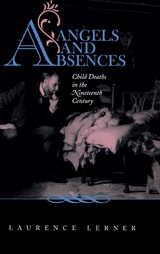
Angels and Absences
Child Deaths in the Nineteenth CenturyLaurence Lerner
Vanderbilt University Press, 1997
What is the difference between public and private feeling, and how far can we deduce past feelings from the words that have been left us? Why do child deaths figure so often and so prominently in the literature of the nineteenth century, and how was the theme of the death of a child used to elicit such poignant responses in the readers of that era? In this fascinating new book, Laurence Lerner vividly contrasts the contempt with which twentieth- century criticism so often dismisses such works as mere sentimentality with the enthusiasm and tears of nineteenth-century contemporaries.
Drawing examples from both real and literary deaths, Lerner delves into the writings of well-known authors such as Dickens, Coleridge, Shelley, Flaubert, Mann, Huxley, and Hesse, as well as lesser known writers like Felicia Hemans and Lydia Sigourney. In the process, he synthesizes fresh ideas about the thorny subjects of sentimentality, aesthetic judgment, and the function of religion in literature.
Lerner's forthright and evocative prose style is enjoyable reading, and he excels in teasing out the moral implications and the psychosocial entanglements of his chosen narrative and lyrical texts. This is a book that will illuminate an important aspect of the history of private life. It should have wide application for those interested in the history, sociology, and literature of the nineteenth century.
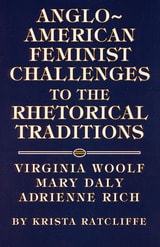
Anglo-American Feminist Challenges to the Rhetorical Traditions
Virginia Woolf, Mary Daly, Adrienne RichKrista Ratcliffe
Southern Illinois University Press, 1996
Although women and men have different relationships to language and to each other, traditional theories of rhetoric do not foreground such gender differences. Krista Ratcliffe argues that because feminists generally have not conceptualized their language theories from the perspective of rhetoric and composition studies, rhetoric and composition scholars must construct feminist theories of rhetoric by employing a variety of interwoven strategies: recovering lost or marginalized texts; rereading traditional rhetoric texts; extrapolating rhetorical theories from such nonrhetoric texts as letters, diaries, essays, cookbooks, and other sources; and constructing their own theories of rhetoric.
Focusing on the third option, Ratcliffe explores ways in which the rhetorical theories of Virginia Woolf, Mary Daly, and Adrienne Rich may be extrapolated from their Anglo-American feminist texts through examination of the interrelationship between what these authors write and how they write. In other words, she extrapolates feminist theories of rhetoric from interwoven claims and textual strategies. By inviting Woolf, Daly, and Rich into the rhetorical traditions and by modeling the extrapolation strategy/methodology on their writings, Ratcliffe shows how feminist texts about women, language, and culture may be reread from the vantage point of rhetoric to construct feminist theories of rhetoric. She also outlines the pedagogical implications of these three feminist theories of rhetoric, thus contributing to ongoing discussions of feminist pedagogies.
Traditional rhetorical theories are gender-blind, ignoring the reality that women and men occupy different cultural spaces and that these spaces are further complicated by race and class, Ratcliffe explains. Arguing that issues such as who can talk, where one can talk, and how one can talk emerge in daily life but are often disregarded in rhetorical theories, Ratcliffe rereads Roland Barthes’ "The Old Rhetoric" to show the limitations of classical rhetorical theories for women and feminists. Discovering spaces for feminist theories of rhetoric in the rhetorical traditions, Ratcliffe invites readers not only to question how women have been located as a part of— and apart from—these traditions but also to explore the implications for rhetorical history, theory, and pedagogy.

Another English
Anglophone Poems from Around the WorldEdited by Catherine Barnett and Tiphanie Yanique
Tupelo Press, 2014

Are Girls Necessary?
Lesbian Writing and Modern HistoriesJulie Abraham
University of Minnesota Press, 2008
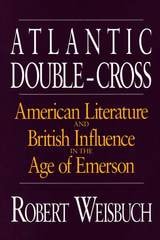
Atlantic Double-Cross
American Literature and British Influence in the Age of EmersonRobert Weisbuch
University of Chicago Press, 1987
Describing the transatlantic "double-cross" of literary influence, Weisbuch documents both the American desire to create a literature distinctly different from English models and the English insistence that any such attempt could only fail. The American response, as he demonstrates, was to make strengths out of national disadvantages by rethinking history, time, and traditional concepts of the self, and by reinterpreting and ridiculing major British texts in mocking allusions and scornful parodies.
Weisbuch approaches a precise characterization of this "double-cross" by focusing on paired sets of English and American texts. Investigations of the causes, motives, and literary results of the struggle alternate with detailed analyses of several test cases. Weisbuch considers Melville's challenge to Dickens, Thoreau's response to Coleridge and Wordsworth, Hawthorne's adaptation of Keats and influence on Eliot, Whitman's competition with Arnold, and Poe's reshaping of Shelley. Adding a new dimension to the exploration of an emerging aesthetic consciousness, Atlantic Double-Cross provides important insights into the creation of the American literary canon.