Results by title
87 books match the query 'Fire' and 10 start with a
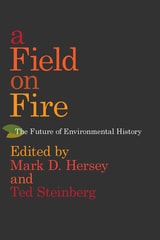
A Field on Fire
The Future of Environmental HistoryEdited by Mark D. Hersey and Ted Steinberg
University of Alabama Press, 2019
Inspired by the pioneering work of preeminent environmental historian Donald Worster, the contributors to A Field on Fire: The Future of Environmental History reflect on the past and future of this discipline. Featuring wide-ranging essays by leading environmental historians from the United States, Europe, and China, the collection challenges scholars to rethink some of their orthodoxies, inviting them to approach familiar stories from new angles, to integrate new methodologies, and to think creatively about the questions this field is well positioned to answer.
Worster’s groundbreaking research serves as the organizational framework for the collection. Editors Mark D. Hersey and Ted Steinberg have arranged the book into three sections corresponding to the primary concerns of Worster’s influential scholarship: the problem of natural limits, the transnational nature of environmental issues, and the question of method. Under the heading “Facing Limits,” five essays explore the inherent tensions between democracy, technology, capitalism, and the environment. The “Crossing Borders” section underscores the ways in which environmental history moves easily across national and disciplinary boundaries. Finally, “Doing Environmental History” invokes Worster’s work as an essayist by offering self-conscious reflections about the practice and purpose of environmental history.
The essays aim to provoke a discussion on the future of the field, pointing to untapped and underdeveloped avenues ripe for further exploration. A forward thinker like Worster presents bold challenges to a new generation of environmental historians on everything from capitalism and the Anthropocene to war and wilderness. This engaging volume includes a very special afterword by one of Worster’s oldest friends, the eminent intellectual historian Daniel Rodgers, who has known Worster for close to fifty years.

A Pillar of Fire to Follow
American Indian Dramas, 1808–1859Priscilla Sears
University of Wisconsin Press, 1982
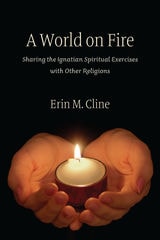
A World On Fire
Sharing the Ignatian Spiritual Exercises with Other ReligionsErin M. Cline
Catholic University of America Press, 2018
Erin Cline examines why this ought to be done, for whom, and what the aims of such an adaptation would be, including the different theological justifications for this practice. She concludes that there are compelling reasons for sharing the Exercises with members of other religions and that doing so coheres with the central mission of the Jesuits. A World on Fire goes on to examine the question of how the Exercises can be faithfully adapted for members of other religions. In outlining adaptations for the Hindu, Buddhist, and Confucian traditions that draw upon the traditional content of the Exercises supplemented by the texts of these religious traditions, Cline shows how Ignatian spirituality can help point the way to a different kind of inter-religious dialogue – one that is not bound up in technical terminology or confined to conversations between theologians and religious leaders. Rather, in making the Spriitual Exercises accessible to members of other faith traditions, we are as Pope Francis puts it, “living on a frontier, one in which the Gospel meets the needs of the people to whom it should be proclaimed in an understandable and meaningful way.”
A World on Fire will be of interest to comparative theologians and scholars working on inter-religious dialogue, religious pluralism, contemplative studies, and spirituality, as well as Jesuit priests and other practitioners who employ the Spiritual Exercises in their ministry.

After The Fire
A Writer Finds His PlacePaul Zimmer
University of Minnesota Press, 2002
Looking back at a lifetime of rich experience from Wisconsin’s driftless hills
We all dream of finding the place we can be most ourselves, the landscape that seems to have been crafted just for us. The poet Paul Zimmer has found his: a farm in the driftless hills of southwestern Wisconsin, a region of rolling land and crooked rivers, "driftless" because here the great glaciers of the Patrician ice sheet split widely, leaving behind a heart-shaped area untouched by crushing ice. After the Fire is the story of Zimmer’s journey from his boyhood in the factory town of Canton, Ohio, and his days as a soldier during atomic tests in the Nevada desert, to his many years in the book business as a writer and publisher, and the rural tranquillity of his present life.
Zimmer juxtaposes timeless rustic subjects (tending the land, country people and their ways, the ever-changing beauty of his natural surroundings) with flashbacks to key moments: his first and only boxing match, hearing Count Basie play and discovering his lifelong love of jazz, his return to the France of his ancestors, his painful departure from the publishing world after forty years. These stories are full of humor and pathos, keen insights and poignant meditations, but the real center of the book is the abiding beauty of the driftless hills, the silence and peace that is the source of and reward for Zimmer’s hard-won wisdom. Above all, it is a meditation on the ways that nature provides deep meaning and solace, and a consideration of the importance of finding the right place.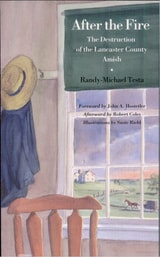
After the Fire
The Destruction of the Lancaster County AmishRandy-Michael Testa
Brandeis University Press, 1992
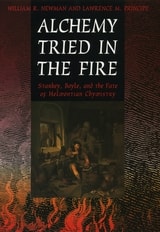
Alchemy Tried in the Fire
Starkey, Boyle, and the Fate of Helmontian ChymistryWilliam R. Newman and Lawrence M. Principe
University of Chicago Press, 2002
What actually took place in the private laboratory of a mid-seventeenth century alchemist? How did he direct his quest after the secrets of Nature? What instruments and theoretical principles did he employ?
Using, as their guide, the previously misunderstood interactions between Robert Boyle, widely known as "the father of chemistry," and George Starkey, an alchemist and the most prominent American scientific writer before Benjamin Franklin as their guide, Newman and Principe reveal the hitherto hidden laboratory operations of a famous alchemist and argue that many of the principles and practices characteristic of modern chemistry derive from alchemy. By analyzing Starkey's extraordinary laboratory notebooks, the authors show how this American "chymist" translated the wildly figurative writings of traditional alchemy into quantitative, carefully reasoned laboratory practice—and then encoded his own work in allegorical, secretive treatises under the name of Eirenaeus Philalethes. The intriguing "mystic" Joan Baptista Van Helmont—a favorite of Starkey, Boyle, and even of Lavoisier—emerges from this study as a surprisingly central figure in seventeenth-century "chymistry." A common emphasis on quantification, material production, and analysis/synthesis, the authors argue, illustrates a continuity of goals and practices from late medieval alchemy down to and beyond the Chemical Revolution.
For anyone who wants to understand how alchemy was actually practiced during the Scientific Revolution and what it contributed to the development of modern chemistry, Alchemy Tried in the Fire will be a veritable philosopher's stone.
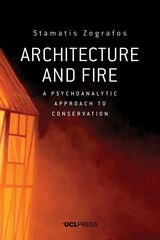
Architecture and Fire
A Psychoanalytic Approach to ConservationStamatis Zografos
University College London, 2019
Founded in inventive interdisciplinary research that ranges across architecture and conservation, archival theory, classical mythology, evolutionary theory, philosophy, and psychoanalysis, Architecture and Fire draws on the insights of psychoanalysis to offer such a reassessment. Among the topics discussed are the ambivalent nature of fire, seen through the conflicting philosophies of Gaston Bachelard and Henri Bergson; the ways in which architecture evolves by absorbing and accommodating fire; and the destruction of buildings by fire as a critical moment of architectural evolution, with a focus on the tragic disaster at London’s Grenfell Tower in 2017. Stamatis Zografos concludes with thoughts on Freud’s drive theory. He argues that the practice of architectural conservation is an expression of the life drive and a simultaneous repression of the death drive, which suggests controlled destruction should be an integral part of the conservation agenda.
Art in Chicago
A History from the Fire to NowEdited by Maggie Taft and Robert Cozzolino
University of Chicago Press, 2018
Now that art is getting its due. Art in Chicago is a magisterial account of the long history of Chicago art, from the rupture of the Great Fire in 1871 to the present, Manierre Dawson, László Moholy-Nagy, and Ivan Albright to Chris Ware, Anne Wilson, and Theaster Gates. The first single-volume history of art and artists in Chicago, the book—in recognition of the complexity of the story it tells—doesn’t follow a single continuous trajectory. Rather, it presents an overlapping sequence of interrelated narratives that together tell a full and nuanced, yet wholly accessible history of visual art in the city. From the temptingly blank canvas left by the Fire, we loop back to the 1830s and on up through the 1860s, tracing the beginnings of the city’s institutional and professional art world and community. From there, we travel in chronological order through the decades to the present. Familiar developments—such as the founding of the Art Institute, the Armory Show, and the arrival of the Bauhaus—are given a fresh look, while less well-known aspects of the story, like the contributions of African American artists dating back to the 1860s or the long history of activist art, finally get suitable recognition. The six chapters, each written by an expert in the period, brilliantly mix narrative and image, weaving in oral histories from artists and critics reflecting on their work in the city, and setting new movements and key works in historical context. The final chapter, comprised of interviews and conversations with contemporary artists, brings the story up to the present, offering a look at the vibrant art being created in the city now and addressing ongoing debates about what it means to identify as—or resist identifying as—a Chicago artist today. The result is an unprecedentedly inclusive and rich tapestry, one that reveals Chicago art in all its variety and vigor—and one that will surprise and enlighten even the most dedicated fan of the city’s artistic heritage.
Part of the Terra Foundation for American Art’s year-long Art Design Chicago initiative, which will bring major arts events to venues throughout Chicago in 2018, Art in Chicago is a landmark publication, a book that will be the standard account of Chicago art for decades to come. No art fan—regardless of their city—will want to miss it.
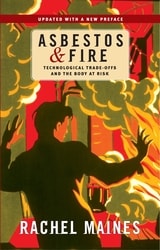
Asbestos and Fire
Technological Tradeoffs and the Body at RiskMaines, Rachel
Rutgers University Press, 2013
For much of the industrial era, asbestos was a widely acclaimed benchmark material. During its heyday, it was manufactured into nearly three thousand different products, most of which protected life and property from heat, flame, and electricity. It was used in virtually every industry from hotel keeping to military technology to chemical manufacturing, and was integral to building construction from shacks to skyscrapers in every community across the United States. Beginning in the mid-1960s, however, this once popular mineral began a rapid fall from grace as growing attention to the serious health risks associated with it began to overshadow the protections and benefits it provided.
In this thought-provoking and controversial book, Rachel Maines challenges the recent vilification of asbestos by providing a historical perspective on Americans’ changing perceptions about risk. She suggests that the very success of asbestos and other fire-prevention technologies in containing deadly blazes has led to a sort of historical amnesia about the very risks they were supposed to reduce.
Asbestos and Fire is not only the most thoroughly researched and balanced look at the history of asbestos, it is also an important contribution to a larger debate that considers how the risks of technological solutions should be evaluated. As technology offers us ever-increasing opportunities to protect and prevent, Maines urges that learning to accept and effectively address the unintended consequences of technological innovations is a growing part of our collective responsibility.
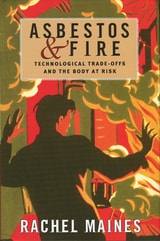
Asbestos and Fire
Technological Tradeoffs and the Body at RiskMaines, Rachel
Rutgers University Press, 2005
For much of the industrial era, asbestos was a widely acclaimed benchmark material. During its heyday, it was manufactured into nearly three thousand different products, most of which protected life and property from heat, flame, and electricity. It was used in virtually every industry from hotel keeping to military technology to chemical manufacturing, and was integral to building construction from shacks to skyscrapers in every community across the United States. Beginning in the mid-1960s, however, this once popular mineral began a rapid fall from grace as growing attention to the serious health risks associated with it began to overshadow the protections and benefits it provided.
In this thought-provoking and controversial book, Rachel Maines challenges the recent vilification of asbestos by providing a historical perspective on Americans’ changing perceptions about risk. She suggests that the very success of asbestos and other fire-prevention technologies in containing deadly blazes has led to a sort of historical amnesia about the very risks they were supposed to reduce.
Asbestos and Fire is not only the most thoroughly researched and balanced look at the history of asbestos, it is also an important contribution to a larger debate that considers how the risks of technological solutions should be evaluated. As technology offers us ever-increasing opportunities to protect and prevent, Maines urges that learning to accept and effectively address the unintended consequences of technological innovations is a growing part of our collective responsibility.