Results by title
377 books match the query 'French' and 32 start with a

A Box of Photographs
Roger Grenier
University of Chicago Press, 2013
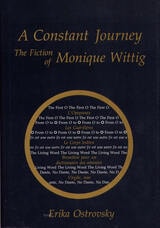
A Constant Journey
The Fiction of Monique WittigErika Ostrovsky
Southern Illinois University Press, 1991
From the creation of a neuter pronoun in her earliest work, L’Opoponax, to the confusion of genres in her most recent fiction, Virgile, non, Monique Wittig uses literary subversion and invention to accomplish what Erika Ostrovsky appropriately defines as renversement, the annihilation of existing literary canons and the creation of highly innovative constructs.
Erika Ostrovsky explores those aspects of Wittig’s work that best illustrate her literary approach. Among the countless revolutionary devices that Wittig uses to achieve renversement are the feminization of masculine gender names, the reorganization of myth patterns, and the replacement of traditional punctuation with her own system of grammatical emphasis and separation. It is the unexpected quantity and quality of such literary devices that make reading Monique Wittig’s fiction a fresh and rewarding experience. Such literary devices have earned Wittig the acclaim of her critics and peers—Marguerite Duras, Mary McCarthy, Alain Robbe-Grillet, Nathalie Sarraute, and Claude Simon, to name a few.
While analyzing the intrinsic value of each of Wittig’s fictions separately, Erika Ostrovsky traces the progressive development of Wittig’s major literary devices as they appear and reappear in her fictions. Ostrovsky maintains that the seeds of those innovations that appear in Wittig’s most recent texts can be found as far back as L’Opoponax. This evidence of progression supports Ostrovsky’s theory that clues to Wittig’s future endeavors can be found in her past.
A Critical Bibliography of the Published Writings of Romain Rolland
William Thomas Starr
Northwestern University Press, 1950

A Critical Encounter
Bataille and Blanchot: Exploring the Literary RealZoe Angeli
University of London Press, 2022
Few terms have been more prone and resistant to definition than the “literary” and the “real.” Bringing them together under the contrivance of the “literary real” sheds new light on the understanding of the terms real, being, existence, the literary, literature, and writing.
A Critical Encounter addresses two questions that are constantly entwined: first, what kind of real is involved and disclosed in writing—and how does this differ from conventional definitions and representations of reality? Second, what is writing’s own mode of being, in what way is it particular, and what are the implications of this particularity? Consulting the writings of French theorists Georges Bataille and Maurice Blanchot, this volume investigates the real effect that the existence of literature has on our lives: how it challenges and reconfigures the way we perceive ourselves, our place in the world, and our relations with others.
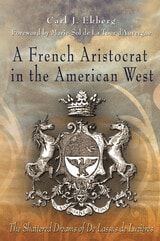
A French Aristocrat in the American West
The Shattered Dreams of De Lassus De LuzièresCarl J. Ekberg & Foreword by Marie-Sol de La Tour d'Auvergne
University of Missouri Press, 2010
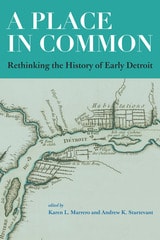
A Place in Common
Rethinking the History of Early DetroitKaren L. Marrero
Michigan State University Press, 2025
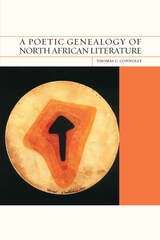
A Poetic Genealogy of North African Literature
Thomas C. Connolly
Northwestern University Press, 2025
Engaging the poetic to expand our imagination of Maghrebi literature in French
Poetry, as the Moroccan writer Abdelkébir Khatibi describes it, is a form of dissymmetry that exposes readers to the unexpected, and to the possibility of a transformative encounter with the text. Drawing on literary, philosophical, theoretical, and theological texts in multiple languages and scripts, as well as on the visual arts, Thomas C. Connolly delves into the poetic works of Khatibi and six other major Maghrebi authors—Jean Amrouche, Tahar Djaout, Nabile Farès, Mohammed Khaïr-Eddine, Abdelwahab Meddeb, and Jean Sénac—as well as the French poet Arthur Rimbaud, to think anew about the origins and legacy of Francophone poetry in the Maghreb. Instead of turning away from the poetic when it becomes indecipherable, A Poetic Genealogy of North African Literature engages poetic texts on their own terms, allowing them to dictate the search for meaning, thereby expanding our understanding of what Maghrebi literature in French was, is, and might become.
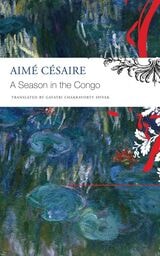
A Season in the Congo
Aimé Césaire
Seagull Books, 2005
This play by renowned poet and political activist Aime Césairerecounts the tragic death of Patrice Lumumba, the first prime minister of the Congo Republic and an African nationalist hero. A Season in the Congofollows Lumumba’s efforts to free the Congolese from Belgian rule and the political struggles that led to his assassination in 1961. Césaire powerfully depicts Lumumba as a sympathetic, Christ-like figure whose conscious martyrdom reflects his self-sacrificing humanity and commitment to pan-Africanism.
Born in Martinique and educated in Paris, Césaire was a revolutionary artist and lifelong political activist, who founded the Martinique Independent Revolution Party. Césaire’s ardent personal opposition to Western imperialism and racism fuels both his profound sympathy for Lumumba and the emotional strength of A Season in the Congo.
Now rendered in a lyrical translation by distinguished scholar Gayatri Chakravorty Spivak, Césaire’s play will find a new audience of readers interested in world literature and the vestiges of European colonialism.

A Singular Man
Emmanuel Bove
Northwestern University Press, 1995
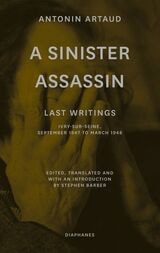
A Sinister Assassin
Last Writings, Ivry-Sur-Seine, September 1947 to March 1948Antonin Artaud
Diaphanes, 2022
A Sinister Assassin presents translations of Antonin Artaud’s largely unknown final work of 1947–48, revealing new insights into his obsessions with human anatomy, sexuality, societal power, creativity, and ill-will—notably, preoccupations of the contemporary world.
Artaud’s last conception of performance is that of a dance-propelled act of autopsy, generating a ”body without organs” which negates malevolent microbial epidemics. This book assembles Artaud’s crucial writings and press interviews from September 1947 to March 1948, undertaken at a decrepit pavilion in the grounds of a convalescence clinic in Ivry-sur-Seine, on the southern edge of Paris, as well as in-transit through Paris’s streets. It also draws extensively on Artaud’s manuscripts and original interviews with his friends, collaborators, and doctors throughout the 1940s, illuminating the many manifestations of Artaud’s final writings: the contents of his last, death-interrupted notebook; his letters; his two final key texts; his glossolalia; the magazine issue which collected his last fragments; and the two extraordinary interviews he gave to national newspaper journalists in the final days of his life, in which he denounces and refuses both his work’s recent censorship and his imminent death.
Edited, translated, and with an introduction by Stephen Barber, A Sinister Assassin illuminates Artaud’s last, most intensive, and terminal work for the first time.
A Taste for the Foreign
Worldly Knowledge and Literary Pleasure in Early Modern French FictionEllen R. Welch
University of Delaware Press, 2011
A Taste for the Foreign examines foreignness as a crucial aesthetic category for the development of prose fiction from Jacques Amyot’s 1547 translation of The Ethiopian Story to Antoine Galland’s early eighteenth-century version of The Thousand and One Nights. While fantastic storylines and elements of magic were increasingly shunned by a neo-classicist literary culture that valued verisimilitude above all else, writers and critics surmised that the depiction of exotic lands could offer a superior source for the novelty, variety, and marvelousness that constituted fiction’s appeal. In this sense, early modern fiction presents itself as privileged site for thinking through the literary and cultural stakes of exoticism, or the taste for the foreign. Long before the term exoticism came into common parlance in France, fiction writers thus demonstrated their understanding of the special kinds of aesthetic pleasure produced by evocations of foreignness, developing techniques to simulate those delights through imitations of the exotic. As early modern readers eagerly consumed travel narratives, maps, and international newsletters, novelists discovered ways to blur the distinction between true and imaginary representations of the foreign, tantalizing readers with an illusion of learning about the faraway lands that captured their imaginations.
This book analyzes the creative appropriations of those scientific or documentary forms of writing that claimed to inform the French public about exotic places. Concentrating on the most successful examples of some of the most important sub-genres of prose fiction in the long seventeenth century—heroic romances, shorter urban novels, fictional memoirs, and extraordinary voyages—the book examines how these types of fiction creatively appropriate the scientific or documentary forms of writing that claimed to inform the French public about exotic places.
Published by University of Delaware Press. Distributed worldwide by Rutgers University Press.
A Winter's Journal
Emmanuel Bove, translated by Nathalie Favre-Gilly and with an afterword by Keith Botsford
Northwestern University Press, 1997
Every few days for one winter, Louis writes down the details of his unhappy marriage. Although his wife, Madeleine, is the focal point of his journal, his painstakingly rendered analyses of her behavior tell us more about him than her, and about the harm two people can do to one another. Unsparing and insightful, A Winter's Journal remains one of the most devastating novels ever written on the self-destructive impulse present in all marriages.
A history of the French in London
liberty, equality, opportunityVolume editor Debra Kelly and Martyn Cornick
University of London Press, 2013
Absolutist Attachments
Emotion, Media, and Absolutism in Seventeenth-Century FranceChloé Hogg
Northwestern University Press, 2019
In Absolutist Attachments, Chloé Hogg uncovers the affective and media connections that shaped Louis XIV’s absolutism. Studying literature, painting, engravings, correspondence, and the emerging periodic press, Hogg diagnoses the emotions that created absolutism’s feeling subjects and publics.
Louis XIV’s subjects explored new kinds of affective relations with their sovereign, joining with the king in acts of aesthetic judgment, tender feeling, or the “newsiness” of emerging print news culture. Such alternative modes of adhesion countered the hegemonic model of kingship upheld by divine right, reason of state, or corporate fidelities and privileges with subject-driven attachments and practices. Absolutist Attachments discovers absolutism’s alternative political and cultural legacy—not the spectacle of an unbound king but the binding connections of his subjects.
Accounting for Taste
The Triumph of French CuisinePriscilla Parkhurst Ferguson
University of Chicago Press, 2004
This momentous culinary journey begins with Ancien Régime cookbooks and ends with twenty-first-century cooking programs. It takes us from Carême, the "inventor" of modern French cuisine in the early nineteenth century, to top chefs today, such as Daniel Boulud and Jacques Pépin. Not a history of French cuisine, Accounting for Taste focuses on the people, places, and institutions that have made this cuisine what it is today: a privileged vehicle for national identity, a model of cultural ascendancy, and a pivotal site where practice and performance intersect. With sources as various as the novels of Balzac and Proust, interviews with contemporary chefs such as David Bouley and Charlie Trotter, and the film Babette's Feast, Ferguson maps the cultural field that structures culinary affairs in France and then exports its crucial ingredients. What's more, well beyond food, the intricate connections between cuisine and country, between local practice and national identity, illuminate the concept of culture itself.
To Brillat-Savarin's famous dictum—"Animals fill themselves, people eat, intelligent people alone know how to eat"—Priscilla Ferguson adds, and Accounting for Taste shows, how the truly intelligent also know why they eat the way they do.
“Parkhurst Ferguson has her nose in the right place, and an infectious lust for her subject that makes this trawl through the history and cultural significance of French food—from French Revolution to Babette’s Feast via Balzac’s suppers and Proust’s madeleines—a satisfying meal of varied courses.”—Ian Kelly, Times (UK)
Advertising the Self in Renaissance France
Lemaire, Marot, and RabelaisScott Francis
University of Delaware Press, 2019
Published by University of Delaware Press. Distributed worldwide by Rutgers University Press.
After the Fall
War and Occupation in Irène Némirovsky's Suite françaiseNathan Bracher
Catholic University of America Press, 2010
After the King
Watteau, Spectacle, and the Poetics of MemoryGeorgia J. Cowart
University of Chicago Press, 2026
Musicologist Georgia J. Cowart explores how Antoine Watteau’s late paintings reimagine the symbolic order of absolutism in the wake of Louis XIV’s death.
Antoine Watteau has long been known for the theatricality of his paintings, but what that theatricality signifies has remained elusive. In After the King, Georgia Cowart contends that this mode of painting takes shape in response to the spectacle of Louis XIV’s absolutism, which the painter’s late works transform into a new aesthetic language.
The king’s death marked a turning point in Watteau’s art. In the six years that followed, his paintings turned more decisively toward the musical stage. Evoking theatrical plots, frontispieces, and costume types, they conjured a world in which the legacy of absolutist culture lingered as stylized memory—its rituals, emblems, and pleasures recast through theatrical illusion and ironic distance.
Rather than treating Watteau as a painter of nostalgic reverie or Rococo charm, Cowart situates his art within the immersive performance culture of Versailles and the vibrant Parisian stage, at a time when the opéra-ballet, popular opera, and the commedia dell’arte were charting new theatrical landscapes. Drawing on art history, musicology, theater studies, and Pierre Nora’s theory of lieux de mémoire, she proposes a new framework that understands Watteau’s paintings as acts of theatrical memory and cultural recomposition.
Elegantly written and conceptually ambitious, After the King reveals how Watteau recoded the symbols of monarchy to stage a post-absolutist cultural imagination shaped by irony, sensuality, and poetic transformation.
Albert Camus
The Artist in the ArenaEmmett Parker
University of Wisconsin Press, 1966
An Italian Journey
Jean Giono
Northwestern University Press, 1998

Andre Malraux
An Age of OppressionRoberta Newnham
Intellect Books, 2013
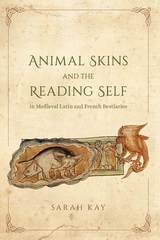
Animal Skins and the Reading Self in Medieval Latin and French Bestiaries
Sarah Kay
University of Chicago Press, 2017
Bestiaries present accounts of animals whose fantastic behaviors should be imitated or avoided, depending on the given trait. In a highly original argument, Kay suggests that the association of beasts with books is here both literal and material, as nearly all surviving bestiaries are copied on parchment made of animal skin, which also resembles human skin. Using a rich array of examples, she shows how the content and materiality of bestiaries are linked due to the continual references in the texts to the skins of other animals, as well as the ways in which the pages themselves repeatedly—and at times, it would seem, deliberately—intervene in the reading process. A vital contribution to animal studies and medieval manuscript studies, this book sheds new light on the European bestiary and its profound power to shape readers’ own identities.
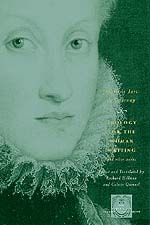
Apology for the Woman Writing and Other Works
Marie le Jars de Gournay
University of Chicago Press, 2002
This volume presents translations of four of Gournay's works that address feminist issues. Two of these appear here in English for the first time—The Promenade of Monsieur de Montaigne and The Apology for the Woman Writing. One of the first modern psychological novels, the best-selling Promenade was also the first to explore female sexual feeling. With the autobiographical Apology, Gournay defended every aspect of her life, from her moral conduct to her household management. The book also includes Gournay's last revisions (1641) of her two best-known feminist treatises, The Equality of Men and Women and The Ladies' Complaint. The editors provide a general overview of Gournay's career, as well as individual introductions and extensive annotations for each work.
Archival Afterlives
Cixous, Derrida, and the Matter of FriendshipLaura Hughes
Northwestern University Press, 2024
A capacious analysis of a legendary intellectual friendship and the material legacies it left behind
Over the course of their decades-long friendship, Hélène Cixous and Jacques Derrida assembled overlapping archives of written experiments and exchanges that document a shared interest in their literary afterlives. In this incisive account, Laura Hughes shows how pushing against the limits of writing and of life itself means not only imagining but manifesting a community of future readers.
Archival Afterlives: Cixous, Derrida, and the Matter of Friendship examines the embodied nature of literary creation, taking letters, fragments, notes, and other ephemera as objects of critical analysis and care. Combining close readings of key texts and previously unexamined archival materials, Hughes traces critical connections between Cixous and Derrida, between the theoretical and the autobiographical, and between life writing and its limits. In putting deconstruction into dialogue with new material analyses and archive studies, Archival Afterlives positions this historical and intellectual relationship as a lens through which to reexamine the legacy of critical theory itself.
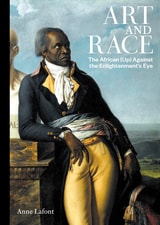
Art and Race
The African (Up) Against the Enlightenment’s EyeAnne Lafont
J. Paul Getty Trust, The, 2026
In this text, French art historian Anne Lafont examines the complexities and contradictions in Enlightenment-era ideas about race, focusing on the figurations of Africans and other people of color. Through studies of a wide range of eighteenth-century art, Lafont grounds her analysis in the objects themselves and, by doing so, highlights how visual works can reveal the values of the culture that produced them.
While Lafont locates—unsurprisingly—instances of the marginalization and objectification of Black people, she also draws attention to depictions that present African sitters as subjects in their own right. For example, Anne-Louis Girodet’s Portrait of Jean-Baptiste Belley (1797) offers a dignified, individualized representation of this formerly enslaved French politician from Saint-Domingue; and portraits of anonymous sitters show them as actual persons whose costumes and poses demonstrate their agency.
Ultimately, Lafont moves beyond artworks to consider the broader intellectual context of the Enlightenment, particularly ideas about freedom, equality, and universal human rights, which were anchored in visual culture and indexed by it. She reveals how these ideals often conflicted with the realities of colonialism and the shifting status of Black people during this era.
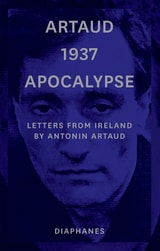
Artaud 1937 Apocalypse
Letters from IrelandAntonin Artaud
Diaphanes, 2019
During his fateful journey, Artaud wrote letters to friends in Paris which included several “magic spells,” intended to curse his enemies and protect his friends from the city’s forthcoming incineration and the Antichrist’s appearance. (To André Breton, he wrote: “It’s the Unbelievable—yes, the Unbelievable—it’s the Unbelievable which is the truth.”) This book collects all of Artaud’s surviving correspondence from his time in Ireland, as well as photographs of the locations he traveled through. Featuring an afterword and notes by the book’s translator, Stephen Barber, this edition marks the seventieth anniversary of Artaud’s death.
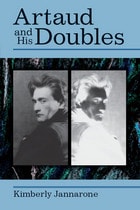
Artaud and His Doubles
Kimberly Jannarone
University of Michigan Press, 2012
Artaud and His Doublesis a radical re-thinking of one of the most influential theater figures of the twentieth century. Placing Artaud's writing within the specific context of European political, theatrical, and intellectual history, the book reveals Artaud's affinities with a disturbing array of anti-intellectual and reactionary writers and artists whose ranks swelled catastrophically between the wars in Western Europe.
Kimberly Jannarone shows that Artaud's work reveals two sets of doubles: one, a body of peculiarly persistent received interpretations from the American experimental theater and French post-structuralist readings of the 1960s; and, two, a darker set of doubles—those of Artaud's contemporaries who, in the tumultuous, alienated, and pessimistic atmosphere enveloping much of Europe after World War I, denounced the degradation of civilization, yearned for cosmic purification, and called for an ecstatic loss of the self. Artaud and His Doubleswill generate provocative new discussions about Artaud and fundamentally challenge the way we look at his work and ideas.
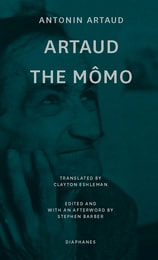
Artaud the Mômo
Antonin Artaud
Diaphanes, 2020
This edition is translated by Clayton Eshleman, the acclaimed foremost translator of Artaud’s work. This will be the first edition since the original 1947 publication to present the work in the spatial format Artaud intended. It also incorporates eight original drawings by Artaud—showing reconfigured bodies as weapons of resistance and assault—which he selected for that edition, after having initially attempted to persuade Pablo Picasso to collaborate with him. Additional critical material draws on Artaud’s previously unknown manuscript letters written between 1946 and 1948 to the book’s publisher, Pierre Bordas, which give unique insights into the work from its origins to its publication.
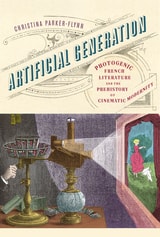
Artificial Generation
Photogenic French Literature and the Prehistory of Cinematic ModernityChristina Parker-Flynn
Rutgers University Press, 2022
As French as Everyone Else?
A Survey of French Citizens of Maghrebin, African, and Turkish OriginAuthored by Sylvain Brouard and Vincent Tiberj
Temple University Press, 2011
France is often depicted as the model of assimilationist or republican integration in the international literature on immigration. However, rarely have surveys drilled down to provide individual responses from a double representative sample. In As French as Everyone Else?, Sylvain Brouard and Vincent Tiberj provide a comprehensive assessment of the state of integration in France and challenge the usual crisis of integration by systematically comparing the "new French" immigrants, as well as their children and grandchildren born in France, with a sample of the French general population.
The authors' survey considers a wide range of topics, including religious affiliation and religiosity, political attitudes and political efficacy, value systems (including gender roles, work ethics, and anti-Semitism), patterns of integration, multiple identities and national belongings, and affirmative action. As the authors show, despite existing differences, immigrants of Maghrebin, African, and Turkish origin share a wide scope of commonality with other French citizens.
At the Crossroads of the Scientific Revolution
Two French Seventeenth-Century Women of ScienceMartine de Bertereau and Marie Meurdrac
Iter Press, 2026
The writings of mineralogist and hydrogeologist Martine de Bertereau (ca. 1584–ca. 1643) and alchemist and chemist Marie Meurdrac (ca. 1610–80) stand at the crossroads of the Scientific Revolution, a significant period between Copernicus and Newton that oversaw a new ferment in both the theoretical and empirical investigation of the natural world. Bertereau’s writings appear at the interface of a negotiation between an older form of knowledge, dating back to Aristotle, and a new scientific empiricism. She brilliantly addresses the relationship between knowledge and mining applications, as well as the roles of the king, the state, the market, and the public. Meurdrac published the first so-called chemistry book by a woman, which contributed to the various areas of scientific knowledge generally associated with alchemy in its development into chemistry, particularly medical cookery, botany, pharmacology, and cosmetology.
Bertereau’s and Meurdrac’s works illustrate this age of transition, a spectacular time of growth in ideas and discoveries for both men and women. This first-time translation of their works is an important step in restoring the voices of these early modern French women scientists.
Aucassin and Nicolette
A Facing-Page Edition and TranslationRobert S. Sturges
Michigan State University Press, 2015