Results by title
511 books match the query 'Government policy' and 33 start with a

A COVID Charter, A Better World
Toby Miller
Rutgers University Press, 2021
A COVID Charter, A Better World outlines the steps needed to reform public policies and fix the structural vulnerabilities that the current pandemic has made so painfully clear. Leading scholar Toby Miller argues that we must resist neoliberalism’s tendency to view health in terms of individual choices and market-driven solutions, because that fails to preserve human rights. He addresses the imbalance of geopolitical power to explain how we arrived at this point and shows that the pandemic is more than just a virus—it’s a social disease. By examining how the U.S., Britain, Mexico, and Colombia have responded to the COVID-19 crisis, Miller investigates corporate, scientific, and governmental decision-making and the effects those decisions have had on disadvantaged local communities. Drawing from human rights charters ratified by various international organizations, he then proposes a COVID charter, calling for a new world that places human lives above corporate profits.
A Common Humanity
Ritual, Religion, and Immigrant Advocacy in Tucson, ArizonaLane Van Ham
University of Arizona Press, 2011
This is the first book to examine immigrant aid groups from the inside. Author Lane Van Ham spent more than three years observing the groups and many hours in discussions and interviews. He is particularly interested in how immigrant advocates both uphold the legitimacy of the United States and maintain a broader view of its social responsibilities. By advocating for immigrants regardless of their documentation status, he suggests, advocates navigate the conflicting pulls of their own nation-state citizenship and broader obligations to their neighbors in a globalizing world. And although the advocacy organizations are not overtly religious, Van Ham finds that they do employ religious symbolism as part of their public rhetoric, arguing that immigrants are entitled to humane treatment based on universal human values.
Beautifully written and immensely engaging, A Common Humanity adds a valuable human dimension to the immigration debate.
A Contemporary History of Exclusion
The Roma Issue in Hungary from 1945 to 2015György Majtényi
Central European University Press, 2016

A Feminist Theory of Violence
A Decolonial PerspectiveFrançoise Vergès
Pluto Press, 2022
***Winner of an English PEN Award 2022***
The mainstream conversation surrounding gender equality is a repertoire of violence: harassment, rape, abuse, femicide. These words suggest a cruel reality. But they also hide another reality: that of gendered violence committed with the complicity of the State.
In this book, Françoise Vergès denounces the carceral turn in the fight against sexism. By focusing on 'violent men', we fail to question the sources of their violence. There is no doubt as to the underlying causes: racial capitalism, ultra-conservative populism, the crushing of the Global South by wars and imperialist looting, the exile of millions and the proliferation of prisons - these all put masculinity in the service of a policy of death.
Against the spirit of the times, Françoise Vergès refuses the punitive obsession of the State in favour of restorative justice.
A History of Japan’s Government-Business Relationship
The Passenger Car IndustryPhyllis A. Genther
University of Michigan Press, 1990

A Narrative of Events, since the First of August, 1834, by James Williams, an Apprenticed Labourer in Jamaica
James Williams
Duke University Press, 2001
Describing the hard working conditions on plantations and the harsh treatment of apprentices unjustly incarcerated, Williams argues that apprenticeship actually worsened the conditions of Jamaican ex-slaves: former owners, no longer legally permitted to directly punish their workers, used the Jamaican legal system as a punitive lever against them. Williams’s story documents the collaboration of local magistrates in this practice, wherein apprentices were routinely jailed and beaten for both real and imaginary infractions of the apprenticeship regulations.
In addition to the complete text of Williams’s original Narrative, this fully annotated edition includes nineteenth-century responses to the controversy from the British and Jamaican press, as well as extensive testimony from the Commission of Enquiry that heard evidence regarding the Narrative’s claims. These fascinating and revealing documents constitute the largest extant body of direct testimony by Caribbean slaves or apprentices.
A Nation of Immigrants Reconsidered
US Society in an Age of Restriction, 1924-1965Maddalena Marinari, Madeline Hsu, Maria Garcia
University of Illinois Press, 2019
Contributors: Eiichiro Azuma, David Cook-Martín, David FitzGerald, Monique Laney, Heather Lee, Kathleen López, Laura Madokoro, Ronald L. Mize, Arissa H. Oh, Ana Elizabeth Rosas, Lorrin Thomas, Ruth Ellen Wasem, and Elliott Young
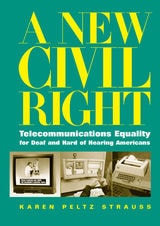
A New Civil Right
Telecommunications Equality for Deaf and Hard of Hearing AmericansKaren Peltz Strauss
Gallaudet University Press, 2006
When three deaf men in the 1960s invented and sold TTYs, the first teletypewriting devices that allowed deaf people to communicate by telephone, they started a telecommunications revolution for deaf people throughout America. A New Civil Right: Telecommunications Equality for Deaf and Hard of Hearing Americans chronicles the history of this movement, which lagged behind new technical developments decades after the advent of TTYs.
In this highly original work, Author Karen Peltz Strauss reveals how the paternalism of the hearing-oriented telecommunications industries slowed support for technology for deaf users. Throughout this comprehensive account, she emphasizes the grassroots efforts behind all of the eventual successes. A New Civil Right recounts each advance in turn, such as the pursuit of special customer premises equipment (SCPE) from telephone companies; the Telecommunications Act of 1982 and the Telecommunications Accessibility Enhancement Act of 1988 and the 1990 Americans with Disabilities Act, which required nationwide relay telephone services for deaf and hard of hearing users.
Strauss painstakingly details how all of these advances occurred incrementally, first on local and state levels, and later through federal law. It took exhaustive campaigning to establish 711 for nationwide relay dialing, while universal access to television captioning required diligent legal and legislative work to pass the Decoder Circuitry Act in 1990. The same persistence resulted in the enactment of the Telecommunications Act of 1996, which required all off-the-shelf communications equipment, including new wireless technology, to be readily accessible to deaf users.
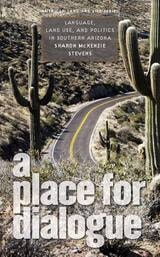
A Place for Dialogue
Language, Land Use, and Politics in Southern ArizonaSharon McKenzie Stevens
University of Iowa Press, 2007
In A Place for Dialogue, Sharon McKenzie Stevens views the contradictions and collaborations involved in the management of public land in southern Arizona—and by extension the entire arid West—through the lens of political rhetoric. Revealing the socioecological relationships among cattlemen and environmentalists as well as developers and recreationists, she analyzes the ways that language shapes landscape by shaping decisions about land use.
Stevens focuses on the collaborative Sonoran Desert Conservation Plan initiated by Pima County, Arizona, the ubiquitous use of scientific argument to defend contradictory practices, and the construction and negotiation of rancher/environmentalist identities to illuminate both literally and metaphorically the dynamics of land use politics. Drawing specifically upon extensive interviews with a diverse array of agents on all sides of the debate—ranchers, environmentalists, scientists, land managers, government officials—on historical narratives, and on her own conflicting experiences as someone who grew up with those who work the western lands, she demonstrates that it is possible to use differences to solve, rather than to aggravate, the entrenched problems that bridge land and language.
By integrating her richly textured case study of a fragile region with rhetorical approaches to narrative, science-based argument, and collective identities, Stevens makes a significant contribution to the fields of rhetoric, land management, and cultural studies.

A Poverty of Imagination
Bootstrap Capitalism, Sequel to Welfare ReformDavid Stoesz
University of Wisconsin Press, 2000
Welfare reform was supposed to end welfare as we know it. And it has. The welfare poor have been largely transformed into the working poor, but their poverty persists. This hard-hitting book takes a close look at where we’ve gone wrong—and where we might go next if we truly want to improve the lot of America’s underclass.
Tracing the roots of recent reforms to the early days of the war on poverty, A Poverty of Imagination describes a social welfare system grown increasingly inept, corrupt, and susceptible to conservative redesign. Investigating the causes of the ongoing failure of welfare assistance, Stoesz focuses on the economic barriers that impede movement out of poverty into the American mainstream. He explores such issues as the heterogeneity of welfare families, generational welfare, inadequate benefits, the negative effects of time limits on welfare recipients, a fringe banking industry that exploits low-income families, the limited capacity of low-wage markets, and the unavailability of credit.
Stoesz suggests that a form of "bootstrap capitalism" would allow individuals and families to participate more fully in American society and achieve upward economic mobility and stability. This proposal, emphasizing wage supplements, asset building, and community capitalism, sets the stage for the next act in poverty policy in the United States. With its valuable insights on the American welfare system and its positive agenda for change, this book makes a significant intervention in our ongoing struggle to come to terms with widespread poverty in the wealthiest nation on earth.
A Task for Sisyphus
Why Europe’s Roma Policies FailIulius Rostas
Central European University Press, 2020

A Thirsty Land
The Fight for Water in TexasBy Seamus McGraw
University of Texas Press, 2018
As a changing climate threatens the whole country with deeper droughts and more furious floods that put ever more people and property at risk, Texas has become a bellwether state for water debates. Will there be enough water for everyone? Is there the will to take the steps necessary to defend ourselves against the sea? Is it in the nature of Americans to adapt to nature in flux?
The most comprehensive—and comprehensible—book on contemporary water issues, A Thirsty Land delves deep into the challenges faced not just by Texas but by the nation as a whole, as we struggle to find a way to balance the changing forces of nature with our own ever-expanding needs. Part history, part science, part adventure story, and part travelogue, this book puts a human face on the struggle to master that most precious and capricious of resources, water. Seamus McGraw goes to the taproots, talking to farmers, ranchers, businesspeople, and citizen activists, as well as to politicians and government employees. Their stories provide chilling evidence that Texas—and indeed the nation—is not ready for the next devastating drought, the next catastrophic flood. Ultimately, however, A Thirsty Land delivers hope. This deep dive into one of the most vexing challenges facing Texas and the nation offers glimpses of the way forward in the untapped opportunities that water also presents.
A Ticket to Work
Policies for the Young Unemployed in Britain and GermanyBettina Kohlrausch
Campus Verlag, 2009
In A Ticket to Work, Bettina Kohlrausch examines the differing approaches taken by Britain and Germany to assisting young people with the often difficult transition from school to full-time work. Detailing the workings of such programs as skills training and job-placement assistance, the volume places those vocational training methods in the context of the general political and economic climate of the two nations, drawing a contrast between Britain’s more liberal market economy and Germany’s more structured and coordinated regime.

A War on Terror
Afghanistan and AfterPaul Rogers
Pluto Press, 2004
Paul Rogers is one of the world's leading security experts. Since the 11 September attacks, he has been a regular guest on TV news channels throughout America and Britain, where he has offered expert advice on the real implications of 9/11 and Bush's 'war on terror'. His articles in newspapers around the world, and in the web journal Open Democracy, have become essential reading for many thousands of people, including government officials, senior military, heads of UN agencies, opinion formers, journalists and peace activists.
A War on Terror is Paul Roger's radical assessment of Bush's new policy, the way it has affected world security and the grave implications that it holds for future peace, not only in the Middle East but throughout the world. Moving from the war in Afghanistan and its aftermath to the Israeli/Palestinian conflict, the continuing development of al-Qaida and its associates through to the war on Iraq, Rogers presents a uniquely cogent analysis of these rapid and traumatic events.
In a world in which the US and other states of the Atlantic community are increasingly speaking a different language to that of the majority of the world, Paul Rogers offers a vital critical assessment of the language of dominance and control as 'the New American Century' unfolds.
For the US, in particular, the post-9/11 world is one in which it is essential to maintain firm control of international security, extending to pre-emptive military action. In this book, Rogers demonstrates how futile, mistaken and deeply counter-productive that belief is, and points the way to more effective routes to a more just and secure world.

AIDS in Industrialized Democracies
Passions, Politics, and PoliciesBayer, Ronald
Rutgers University Press, 1992
In the ten years since the first cases of AIDS were reported, the disease has spread around the world. Every country has had to come up with policies suited to its own conditions, economy, culture, and institutions. The differences among their approaches are striking. This volume, the first international comprehensive comparison of responses to AIDS, is a unique guide to the world's most urgent public health crisis.
Sixteen leading experts in public health, social science, government, and public policy from USA, Canada, Germany, Australia, Spain, Britain, France, the Netherlands, Denmark, Sweden, and Japan candidly recount and analyze the responses of their own nations and comment on the lessons that can be drawn from each country's experience. For each country, they look critically at the tragic statistics of AIDS incidence; the circumstances of AIDS's first appearance; public health traditions of mandatory screening, contact tracing, and quarantine; attitudes toward drug abuse, homosexuality, sex education; publicity about AIDS; legal and customary protections of civil rights, minority groups, medical confidentiality; access to health care and insurance; and the interplay of formal and informal interest groups in shaping policy. The spectrum of AIDS policy ranges from severe "contain-and-control" programs to much more liberal plans based on education, cooperation, and inclusion.
No matter what policy a nation has constructed to deal with AIDS, the coming decade will test how well that policy conforms to democratic ideals. By scrutinizing the responses to AIDS so far, this book aims to give countries around the world a chance to learn from each others' mistakes and triumphs. It will be essential reading for all students and professionals in public health and public policy.

AIDS, The Winter War
Arthur Kahn
Temple University Press, 1993

Abolitionist Intimacies
Queer and Trans Migrants against the Deportation StateEithne Luibheid
Duke University Press, 2025

Aboriginal Resource Use in Canada
Historical and Legal AspectsKerry Abel
University of Manitoba Press, 1991

Accelerating Energy Innovation
Insights from Multiple SectorsEdited by Rebecca M. Henderson and Richard G. Newell
University of Chicago Press, 2011
Accelerating energy innovation could be an important part of an effective response to the threat of climate change. Written by a stellar group of experts in the field, this book complements existing research on the subject with an exploration of the role that public and private policy have played in enabling—and sustaining—swift innovation in a variety of industries, from agriculture and the life sciences to information technology. Chapters highlight the factors that have determined the impact of past policies, and suggest that effectively managed federal funding, strategies to increase customer demand, and the enabling of aggressive competition from new firms are important ingredients for policies that affect innovative activity.
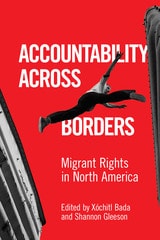
Accountability Across Borders
Migrant Rights in North AmericaEdited by Xóchitl Bada and Shannon Gleeson
University of Texas Press, 2019
Collecting the diverse perspectives of scholars, labor organizers, and human-rights advocates, Accountability across Borders is the first edited collection that connects studies of immigrant integration in host countries to accounts of transnational migrant advocacy efforts, including case studies from the United States, Canada, and Mexico.
Covering the role of federal, state, and local governments in both countries of origin and destinations, as well as nongovernmental organizations (NGOs), these essays range from reflections on labor solidarity among members of the United Food and Commercial Workers in Toronto to explorations of indigenous students from the Maya diaspora living in San Francisco. Case studies in Mexico also discuss the enforcement of the citizenship rights of Mexican American children and the struggle to affirm the human rights of Central American migrants in transit. As policies regarding immigration, citizenship, and enforcement are reaching a flashpoint in North America, this volume provides key insights into the new dynamics of migrant civil society as well as the scope and limitations of directives from governmental agencies.

Acid Rain and Friendly Neighbors
The Policy Dispute Between Canada and the United StatesJurgen Schmandt, Judith Clarkson, and Hilliard Roderick
Duke University Press, 1988
“Covers a wide range of issues with balance and clarity. . . . I can recommend the book highly as an intermediate-level source of information and insight into the international aspects of the acid rain problem.”—J. F. Hornig, Ambio
“A masterful analysis of the policy problems raised by acid rain in the U.S. and Canada . . . detailed, objective, understandable, and compelling. Weaving substantive and institutional factors into their analysis, the authors skillfully portray the controversy’s multifaceted nature.”—Tracy Dobson, American Journal of International Law
“[A] thorough, well-balanced analysis . . . [that] could serve as a model for analysis of complex policy issues.”—Choice
“Reveals the interface between science, technology, and public policy as being the co-extensive network it really is. . . . Timely and welcomed.”—John de la Mothe, Canadian Public Policy/Analyse de Politiques
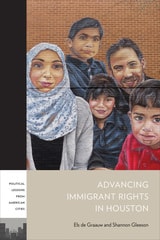
Advancing Immigrant Rights in Houston
Els de Graauw and Shannon Gleeson
Temple University Press, 2024
In Advancing Immigrant Rights in Houston, Els de Graauw and Shannon Gleeson recount how local and multi-level contexts shape the creation, contestation, and implementation of immigrant rights policies and practices in the city. They examine the development of a city immigrant affairs office, interactions between local law enforcement and federal immigration enforcement officials, local public-private partnerships around federal immigration benefits, and collaborations between labor, immigrant rights, faith, and business leaders to combat wage theft.
The case study of Houston provides a bellwether for how other U.S. cities will deal with their growing immigrant populations and underscores the importance of public-private collaborations to advance immigrant rights.
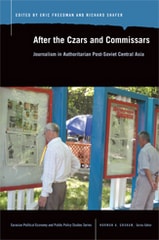
After the Czars and Commissars
Journalism in Authoritarian Post-Soviet Central AsiaEric Freedman
Michigan State University Press, 2011

Against the Deportation Terror
Organizing for Immigrant Rights in the Twentieth CenturyRachel Ida Buff
Temple University Press, 2017
Despite being characterized as a “nation of immigrants,” the United States has seen a long history of immigrant rights struggles. In her timely book Against the Deportation Terror, Rachel Ida Buff uncovers this multiracial history. She traces the story of the American Committee for the Protection of the Foreign Born (ACPFB) from its origins in the 1930s through repression during the early Cold War, to engagement with “new” Latinx and Caribbean immigrants in the 1970s and early 1980s.
Functioning as a hub connecting diverse foreign-born communities and racial justice advocates, the ACPFB responded to various, ongoing crises of what they called “the deportation terror.” Advocates worked against repression, discrimination, detention, and expulsion in migrant communities across the nation at the same time as they supported reform of federal immigration policy. Prevailing in some cases and suffering defeats in others, the story of the ACPFB is characterized by persistence in multiracial organizing even during periods of protracted repression.
By tracing the work of the ACPFB and its allies over half a century, Against the Deportation Terror provides important historical precedent for contemporary immigrant rights organizing. Its lessons continue to resonate today.
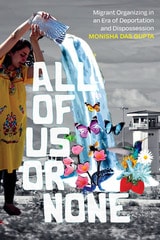
All of Us or None
Migrant Organizing in an Era of Deportation and DispossessionMonisha Das Gupta
Duke University Press, 2024

Alone in the Mainstream
A Deaf Woman Remembers Public SchoolGina A. Oliva
Gallaudet University Press, 2004
When Gina Oliva first went to school in 1955, she didn’t know that she was “different.” If the kindergarten teacher played a tune on the piano to signal the next exercise, Oliva didn’t react because she couldn’t hear the music. So began her journey as a “solitary,” her term for being the only deaf child in the entire school. Gina felt alone because she couldn’t communicate easily with her classmates, but also because none of them had a hearing loss like hers. It wasn’t until years later at Gallaudet University that she discovered that she wasn’t alone and that her experience was common among mainstreamed deaf students. Alone in the Mainstream recounts Oliva’s story, as well as those of many other solitaries.
In writing this important book, Oliva combined her personal experiences with responses from the Solitary Mainstream Project, a survey that she conducted of deaf and hard of hearing adults who attended public school. Oliva matched her findings with current research on deaf students in public schools and confirmed that hearing teachers are ill-prepared to teach deaf pupils, they don’t know much about hearing loss, and they frequently underestimate deaf children. The collected memories in Alone in the Mainstream add emotional weight to the conviction that students need to be able to communicate freely, and they also need peers to know they are not alone.
America's Children
Resources from Family, Government, and the EconomyDonald J. Hernandez
Russell Sage Foundation, 1993
America's Newcomers and the Dynamics of Diversity
Frank D. Bean
Russell Sage Foundation, 2003
American Fish and Wildlife Policy
The Human DimensionEdited by William R. Mangun
Southern Illinois University Press, 1992
These eleven original essays by leading wildlife management and public policy scholars deal with policy issues, management perspectives, and the public attitudes about wildlife that shape the world of the wildlife manager.
Part 1 contains William R. Mangun’s introductory essay "Fish and Wildlife Policy Issues" and Daniel J. Decker et al.’s "Toward a Comprehensive Paradigm of Wildlife."
Ann H. Harvey’s "Interagency Conflict and Coordination in Wildlife Management," Philip S. Cook and Ted T. Cable’s "Developing Policy for Public Access to Private Land," and Debra A. Rose’s "Implementing Endangered Species Policy" make up part 2.
Part 3 consists of Cliff Hamilton’s "Pursuing a New Paradigm in Funding State Fish and Wildlife Programs" and Trellis G. Green’s "Use of Economics in Federal and State Fishery Allocation Decisions."
The fourth part includes James J. Kennedy and Jack Ward Thomas’s "Exit, Voice, and Loyalty of Wildlife Biologists in Public Natural Resource/Environmental Agencies"; Jean C. Mangun et al.’s "Nonconsumptive Wildlife-Associated Recreation in the United States"; and Barbara A. Knuth’s "Natural Resource Hazards: Managing to Protect People from the Resource."
In part 5, Joseph F. Coates looks to the future in "Public Policy Actors and Futures."

American Pentimento
The Invention of Indians and the Pursuit of RichesPatricia Seed
University of Minnesota Press, 2001

Animals under the Swastika
J. W. Mohnhaupt, translated by John R. J. Eyck
University of Wisconsin Press, 2022
Drawing from diaries, journals, school textbooks, and printed propaganda, J.W. Mohnhaupt tells these animals’ stories vividly and with an eye for everyday detail, focusing each chapter on a different facet of Nazism by way of a specific animal species: red deer, horses, cats, and more. Animals under the Swastika illustrates the complicated, thought-provoking relationship between Nazis and animals.
Assets for the Poor
The Benefits of Spreading Asset OwnershipThomas M. Shapiro
Russell Sage Foundation, 2001
Atomic Environments
Nuclear Technologies, the Natural World, and Policymaking, 1945–1960Neil S. Oatsvall
University of Alabama Press, 2023
Demonstrates how policymakers influenced environmental science during the early nuclear age
In Atomic Environments: Nuclear Technologies, the Natural World, and Policymaking, 1945–1960, Neil S. Oatsvall examines how top officials in the Truman and Eisenhower administrations used environmental science to develop nuclear strategy at the beginning of the Cold War. While many people were involved in research and analysis during the period in question, it was at highest levels of executive decision-making where environmental science and nuclear science most clearly combined to shape the nation’s policies.
Oatsvall clearly demonstrates how the natural world and the scientific disciplines that study it became integral parts of nuclear science rather than adversarial fields of knowledge. But while nuclear technologies heavily depended on environmental science to develop, those same technologies frequently caused great harm to the natural world. Moreover, while some individuals expressed real anxieties about the damage wrought by nuclear technologies, policymakers as a class consistently made choices that privileged nuclear boosterism and secrecy, prioritizing institutional values over the lives and living systems that they were ostensibly charged to protect.
By scrutinizing institutional policymaking practices and agendas at the birth of the nuclear age, a constant set of values becomes clear. Oatsvall reveals an emerging technocratic class that routinely valued knowledge about the environment to help create and maintain a nuclear arsenal, despite its existential threat to life on earth and the negative effects many nuclear technologies had on ecosystems and the American people alike. Although policymakers took their charge to protect and advance the welfare of the United States and its people seriously, Atomic Environments demonstrates how they often failed to do so because their allegiance to the US nuclear hierarchy blinded them to the real risks and dangers of the nuclear age.