228 books match the query 'Guidebooks' and 40 start with a

cover of A Birder’s West Indies: An Island-by-Island Tour

A Birder’s West Indies

An Island-by-Island Tour

By Roland H. Wauer

University of Texas Press, 1996

The West Indies offer so much more than sun, sand, and shopping. This sweeping arc of islands, which runs from Cuba to Grenada and includes the Virgin Islands, teems with a rich diversity of plant and animal life. Up to 40 percent of the plants in some forests are found nowhere else on earth, while the West Indian flyway is a critical link in the migratory routes of many birds.

In A Birder's West Indies, Roland Wauer takes you on an island-by-island journey of discovery. He describes the unique natural features of each island and recounts his often fascinating experiences in seeking out the nearly 400 species of birds known in the West Indies. His accounts give insight into the birds' habitats, status, and ecology and record some of the threats posed by human activities.

For readers planning trips to the West Indies, Wauer also includes helpful, up-to-date facts about the best times to travel, the kinds of entry and customs systems to expect, the money exchange services available, and general information about weather, food, and accommodations. Filling a unique niche among current guides, A Birder's West Indies offers both professional ornithologists and avocational bird watchers a chance to compare notes and experiences with an expert observer. And for readers who haven't yet visited the islands, Wauer's fluid prose and lovely color photographs will be the next-best thing to being there—and an irresistible invitation to go.

[more]
cover of A Cruising Guide to New Jersey Waters

A Cruising Guide to New Jersey Waters

Launer, Donald

Rutgers University Press, 2004

With this book in hand, boaters can cruise down the Jersey Shore--from New York Harbor to Delaware Bay--in the good company of Captain Donald Launer. Captain Launer brings many years of experience as a skipper of small boats to this engaging nautical and historical guide to New Jersey's tidal waters. Cruise with him from the New Jersey/New York state line near the mouth of the Hudson River, past Raritan Bay and Sandy Hook, and into the Manasquan Inlet. From there, he gives you a choice of voyages: the inside route through the Intracoastal Waterway to Toms River, Barnegat Bay, Atlantic City, and Cape May, or taking the offshore passage. Then you explore the Delaware Bay and its tributaries and cruise up the Delaware River to Trenton. This revised edition contains updated information about onshore facilities, marinas, restaurants, stores, sites of interest, docking fees, bridge heights, maritime service stations, weather, navigation, and safety, as well as post-September 11 regulations in the waters around New York City. The book also includes a wealth of photographs and sea charts. Donald Launer, who holds a U.S. Coast Guard captain's license, has explored the New Jersey waters in every kind of small craft since he first sailed in Barnegat Bay at the age of eight. His articles on recreational boating have appeared in Good Old Boat Magazine, Cruising World, The Beachcomber, Offshore, and Sail. He berths his schooner, Delphinus, in Forked River, New Jersey.
[more]
cover of A Dog Lover's Guide to Hiking Wisconsin's State Parks

A Dog Lover's Guide to Hiking Wisconsin's State Parks

Danielle St. Louis

University of Wisconsin Press, 2022

Danielle St. Louis and her energetic Labrador-border collie rescue dog, Lucky, have hiked every Wisconsin state park together. While doing so, they enjoyed the state’s rich natural beauty and the challenges that can come from hiking with a canine companion. St. Louis documents it all in this fun and thorough guide.
 
A Dog Lover’s Guide to Hiking Wisconsin’s State Parks divides Wisconsin into five regions and further details specific trails, graded for dog reactivity as well as the fitness level of human and canine alike. St. Louis also helpfully notes the availability of nearby facilities such as bathrooms, water stations, trashcans, designated dog swimming areas, and veterinarians. Truly one of a kind, this book is a must have for any Wisconsin dog lover looking to go out into nature with their pup.
[more]
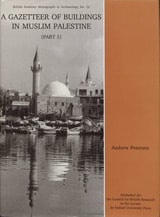
cover of A Gazetteer of Buildings in Muslim Palestine

A Gazetteer of Buildings in Muslim Palestine

Andrew Petersen

Council for British Research in the Levant, 2001

The aim of the survey on which this book is based was to make a record of all buildings constructed in Palestine during the medieval and Ottoman periods. The survey area covers the modern state of Israel excluding West Jerusalem and Ramla (which are covered in separate publications). The West Bank and Gaza will be the subject of Volume II.


Library of Congress subject headings for this publication:
Architecture, Islamic -- Palestine -- Guidebooks.
Architecture, Ottoman -- Palestine -- Guidebooks.
Architecture, Medieval -- Palestine -- Guidebooks.
Historic buildings -- Palestine -- Guidebooks.
[more]
cover of A Ghost in Trieste

A Ghost in Trieste

Joseph Cary

University of Chicago Press, 1993

Gem of the Adriatic, Trieste sparkled and beckoned through the pages of poets and novelists. Drawn there in search of literary ghosts, of the poet Umberto Saba and the novelists Italo Svevo and James Joyce, Joseph Cary found instead a city with an imaginative life of its own, the one that rises, tantalizing from the pages of this book. The story of Cary's travels, A Ghost in Trieste, is also a tale of discovery and transformation, as the bustling world of port and airplane, baggage and trams and trains becomes the landscape of history and literature, language and art, psychoanalysis and the self.

Here is the crossroads of East and West. A port held in turn by the Romans, the Venetians, the Austrians, the Germans, the Slavs, and finally the Italians, Trieste is the capital of nowhere, fertile source of a unique literary florescence before the First World War. At times an exile home and an exiled city. "I cannot claim to have walked across it all,:" wrote Saba, the poet of Trieste in 1910 of the city Cary crosses and recrosses, seeking the poetry of the place that inspired its literary giants. Trieste's cultural and historical riches, its geographical splendor of hills and sea and mysterious presence unfold in a series of stories, monologues and literary juxtapositions that reveal the city's charms as well as its seductive hold on the writer's imagination. Throughout, literary and immediate impressions alike are elaborated in paintings and maps, and in handsome line drawings by Nicholas Read.

This "clownish and adolescent Parsifal," this Trieste of the "prickly grace," this place "impaled in my heart like a permanent point," this symbol of the Adriatic, this "city made of books" — here the book remakes the city. The Trieste of allusions magically becomes a city of palpable allure, of warmth and trying contradictions and gritty beauty. Part travel diary, part guide book, part literary history, A Ghost in Trieste is a brilliant introduction to an extraordinary time and place. In Joseph Cary, Trieste has found a new poet, and readers, a remarkably captivating companion and guide.
[more]
cover of A Guide to Bird Finding in New Jersey

A Guide to Bird Finding in New Jersey

William J. Boyle, Jr.

Rutgers University Press, 2002

New Jersey is one of the smallest and most densely populated states, yet the remarkable diversity of its birdlife surpasses that of many larger states. Well over 400 species of birds have been recorded in New Jersey and an active birder can hope to see more than 300 species in a year.
William J. Boyle has updated his classic guide to birding in New Jersey, featuring all new maps and ten new illustrations. The book is an invaluable companion for every birder - novice or experienced, New Jerseyan or visitor.
A Guide to Bird Finding in New Jersey features:
More than 130 top birding spots described in detail
Clear maps, travel directions, species lists, and notes on birding
An annotated list of the frequency and abundance of the state's birds, including waterbirds, pelagic birds, raptors, migrating birds, and northern and southern birds at the edge of their usual ranges
A comprehensive bibliography and index
The guide also includes helpful information on:
Birding in New Jersey by season
Telephone and internet rare bird alerts
Pelagic birding
Hawk watching
Bird and nature clubs in the state
[more]
cover of A Guide to Chicago's Murals

A Guide to Chicago's Murals

Mary Lackritz Gray

University of Chicago Press, 2001

Chicago is a city known for its fabulous architecture and public sculpture by artists such as Picasso and Calder, but anyone who has seen the gorgeous lunettes in the Auditorium Theater or the South Side's Wall of Respect, which inaugurated the city's contemporary mural movement, knows that Chicago has an equally rich tradition of mural painting. Through these murals, the history of Chicago and the nation is writ in churches and lobbies, on viaducts and school walls. Mary Gray's A Guide to Chicago's Murals is the first definitive handbook to the treasures that can be found all over the city.

With full-color illustrations of nearly two hundred Chicago murals and accompanying entries that describe their history—who commissioned them and why, how artists collaborated with architects, the subjects of the murals and their contexts—A Guide to Chicago's Murals serves both a general and a specific audience. Divided into easy-to-read geographical sections with useful maps for walking tours, it is the perfect companion for tourists or Chicagoans interested in coming to know better this aspect of the city's history. Gray also provides crucial information on lesser-known artists and on murals that have been destroyed over the years, filling a gap in the visual record of the city's development.

Gray also includes biographies of more than 150 artists and a glossary of key terms, making A Guide to Chicago's Murals essential reading for mural viewing. From post offices to libraries, fieldhouses to banks, and private clubs to street corners, Mary Gray chronicles the amazing works of artists who have sought to make public declarations in this most social of art forms.

"A major lacuna in the history of art in Chicago has been filled, with the thoroughness of the research proportionate to the richness of the material revealed."—From the Foreword by Franz Schulze

"Gray's book . . . can function as a guidebook, as the murals are conveniently arranged according to the quadrants of the city. But the book is also beautiful to look at and indespensable as art history and Chicago history as well. . . . This book is a wonderful guide to Chicago's rich and unique mural tradition."—Elizabeth Alexander, Chicago Tribune Books

"If you love art and history, this is a book you'll truly enjoy."—Al Paulson, Utne Reader
[more]
cover of A Guide to Green New Jersey: Nature Walks in the Garden State

A Guide to Green New Jersey

Nature Walks in the Garden State

Rosenfeld, Lucy D

Rutgers University Press, 2003

New Jersey is a state of surprises. Did you know there was a castle in Passaic County? Or that Essex County’s Branch Brook Park, rather than Washington, D.C., has the largest concentration of flowering cherry trees outside of Japan? Did you know you could walk through a bamboo forest on the Rutgers University campus, dig for fossils in Middletown’s Poricy Brook, visit an owl haven on the site of the Battle of Monmouth, or see wild river otters in Salem County?

Despite its proximity to major urban areas and its high population density, the state has dozens of absolutely marvelous natural areas and preserved spaces. It boasts something for everyone, from Atlantic seashore to rugged mountains, rolling farmland to winding canals, historic trails to formal gardens, bird-filled marshes to hardwood forests, pine barrens to fragrant vineyards and orchards. There are outings for hikers, bikers, beachcombers, gardeners, power-walkers, and strollers of all kinds, and A Guide to Green NewJersey is your key to finding it all.

The book is conveniently organized into forty geographic areas, spotlighting more than 200 nature walks. Each entry includes a description, visitor hours, fees, driving accessibility, and other pertinent information for walkers. At the end of the book, the authors provide an index with the names of each site, and their guide to choosing an outing according to individual tastes and interests. They identify sites that are wheelchair accessible, especially fun for kids, best for bicyclists, and those that are particularly physically challenging.

Newcomers to the state will find the book indispensable, and long-time New Jerseyans will find it a pleasantly eye-opening guide to wonderful walks right in their own backyards.

[more]
cover of A Guide to New Jersey's Revolutionary War Trail: for Families and History Buffs

A Guide to New Jersey's Revolutionary War Trail

for Families and History Buffs

Di Ionno, Mark

Rutgers University Press, 2000

Hit the road with journalist Mark DiIonno as he takes you on a tour of New Jersey’s extraordinary Revolutionary War history. Listing more than 350 historic sites throughout the state, DiIonno has compiled the most complete guide ever to the Revolutionary War in the Garden State.

New Jersey’s role in the Revolutionary War is widely overlooked. Every school kid learns about the Boston Tea Party but not the Greenwich tea burning; and about the miserable winter at Valley Forge but not Jockey Hollow. Schools fund class trips to Philadelphia’s Independence Hall but not Princeton’s Nassau Hall. To find history in New Jersey, all you need is DiIonno’s book as your guide. His easy-to-read volume helps readers explore the cities and the countryside from Bergen to Cape May County to find out exactly what happened there during the Revolutionary War.

While previously published books center on the highlights — Fort Lee and Washington’s retreat across the state, victories at Trenton and Princeton, the brutal winter encampment at Jockey Hollow and the Battle of Monmouth —  DiIonno fills in the blanks. Battlefields, churches, homes of the famous and infamous, cemeteries, parks, taverns, liberty poles, bridges, creeks, hills, museums, encampment sites, lighthouses, historical societies, walking trails, monuments, plaques—if it played a part in or commemorates the Revolutionary War in New Jersey, DiIonno tells you what happened there, the personalities involved, and how to see it for yourself.

The sites are conveniently cataloged by county, with a helpful summary of the area’s war history beginning each chapter. Each entry lists the town and directions to each site, and where appropriate, a complete address, telephone numbers, and hours of operation. Both public and private sites are described, and DiIonno advises readers of which private sites tours can be arranged.
[more]
cover of A Guide to Oregon South Coast History: Traveling the Jedediah Smith Trail

A Guide to Oregon South Coast History

Traveling the Jedediah Smith Trail

Nathan Douthit

Oregon State University Press, 1999

[more]
cover of A Guide to Southern Utah's Hole-in-the-Rock Trail

A Guide to Southern Utah's Hole-in-the-Rock Trail

Stewart Aitchison

University of Utah Press, 2005

In 1879, 230 settlers in southwestern Utah heeded the call from leaders of the Church of Jesus Christ of Latter-day Saints to pull up stakes and move to the distant San Juan country of southeastern Utah. Their year-long journey became one of the most extraordinary wagon trips ever undertaken in North America, their trail one of peril, difficulty, and spectacular vistas. Beginning in Cedar City, Utah, this trail crosses today’s Dixie National Forest, skirts Bryce Canyon National Park, bisects the Grand Staircase-Escalante National Monument, crosses the Glen Canyon National Recreation Area, and comes close to Natural Bridges National Monument on its way to Bluff, Utah.

Though the trail that these devoted pioneers broke across raw frontier was used for several years afterward, no highway was built over most of the route because it was deemed too rugged for modern vehicles. In addition to the historical value of the story of these pioneers, this guide includes road logs, maps, and hiking trails along the historic trail. It also points out fascinating natural history along the way, making A Guide to Southern Utah’s Hole-in-the-Rock Trail a significant reference for a variety of readers. 
[more]
cover of A Guide to Southern Utah's Hole-in-the-Rock Trail: Updated Edition

A Guide to Southern Utah's Hole-in-the-Rock Trail

Updated Edition

Stewart Aitchison

University of Utah Press, 2026

Updated Edition

In 1879, more than 230 settlers in southwestern Utah heeded the call from leaders of the Church of Jesus Christ of Latter-day Saints to pull up stakes and move to the distant San Juan country of southeastern Utah. Their year-long journey became one of the most extraordinary wagon trips ever undertaken in North America, and their trail became one of peril, difficulty, and spectacular vistas. Beginning in Cedar City, Utah, this trail crosses today’s Dixie National Forest, skirts Bryce Canyon National Park, bisects Grand Staircase-Escalante National Monument, crosses Glen Canyon National Recreation Area, and cuts through   Bears Ears National Monument on its way to Bluff, Utah.

Though the trail that these devoted pioneers broke across the raw frontier was used for several years afterward, no highway was built over most of the route because it was deemed too rugged for modern vehicles. This updated edition features pioneer family histories and updated natural history, road logs, maps, and hiking trails along the historic route, making A Guide to Southern Utah’s Hole-in-the-Rock Trail a significant reference for a variety of readers.

[more]
cover of A Guide to Tucson Architecture

A Guide to Tucson Architecture

Anne M. Nequette

University of Arizona Press, 2002

Tucson is a city rich in architectural heritage spanning three cultures, with a history of human settlement that makes it one of the oldest continually inhabited cities in the United States. Hispanic barrios, American architectural forms, and remnants of a prehistoric Native American past give Tucson a unique and eclectic identity unlike any other city. This book is a comprehensive, richly illustrated guide to Tucson's significant historic and contemporary architectural resources—not only buildings, but ruins, open spaces, landscapes, and other elements that define the city’s built environment. It captures all facets of Tucson’s architecture, from one-of-a-kind homes on Main Avenue and historic downtown buildings to destination resorts in the Catalina Foothills and other modern structures. In this book readers will find:
- walking and driving tours of fourteen areas, complete with maps, beginning with central neighborhoods such as Barrio Historico and Armory Park and moving on to the rapidly expanding outlying areas
- annotated descriptions of individual structures—residences, schools, churches, government buildings, offices, commercial establishments, and others—enhanced by more than 120 photographs
- profiles of prominent Tucson architects, including Henry Trost, Josias Joesler, and Judith Chafee
- a guide to architectural styles found in Tucson—with examples—and a glossary of terms. A Guide to Tucson Architecture is the only book to offer such an extensive guided tour of one of America's favorite destination cities, capturing both its historic character and its dynamic growth. Through it, readers will appreciate the holistic balance of influences that has created Tucson's unique architectural expression and that defines its modern identity.
[more]
cover of A Guide to the Campus of the University of Michigan

A Guide to the Campus of the University of Michigan

Margo MacInnes

University of Michigan Press, 1979

The Ann Arbor campus of the University of Michigan has a blend of architecture that is as varied as is the University itself. This convenient and selective guide describes the most beautiful, interesting, and historic buildings on a campus rich in tradition.Photographs and an impressive aerial map help the visitor around a sometimes baffling complex of buildings, streets, and walkways. The text, compiled and written by Margo MacInnes with the assistance of Wystan Stevens, will provide hours of reading enjoyment. The book also offers a historical perspective on the University's other points of interest, such as Matthaei Botanical Gardens. No other guidebook provides you with such inclusive information about the University of Michigan.
[more]
cover of A Guide to the Great Gardens of the Philadelphia Region

A Guide to the Great Gardens of the Philadelphia Region

Adam Levine

Temple University Press, 2007

Finally, for every resident and visitor to the region, a comprehensive guide to the gardens of eastern Pennsylvania, southern New Jersey, and northern Delaware.  Magnificently illustrated with nearly 200 full color photographs, A GUIDE TO THE GREAT GARDENS OF THE PHILADELPHIA REGION provides essential information on how to locate and enjoy the finest gardens the area has to offer.

As the horticultural epicenter of the United States, Philadelphia and the surrounding towns, suburbs, and countryside are blessed with more public gardens in a concentrated area than almost any other region in the world.  Stretching from Trenton, New Jersey  through Philadelphia and down to Newark, Delaware, this area (often called the Delaware Valley) offers more horticultural riches than a visitor can possibly see even in a coupl of weeks of hectic garden-hopping.

In A GUIDE TO THE GREAT GARDENS OF THE PHILADELPHIA REGION  you will find:

Detailed coverage of almost 100 gardens

Maps to indicate where area gardens are in relation to each other to plan day trip itineraries

Key information about each major garden, including hours, fees, time needed for a tour, history, acreage, and special features

Over a dozen gardens that have never before been featured in any garden guidebook

Arranged by interest, to help guide readers to gardens that will most meet their needs

Notations about historical houses, cafes/restaurants, gift shops, and chidren's features at each major garden
[more]
cover of A Guide to the Naval Records in the National Archives of the UK

A Guide to the Naval Records in the National Archives of the UK

Edited by Randolph Cock and N. A. M. Rodger

University of London Press, 2008

[more]
cover of A Hiking Guide To Cedar Mesa

A Hiking Guide To Cedar Mesa

Peter Francis Tassoni

University of Utah Press, 2001

The Cedar Mesa country in southeast Utah is a land of convoluted cliffs with arches, natural bridges, hoodoos, spires, hat rocks, ledges, and alcoves. It is a land of flash floods and extreme temperatures that demands much from those who would explore it. It is also an unparalleled museum of geological features and ancestral Puebloan culture. This fascinating culture flowered for more than a millennium and visitors to southeast Utah are treated to a sampling of archaeological wonders.

A Hiking Guide to Cedar Mesa describes sixty-three routes, ranging from quarter-mile walks to fifteen-mile day hikes, loops, and multi-day backpack trips. There is essential information on permits, weather, gear, road, trailhead access, geology, human history in the region, and leave-no-trace camping.

Care is given to name only those well-known archaeological sites that are visible or immediately accessible from roads. Throughout, the author emphasizes proper visitation protocol for fragile archaeological sites. He states, "I have been touched by this landscape and would prefer to keep its teachings and secrets to myself, but I cannot. The experience of the desert should be available to everyone with the motivation to encounter it."
[more]
cover of A Hiking Guide to the Geology of the Wasatch Mountains: Mill Creek and Neffs Canyons, Mount Olympus, Big and Little Cottonwood and Bells Canyons

A Hiking Guide to the Geology of the Wasatch Mountains

Mill Creek and Neffs Canyons, Mount Olympus, Big and Little Cottonwood and Bells Canyons

William T Parry

University of Utah Press, 2005

Northern Utah’s Wasatch Mountains are popular destinations for outdoor enthusiasts in every season. These mountains rise spectacularly from the relatively flat valley floor to thirteen peaks over 11,000 feet in elevation. An additional nineteen peaks rise more than 10,000 feet in elevation. Although many hiking guides exist for the Wasatch Mountains, there has been no guide book that focuses on the geologic features visible from the trails—until now.

Written by a recognized authority on the geology of the Wasatch Mountains, this guide is meant to enrich the experience of outdoor enthusiasts who want to understand the geological history and development of the Wasatch range. The first section of the book introduces the major geological time periods—the record of mountain building events from oldest to youngest, the effects of glaciation, and the development of the present topography. It then follows with a descriptive trail guide for each major trail system, including Mill Creek and Neffs Canyons, Mount Olympus, Little and Big Cottonwood Canyons, and Bells Canyon. Trail length, elevation gain, relative difficulty, and major geological features are outlined for each trail. Now you can hike these trails with the answers to all your geologic questions right at your fingertips.

[more]
cover of A Historical Guidebook to Old Columbus: Finding the Past in the Present in Ohio’s Capital City

A Historical Guidebook to Old Columbus

Finding the Past in the Present in Ohio’s Capital City

Bob Hunter

Ohio University Press, 2012

Ever look at a modern skyscraper or a vacant lot and wonder what was there before? Or maybe you have passed an old house and been curious about who lived there long ago. This richly illustrated new book celebrates Columbus, Ohio’s, two-hundred-year history and supplies intriguing stories about the city’s buildings and celebrated citizens, stopping at individual addresses, street corners, parks, and riverbanks where history was made. As Columbus celebrates its bicentennial in 2012, a guide to local history is very relevant.

Like Columbus itself, the city’s history is underrated. Some events are of national importance; no one would deny that Abraham Lincoln’s funeral procession down High Street was a historical highlight. But the authors have also included a wealth of social and entertainment history from Columbus’s colorful history as state capital and destination for musicians, artists, and sports teams.

The book is divided into seventeen chapters, each representing a section of the city, including Statehouse Square, German Village, and Franklinton, the city’s original settlement in 1797. Each chapter opens with an entertaining story that precedes the site listings. Sites are clearly numbered on maps in each section to make it easy for readers to visit the places that pique their interest. Many rare and historic photos are reproduced along with stunning contemporary images that offer insight into the ways Columbus has changed over the years.

A Historical Guidebook to Old Columbus invites Columbus’s families to rediscover their city with a treasure trove of stories from its past and suggests to visitors and new residents many interesting places that they might not otherwise find. This new book is certain to amuse and inform for years to come.

[more]
cover of A Literary Guide to Provence

A Literary Guide to Provence

Daniel Vitaglione

Ohio University Press, 2001

Provence through the eyes of its writers—those who wrote of it in Provençal or French and also those visitors who were moved by its beauty—that is the inspiration behind A Literary Guide to Provence. In this compact travel guide, Marseilles native Daniel Vitaglione presents a literary panorama of the region of southern France from the Avignon of Mistral to Colette’s St. Tropez.

Including such sites as the birthplace of Nostradamus and the ruins of the Marquis de Sade’s castle, A Literary Guide to Provence presents a thousand years of history entwined with maps and photos that provide readers on tour with a sense of the historical import of this most beautiful of regions even as they experience it firsthand.

Both authors of Provençal ancestry and those who came to love and live in Provence are featured in this comprehensive and enchanting picture of the garden place of France. The Riviera enticed Virginia Woolf. Toulon inspired two novels by Georges Sand. Robert Louis Stevenson resided in Hyères, as did Edith Wharton. Le Lavandou was Willa Cather’s favorite place. F. Scott Fitzgerald lived in St. Raphael and Juan-les-Pins, where he wrote Tender is the Night.

This illustrated guide follows in these writers’ footsteps, and the practical information on hotels and restaurants (phones, web sites, email, etc.) make it the ideal traveling companion for armchair tourists and those who cannot resist seeing Provence for themselves.

[more]
cover of A Paddler's Guide to the Delaware River: Kayaking, Canoeing, Rafting, Tubing

A Paddler's Guide to the Delaware River

Kayaking, Canoeing, Rafting, Tubing

Letcher, Gary

Rutgers University Press, 2012

When Henry Hudson explored the Delaware River in 1609, he dubbed it “one of the finest, best, and pleasantest rivers in the world.” Today, those same qualities make the Delaware one of the most popular rivers for recreational use in the United States. Although in places a near-wilderness, the Delaware is easily accessible to millions of residents. On any summer day there may be thousands of people rushing down its exciting rapids or lazing through its serene eddies.

A Paddler’s Guide to the Delaware River is an indispensable resource for anyone who wants to experience the Delaware River in a kayak, canoe, raft, or tube—or, for that matter, an automobile or an armchair. Reading the book is like travelling down the river with an experienced guide. It charts the non-tidal Delaware 200 miles from Hancock, New York, to Trenton, New Jersey, describing access points, rapids, natural features, villages, historical sites, campgrounds, outfitters, and restaurants. The Delaware comes alive as the author introduces some of the people, places, events, and  controversies that have marked the river from earliest times to the present day.
Completely revised, the third edition offers:

  • An overview of the river including watershed, history, place names, paddlecraft, safety, and fishing.
  • The River Guide: ten sections that can each be paddled in one day (about 20 miles), with a mile-by-mile account of rapids, access, natural features, historic sites, and other features.
  • All new maps, with names for virtually every rapid, eddy, and other river feature, plus detailed diagrams for routes through even the most severe rapids.
  • Features in the River Guide highlight the people, events, natural history, and communities that define the river experience, such as Tom Quick, the infamous “avenger of the Delaware”; the mysterious migration of eels, the battle over Tocks Island Dam; and many others.
  • Appendices of Important Contacts, Outfitters and Campgrounds, River Trip Checklists, and more.

Whether you are a novice out for an afternoon float, a seasoned adventurer on an overnight expedition, or a resident fascinated by the lore of the Delaware Valley, this book is an invaluable guide.

[more]
cover of A Perfect Pint's Beer Guide to the Heartland

A Perfect Pint's Beer Guide to the Heartland

Michael Agnew

University of Illinois Press, 2014

Once dominated by megabreweries like Miller and G. Heilemann, the Midwest has in recent years become home to a dynamic craft beer industry at the core of America's current brewing renaissance. Beer writer and Certified Cicerone® Michael Agnew crisscrossed Illinois, Iowa, Minnesota, and Wisconsin sampling the astonishing variety of beers on offer at breweries and brewpubs. The result is a region-wide survey of the Midwestern craft beer scene. Packed with details on more than 200 breweries, A Perfect Pint's Beer Guide to the Heartland offers actual and armchair travelers alike a handbook that includes:
  • Agnew's exclusive choices on which beers to try at each location
  • Entries on every brewery's history and philosophy
  • Information on tours, tasting rooms and attached pubs, and dining options and other amenities
  • A survey of each brewery's brands, including its flagship beer plus seasonal brews and special releases
  • Brewery equipment and capacity
  • Nearby attractions

In addition, Agnew sets the stage with a history of Midwestern beer spanning the origins of the immigrant brewers who arrived in the 1800s to the homebrewers-made-good who have built a new kind of brewing culture founded on creativity, dedication to quality, and attention to customer feedback.

Informed and unique, A Perfect Pint's Beer Guide to the Heartland is the essential companion for beer aficionados and curious others determined to drink the best the Midwest has to offer.

Includes more than 150 full color images, including the region's most distinctive beer labels, trademarks, and company logos.

[more]
cover of A Photographer’s Guide to Ohio

A Photographer’s Guide to Ohio

Ian Adams

Ohio University Press, 2011

In A Photographer’s Guide to Ohio Ian Adams, Ohio’s foremost landscape photographer, guides you to some of the most photogenic sites in the Buckeye State. With 3,600 buildings on the National Register of Historic Places, more than 120 state parks and nature preserves, and the world’s largest Amish community, Ohio’s photographic subjects are nearly endless. In more than 150 color photographs, Adams shows you how to capture the beauty of the seasons when photographing Ohio’s scenic vistas, nature preserves, waterfalls, public gardens, historic barns and bridges, landmark buildings, and town murals. Accompanied by regional maps, each entry includes clear directions and GPS locations, related websites, and historical facts about the area, as well as Adams’s detailed suggestions for capturing the best images. Both beginners and experienced photographers will find expert guidance in Adams’s clear advice on digital landscape photography and will be inspired to create their own stunning Ohio scenic images.
[more]
cover of A Projectile Point Guide for the Upper Mississippi River Valley

A Projectile Point Guide for the Upper Mississippi River Valley

Robert F. Boszhardt

University of Iowa Press, 2003

The most common relics of the 12,000-year occupancy of the Upper Mississippi River Valley may be the chipped stone projectile points that Native Americans fastened to the ends of their spears, darts, and arrow shafts. This useful guide provides a key to identifying the various styles of points found along the Upper Mississippi River in the Driftless region stretching roughly from Dubuque, Iowa, to Red Wing, Minnesota, but framed within a somewhat larger area extending from the Rock Island Rapids at the modern Moline-Rock Island area to the Falls of St. Anthony at Minneapolis-St. Paul.

Logging tens of thousands of miles and visiting private collectors from all walks of life since 1982, Robert Boszhardt has documented thousands of projectile points found in this region. In addition to drawings of each style, he provides other accepted names as well as names of related points, age, distribution, a description (including length and width), material, and references for each type. The guide is meant for the many avocational archaeologists who collect projectile points in the Upper Midwest and will be a useful reference tool for professional field archaeologists as well.

Emphasizing the preservation of sites as well as a mutual exchange of information between professional and avocational archaeologists, this guide will reveal projectile points as clues to the past, time markers which embody crucial information about the cultures of the Mississippi River Valley's early inhabitants.

[more]
cover of A Travel Guide To Basque America: Families, Feasts, and Festivals, 2nd Edition

A Travel Guide To Basque America

Families, Feasts, and Festivals, 2nd Edition

Nancy Zubiri

University of Nevada Press, 2006

A Travel Guide to Basque America—the first-ever guide to America’s Basque-American communities, their history, culture, and festivals—has been a best-seller since it first appeared in 1998. This new edition lists dozens of new restaurants, Basque cultural clubs and cultural events, and hundreds of Basque-related Internet sites that have appeared since 1998. It also includes new information about recent events in the Basque Country, their impact on Basque-Americans, and new cultural and community efforts to preserve Basque culture in America. This is the essential guide for Basque-Americans seeking links to their ancient culture and its homeland and their counterparts in the U.S., as well as for any traveler interested in exploring one of this country’s most vibrant and fascinating ethnic minorities.

[more]
cover of A Visitor's Guide to the University of Nevada, Reno Arboretum

A Visitor's Guide to the University of Nevada, Reno Arboretum

James W. Hulse

University of Nevada Press, 2018

A Nevada State Arboretum, the University of Nevada, Reno campus is home to more than 3,000 trees representing more than 200 species and varieties. This attractive guidebook introduces readers to the university’s beautiful campus and its botanical treasures. Richly illustrated with both contemporary color and archival photos, this book captures the charm of the campus in all four seasons and shows how the grounds of the university have evolved over the years. Featuring 19 distinct tours around campus, a comprehensive map, and family-friendly interactive “tree hunts,” this guide showcases the campus' ecological diversity and interesting tree species and will appeal to first-time visitors as well as longtime residents.

[more]
cover of AIA Guide to Chicago

AIA Guide to Chicago

American Institute of Architects Chicago; Edited by Alice Sinkevitch and Laurie McGovern Petersen; Preface by Geoffrey Baer; Introduction by Perry Duis

University of Illinois Press, 2014

An unparalleled architectural powerhouse, Chicago offers visitors and natives alike a panorama of styles and forms. The third edition of the AIA Guide to Chicago brings readers up to date on ten years of dynamic changes with new entries on smaller projects as well as showcases like the Aqua building, Trump Tower, and Millennium Park.
 
Four hundred photos and thirty-four specially commissioned maps make it easy to find each of the one thousand-plus featured buildings, while a comprehensive index organizes buildings by name and architect. This edition also features an introduction providing an indispensable overview of Chicago's architectural history.
[more]
cover of AIA Guide to Chicago

AIA Guide to Chicago

American Institute of Architects Chicago; Edited by Laurie McGovern Petersen

University of Illinois Press, 2022

Chicago’s architecture attracts visitors from around the globe. The fourth edition of the AIA Guide to Chicago is the best portable resource for exploring this most breathtaking and dynamic of cityscapes. The editors offer entries on new destinations like the Riverwalk, the St. Regis Chicago, and The 606 as well as updated descriptions of Willis Tower and other refreshed landmarks. Thirty-four maps and over 500 photos make it easy to find each of the almost 2000 featured sites. A special insert, new to this edition, showcases the variety of Chicago architecture with over 80 full-color images arranged chronologically. A comprehensive index organizes entries by name and architect.

Sumptuously detailed and user friendly, the AIA Guide to Chicago encourages travelers and residents alike to explore the many diverse neighborhoods of one of the world’s great architectural destinations.

[more]
cover of Adventuring in Arizona

Adventuring in Arizona

John Annerino

University of Arizona Press, 2003

From mountain heights to canyon depths, Arizona offers more opportunities for adventure than most people would contemplate in a lifetime. John Annerino has experienced more Arizona adventures than most, and he shares them in this book. It features 50 excursions—canyoneering, trekking, climbing, river running, and even car touring—plus an overview of geology, ecology, and climate, and an introduction to Native American tribes and state history. Maps, travel notes, and planning essentials such as water sources and supply points help make this an indispensable guide for outdoor excitement.
[more]
cover of Alabama Canoe Rides and Float Trips

Alabama Canoe Rides and Float Trips

John Foshee

University of Alabama Press, 1986

A detailed guide to 102 canoe trips on the Cahaba River and 40 other creeks and rivers within the state.

John H. Foshee’s popular and informative Alabama Canoe Rides and Float Trips has been a favorite of canoeing enthusiasts since 1975, providing a detailed guide to 102 canoe trips on the Cahaba River and 40 other creeks and rivers within the state. The trips highlighted in the book range from 3½ to 14 miles in length, with difficulty factors varying from leisurely float trips to Class 4 rapids.

This handy guide will assist beginning and expert canoeists in the selection of and preparation for a variety of float experiences. The author gives suggestions for river safety and makes recommendations for equipment. In addition, he points out major danger areas and obstacles that may be encountered and includes information on river access and use of topographical maps. An appendix contains brief descriptions of the rides, including their put-ins and take-outs, and follows the general format of the individual trip descriptions.
 

[more]
cover of Alabama's Civil Rights Trail: An Illustrated Guide to the Cradle of Freedom

Alabama's Civil Rights Trail

An Illustrated Guide to the Cradle of Freedom

Frye Gaillard

University of Alabama Press, 2009

Alabama’s great civil rights events in a compact and accessible narrative, paired with a practical guide to Alabama’s preserved civil rights sites and monuments

No other state has embraced and preserved its civil rights history more thoroughly than Alabama. Nor is there a place where that history is richer. Alabama’s Civil Rights Trail tells of Alabama’s great civil rights events, as well as its lesser-known moments, in a compact and accessible narrative, paired with a practical guide to Alabama’s preserved civil rights sites and monuments.

In this history of Alabama’s civil rights movement, Cradle of Freedom (University of Alabama Press, 2004), Frye Gaillard contends that Alabama played the lead role in a historic movement that made all citizens of the nation, black and white, more free. This book, geared toward the casual traveler and the serious student alike, showcases in a vividly illustrated and compelling manner, valuable and rich details. It provides a user-friendly, graphic tool for the growing number of travelers, students, and civil rights pilgrims who visit the state annually.

The story of the civil rights movement in Alabama is told city by city, region by region, and town by town, with entries on Montgomery, Birmingham, Selma, Tuscaloosa, Tuskegee, and Mobile, as well as chapters on the Black Belt and the Alabama hill country. Smaller but important locales such as Greensboro, Monroeville, and Scottsboro are included, as are more obscure sites like Hale County’s Safe House Black History Museum and the birthplace of the Black Panther Party in Lowndes County.

[more]
cover of Alaska on the Go: Exploring the 49th State with Children

Alaska on the Go

Exploring the 49th State with Children

Erin Kirkland

University of Alaska Press, 2014

Nearly two million people visit Alaska every year, drawn to its spectacular views and endless activities. But with such size and so many options, it can seem overwhelming when it comes to planning a family vacation to the 49th state. The best place to start? With a local, of course.

Journalist and Alaska resident Erin Kirkland knows every corner of the state, and she has crossed thousands of miles with her son. In Alaska on the Go, she offers a fresh take on exploring some of the most beautiful land in the world, with tips and tricks that only an insider knows. Serving as the perfect tour guide, Kirkland identifies the best and most kid-friendly destinations in cities across Alaska. She offers practical advice on everything from restaurants to rest stops and from weather surprises to wild animals. Photos, maps, and sample itineraries make it easy for parents to plan a trip that will delight and entertain everyone.

The only family travel guide to Alaska written by a current Alaskan, Alaska on the Go makes the state more accessible than ever. Whether traveling via car, cruise ship, or dogsled, this practical, portable guide will open up a new world of memorable adventures.
[more]
cover of Alaska on the Go: Exploring the Alaska Marine Highway System with Children

Alaska on the Go

Exploring the Alaska Marine Highway System with Children

Erin Kirkland

University of Alaska Press, 2017

Every year, nearly two million tourists visit Alaska, and at least half of them spend time exploring the state’s waterways. For families that want to do so in a more independent fashion than a cruise ship or guided tour would allow, Erin Kirkland has written the perfect guide to navigating the state’s unique ferry system.
 
A staple of coastal transportation since the 1950s, the Alaska Marine Highway System is a vital link to cities that are often inaccessible except by air. Alaska on the Go offers fascinating accounts of both the small coastal towns and the larger population centers serviced by the highway along with easy-to-navigate route descriptions, helpful packing lists, and tips for inland and onboard adventures. Portable and personable, and covering all thirty routes that make up the Alaska Marine Highway System, Alaska on the Go is the perfect companion for the intrepid traveler.
[more]
cover of Along the Texas Forts Trail

Along the Texas Forts Trail

B. W. Aston

University of North Texas Press, 1997

[more]
cover of An Architectural Travel Guide to Utah

An Architectural Travel Guide to Utah

Martha Bradley Evans

University of Utah Press, 2020

An Architectural Travel Guide to Utah invites visitors and other explorers of Utah to see the state’s history, material culture, settlement, and natural landscape through the lens of its buildings. With more than 600 buildings as examples, this guide takes readers through Utah’s cities and rural villages, exploring neighborhoods and other built landscapes. An adobe house from the 1860s speaks volumes about the transmission of ideas, respectability, the places of origin of Utah’s white settlers, and their use of place-specific materials. The Utah State Capitol reflects the Neoclassicism preferred for statehouses throughout the nation, but its site overlooking a canyon to the east, the Great Salt Lake to the northwest, and the long view south down State Street—one of the longest streets in America—set it apart and make it very much of its place. From the most common vernacular cabin to the modern architecture of Abravanel Symphony Hall and the Salt Lake Arts Center, this guide uses the diversity of Utah’s architecture to showcase the diversity of its people, their visions for the good life, and the particular responses of their  built environment to the unique geography of this beautiful state. Includes 276 images, many in color.
[more]
cover of An Illustrated Guide to Virginia's Confederate Monuments

An Illustrated Guide to Virginia's Confederate Monuments

Timothy S. Sedore

Southern Illinois University Press, 2011


From well-known battlefields, such as Manassas, Fredericksburg, and Appomattox, to lesser-known sites, such as Sinking Spring Cemetery and Rude’s Hill, Sedore leads readers on a vivid journey through Virginia’s Confederate history. Tablets, monoliths, courthouses, cemeteries, town squares, battlefields, and more are cataloged in detail and accompanied by photographs and meticulous commentary. Each entry contains descriptions, fascinating historical information, and location, providing a complete portrait of each site.

Much more than a visual tapestry or a tourist’s handbook, An Illustrated Guide to Virginia’s Confederate Monuments draws on scholarly and field research to reveal these sites as public efforts to reconcile mourning with Southern postwar ideologies. Sedore analyzes in depth the nature of these attempts to publicly explain Virginia’s sense of grief after the war, delving deep into the psychology of a traumatized area. From commemorations of famous generals to memories of unknown soldiers, the dead speak from the pages of this sweeping companion to history.
 
[more]
cover of Architecture Walks: The Best Outings Near New York City

Architecture Walks

The Best Outings Near New York City

Rosenfeld, Lucy D

Rutgers University Press, 2010

Welcome to the fascinating world of Architecture Walks--from reflections of three hundred years of history to expressions of the most modern design, authors Lucy D. Rosenfeld and Marina Harrison guide you on a tour of inspiring, informative, and aesthetically intriguing architectural treasures in and around the New York area.

Early colonial saltboxes, as-yet-unfinished contemporary structures on college campuses, nineteenth-century follies, Gilded Age palaces, lighthouses, windmills, romantic ruins-- the pages of this delightful book, filled with adventures, treat readers to sites within approximately two hours' driving time from New York City. With book in hand readers will marvel at college campuses, small villages, planned and utopian communities, National Historic Sites, castles and forts, churches and temples of architectural interest, and even a Buddhist monastery, all in Connecticut, New York, New Jersey, the eastern edge of Pennsylvania, and Delaware.

By including descriptions of architectural styles, suggestions for special adventures, and lists of jaunts arranged by architect or designer, architectural style, and particular types of sites, Rosenfeld and Harrison help make day trips even more enjoyable. Whether explorers or armchair adventurers, readers of all ages will find something that captures their interest in the nearly one hundred sites and forty photos included in Architecture Walks.
[more]
cover of Arizona Friend Trips: Stories from the Road

Arizona Friend Trips

Stories from the Road

Lisa Schnebly Heidinger and Julie Morrison

University of Arizona Press, 2025

Southwest Books of the Year Pick

In Arizona Friend Trips, Lisa Schnebly Heidinger and Julie Morrison invite readers to explore the state’s most cherished places through a blend of poetry, prose, and photography. From the iconic landmarks to hidden gems, each chapter of this captivating travelogue provides a rich tapestry of historical insight, personal anecdotes, and emotional reflections, painting a vivid portrait of Arizona’s diverse landscapes and vibrant culture. Be part of this unique journey as Lisa and Julie embark on an unforgettable adventure, filled with laughter, nostalgia, and a deep appreciation for the beauty of the Grand Canyon State.
 
Arizona Friend Trips is a celebration of friendship, discovery, and the enduring spirit of exploration. As Lisa and Julie share their favorite trips and formative experiences, readers are treated to an intimate glimpse into their lives, making this book a joyous and uplifting read for travelers and armchair explorers alike. Whether you're planning your own Arizona adventure or simply yearning to wander from the comfort of home, Arizona Friend Trips promises to inspire, delight, and leave you longing for the open road.

[more]
cover of Artists of Wyeth Country: Howard Pyle, N. C. Wyeth, and Andrew Wyeth

Artists of Wyeth Country

Howard Pyle, N. C. Wyeth, and Andrew Wyeth

W. Barksdale Maynard

Temple University Press, 2021

Few artists have ever been so beloved—or so controversial among art critics—as Andrew Wyeth. The groundbreaking book Artists of Wyeth Country presents an unauthorized and unbiased biographical portrait of Wyeth, based on interviews with family, friends, neighbors—even actress Eva Marie Saint.  Journalist W. Barksdale Maynard shines new light on the reclusive artist, emphasizing Wyeth’s artistic debt to Howard Pyle as well as his surprising interest in surrealism. The book is filled with brand-new information and fresh interpretations.
 
Artists of Wyeth Country also comprises the first-ever guidebook to the artistic world of Chadds Ford, Pennsylvania, center of the Brandywine Tradition begun by Howard Pyle. Six in-depth tours for walking or driving allow the reader to stand exactly where N. C. and Andrew Wyeth stood, as has never been fully possible before.
 
As Maynard explains, Andrew Wyeth’s artistic process was influenced by Henry David Thoreau’s nature-worship and by his habit of walking daily. Newly commissioned maps, rare aerial photographs, as well as glorious full-color images and artworks of the landscape (many never reproduced before) illustrate the text.
 
A fascinating exploration of the world of Andrew Wyeth, Artists of Wyeth Country is sure to become an essential new source for those who love American art as well as for admirers of the scenic landscapes of the Mid-Atlantic, of which the Brandywine Valley is an exceptional example. As a rare, unauthorized biography of Andrew Wyeth, it opens the door for an entirely new understanding of the American master.


[more]
cover of At Home: Historic Houses of Eastern Massachusetts

At Home

Historic Houses of Eastern Massachusetts

Beth Luey

University of Massachusetts Press, 2019

With its abundant history of prominent families, Massachusetts boasts some of the most historically rich residences in the country. In the eastern half of the Commonwealth, these include Presidents John and John Quincy Adams's home in Quincy, Bronson and Louisa May Alcott's Orchard House in Concord, the Charles Bulfinch—designed Harrison Gray Otis House in Boston, and Edward Gorey's Elephant House in Yarmouth Port.

In At Home: Historic Houses of Eastern Massachusetts, Beth Luey uses architectural and genealogical texts, wills, correspondences, and diaries to craft delightful narratives of these notable abodes and the people who variously built, acquired, or renovated them. Filled with vivid details and fresh perspectives that will surprise even the most knowledgeable aficionados, each chapter is short enough to serve as an introduction for a visit to its house. All the homes are open to the public.
[more]