Results by title
71 books match the query 'Historical Events' and 8 start with a
A Poetic Genealogy of North African Literature
Thomas C. Connolly
Northwestern University Press, 2025
Engaging the poetic to expand our imagination of Maghrebi literature in French
Poetry, as the Moroccan writer Abdelkébir Khatibi describes it, is a form of dissymmetry that exposes readers to the unexpected, and to the possibility of a transformative encounter with the text. Drawing on literary, philosophical, theoretical, and theological texts in multiple languages and scripts, as well as on the visual arts, Thomas C. Connolly delves into the poetic works of Khatibi and six other major Maghrebi authors—Jean Amrouche, Tahar Djaout, Nabile Farès, Mohammed Khaïr-Eddine, Abdelwahab Meddeb, and Jean Sénac—as well as the French poet Arthur Rimbaud, to think anew about the origins and legacy of Francophone poetry in the Maghreb. Instead of turning away from the poetic when it becomes indecipherable, A Poetic Genealogy of North African Literature engages poetic texts on their own terms, allowing them to dictate the search for meaning, thereby expanding our understanding of what Maghrebi literature in French was, is, and might become.
Abusing Religion
Literary Persecution, Sex Scandals, and American Minority ReligionsMegan Goodwin
Rutgers University Press, 2020
Acoustic Properties
Radio, Narrative, and the New Neighborhood of the AmericasTom McEnaney
Northwestern University Press, 2017
Based on original archival research in Buenos Aires, Havana, Paris, and the United States, the book develops a literary media theory that understands sound as a transmedial phenomenon and radio as a transnational medium. Analyzing the construction of new social and political relations in the wake of the United States’ 1930s Good Neighbor Policy, Acoustic Properties challenges standard narratives of hemispheric influence through new readings of Richard Wright’s cinematic work in Argentina, Severo Sarduy’s radio plays in France, and novels by John Dos Passos, Manuel Puig, Raymond Chandler, and Carson McCullers. Alongside these writers, the book also explores Che Guevara and Fidel Castro’s Radio Rebelde, FDR’s fireside chats, Félix Caignet’s invention of the radionovela in Cuba, Evita Perón’s populist melodramas in Argentina, Orson Welles’s experimental New Deal radio, Cuban and U.S. “radio wars,” and the 1960s African American activist Robert F. Williams’s proto–black power Radio Free Dixie.
From the doldrums of the Great Depression to the tumult of the Cuban Revolution, Acoustic Properties illuminates how novelists in the radio age converted writing into a practice of listening, transforming realism as they struggled to channel and shape popular power.

American War Stories
Brenda M. Boyle
Rutgers University Press, 2021

An Innocent Abroad
Lectures in ChinaJ. Hillis Miller
Northwestern University Press, 2015
Since 1988, J. Hillis Miller has traveled to China to lecture on literary theory, especially the role of globalization in literary theory. Over time, he has assisted in the development of distinctively Chinese forms of literary theory, Comparative Literature, and World Literature. The fifteen lectures gathered in An Innocent Abroad span both time and geographic location, reflecting his work at universities across China for more than twenty-five years. More important, they reflect the evolution of Miller’s thinking and of the lectures’ contexts in China as these have markedly changed over the years, especially on either side of Tiananmen Square and in light of China’s economic growth and technological change. A foreword by the leading theorist Fredric Jameson provides additional context.
Antigone's Ghosts
The Long Legacy of War and Genocide in Five CountriesWolfgram, Mark A
Bucknell University Press, 2019
Published by Bucknell University Press. Distributed worldwide by Rutgers University Press.
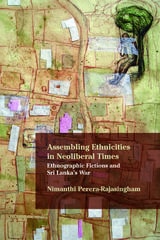
Assembling Ethnicities in Neoliberal Times
Ethnographic Fictions and Sri Lanka’s WarNimanthi Perera-Rajasingham
Northwestern University Press, 2019
Assembling Ethnicities in Neoliberal Times: Ethnographic Fictions and Sri Lanka’s War argues that the bloody war fought between the Sri Lankan state and the separatist Tamil Tigers from 1983 to 2009 should be understood as structured and animated by the forces of global capitalism. Using Aihwa Ong’s theorization of neoliberalism as a mobile technology and assemblage, this book explores how contemporary globalization has exacerbated forces of nationalism and racism.
Nimanthi Perera-Rajasingham finds that ethnographic fictions have both internalized certain colonial Orientalist impulses and critically engaged with categories of objective gazing, empiricism, and temporal distancing. She demonstrates that such fictions take seriously the task of bearing witness and documenting the complex productions of ethnic identities and the devastations wrought by warfare. To this end, Assembling Ethnicities
explores colonial-era travel writing by Robert Knox (1681) and Leonard Woolf (1913); contemporary works by Michael Ondaatje, Romesh Gunesekera, Shobasakthi, Dharmasiri Bandaranayake, and Thamotharampillai Shanaathanan; and cultural festivals and theater, including vernacular performances of Euripides’s The Trojan Women and women workers’ theater.
The book interprets contemporary fictions to unpack neoliberalism’s entanglements with nationalism and racism, engaging current issues such as human rights, the pastoral, Tamil militancy, immigrant lives, feminism and nationalism, and postwar developmentalism.
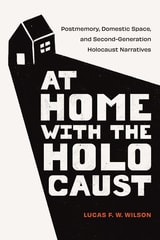
At Home with the Holocaust
Postmemory, Domestic Space, and Second-Generation Holocaust NarrativesLucas F. W. Wilson
Rutgers University Press, 2025